Fort of Carvalha: A Defensive Work of the Lines of Torres Vedras


Site at a Glance
- Rating
- 4.4
- Popularity
- Low
- Country
- Portugal
- Primary era
- Modern
- External website
- Open
- Eras represented
- Modern
- Civilizations
- British, Portuguese
- Site type
- Military
- Remains
- Fort
On this page4 sections
History
The Fort of Carvalha is a Portuguese military work built in 1809–1810 as Military Work No. 10 of the first and most northerly line of the Lines of Torres Vedras. The lines were a British-Portuguese system of forts, redoubts, and other defensive positions constructed during the Peninsular War, the 1807–1814 conflict in which British, Portuguese, and Spanish forces opposed Napoleonic France. The fort formed part of the effort to protect Lisbon from invasion.
Construction of the Lines
After renewed French military activity in 1809, Arthur Wellesley, 1st Duke of Wellington, ordered the construction of the defensive lines on 20 October. The 152 forts, redoubts, and related military installations were built rapidly and secretly under the overall supervision of Colonel Richard Fletcher, a Royal Engineers officer responsible for military engineering and fortification construction. The system was also intended to provide a secure position from which a retreating British army could embark if Portugal were defeated.
Portuguese Major Brandão de Sousa gave the fort its name, taking “Carvalha” from the hill on which it stood. Its position allowed it to protect the Arruda Valley against a French incursion and to exchange supporting fire with the nearby Fort of Cego. This coordinated fire, known as crossfire, enabled separate fortified positions to support one another. The fort had a garrison of 400 men, but it was not used in battle.
Restoration and heritage status
Restoration began on 19 April 2010 as part of a programme marking the bicentenary of the construction of the Lines of Torres Vedras. The Fort of Carvalha is included within a classified heritage site, reflecting its place in the defensive system created during the Peninsular War.
Remains
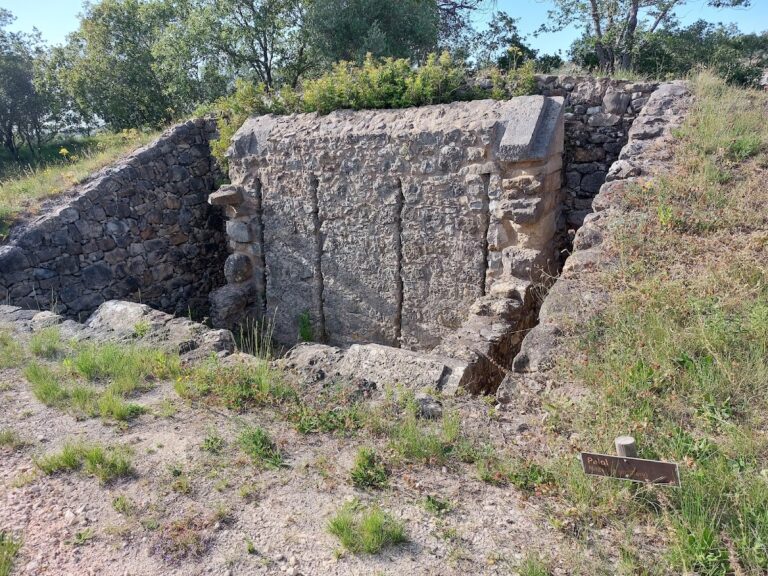
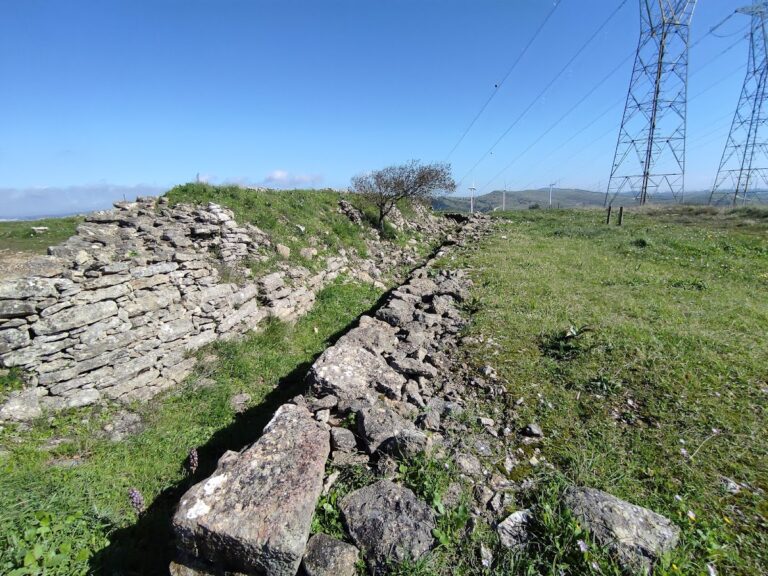
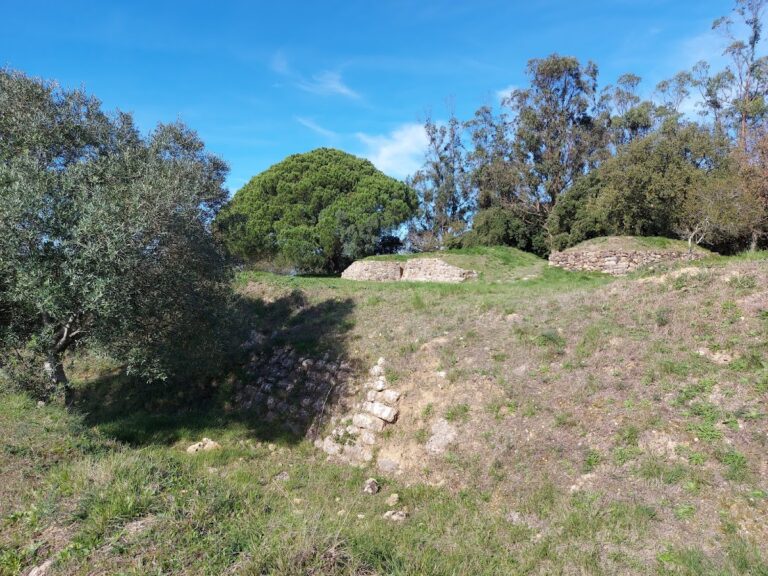
The fort stands in the parish of São Tiago dos Velhos, at the highest point of the municipality of Arruda dos Vinhos in Portugal’s Lisbon District. Its elevated position is 394 metres above sea level. The surviving work has an irregular star-shaped plan, a form suited to arranging defensive fire around its perimeter.
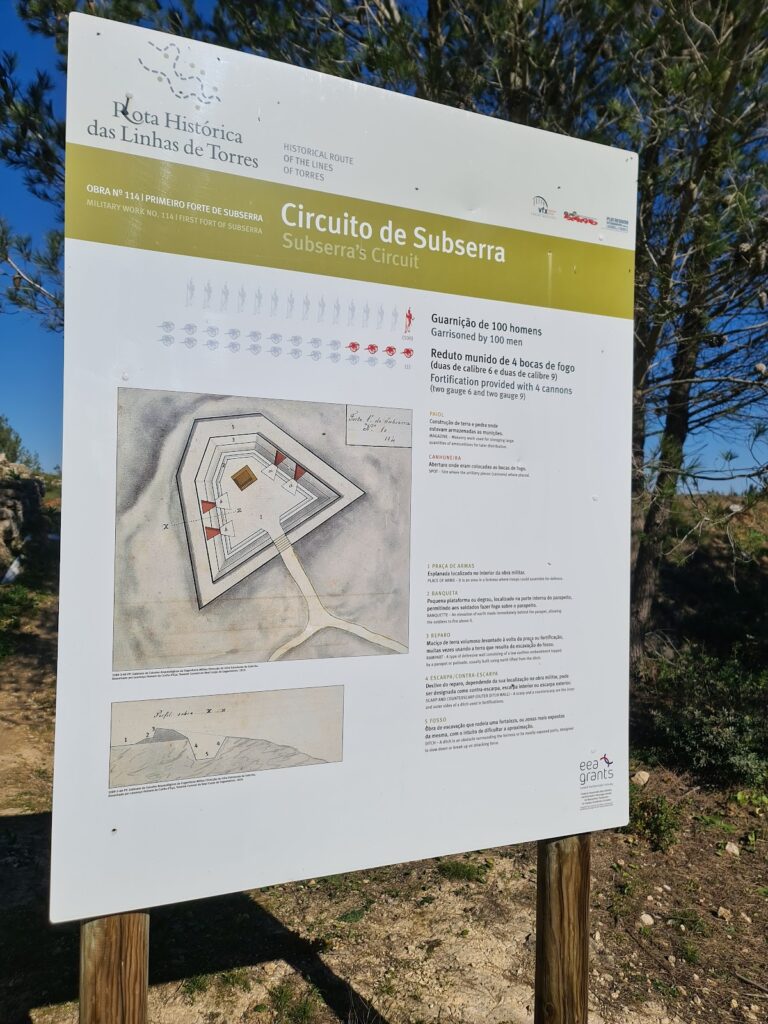
Four cannon formed part of the fort’s armament. The structure is partly restored, leaving the physical remains connected to the defensive role for which the position was built. Its layout and elevated setting express its function within the first line of the wider Torres Vedras system, alongside the supporting position at Fort of Cego.