Fort of Subserra: A Peninsular War Fortification in Portugal


Site at a Glance
- Rating
- 4.5
- Popularity
- Very Low
- Country
- Portugal
- Primary era
- Modern
- External website
- Open
- Eras represented
- Modern
- Civilizations
- British, Portuguese
- Site type
- Military
- Remains
- Fort
On this page7 sections
History
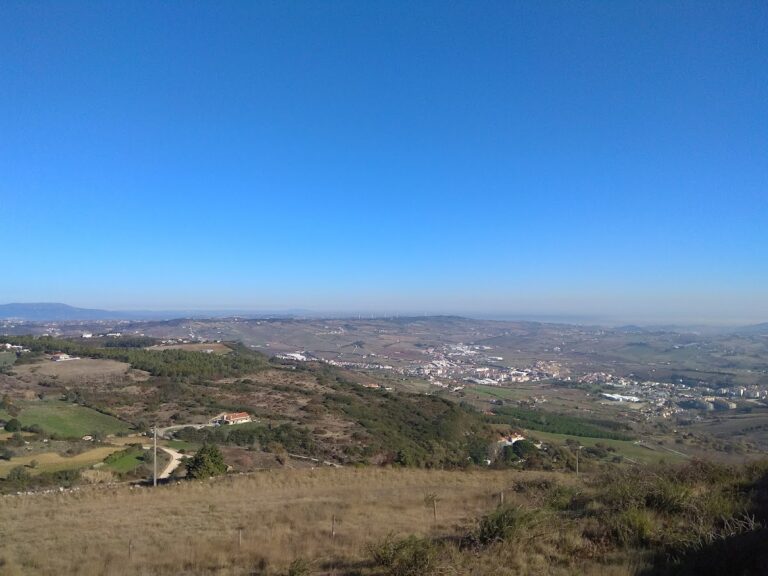
The Fort of Subserra, also known as the Fort of Alhandra, is a Peninsular War fortification in Portugal near Alhandra. Built in 1810 as part of the first defensive line of the Lines of Torres Vedras, it belonged to a network created to protect Lisbon and support Arthur Wellesley, later the 1st Duke of Wellington, if an allied retreat became necessary.
Construction within the Lines of Torres Vedras
The Peninsular War was the Iberian campaign of the wider Napoleonic Wars, fought from 1807 to 1814 between French forces and allied Portuguese, British, and Spanish forces. In October 1809, Wellington ordered the construction of the Lines of Torres Vedras, a defensive system of 152 numbered works that included forts, redoubts, batteries, earthworks, escarpments, dams, and other interventions.
The Fort of Subserra was designated work No. 114, although it was also called Subserra No. 1 within the group of Subserra fortifications. Construction began in February 1810 on the heights near Alhandra, where the hilly terrain supported the defensive plan. The fort was completed within a few weeks.
Garrison and military purpose
From October 1810, the fort was garrisoned by 100 Portuguese militia and gunners under the overall command of General Rowland Hill, a British commander serving under Wellington. Its role was to defend the left flank of the São Fernando Battery, work No. 4, and exchange cross-fire with the nearby New Subserra Battery. Together, these positions protected the road between Arruda dos Vinhos and Alhandra through the Subserra Valley. The Fort of Subserra was not used in battle.
Commemoration of the defensive lines
A nearby monument commemorating the role of the Lines of Torres Vedras in the Anglo-Portuguese victory over the French was completed in 1883. It stands on the site of the Boavista redoubt, originally numbered work No. 3. Two plaques added in 1911 honour Sir Richard Fletcher, who supervised construction of the Lines, and José Maria das Neves Costa, whose original topographic maps Wellington used when planning them.
Remains
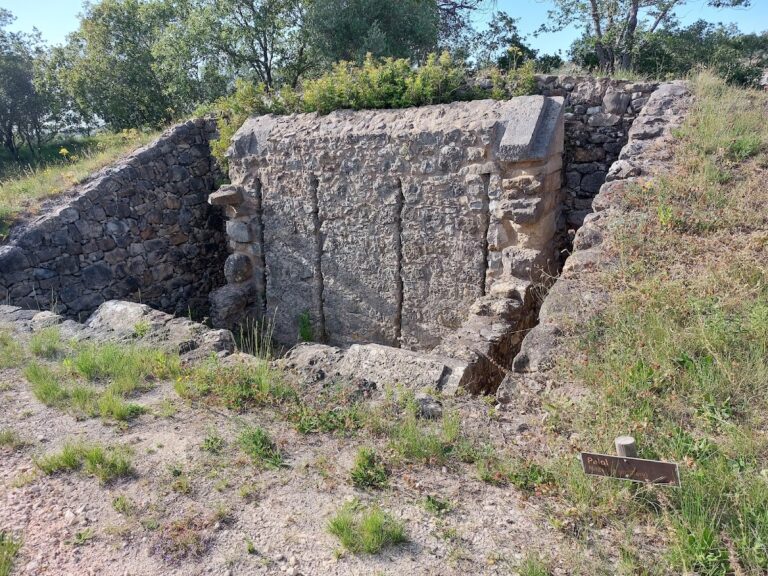
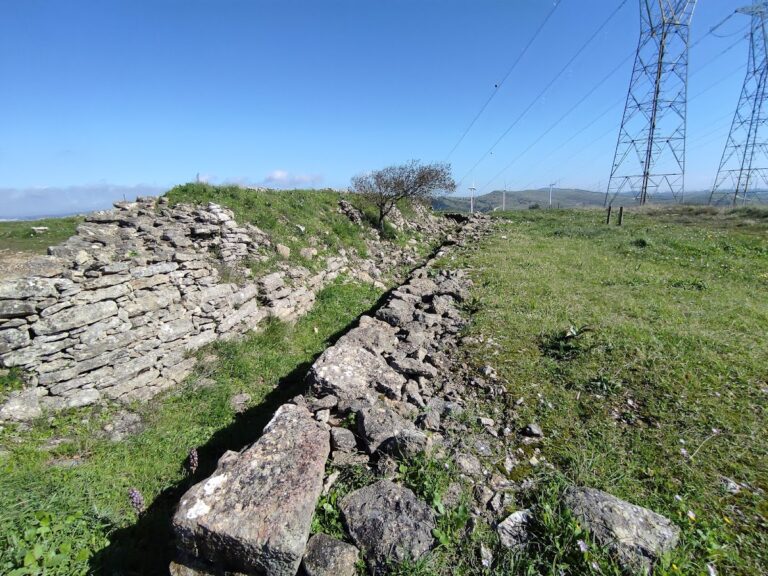
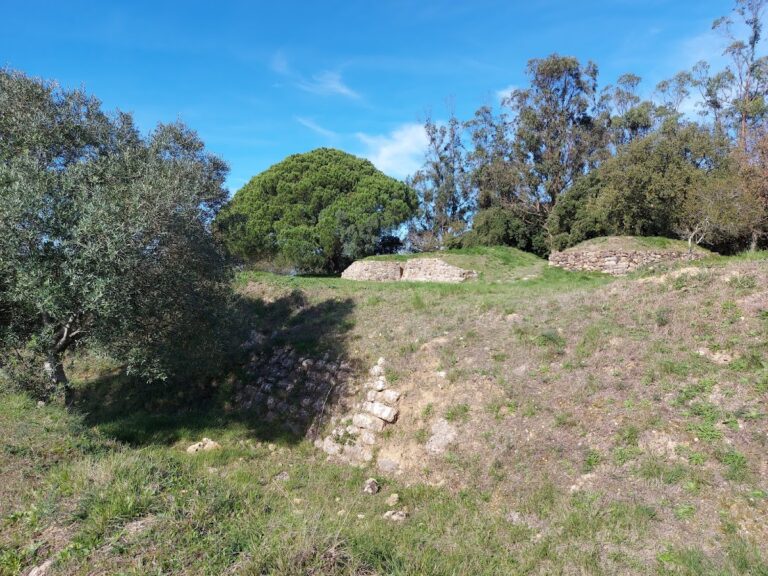
The surviving site is a small, irregular pentagonal earthwork capped with stone, positioned at approximately 142 metres above sea level near Alhandra, in the municipality of Vila Franca de Xira. Its preserved and partly restored form follows the elevated, hilly setting chosen for its defensive function.
Fortification
Much of the stone capping remains visible across the earthwork. Three embrasures, openings through which artillery could fire, held one six-pounder cannon and two nine-pounder cannons, alongside other artillery pieces. These openings formed part of the fort’s protection of the São Fernando Battery, the New Subserra Battery, and the road through the Subserra Valley.
Commemorative monument
The nearby monument is a column topped by a statue of Hercules, the classical Greek figure. It occupies the former Boavista redoubt and carries the two plaques installed in 1911 in memory of Fletcher and Neves Costa.