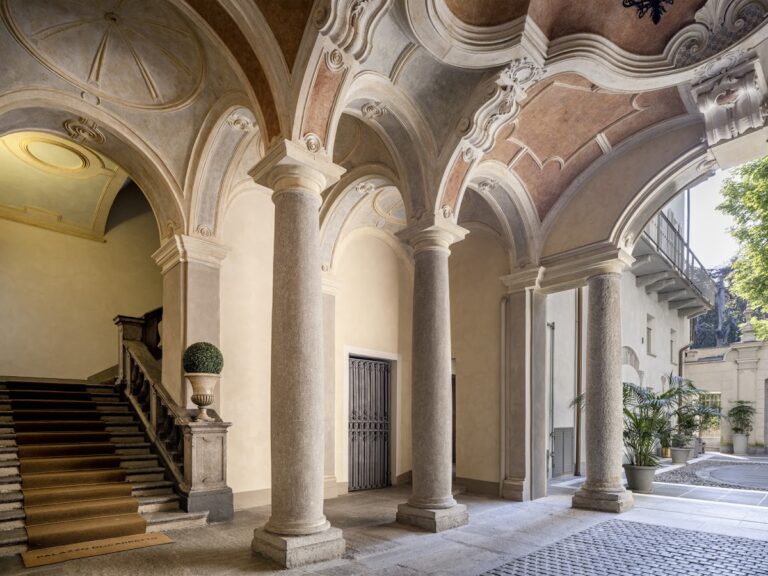
Palazzo Trucchi di Levaldigi: A Baroque Palace in Turin


Site at a Glance
- Rating
- 4.3
- Popularity
- Low
- Country
- Italy
- Primary era
- Early Modern
- Eras represented
- Early Modern
- Civilizations
- Duchy of Savoy
- Site type
- Domestic
- Remains
- Palace
On this page5 sections
History
Palazzo Trucchi di Levaldigi is a Baroque building in Turin, Italy, constructed between 1673 and 1677 to designs by the architect Amedeo di Castellamonte. Baroque architecture was an early-modern style known for theatrical compositions, elaborate ornament, dramatic effects, and richly worked surfaces. The palace was commissioned by Giovanni Battista Trucchi di Levaldigi, a count and general superintendent of the finances of Carlo Emanuele II, the seventeenth-century duke of Savoy. Trucchi di Levaldigi also served as a member of the Council of State during the seventeenth and eighteenth centuries.
Institutional and Commercial Uses
The palace later housed the Royal Tarot Factory. At that time its address was number 15, a number associated with the Devil in tarot symbolism. The building subsequently became the Turin headquarters of the Banca Nazionale del Lavoro, an Italian banking institution, marking a later institutional phase in its history. It is currently used commercially and is listed with the Banca Nazionale del Lavoro as its owner.
Traditions of Mystery
Palazzo Trucchi di Levaldigi has long been associated with stories of mystery, diabolical symbolism, and alleged murders. One tradition interprets the door knocker as a mocking reference to people who spread malicious rumors about Trucchi di Levaldigi, who was said to have made a pact with the Devil.
Another legend says that the entrance door appeared suddenly after an apprentice sorcerer invoked dark forces and Satan. The Devil, angered by the invocation, supposedly imprisoned the magician inside the palace for eternity.
An unverified story set during the French occupation in the early nineteenth century tells of Major Melchiorre Du Perril entering the palace for a quick meal before leaving with important secret documents. He never emerged, according to the tale. Around twenty years later, renovation workers allegedly found a skeleton enclosed within a wall and buried upright.
A further tradition places a fatal stabbing in 1790, when the palace supposedly belonged to Marianna Carolina of Savoy. During a major carnival celebration, a dancer performing for the guests was mortally wounded. Neither the attacker nor the weapon was ever found. The legend continues with a violent storm, extinguished palace lights, panicked guests, and a cold wind moving through the rooms. Later versions say that the murdered dancer’s ghost appeared, while another describes a painting that showed the dancer performing on the flames of Hell.
Remains
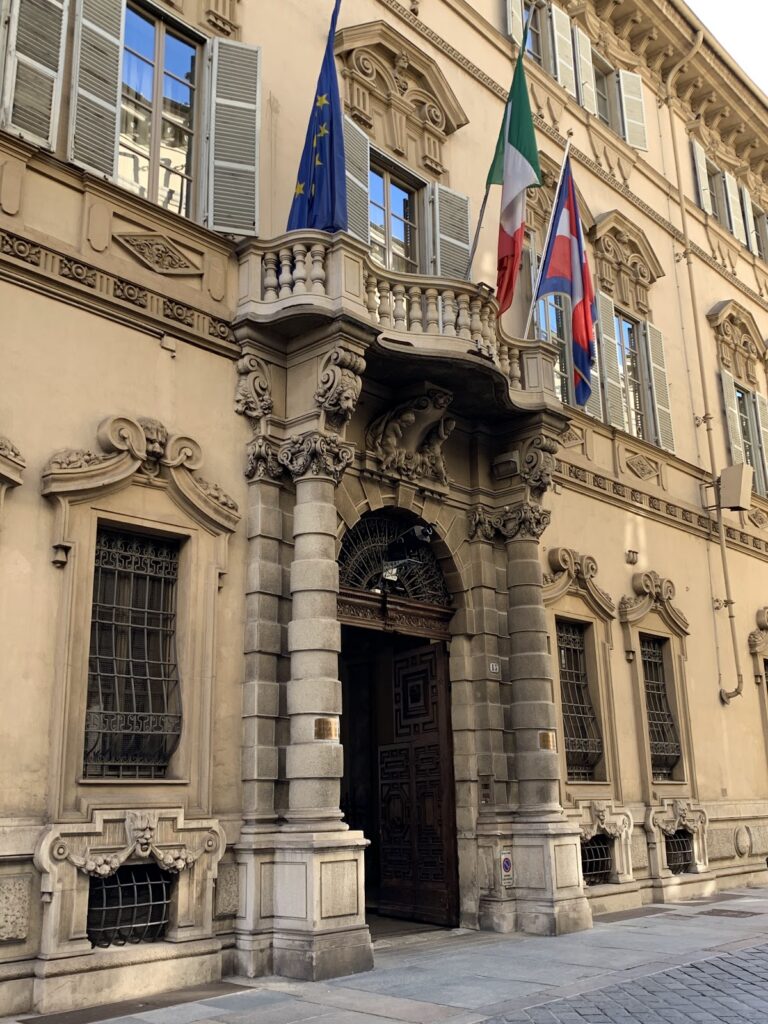
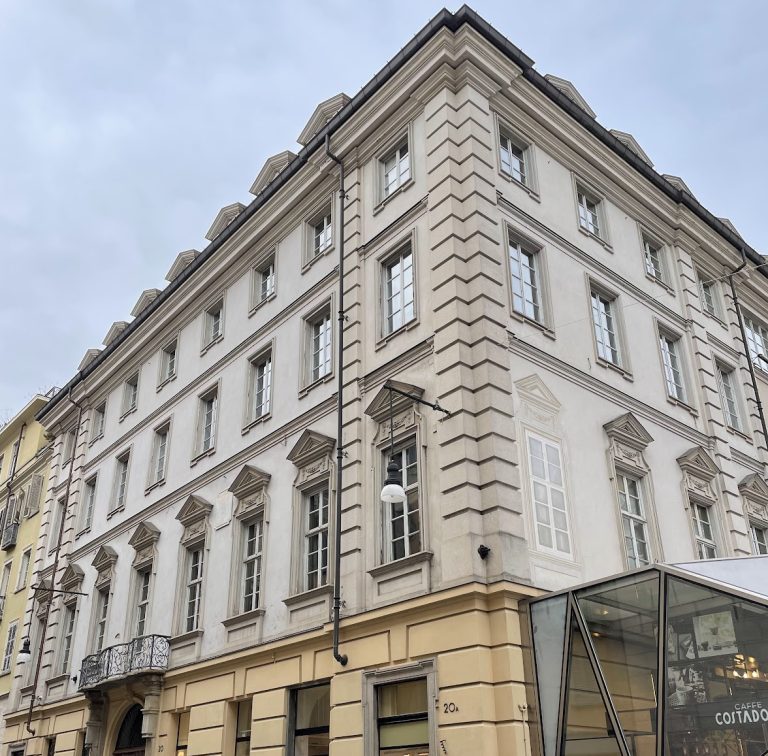
The palace occupies a corner position at the junction of present-day Via Alfieri and Via XX Settembre in Turin. Its Baroque design is expressed most strongly in the richly ornamented wooden entrance portal, which forms the building’s principal surviving architectural feature.
Entrance Portal
Trucchi di Levaldigi commissioned the portal in Paris in 1673, and the artist Pietro Danesi made it in 1675. Its carved decoration includes flowers, fruit, animals, putti, and other esoteric symbols. Putti are childlike decorative figures commonly used in Renaissance and Baroque art. The entrance is popularly known as the “Devil’s Door” because its knocker depicts a demon’s head framed by two intertwined serpents. The knocker also carries the symbolic interpretation connected with Trucchi di Levaldigi’s claimed indifference to malicious gossip.