Fort du Freinet: A Medieval Fortress in France


Site at a Glance
- Rating
- 4.5
- Popularity
- Low
- Country
- France
- Primary era
- Medieval
- Eras represented
- Medieval
- Civilizations
- County of Provence
- Site type
- Military
- Remains
- Fortified Town
On this page6 sections
History
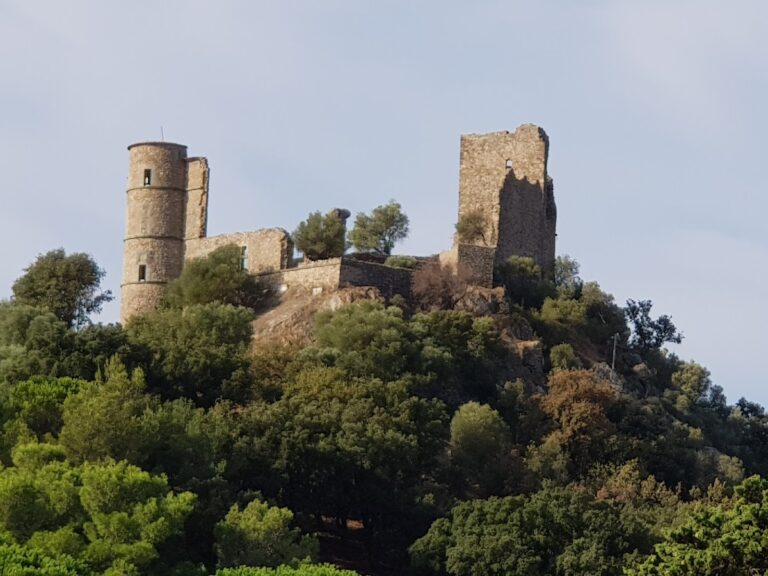
Fort du Freinet is a medieval fortified site in France, above La Garde-Freinet, whose stronghold was built from the twelfth to the thirteenth century. Its position on a naturally defended rocky spur allowed control of the surrounding valleys and routes between the Mediterranean coast and the Provençal hinterland.
Medieval settlement
The settlement reached its largest population in the thirteenth century. Its inhabitants carried out organized agricultural, craft, and military activities, while the castle appears to have remained occupied continuously as the village was gradually abandoned.
The site was long associated with Saracen strongholds and tenth-century raids across the region. Excavation instead places its construction after the counts of Provence, the medieval rulers of the County of Provence, had reconquered the area. Work during the 1980s, directed by archaeologist Philippe Sénac, identified three sectors: a castle, a village, and a defensive outpost.
Destruction in the Wars of Religion
In 1589, during the French Wars of Religion, a series of sixteenth-century conflicts between Protestant and Catholic forces in France, Marshal de La Valette ordered the fort destroyed. He compelled the inhabitants to dismantle it so that French Protestants, known as Huguenots, could not seize the stronghold.
Remains
Fortified spur and settlement
Fort du Freinet occupies a rocky spur of the Massif des Maures at about 450 metres above sea level, overlooking the present village of La Garde-Freinet. The position dominates the surrounding plain and provides a broad view over the Gulf of Saint-Tropez and the Var hinterland. The fortifications used the natural rock of the hill, while a rampart enclosed the settlement. Only a few sections of this defensive wall survive.
The excavated remains are arranged in three sectors: the castle, the village, and a defensive outpost. The castle was the only part apparently occupied permanently. Together, these areas preserve physical evidence of the agricultural, craft, and military organization of the medieval community.
Chapel
A rectangular chapel stood between the castle and the village. Its surviving altar consists of roughly reworked stones. Beside the chapel were a sacristy and a bell tower measuring 2.70 metres in diameter, preserving part of the religious architecture within the fortified settlement.