Fort de Suarlée: A Brialmont Fortress Defending Namur


Site at a Glance
- Rating
- 4
- Popularity
- Very Low
- Country
- Belgium
- Primary era
- Modern
- Eras represented
- Modern
- Civilizations
- Belgian
- Site type
- Military
- Remains
- Fort
On this page14 sections
History
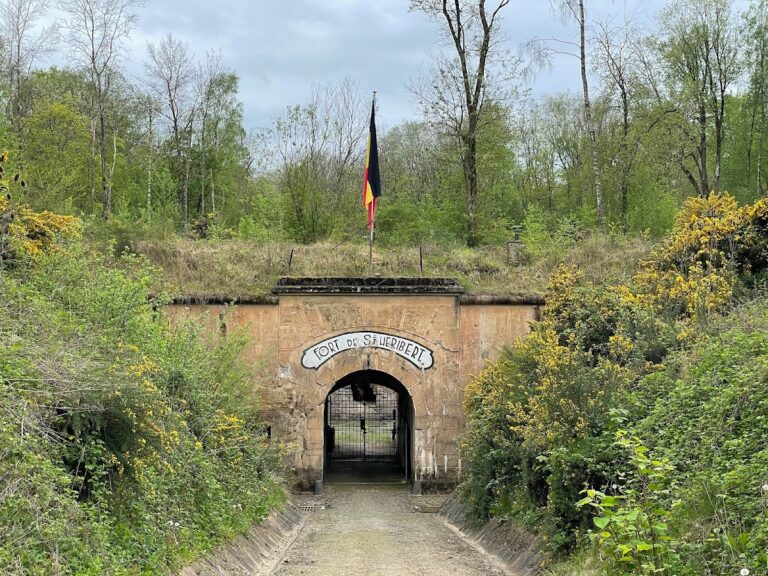
Fort de Suarlée is a Belgian fortress near Namur, built between 1888 and 1892 as part of the late-nineteenth-century Fortifications of Namur. Designed by Belgian general and military engineer Henri Alexis Brialmont, it formed part of a coordinated defensive system with the forts around Liège, intended to protect Belgian neutrality against a possible French or German advance through the Meuse valley.
Construction and defensive purpose
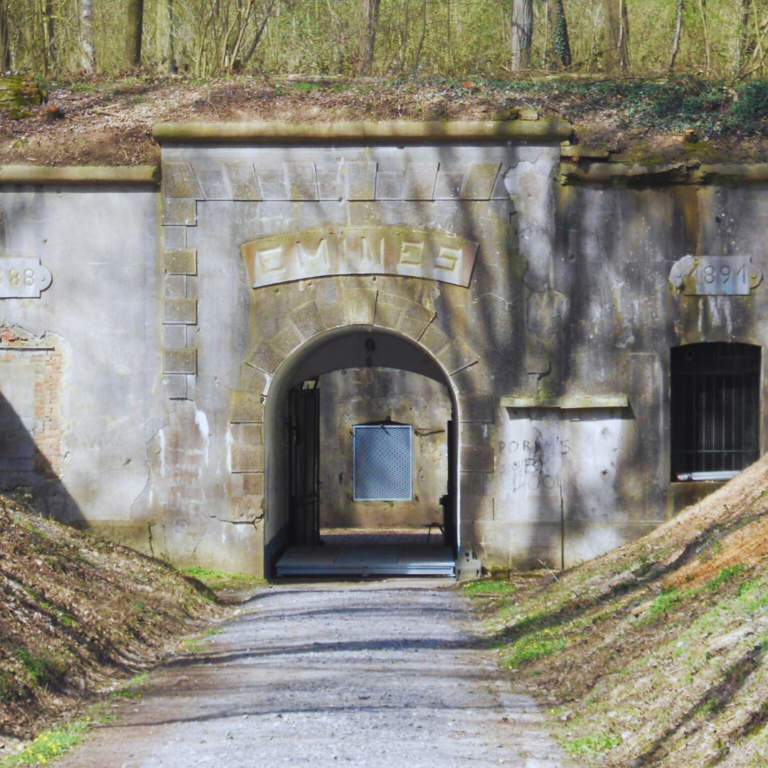
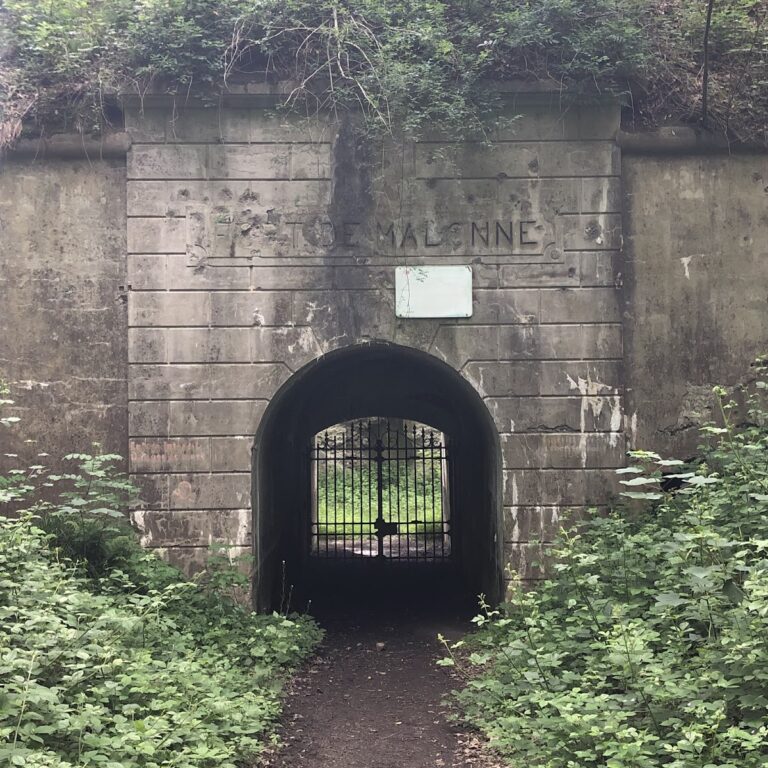
The fort was built to defend Namur, command the Brussels to Namur railway line and protect the interval between Fort d’Émines to the northeast and Fort de Malonne to the south. Belgian troops occupied it soon after its completion. Its position formed part of the western side of Namur’s defensive ring, on an agricultural plateau near the railway.
The Battle of Namur in 1914
During the Battle of Namur, the German assault on Namur’s fortified position in August 1914, Fort de Suarlée was commanded by Captain-Commandant Odon Moisse. This rank stood between captain and major and was associated with command of a fort or comparable unit. About 500 artillerymen and fortress troops formed the garrison.
German forces began shelling Suarlée on 23 August, after their attacks at Liège had shown that heavy artillery could overcome Belgian forts more effectively and with fewer losses than direct infantry assaults. About 800 shells struck the fort that day, causing relatively limited damage. On 24 August, roughly 1,500 shells inflicted serious damage, but an infantry attack that evening was driven back by the fort’s 57 mm guns.
The bombardment intensified on 25 August. German 420 mm mortars, known as Big Berthas, fired from beyond the range of Suarlée’s weapons. By about 3 p.m., nearly all the large and small gun turrets had been put out of action, the galleries had collapsed and communications had been cut. Moisse rejected a German offer to capitulate at about 11:30 a.m., but later ordered an unconditional surrender to prevent further loss of life.
Chaplain Father Agnello carried the surrender message through the rubble and bombardment, then returned with Moisse, who handed over his sword. The German command allowed the Belgian garrison to leave with military honors and permitted Moisse to keep the sword. Father Agnello was decorated after the war for his action, which was credited with saving many lives. Suarlée was the last of Namur’s forts to surrender in 1914.
Interwar modernization
After the German occupation, temporary repairs were made, the fort was rearmed and electricity was installed. During the 1930s, Suarlée became one of seven Namur forts modernized for the Fortified Position of Namur, the Belgian defensive system intended to resist or delay a renewed German invasion. The work improved living conditions, ventilation, communications, electrical power, weapons, armor and protection against gas and aircraft.
Suarlée also served as the instruction battery for the Namur fortress regiment and its area forts. Its revised defenses included updated 75 mm artillery, machine-gun turrets, observation cloches, fixed armored cupolas used for observation or close defense, and six anti-aircraft guns. Additional infantry shelters and observation posts were built around the fort.
The Battle of Belgium in 1940
In May 1940, during the Battle of Belgium, the German invasion and campaign in Belgium, Captain-Commandant Tislair commanded a garrison of about 250 men. German aircraft attacked Suarlée from 10 to 12 May and again on 15 May, when anti-tank guns also fired on the fort. On 16 May, Suarlée supported Fort de Marchovelette with artillery fire.
German infantry attacked the ventilation tower on 16 and 17 May, followed by an assault on the main fort during the night of 17 May. An air attack on 18 May destroyed four 75 mm guns and a machine-gun turret. Further bombardment took place on 19 May, after which the garrison surrendered to German forces.
Abandonment and later damage
After the Second World War, Suarlée was abandoned. Military engineers from Jambes used the area for explosive tests, causing substantial damage, while many metal components were removed. Vandalism and gatherings by far-right groups followed as the isolated site remained unsecured. The two outer head ditches were filled with rubble or other material for reasons that remain unclear.
In 2011, neighboring agricultural land was converted for an extension of the Ecolys industrial zone at Rhisnes, whose infrastructure was routed around the fort’s perimeter. Extensive tree-cutting and decontamination took place in summer 2016. By early November, the surrounding track had been widened and a security fence installed. The privately owned fort remains abandoned, and parts of its exterior have been used as a four-wheel-drive vehicle test track, with ramps built across some ditches.
Remains
Fortress plan and concrete structure
Fort de Suarlée stands about 5 to 5.1 km northwest of central Namur, at roughly 185 m above sea level, on a gently undulating agricultural plateau framed by the Brussels and Gembloux roads. It has the large triangular plan characteristic of a Brialmont fort, with a concave rear side. A ditch about 6 m deep and 8 m wide encircles the position.
The fort was constructed entirely from unreinforced concrete, meaning concrete without steel reinforcement. The central massif was protected by about 4 m of concrete, while the less exposed casemate walls were about 1.5 m thick. The material represented an early large-scale military use of concrete, whose construction methods were not yet fully developed and could leave discontinuities between successive layers.
Central massif
The central massif contained the fire-control office, magazines and principal gun turrets. Its roof carried a retractable searchlight for Morse light signals to Forts d’Émines and Malonne. An observation turret with a searchlight and signal lights was also part of the original equipment. The original heavy armament comprised two retractable turrets with 12 cm guns, one twin 15 cm gun turret and two retractable turrets carrying 21 cm howitzers or guns. The weapons were generally German-made, including Krupp guns, while the turret mechanisms came from several manufacturers.
Ditch defenses and service areas
Four retractable 57 mm turrets provided close defense. Further 57 mm guns in casemates fired along the ditches and defended the rear entrance by flanking fire. A casemate is a protected chamber for artillery or another defensive weapon. Nine heavy machine guns stood in counterscarp casemates, chambers placed in the outer side of a defensive ditch so that their fire could sweep along the ditch and the protected passage, or postern.
The counterscarp also contained latrines, showers, a kitchen, a bakery, sanitary facilities and a morgue. The supply area stood opposite the barracks, whose rear side opened toward the ditch and was less protected than the front and projecting sides. The fort’s guns used black powder, intended to produce choking gases in the ditches, although the gases could also collect in the enclosed firing chambers and spread through the interior.
Modernized installations
Reinforced defenses and underground works
Interwar modernization added reinforced-concrete strengthening, corrugated galvanized steel protection, improved communications and electrical generation, as well as new shelters and observation positions. The powder magazines and the assembly area, known as the quadrilateral, were buried beneath the original structure. At Suarlée, this work extended only about 10 m because the ground was severely damp.
Ventilation tower
A tall reinforced-concrete ventilation tower was built outside the original fort during the modernization. It drew cleaner air from above possible layers of poison gas and supported pressurization by powerful fans. The tower also served as an observation post and a secondary troop entrance, reached through a human-sized passage with defensive niches. Machine guns and grenade launchers formed part of its equipment, and the tower stood about 900 m beyond the fort’s perimeter.
Present physical condition
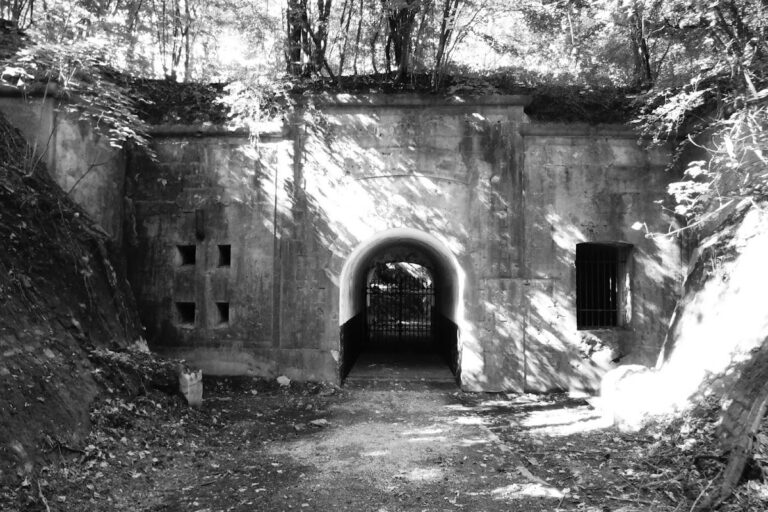
The fort is heavily degraded. Salvageable metal has been stripped from the structure, the air gallery is flooded and the former outer ditches have been filled. Vegetation covers much of the site. Explosive testing, unauthorized access and the construction of vehicle-test ramps have further altered the surrounding ground and defensive features.
Nearby sites