Venafro Cathedral: A Gothic-Medieval Co-Cathedral in Italy


Site at a Glance
- Rating
- 4.3
- Popularity
- Very Low
- Country
- Italy
- Primary era
- Medieval
- External website
- Open
- Eras represented
- Medieval, Early Modern
- Civilizations
- Kingdom of Naples, Norman, Spanish
- Site type
- Religious
- Remains
- Cathedral
On this page11 sections
History
Venafro Cathedral is a Roman Catholic church in Venafro, Italy, dedicated to the Assumption of the Virgin Mary. Its first Christian building was erected in the late fifth century during the episcopate of Bishop Constantine, on the site of a pagan temple. The present church is Gothic in appearance after later restoration, and the cathedral served historically as the seat of the Bishop of Venafro. Since 1986, it has been a co-cathedral of the Diocese of Isernia-Venafro, a cathedral sharing diocesan status with another church after the two dioceses were united with equal standing.
Early Christian Foundation
The first church reused decorative materials from older Roman and early Christian monuments. After it was plundered, the building fell into ruin, leaving the site to be renewed in the medieval period.
Medieval Rebuilding and Damage
Bishop Pietro of Ravenna rebuilt the church during the second half of the eleventh century. A relief representing him survives in local memory under the name “March of the Seven Coats,” a reference to its unusual appearance.
The rebuilt cathedral endured repeated violence and natural disasters. Frederick II’s troops stripped it of its movable possessions, while earthquakes in 1349 and 1456 caused further damage. The church was later set on fire on the orders of Louis XI of France, and Charles VIII’s troops were accommodated there in 1495. These events produced successive repairs, alterations, and reconstructions.
Baroque Alterations and Later Restoration
From the late seventeenth century through the eighteenth century, the interior received extensive Baroque alterations and decoration. The large chapel dedicated to the Blessed Sacrament was built toward the end of the seventeenth century for the keeping and administration of the sacraments, then remodeled in the nineteenth century. Bishop Francesco Saverio Stabile reconsecrated the cathedral on 21 October 1764.
In February 1935, Canon Nicolino Passarelli found colored paint beneath a thick layer of white stucco in the left aisle after a confessional had been removed for restoration. Examination revealed three frescoes decorating three chapels. Restoration campaigns in the 1960s and 1970s removed the Baroque additions and exposed medieval walls, producing the cathedral’s present Gothic-medieval appearance.
Remains
Layout and Exterior
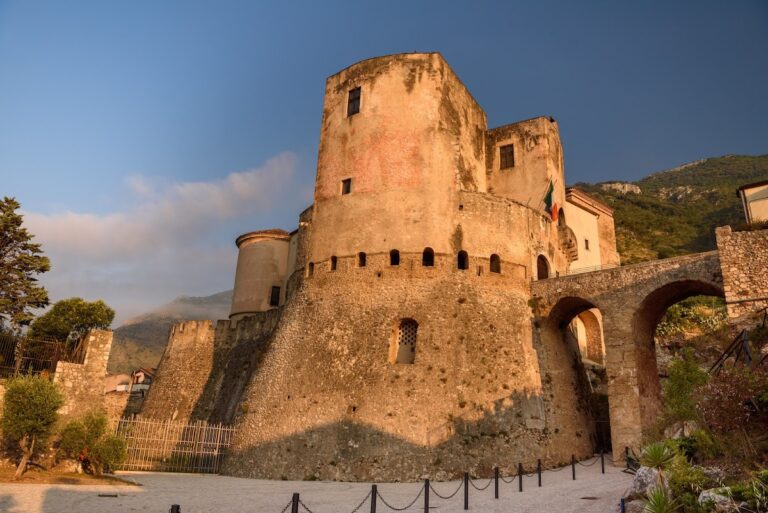
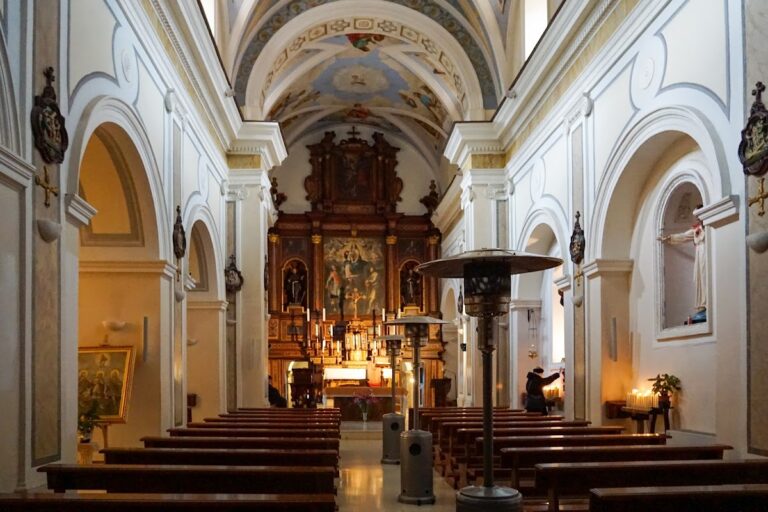
Venafro Cathedral stands at the foot of Parco Oraziano, which extends toward the surrounding mountains. It is one of Venafro’s largest churches and is described as one of the largest in Molise. The present Gothic building has three aisles, an incorporated bell tower, and five portals.
Main Portals
The portal immediately to the right of the main entrance is the Porta Santa, a Holy Door documented at least from 1508. Together with the other portals, it forms part of the cathedral’s surviving entrance arrangement.
Chapels and Interior Works
Side Chapels and Cappellone
Four side chapels open from the southern aisle. The northern aisle leads into the much larger Chapel of the Blessed Sacrament, commonly called the Cappellone. This chapel was built for the reservation, or keeping, of consecrated sacramental elements and was remodeled in the nineteenth century.
Chapel of the Crucifix
The Chapel of the Crucifix was completed in the sixteenth century. Its altar is attributed to the school of Domenico Antonio Vaccaro, an eighteenth-century Italian architect, sculptor, and painter.
Frescoes and Sculpture
The interior contains pictorial works dating from the fourteenth century, along with the three frescoes uncovered beneath the white stucco in 1935. A marble statue of the cleric Antonio Rosario De Bellis, dated 1795, was made by Michele Coppa. Reused decorative elements from Roman and early Christian monuments, as well as a relief of Bishop Pietro of Ravenna, also remain associated with the building.