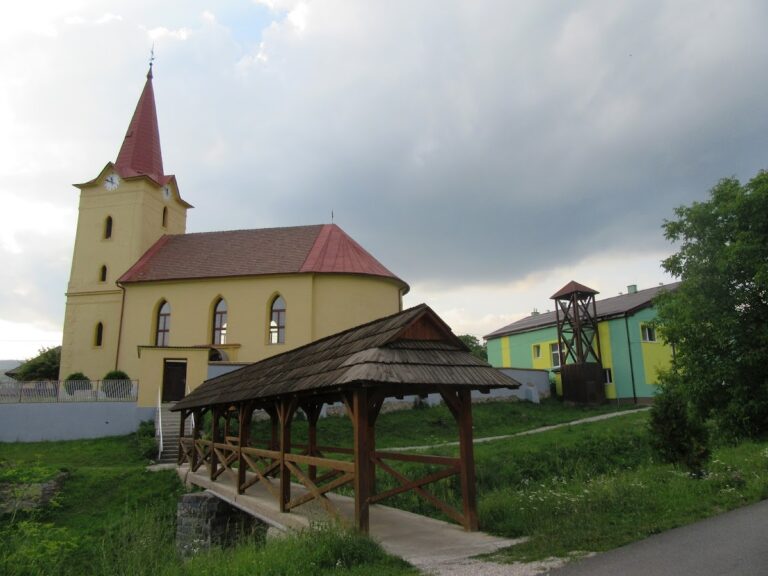
Evangelical Church of the Augsburg Confession at Kameňany: A Medieval Church in Slovakia


Site at a Glance
- Rating
- 4.3
- Popularity
- Very Low
- Country
- Slovakia
- Primary era
- Medieval
- External website
- Open
- Eras represented
- Medieval, Early Modern, Modern
- Civilizations
- Austrian Empire, Habsburg, Hungarian
- Site type
- Religious
- Remains
- Church
On this page7 sections
History
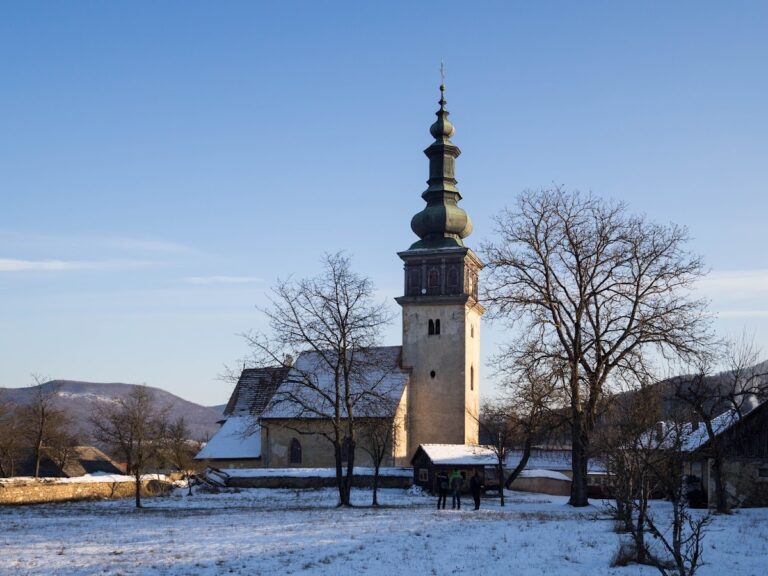
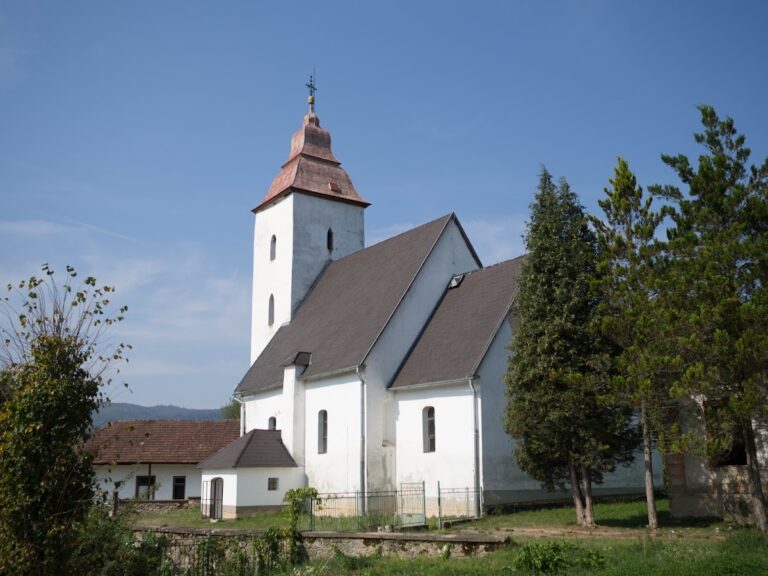
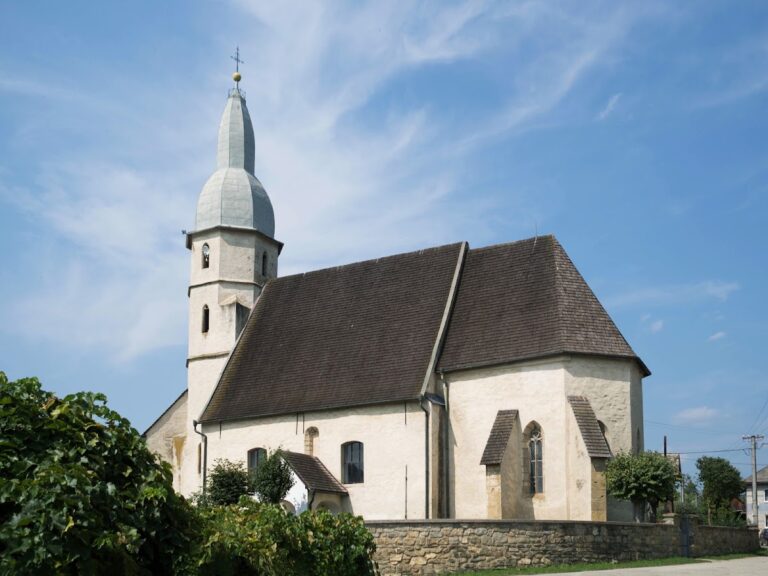
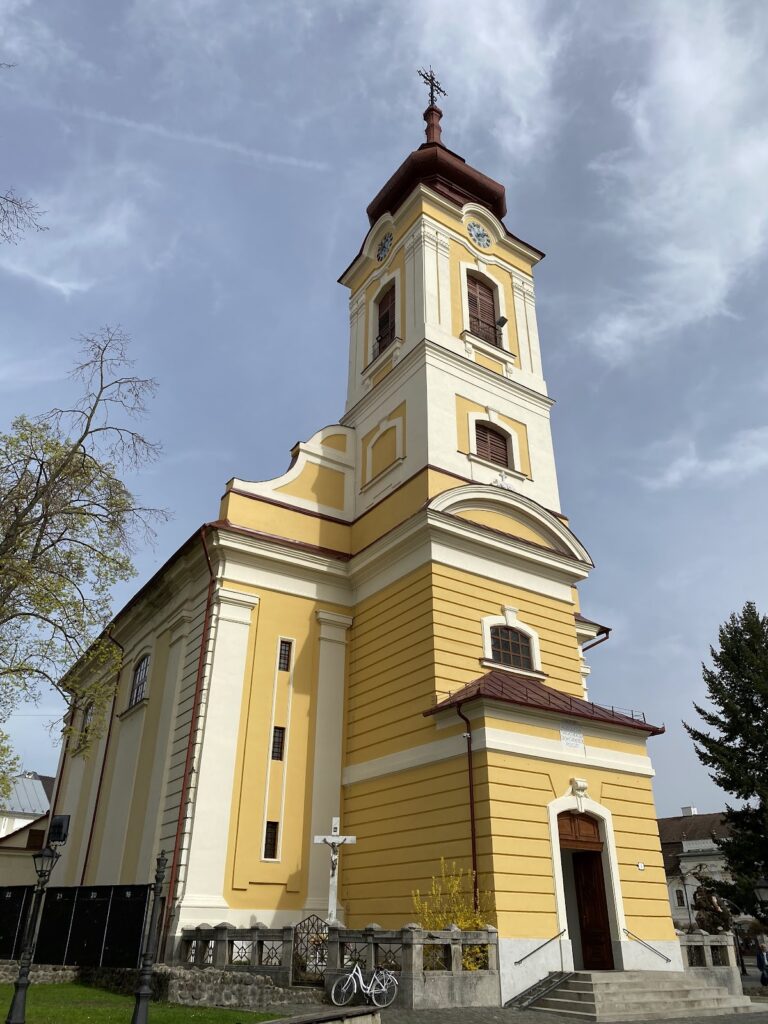
The Evangelical Church of the Augsburg Confession at Kameňany is a medieval Lutheran church in Slovakia, built in the Romanesque tradition during the thirteenth century, probably in its early part. Its architecture was subsequently altered in Gothic, Renaissance, Baroque, and Classical periods. The church belongs to the Eastern District, Gemer Seniorate, and Kameňany congregation of the Evangelical Church of the Augsburg Confession, the Lutheran tradition founded on the Augsburg Confession, a sixteenth-century statement of Lutheran belief.
Kameňany and the medieval church
Kameňany, known in historical records as Kövi and Castrum Kowi, is among the oldest settlements in Gemer. A royal donation charter of 1243 records the settlement when King Béla IV of Hungary granted it to Dittrich and Filip Bebek, members of a prominent noble family in the medieval Kingdom of Hungary.
The church is traditionally regarded as the surviving remnant of a Franciscan monastery established at Kameňany. The monastery had disappeared by the fifteenth century. Its original dedication to Saint Ladislaus, the medieval king of Hungary later venerated as a saint, is recorded in 1688.
Alterations and restoration
The Romanesque building underwent several transformations. During the Renaissance, the nave received a barrel vault, and later Baroque and Classical work further changed the interior. The listed date for completion of the building is 1800. A major restoration in 1921 established much of the church’s present overall appearance.
The church’s medieval paintings became generally known after the writer and historical researcher I. Nagy described them in 1876 in the periodical Történelmi Lapok. In 1958, students from the Academy of Fine Arts in Bratislava, working under Professor Karol Veselý, opened four investigative probes. Two were placed in the presbytery, the area around the main altar, and two in the nave. These revealed painted medieval decoration beneath later layers and prompted further study.
Milan Togner’s investigation in 1977 interpreted the painting behind the altar as having features of Lombard Trecento painting, a fourteenth-century Italian artistic tradition. Preliminary research by Eva Szakálos and conservation work begun in 2011 dated the paintings to the beginning of the fifteenth century. The restoration team of Peter Koreň, Juraj Gregorek, and Martin Vojtko currently attributes the frescoes to a Sienese painter, associated with the medieval painting tradition of Siena in Italy.
The frescoes and their plaster remain in poor and only partly legible condition. Their degradation has been halted, but further conservation is required. The church became a National Cultural Monument of the Slovak Republic on 6 May 1963 and is listed in the Central Register of the Monument Fund under number 513. Since 2021, it has also belonged to the group of twelve churches included in the European Heritage designation “Medieval Wall Paintings in the Gemer and Malohont Regions.”
Remains
Plan and architectural fabric
The church is a single-nave medieval building with a prominent semicircular apse, the rounded end of the sanctuary. The apse is substantially lower than the original nave, and a former ecclesiastical school building stands beside the church. Inside, the apse is covered by a smooth conch vault, a shell-shaped half-dome, decorated with a Baroque stucco mirror, or framed ornamental panel.
The triumphal arch separating the nave from the sanctuary has a pointed archivolt, a dressed stone band following the curve of the arch. It rests on a socle, or low supporting base, and has a simply profiled cornice. The nave originally had a flat ceiling, but the Renaissance barrel vault with lunettes, crescent-shaped sections beneath the vault, was built considerably lower than the earlier wooden ceiling. As a result, the arches of the former Gothic windows now lie within the roof structure.
Medieval painted decoration
Gothic frescoes once covered the wall above the triumphal arch. When the nave was vaulted, parts of this decoration remained in the attic space during the eighteenth century, where they survived as fragments of the medieval scheme. Only three life-sized angel figures remain on the right side of the painted decoration above the arch.
Investigations in the presbytery exposed parts of two larger-than-life figures, together with surviving pastiglia, raised plaster or gesso decoration, and relief halos. A probe in the nave’s north wall revealed medieval fresco ornament, while another on the vault uncovered simple Baroque ornament. The plaster surface also carries ornament made by a punching technique, regarded as the only known example of its kind in present-day Slovakia and the territory of the former Kingdom of Hungary.
An enlarged probe on the north wall uncovered a fresco showing Saint Anne Selbdritt, a representation of Saint Anne with the Virgin Mary, together with the Virgin within a mandorla, an almond-shaped aura surrounding a sacred figure. The painting is in the spirit of the Italian Renaissance, and the interpretation of these discoveries remains under investigation.
Sanctuary features and furnishings
Uncovering work revealed a Romanesque sedilia, a recessed seat for clergy, with a Gothic fresco of three holy bishops behind it. A Gothic pastophorium, a side chamber or niche associated with liturgical objects, was also uncovered. These elements preserve evidence of the church’s medieval arrangement and later painted decoration.
The sanctuary contains a Classical altar from the nineteenth century, with a central oil painting by Jozef Czauczik dated 1840. A pulpit from the beginning of the nineteenth century remains inside the church. The organ, made by František Eduard Pecník, dates from 1804, while the bell tower on the southeast side of the building dates from the beginning of the nineteenth century.