Elmstein Castle: A Palatine Castle Guarding a Valley Route
Site at a Glance
- Rating
- 3.5
- Popularity
- Very Low
- Country
- Germany
- Primary era
- Medieval
- Eras represented
- Medieval
- Civilizations
- Electoral Palatinate, Holy Roman Empire
- Site type
- Military
- Remains
- Castle
On this page9 sections
History
Elmstein Castle, first called Elbstein, is a medieval castle above Elmstein, Germany, probably built in the 12th century as a Palatine castle to guard a route through the valley. The castle belonged to the Electorate of the Palatinate, a principality of the Holy Roman Empire ruled by a Count Palatine who held a vote in choosing the emperor. Its feudal holders also held the court office of cupbearer, responsible for serving drinks. The castle is first mentioned in 1194.
Palatine origins and early transfers
In 1329, Holy Roman Emperor Louis IV of Bavaria transferred the castle to his cousin, the Count Palatine. From 1419 to 1437, Count John V of Sponheim held it as a Palatine fief.
Fiefs and ownership in the fifteenth century
In 1466, Elector Frederick I pawned the castle to Erhard of Remchingen. Following a change of ownership, Elector Philip granted it as a fief to Henry of Pagk in 1492.
War damage and destruction
The castle was damaged during the German Peasants’ War, a widespread uprising in 1524 and 1525. Count Palatine John Casimir inherited it in 1576. It suffered further damage in 1648, the final year of the Thirty Years’ War, a major European conflict fought from 1618 to 1648.
In 1689, during the War of the Palatine Succession, fought from 1688 to 1697, the castle was destroyed. It then passed into private ownership. Local people later took stone from the ruins to build houses.
Remains
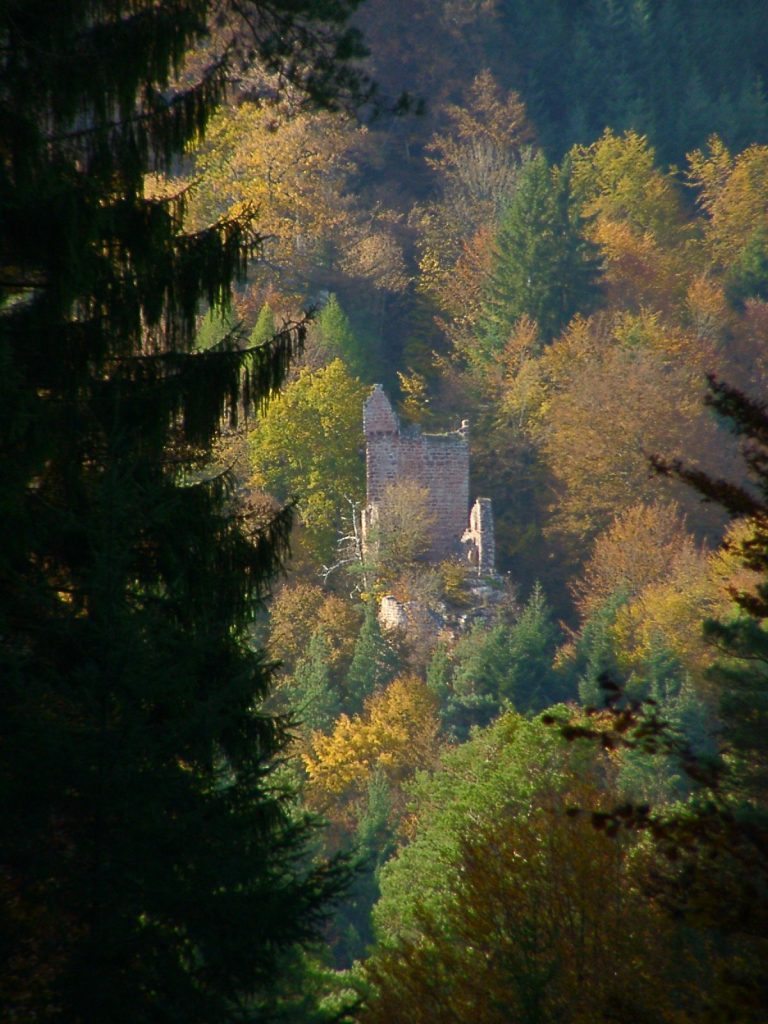
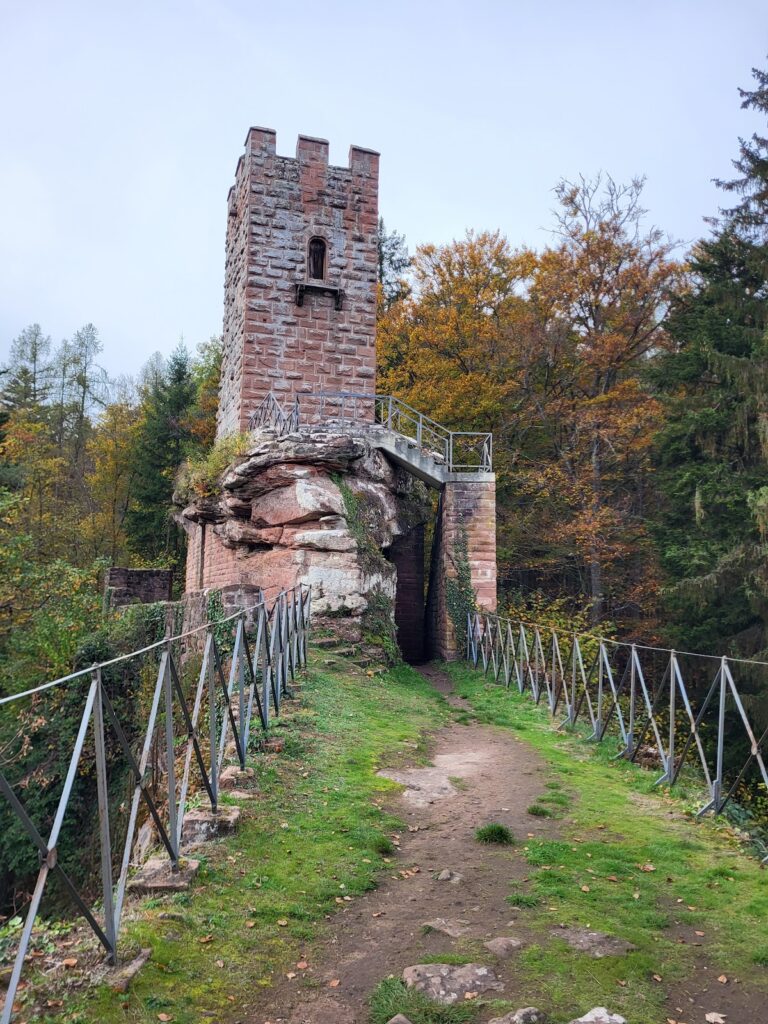
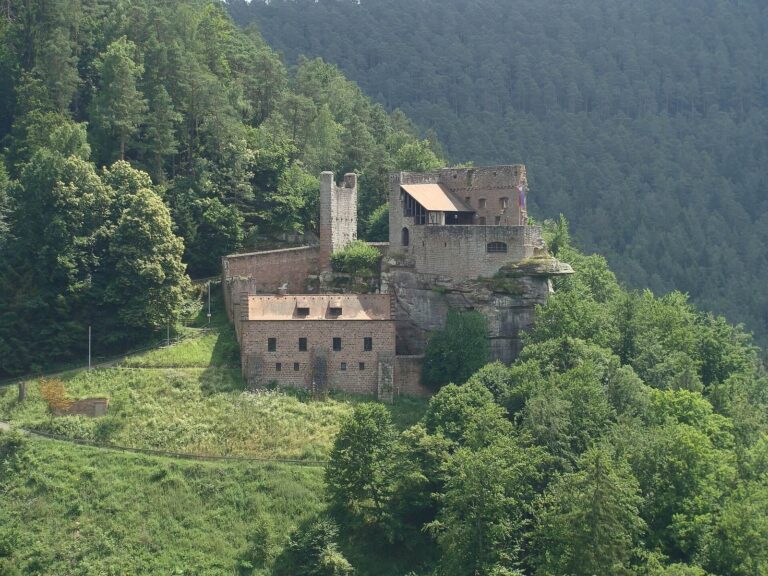
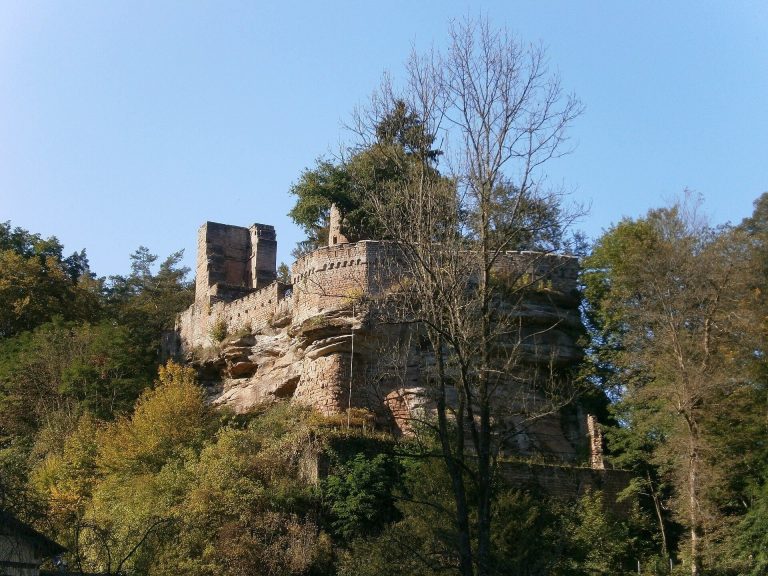
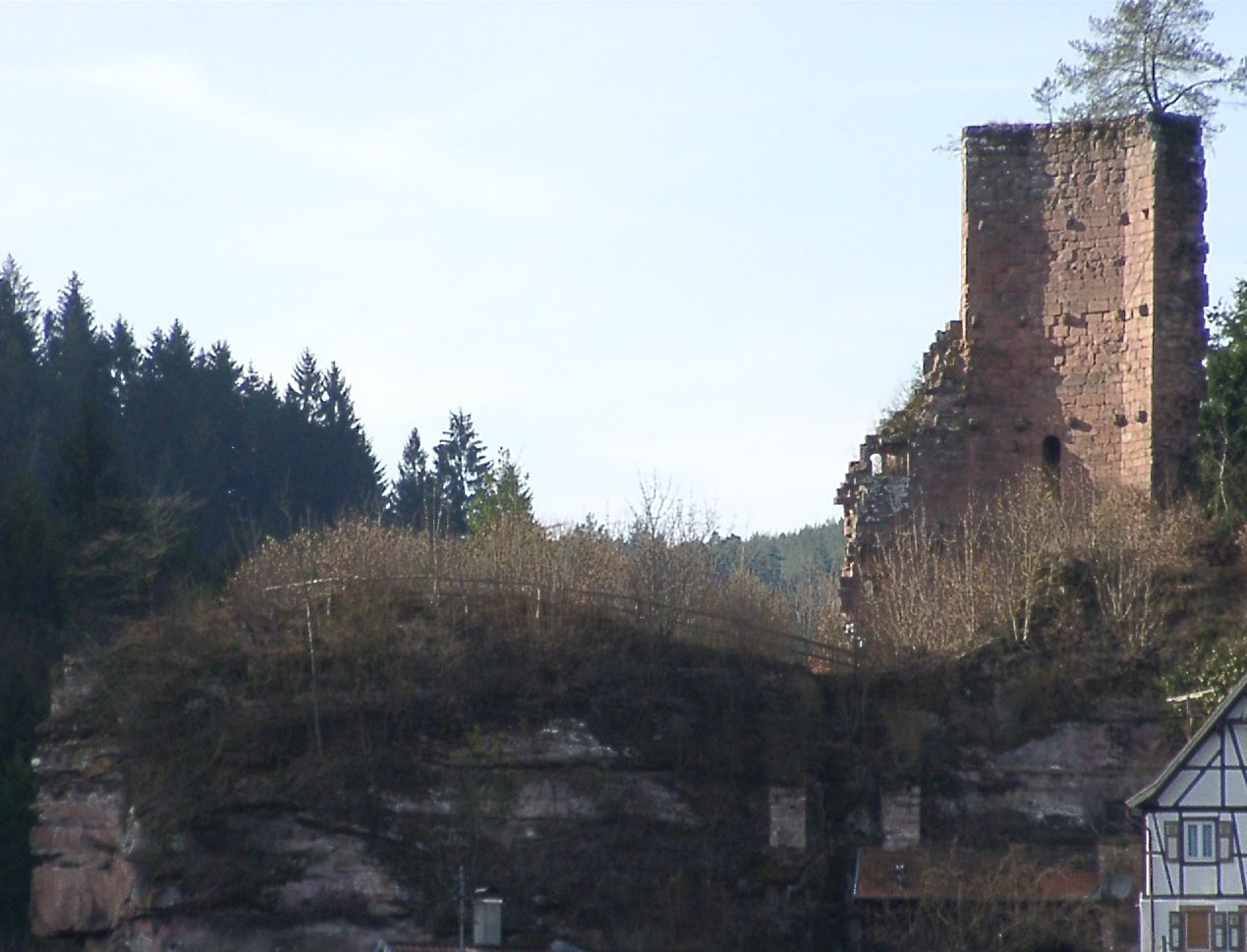
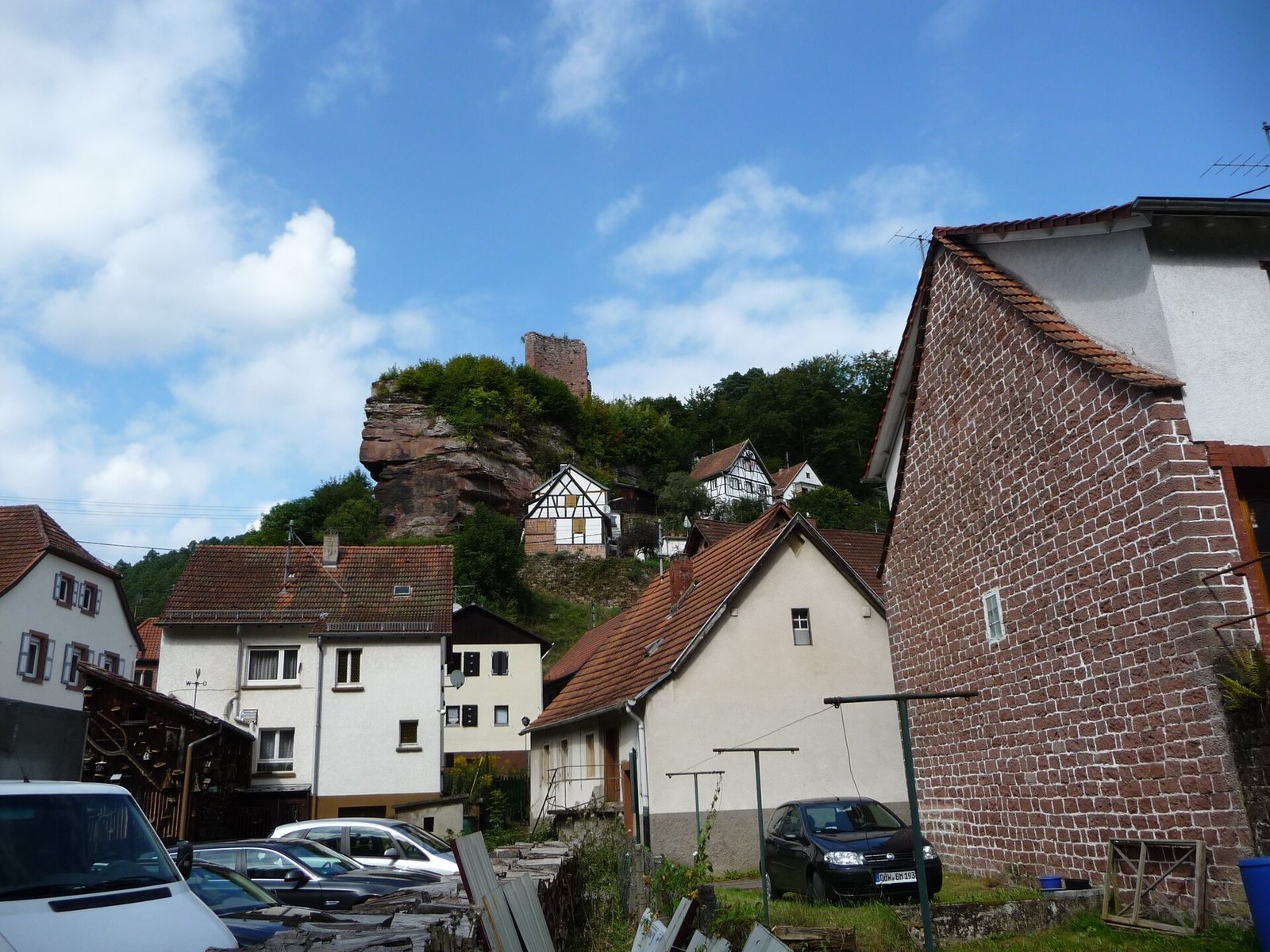
The ruin stands on a 290-metre-high spur on the northern side of the Speyerbach valley, above Elmstein, on the southwestern slope of the Schloßberg. The castle comprised an older core and a later-added outer bailey. Burgweg and Berggasse, immediately south of the site, were part of the former castle grounds.
Surviving structures
Enclosing walls
Sections of the castle’s enclosure walls survive. The lower enclosing wall was built between 1220 and 1230.
Principal hall
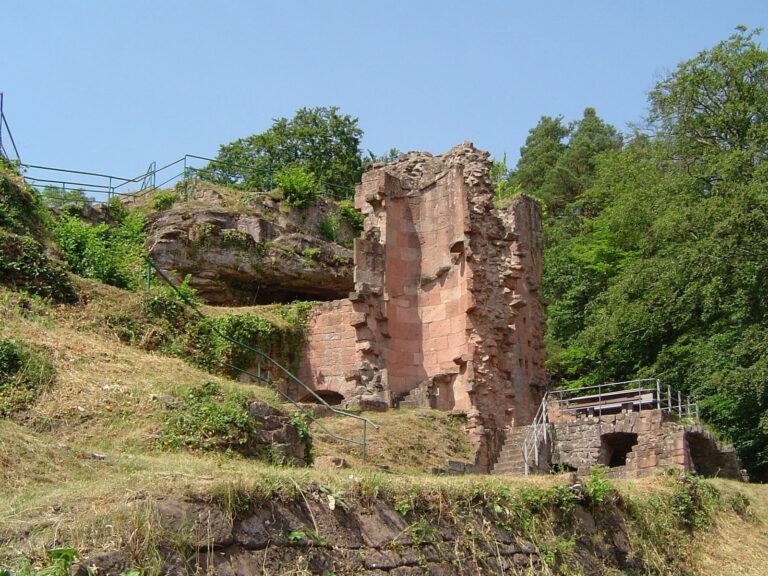
Part of the castle’s principal hall survives among the ruins.
Shield wall
The remains also include a shield wall, a particularly massive defensive wall intended to protect the castle’s most vulnerable side.