Ferme de la Marguerie: A Medieval Manor Farm in Normandy
Site at a Glance
- Popularity
- Very Low
- Country
- France
- Primary era
- Medieval
- Eras represented
- Medieval
- Civilizations
- French
- Site type
- Domestic
- Remains
- Manor House
On this page8 sections
History
Ferme de la Marguerie is a manor farm at Étréham in Calvados, Normandy, France. Its oldest parts date to the fourteenth century, and the manor stood at the center of a local fief, a landed holding associated with a lord’s authority and rights.
Medieval lordship
By the early fifteenth century, the Couvert family held the fief. Roger de Couvert was lord of Étréham in 1419, and another family member, Raoul de Couvert, is mentioned in 1453.
In 1464, Isabeau de Couvert married Guillaume de Héricy, bringing the lordship of Étréham to his family as her dowry. The Héricy were a noble Norman family and retained the lordship for nearly two centuries.
Later ownership and use
In the seventeenth century, the property belonged to the Marguerye family, an old noble family of Normandy whose name became the estate’s. In 1851, farm operator Thomas Castel received an award at an agricultural competition in Trévières for managing his holding well.
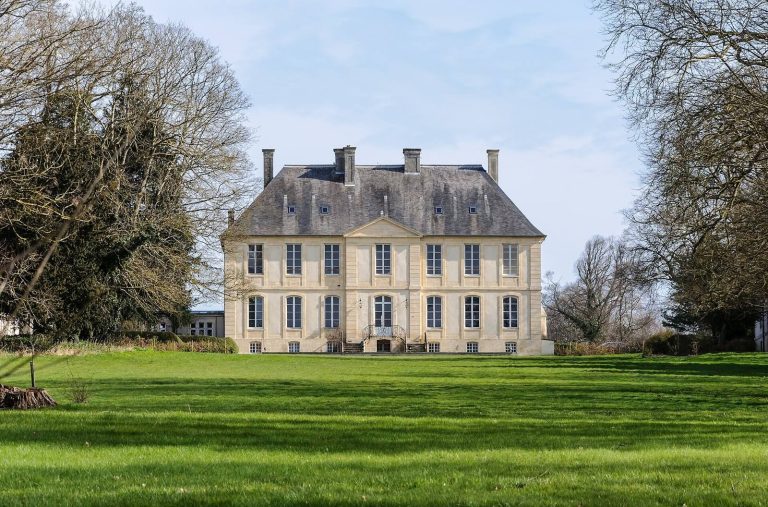
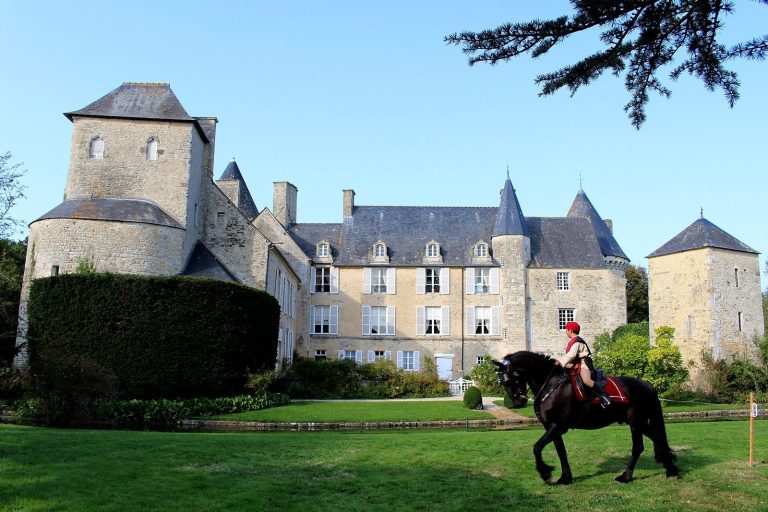
During the nineteenth century, Count Frédéric-Christophe d’Houdetot acquired the manor and built Château d’Étréham nearby, within an estate of 250 hectares. The château is now a stud farm. The farm itself served mainly as a second home during the twentieth century.
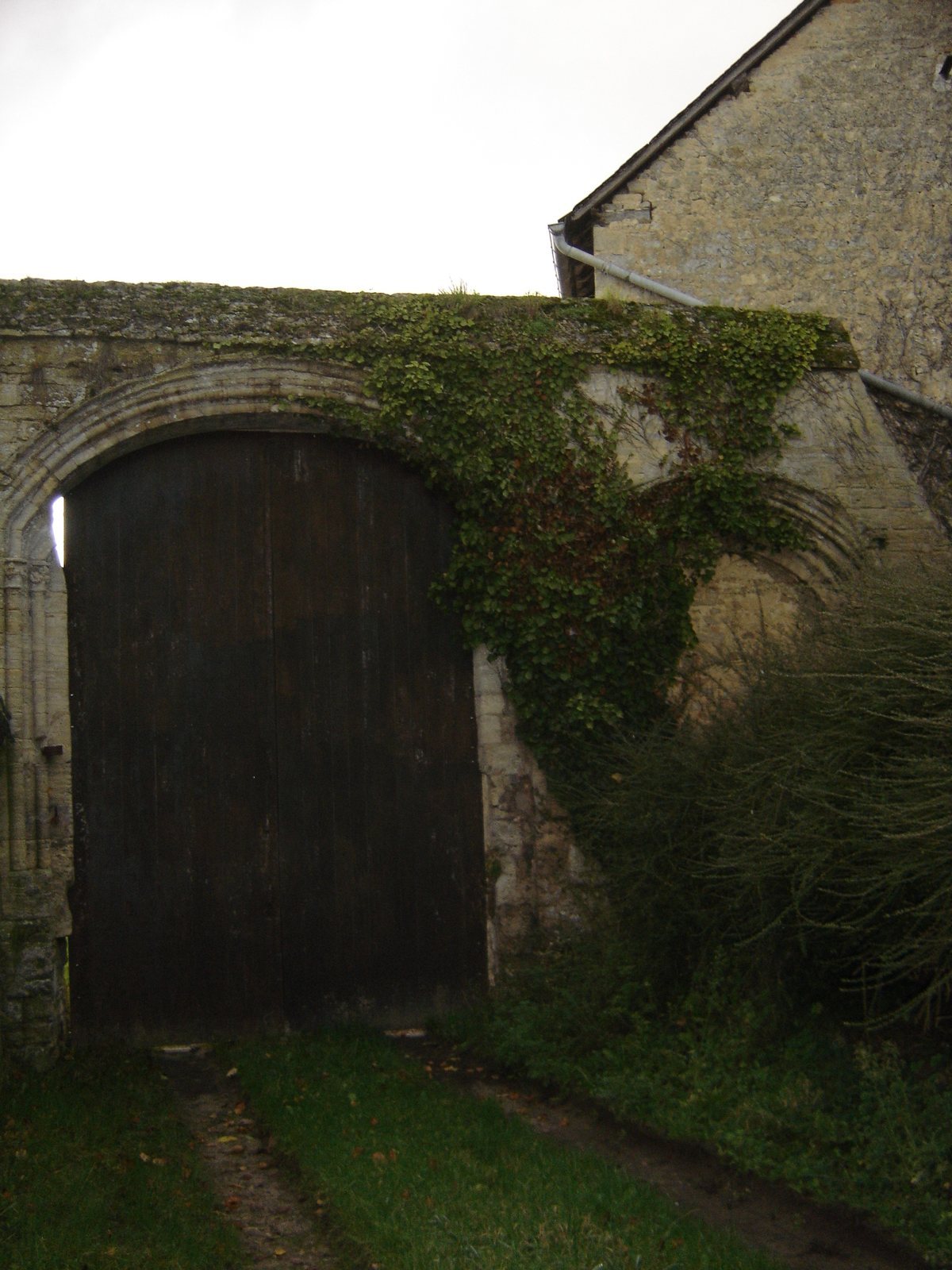
On 9 September 1933, the double portal was listed as a historic monument.
Remains
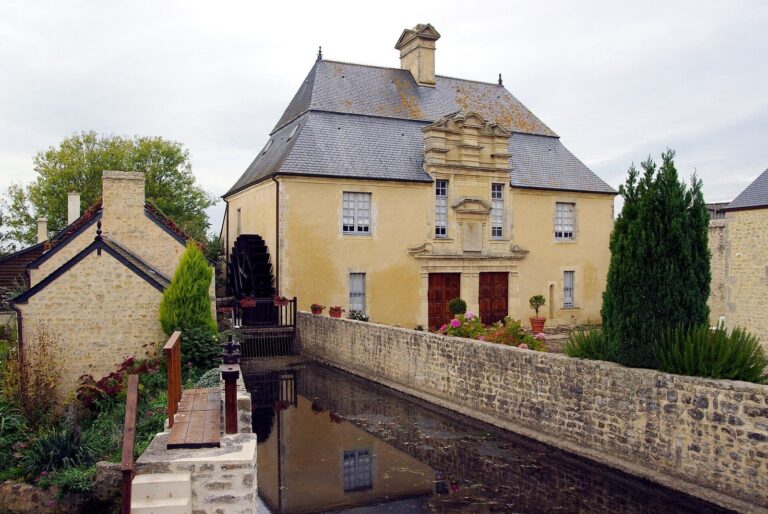
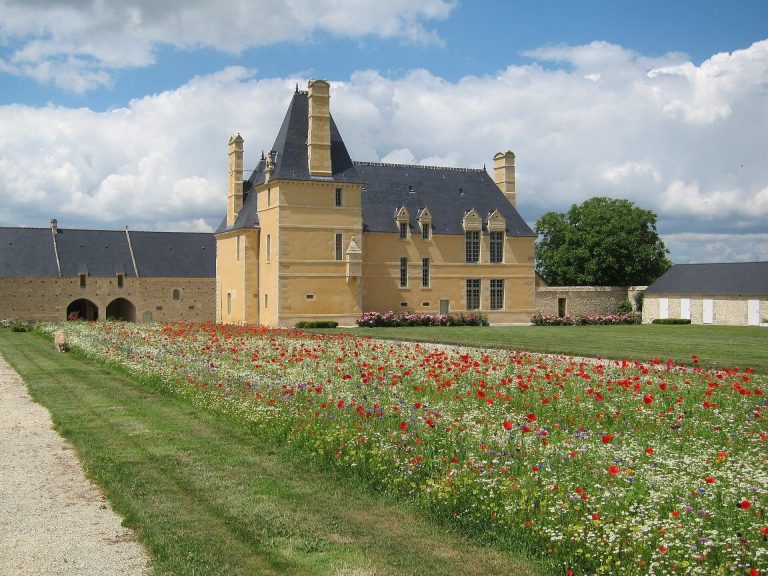
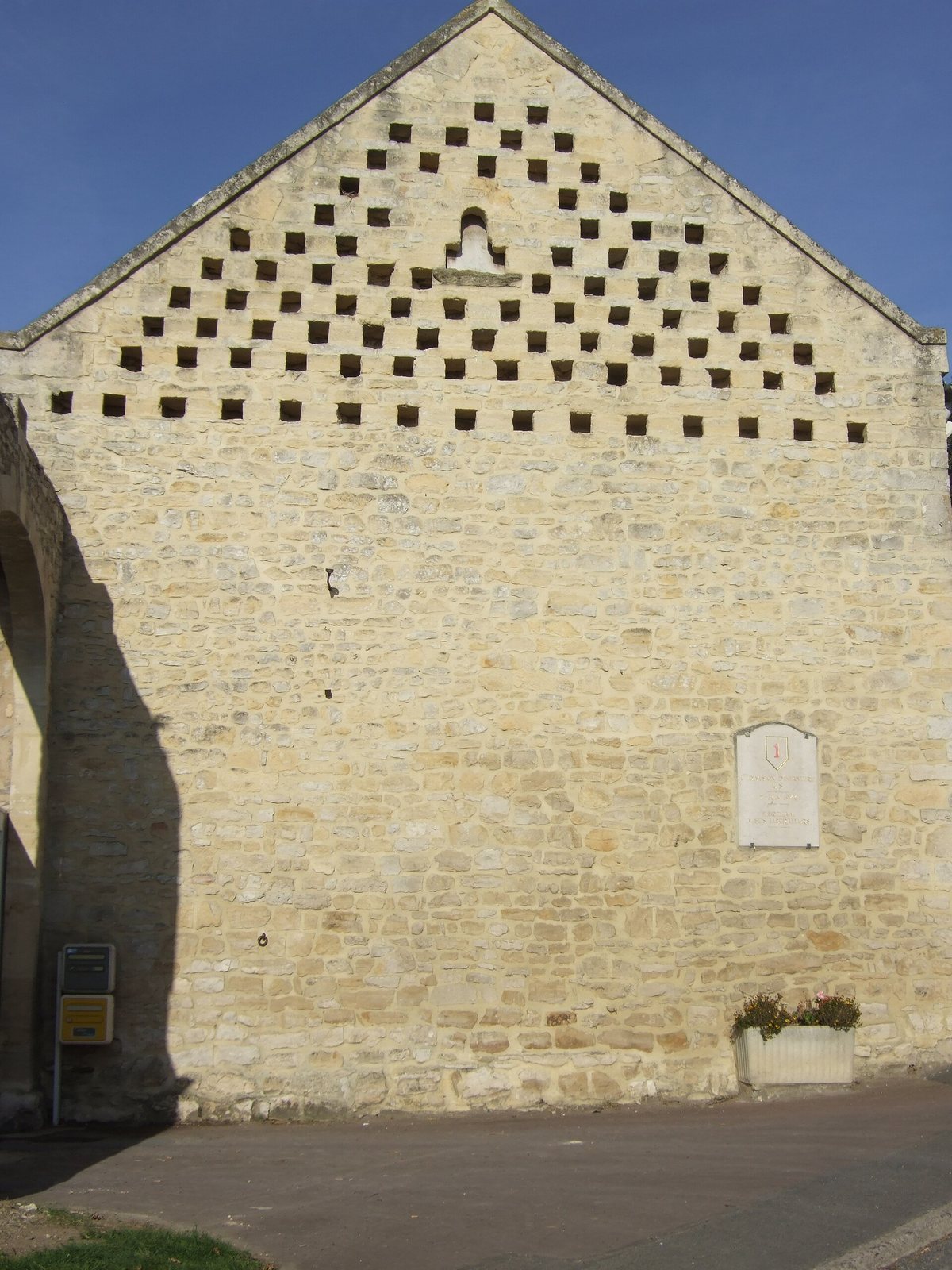
The manor house and agricultural buildings are arranged around a courtyard enclosed by a limestone wall. The farm buildings are made of Caen limestone and have slate roofs; their exterior faces are windowless.
Courtyard and farm buildings
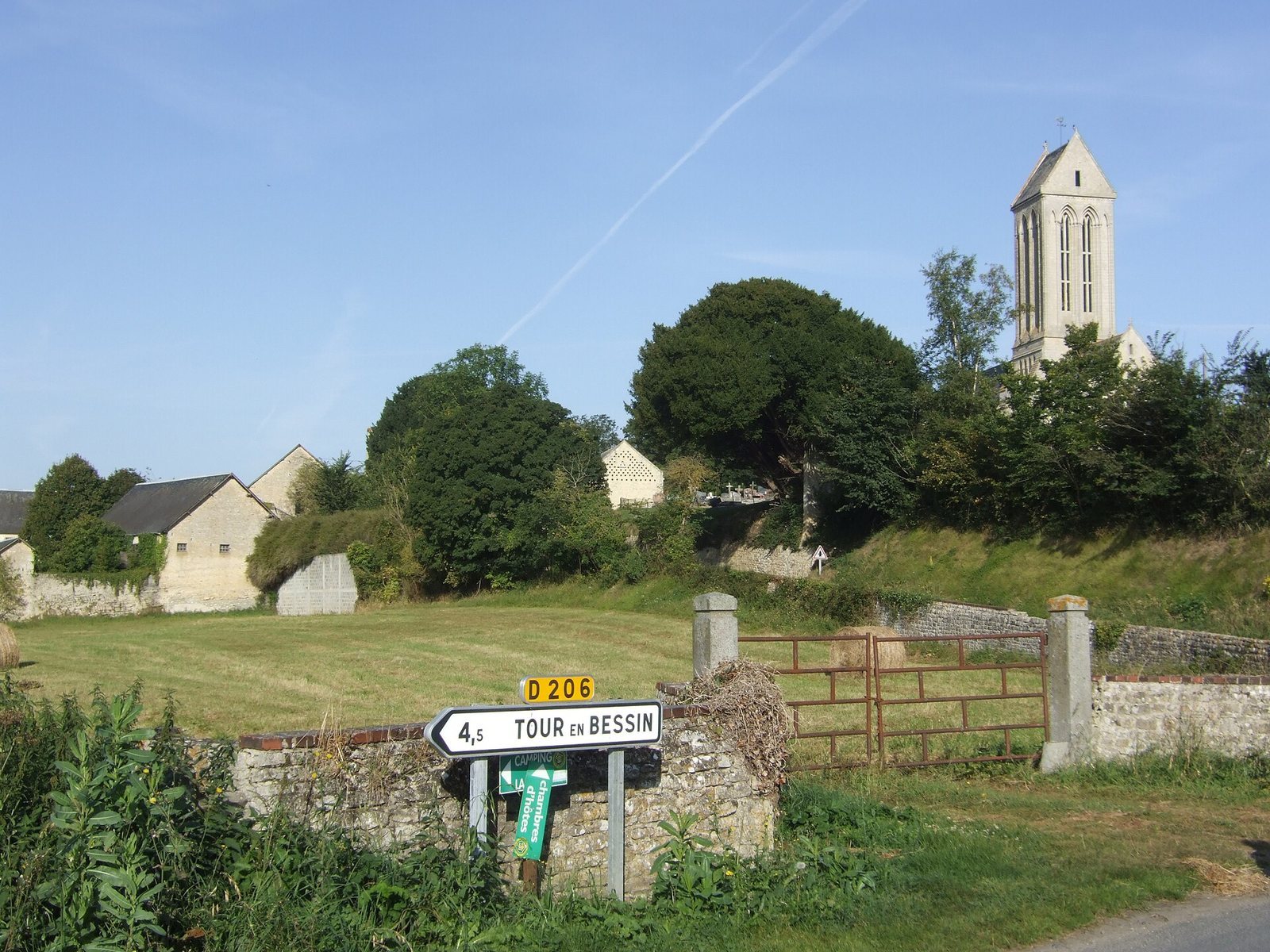
The courtyard brings the manor house and agricultural buildings together within the surrounding wall. The farm-manor lies below Saint-Romain Church and Étréham town hall.
Entrance and chapel
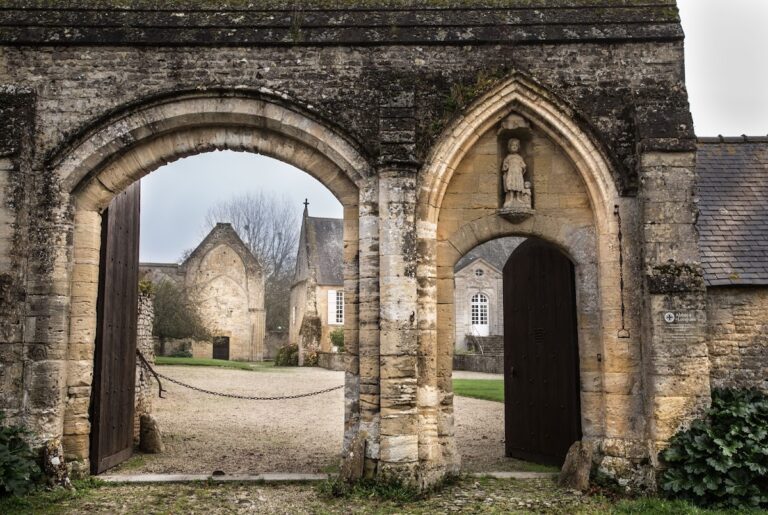
Double portal
The entrance to the former fortified manor dates to the fourteenth or fifteenth century. Its paired openings comprise a pedestrian doorway, now walled up, and a carriage entrance beneath a semicircular arch. Small projections shaped like columns flank the carriage opening. The nineteenth-century antiquary and architectural historian Arcisse de Caumont considered the gateway the only part of the manor dating from before the sixteenth century. He described its limestone portal as well preserved and characteristic of manor-farm entrances.
Manor chapel
An old chapel associated with the manor also survives.