Ellewoutsdijk Fort: A Dutch Westerschelde Coastal Fortification


Site at a Glance
- Rating
- 4.1
- Popularity
- Low
- Country
- Netherlands
- Primary era
- Modern
- External website
- Open
- Eras represented
- Modern
- Civilizations
- Dutch, German
- Site type
- Military
- Remains
- Fort
On this page9 sections
History
Ellewoutsdijk Fort is a nineteenth-century Dutch coastal fortification in the Netherlands, built between 1835 and 1837 and completed as a defensive work by 1839. It formed part of a military program begun after Belgium’s secession in 1830, when the Netherlands strengthened positions along the Westerschelde, a tidal estuary giving access to Antwerp.
Construction and strategic role
Construction began at the southern edge of the Ellewoutsdijk polder, low-lying land protected from flooding by dikes, on the estuary’s northern bank. Designed by Captain F. van Heurn, the fort was intended to control shipping bound for Antwerp. Together with the fortifications around Terneuzen, it formed a second defensive position on the Westerschelde, while the first position lay farther upstream at Bath.
The fort also contributed to the protection of Vlissingen, a naval base and commercial city, and supported the stationing of troops in the border region. The sea dike in front of the fort was deliberately kept low so that it would not obstruct the guns’ field of fire. A setback dike, meaning a secondary dike farther inland, was therefore built as an additional safeguard. The fort could house up to 500 soldiers, and its construction cost 498,480 guilders.
Reduced military importance
The Treaty of London of 1839 helped establish Belgium’s international independence and neutrality. In the Dutch-Belgian border context, that settlement and the Netherlands’ policy of neutrality reduced the perceived military necessity of some Westerschelde fortifications. Ellewoutsdijk Fort remained a defensive work, but its strategic importance declined, and its last guns were removed in 1918.
Wartime reuse and conservation
During the Second World War, the German army reused the fort as a prison and constructed a machine-gun bunker on its western side. After the war, members of the Dutch National Socialist Movement, a fascist organization that collaborated with Nazi Germany, were imprisoned there. A postwar prisoner camp at the fort also held the resistance leader Piet Wapperom.
After the war, Dutch defence authorities used the fort for storage. In 1981, Vereniging Natuurmonumenten, a Dutch organization that manages sites valued for nature and heritage conservation, took the fort into management and acquired it because of its ecological value. Restoration supported by the Dutch Cultural Heritage Agency, the province of Zeeland, private donations, and Natuurmonumenten was completed in mid-2011. Ellewoutsdijk Fort is a Rijksmonument, a nationally protected Dutch heritage monument, registered as monument number 9940. It is owned by Vereniging Natuurmonumenten and has recreational and nature-related functions.
Remains
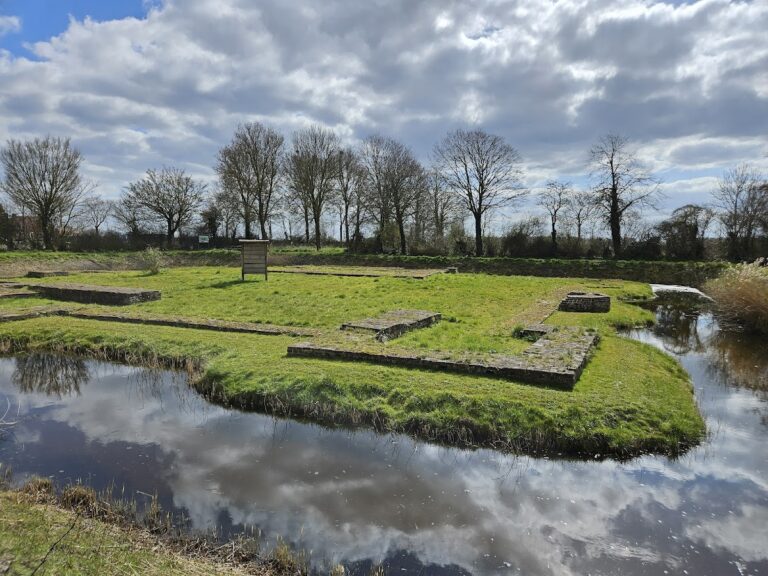
Ellewoutsdijk Fort is a brick hexagonal fortification enclosed by a moat. It measures approximately 80 metres across and 110 metres in length, while its outer walls rise about 10 metres. The surviving structure remains wholly intact in its overall form, with walls in reasonably well-maintained condition. Moisture has, however, caused extensive damage to the vaulted interiors.
Defensive structure
Sea-facing rooms
The side facing the Westerschelde contains 19 rectangular bombproof rooms. Each room has a barrel vault made from heavy masonry, and the group was protected by a covering of approximately two metres of earth. Above the vaults, an earthen parapet originally carried the fort’s guns. Before rifled artillery and high-explosive shells changed the effectiveness of older fortifications, this construction was regarded as bombproof.
Landward earthworks
The northern, landward half of the fort consists of earthworks. These form the earth-built portion of the hexagonal defensive layout and continue the protection provided by the masonry on the sea-facing side. The complete moat surrounds both parts of the fortification.
Second World War addition
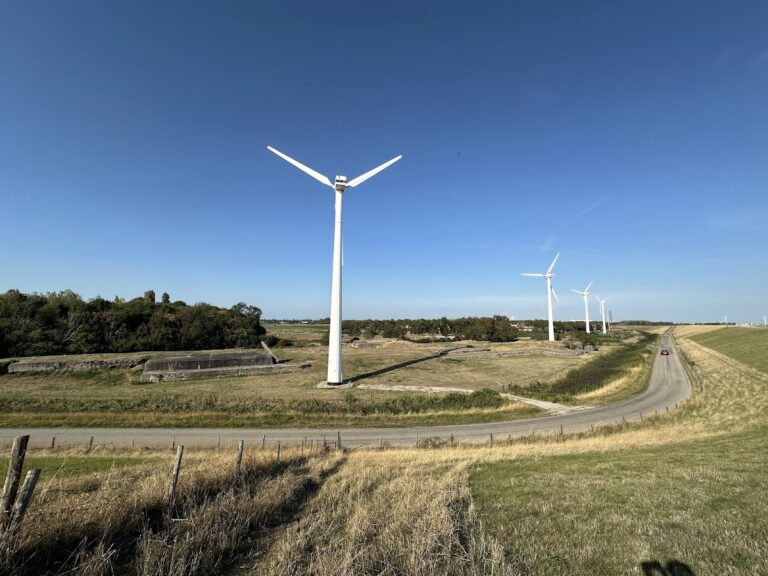
A machine-gun bunker built by the German army during the Second World War stands on the western side of the fortification. It remains as a later military addition to the nineteenth-century brick and earthwork structure, linking the fort’s original defensive design with its reuse during the Second World War.