Forte do Bom Sucesso: A Historic Fortification in Lisbon


Site at a Glance
- Rating
- 4.4
- Popularity
- Low
- Country
- Portugal
- Primary era
- Early Modern
- External website
- Open
- Eras represented
- Early Modern, Modern
- Civilizations
- Portuguese
- Site type
- Military
- Remains
- Fort
On this page11 sections
History
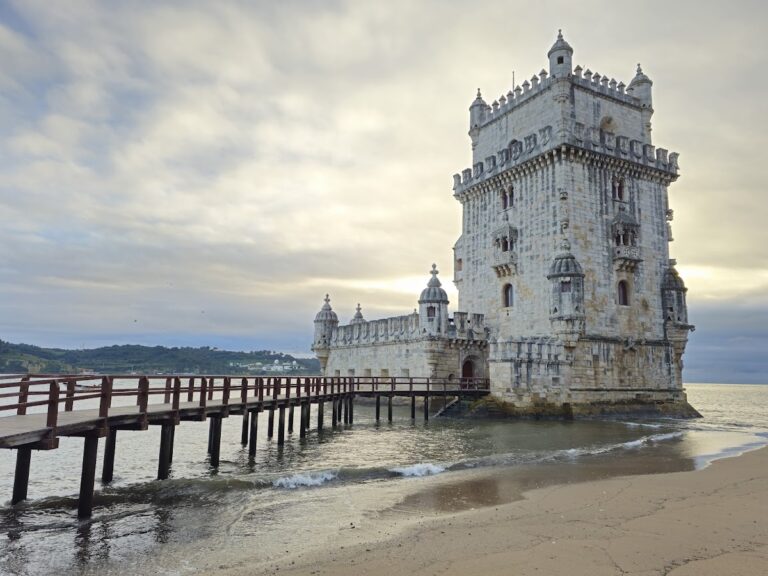
Forte do Bom Sucesso is a Portuguese coastal fortification in Lisbon, Portugal, built in the late eighteenth century during the reign of Maria I to strengthen the defensive line of Belém. Standing beside the Belém Tower on the right bank of the Tagus, it was constructed under the direction of General Guilherme de Vallerée. Work began in 1780, and an inscription above an entrance records its completion in 1802.
Construction and the Peninsular War
The fort was intended to supplement the defenses around Belém. During the Peninsular War, the Iberian phase of the wider Napoleonic Wars, a battery known as the Left Flank Battery was established in 1808 during Marshal Junot’s French occupation of Lisbon. It linked Forte do Bom Sucesso with the Belém Tower. After the French defeat, a right flank was added in 1815.
A governor’s residence was also incorporated within the fort’s perimeter, probably during the Peninsular War, with the work paid for by the Portuguese Crown. By 1836, the fort had fallen into ruins and was effectively abandoned.
Modernization and Coastal Defense
Extensive modernization between 1870 and 1874 returned the fort to active military use. It then became part of the Campo Entrincheirado, a system of fortified positions forming a defensive perimeter around Lisbon within the city’s contemporary boundaries.
The fort’s artillery was upgraded over time. It initially received two Krupp 28 cm L/12 howitzers, guns designed to fire shells on relatively high trajectories. Schneider 120 mm guns later reinforced the defenses, and during the first decade of the twentieth century the Krupp pieces were replaced by three additional Schneider guns. The fort’s armament eventually consisted of five Schneider 120 mm guns.
The fort was involved in the failed Portuguese coup attempt of 18 April 1925. It was attacked after the Portuguese military officer Jaime Baptista escaped from São Julião da Barra Fortress, which guards the entrance to the Tagus near Lisbon. A state of siege was declared during the revolt.
Military and Revolutionary Uses
In the 1950s, the 4th Battery of the Portuguese Army’s Coastal Artillery Regiment was stationed at the fort. General Humberto Delgado commanded the regiment in 1951, and the composer Raúl Ferrão later served as commander of the fort.
During the Portuguese Colonial War, fought from 1961 to 1975, Forte do Bom Sucesso served as the headquarters of the Military Postal Service. It was also one of eight batteries included in the Barron Plan, a defense plan for Lisbon and Setúbal based on a network of batteries. Under that plan, the fort had two 5.6 cm guns.
Following the Carnation Revolution of 25 April 1974, which overthrew Portugal’s authoritarian Estado Novo regime, the fort housed the Command of the Military Intervention Group. The Revolutionary Council, the military governing body created during the revolutionary transition, established the group to maintain law and order. The complex later became the headquarters of the Association of 25 April, an organization formed by military personnel who had initiated the revolution.
From Fortification to Museum
From 1994, the former fort’s facilities were incorporated into the Monument to Overseas Combatants. On 13 January 1999, the fort was formally transferred to the Portuguese League of Combatants, an organization representing Portuguese veterans and combatants. The league administers the Combatant’s Museum, which occupies the complex.
The museum’s permanent exhibition covers World War I, Portugal’s overseas and colonial campaigns, peace missions, and the experience of Portuguese combatants. The site also includes outdoor displays of military equipment, together with social areas, conference and projection rooms, and a bar.
Remains
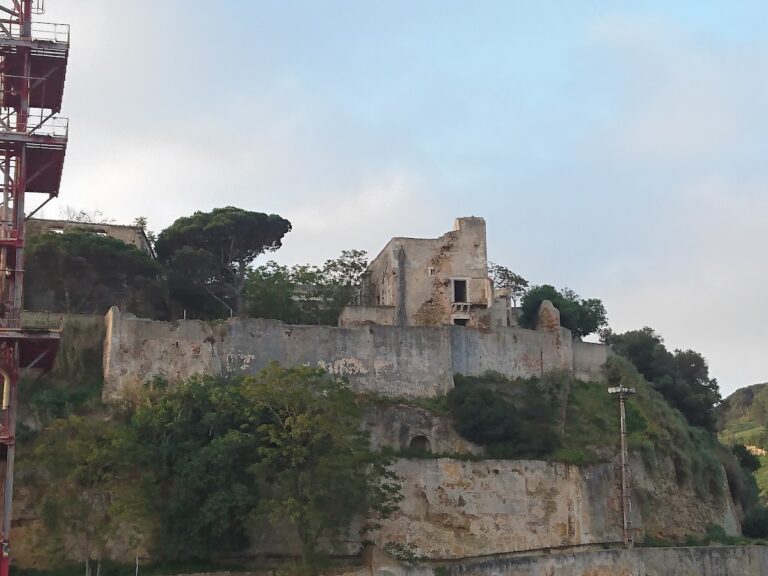
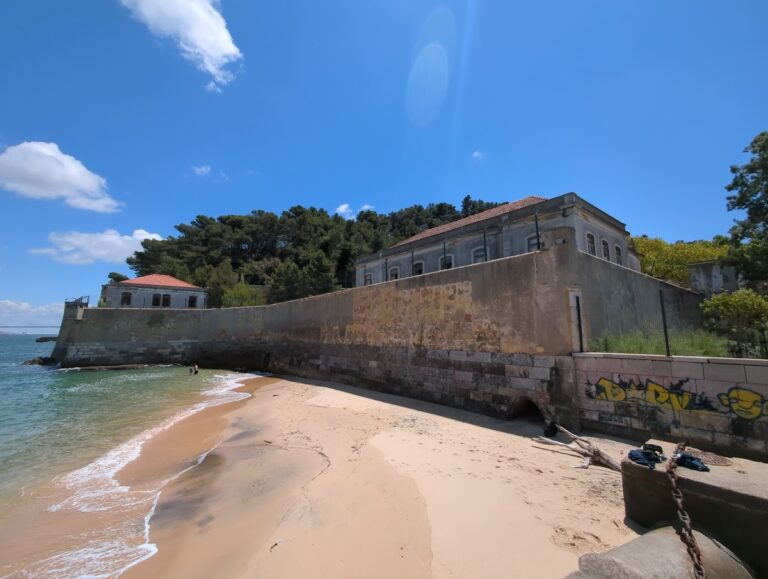
Forte do Bom Sucesso has a polygonal plan and occupies a defensive position along the Tagus, between Bom Sucesso and Pedrouços beaches. Its battery was linked to the western wall of the Belém Tower’s bastion by a walled passage. The fort is well preserved, and its surviving spaces now form part of a museum complex that also contains the Monument to Overseas Combatants.
Fortification and Battery
Polygonal Fort and Artillery
The fort’s polygonal layout reflects its coastal defensive purpose. Its artillery installations included two Krupp 28 cm L/12 howitzers, later Schneider 120 mm guns, and two 5.6 cm guns associated with the Barron Plan. These weapons represent successive phases in the fort’s military use, from its original nineteenth-century armament through the later modernization of its defenses.
Walled Passage
A walled passage connected the battery to the western wall of the Belém Tower’s bastion. This link formed part of the defensive arrangement along the riverfront. The entrance carries the inscription associated with the fort’s completion in 1802.
Governor’s Residence
The governor’s residence has a rectangular plan and stands within the fort’s perimeter. Its principal facade is arranged in three sections by two attached pilasters. The two-level building has dormer windows, while a large central arch on the lower floor once opened into a tunnel leading toward Bom Sucesso beach. That passage is now blocked. Two windows occupy the left side of the lower facade, and two doors are placed on the right.
The upper floor contains six balcony windows, arranged as two in each facade section, and each has an iron balcony. Six smaller openings appear at dormer level. The rear facade closely follows the arrangement of the principal facade.
Museum Grounds
The museum complex includes three outdoor display areas containing military equipment associated with different branches of the Armed Forces. These displays are located alongside the former fort’s preserved structures and the Monument to Overseas Combatants, linking the site’s coastal-artillery history with its later commemorative and museum functions.
Nearby sites