Elisabeta Palace: A Royal Residence in Bucharest


Site at a Glance
- Rating
- 4.8
- Popularity
- Low
- Country
- Romania
- Primary era
- Modern
- External website
- Open
- Eras represented
- Modern
- Civilizations
- Kingdom of Romania
- Site type
- Domestic
- Remains
- Palace
On this page7 sections
History
Construction for Princess Elisabeth
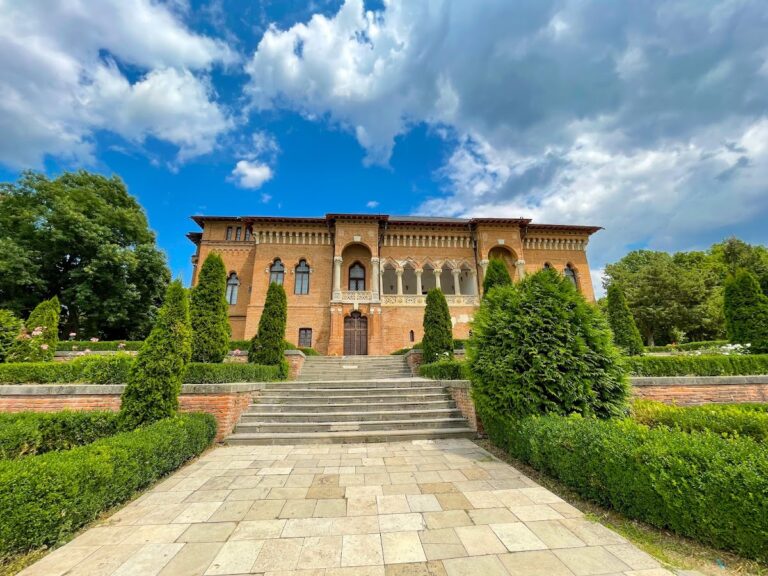
Elisabeta Palace is a royal residence in Bucharest, Romania, built for Princess Elisabeth of Romania in the 1930s in a style combining Moorish architecture with Brancovan elements. The design dates to 1935, construction began in 1936, and the palace was inaugurated on 19 December 1937.
Princess Elisabeth was the former queen consort of Greece, the daughter of King Ferdinand I of Romania and Queen Marie, the sister of King Carol II, and the aunt of King Michael I. After divorcing King George II of Greece in July 1935, she returned to Romania from London. While the palace was being completed, she lived temporarily at Peleș Castle and Banloc Castle. She occupied Elisabeta Palace only briefly before returning to Banloc Castle.
Wartime residence and political crisis
Elisabeta Palace acquired a wider royal role during the political upheavals of the 1940s. After the bombing of Bucharest’s Royal Palace following the events of 23 August 1944, King Michael I asked Princess Elisabeth to allow him to move his court temporarily to Elisabeta Palace. His mother moved there with him, while Princess Elisabeth had already moved to Copăceni Castle.
On 6 March 1945, Michael met at the palace with Andrei Vyshinsky, the Soviet representative in Romania, during a conflict over the formation of the Romanian government. The king refused to sign laws and decrees or appoint Petru Groza as prime minister. The confrontation included shouting and Vyshinsky striking a table. When he closed the door with force, plaster fell from the ceiling. Groza was subsequently appointed prime minister, while Michael continued to refuse cooperation with government and parliamentary decrees in what became known as the “royal strike.”
King Michael I abdicated on 30 December 1947. He later said that he had been forced to abdicate at gunpoint while the palace was surrounded by troops of the Tudor Vladimirescu Division, a Romanian military formation organized under Soviet influence and aligned with the Communist authorities after the Second World War.
Nationalization and royal restoration
Elisabeta Palace remained Princess Elisabeth’s property until its nationalization in 1948. During the Socialist Republic of Romania, it fell into disuse. In 1997, ownership returned to the Romanian Royal Family. In 2001, the Romanian Senate approved legislation granting the former King Michael I use of the palace as a residence for life.
Since the return of the former Royal Family to Romania, the palace has served as its official residence in Bucharest. It is the working residence of Margareta, Custodian of the Romanian Crown, the title used for the head of the Romanian Royal Family in the absence of a reigning monarch, and Prince Radu. Princess Sophie and Princess Marie also use it when they are in Bucharest. The state protects the palace, which is recognized as a monument of Romanian history.
Elisabeta Palace also functions as a setting for official meetings, receptions, investitures, and dinners involving foreign heads of state, royalty, politicians, and Romanian cultural, economic, academic, and political figures. It is the headquarters of the Household Association of Her Majesty, a government-recognized organization of public utility that supports the activities of the Royal Family.
Remains
Setting and architectural character
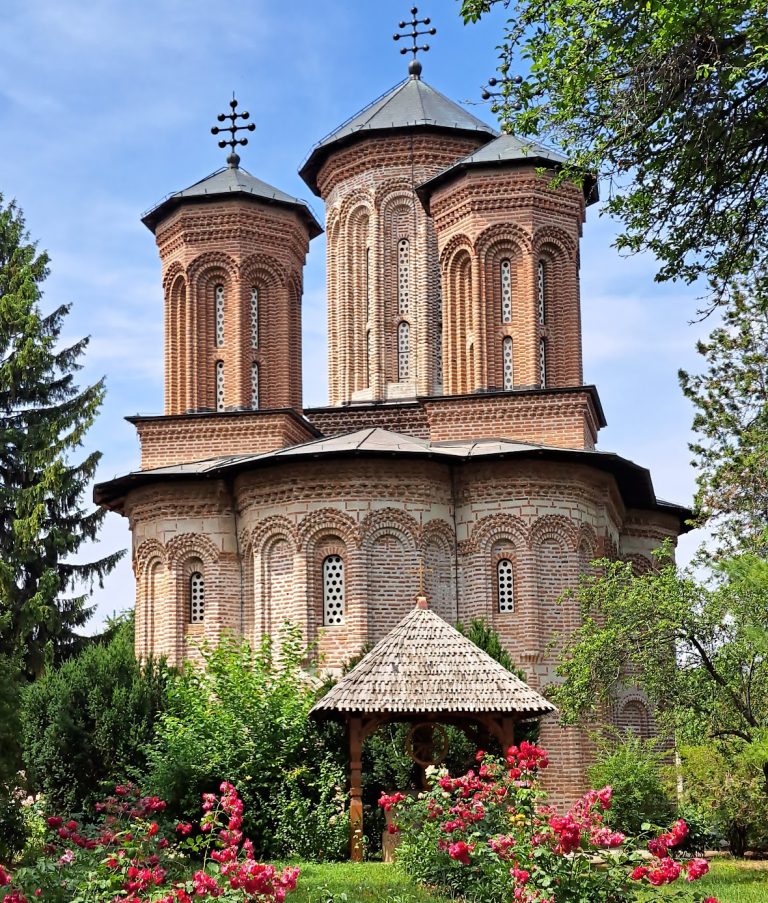
Elisabeta Palace stands on Kiseleff Road in King Michael I Park, near the Dimitrie Gusti National Village Museum and the Summer Theatre. Its architectural character combines Moorish forms with Brancovan architecture, a Romanian tradition associated with Prince Constantin Brancoveanu that brings together local, Byzantine, Ottoman, and Western Renaissance influences. The architects are identified as Constantin Ionescu and Corneliu M. Marcu.
Royal features and interior spaces
A flagpole rises from the palace roof and forms part of its royal protocol. The king’s personal flag is raised when the king, or in some circumstances the highest-ranking member of the Royal Family present, is in the palace. When no member of the Royal Family is present, the Romanian national flag bearing the large coat of arms of the Kingdom of Romania is flown instead. The royal flag can be viewed from the bridge on Rose Alley near the Triumphal Arch in King Michael I Park.
The main gate bears a trilingual plaque presenting a brief history of the building. The palace also includes a dining room and a garden, completing the surviving residential setting of the royal complex.