Cernica Monastery: A Romanian Orthodox Monastic Complex in Romania
Site at a Glance
- Rating
- 4.8
- Popularity
- Medium
- Country
- Romania
- Primary era
- Early Modern
- External website
- Open
- Eras represented
- Early Modern, Modern
- Civilizations
- Kingdom of Romania, Principality of Wallachia
- Site type
- Religious
- Remains
- Monastery
On this page9 sections
History
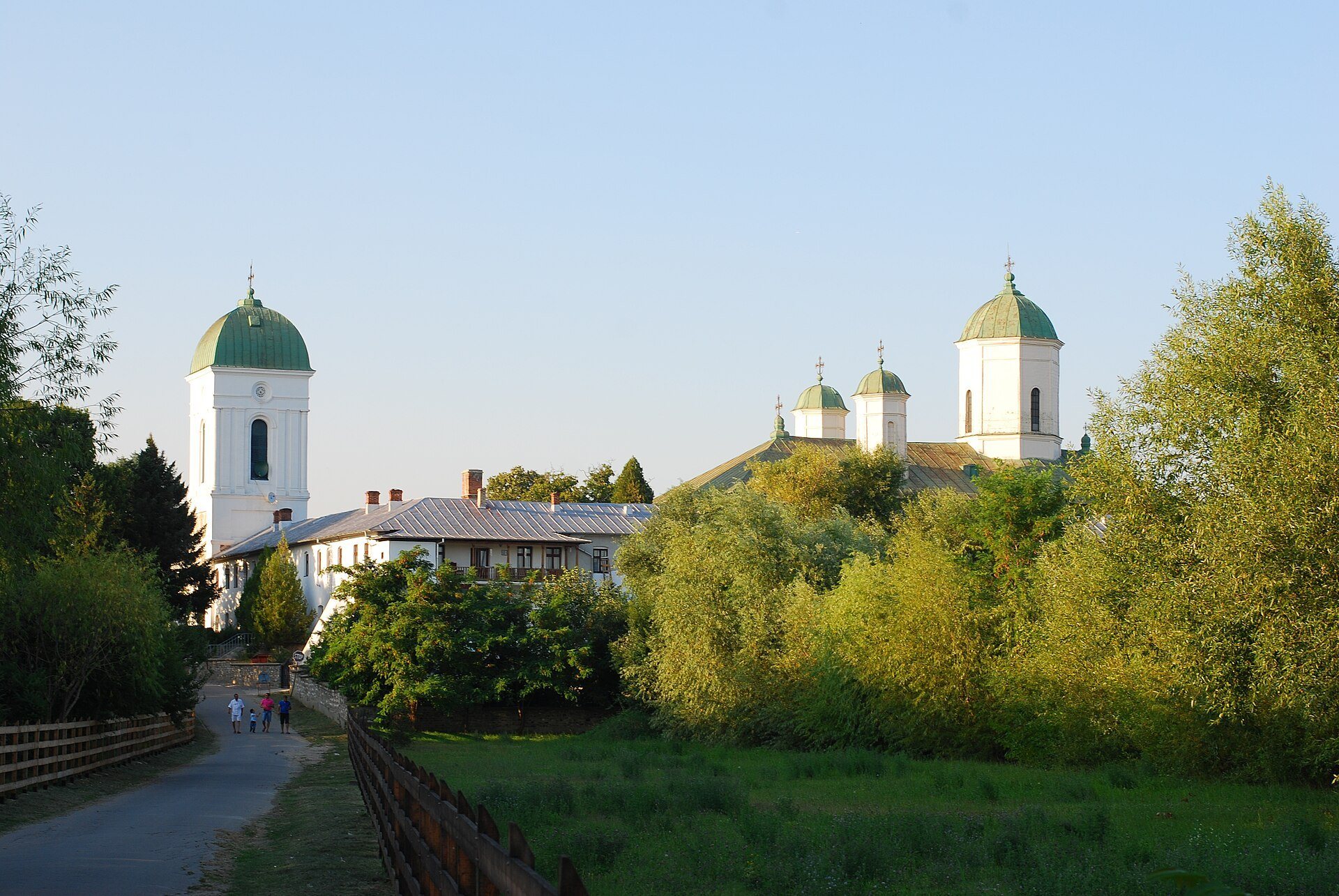
Cernica Monastery is a Romanian Orthodox male monastery in Romania, located at Pantelimon on the shore of Lake Cernica. Established by 1608 during the reign of Radu Șerban, it became an important center of monastic education and now includes a theological seminary. The monastery ensemble is included on Romania’s list of historic monuments under classification code LMI IF-II-a-B-15300.
Foundation and monastic development
A charter dated 29 May/8 June 1608 records the monastery’s establishment. Its founders were Cernica Știrbei, a great vornic, or high-ranking official in the administration of Wallachia, under Michael the Brave, and his wife, Chiajna. The foundation developed into a male monastic community with an enduring educational role.
The monastery also became associated with important figures in Romanian religious and cultural life. Tudor Arghezi lived there as a monk from 1900 to 1904. In the same year, the painter Sava Henția produced mural paintings and portraits of the founders, linking the monastery’s religious setting with Romanian artistic activity.
Damage, rebuilding, and continued use
The main church suffered damage in the earthquake of 1802 and was repaired between 1809 and 1815 under Archimandrite Timotei, a senior monastic cleric responsible for the leadership or administration of a monastery. An earthquake in 1838 brought down one of its turrets. A fire then damaged the church in 1923, followed by a major restoration in 1925.
The Church of Saint George, built in the eighteenth century by Dan Brașoveanu, was completely rebuilt between 1962 and 1964. It was later consolidated after damage caused by the earthquake of 4 March 1977. These successive repairs and reconstructions form part of the monastery’s continuing history as a religious complex.
Remains
Churches
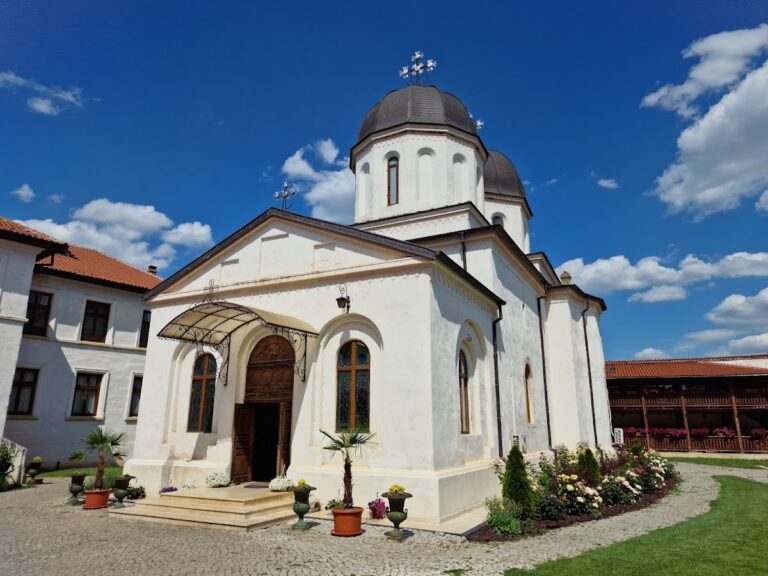
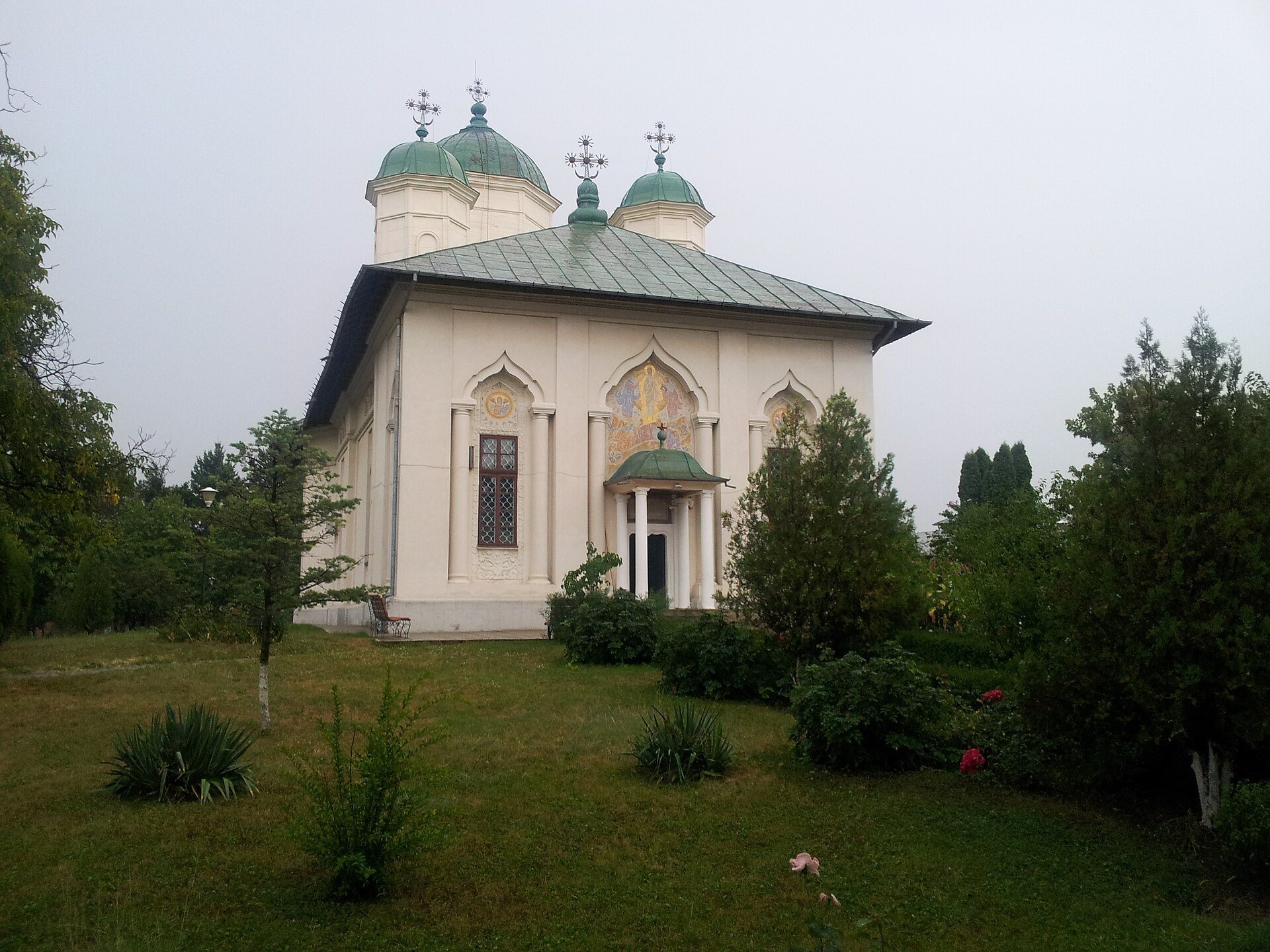
The complex contains three churches arranged within a monastic ensemble whose architecture is described as Neoclassical, with Romanian decorative elements. The churches have monumental three-lobed plans, side apses, and prominent domes. The Churches of Saint Nicholas and Saint George use strong masonry columns to support the vaults over their central worship spaces and entrance halls.
Church of Saint Nicholas
The main church is dedicated to Saint Nicholas. Its form includes a three-lobed plan, side apses, a prominent dome, and substantial masonry columns supporting the vaults of the nave and narthex, the entrance or vestibular space adjoining the nave. The building bears the physical evidence of repeated repair after earthquake and fire damage.
Church of Saint George
The Church of Saint George is a separate monastic church. It has the complex’s characteristic monumental form, including a three-lobed plan, side apses, a dome, and masonry supports for its vaulted nave and narthex. The present building derives from the complete rebuilding carried out between 1962 and 1964.
Church of Saint Lazarus
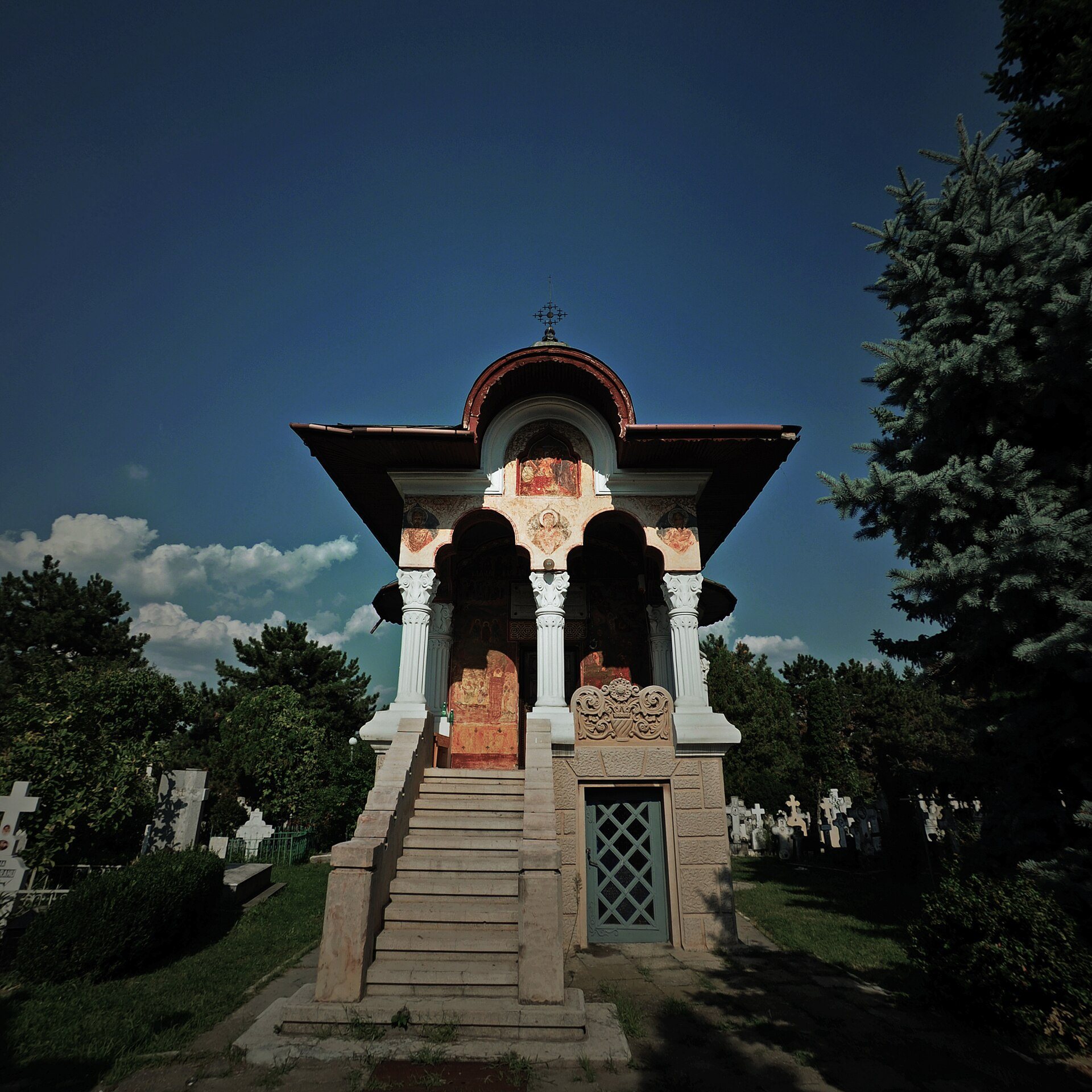
The small Church of Saint Lazarus stands in the monastery cemetery. Archimandrite George built it in 1804, and its exterior is distinguished by rich decorative treatment.
Chapels and cemetery
Three chapels complete the religious buildings of the complex. They are dedicated to the Dormition of the Mother of God, Saint John, and the Entrance into the Church. The Chapel of the Dormition was built in 1790, while the Chapel of Saint John dates from 1842.
The monastery cemetery contains the graves of numerous Romanian religious, cultural, and public figures. Those buried there include painter Ion Țuculescu, Metropolitan Nifon, theologian Dumitru Stăniloae, writer Gala Galaction, orientalist Athanase Negoiță, sociologist Ernest Bernea, pianist Johnny Răducanu, singer Zavaidoc, actress Stela Popescu, director Geo Saizescu, translator Stelian Gruia, academician Emilian Popescu, broadcaster Marioara Murărescu, politician Pantelimon Halippa, and Archimandrite Irineu Dogaru.