Church of Our Lady of the Assumption of Bellevaux: A Catholic Church in France
Site at a Glance
- Popularity
- Very Low
- Country
- France
- Primary era
- Modern
- Eras represented
- Medieval, Modern
- Civilizations
- Holy Roman Empire, Kingdom of Sardinia
- Site type
- Religious
- Remains
- Church
On this page15 sections
History
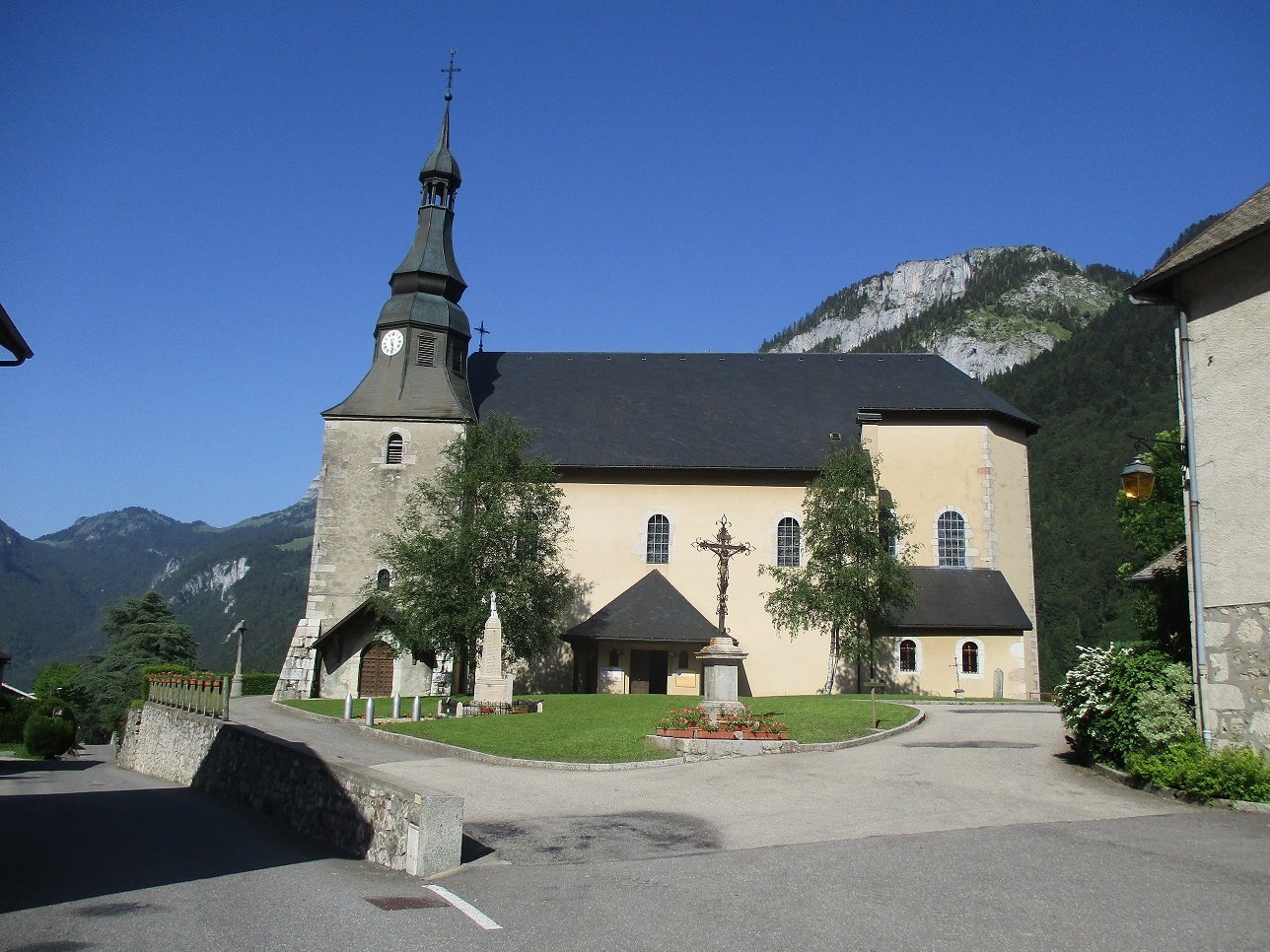
The Church of Our Lady of the Assumption of Bellevaux is a Catholic church in France, dedicated to the Assumption of Mary, the belief that she was taken body and soul into heaven. Benedictine monks, members of a monastic order whose communal life follows the Rule of Saint Benedict, built a small wooden church here in 1136. They came from Saint-Jean de Genève, then dependent on the Abbey of Ainay in Lyon. The church belongs to the Diocese of Annecy and the Parish of Notre-Dame-des-Hermones. Its present building was reconstructed in 1828–29 in a Sardinian neoclassical style with Baroque elements.
The priory and the Reformation
In 1536, the priory and church were deserted as the Protestant Reformation, a sixteenth-century movement that led to the establishment of Protestant churches, spread through northern Savoy. Protestant troops withdrew in 1567, and the Benedictines regained the priory, which was then in poor condition.
Rebuilding and revolutionary closure
The church collapsed in 1737, taking down its tower, which dated to the fourteenth century. Rebuilding began on the same site, and the replacement church was completed in the summer of 1740.
After Revolutionary France annexed the Duchy of Savoy in 1792, the church was closed for a time. Abbot Rey, Bellevaux’s parish priest, resumed Mass in 1795. An order from Thonon to demolish the building followed, but it was closed rather than destroyed.
Nineteenth-century enlargement and repair
The bell tower was rebuilt in 1808, and its spire was renewed in 1894. The old presbytery was demolished and replaced by a new one elsewhere, completed in 1826.
By 1826, population growth had left the church too small. The rebuilding project was assigned to an architect who also served as an adjutant in the military engineering corps, working with two collaborators. Bellevaux residents took turns in the construction work; women and children under sixteen were exempt. A building accident killed five people, including the municipal syndic, a local civic official. In 1828–29, the earlier church was demolished apart from its bell tower, and a larger church was built using elements from its predecessor.
Modern restoration and protected objects
Heating was installed in 1967. In 1969, painters from La Giettaz restored the interior during reforms to church worship, retaining its warm Sardinian neoclassical tones. Work on the roofs, tower, and façades followed in spring 1977. The floor was completely renewed in October 1999, and further restoration took place in 2001.
Three objects associated with the church received historic-monument protection: a sculpture in 1942, a bell in 1943, and choir stalls in 1984.
Remains
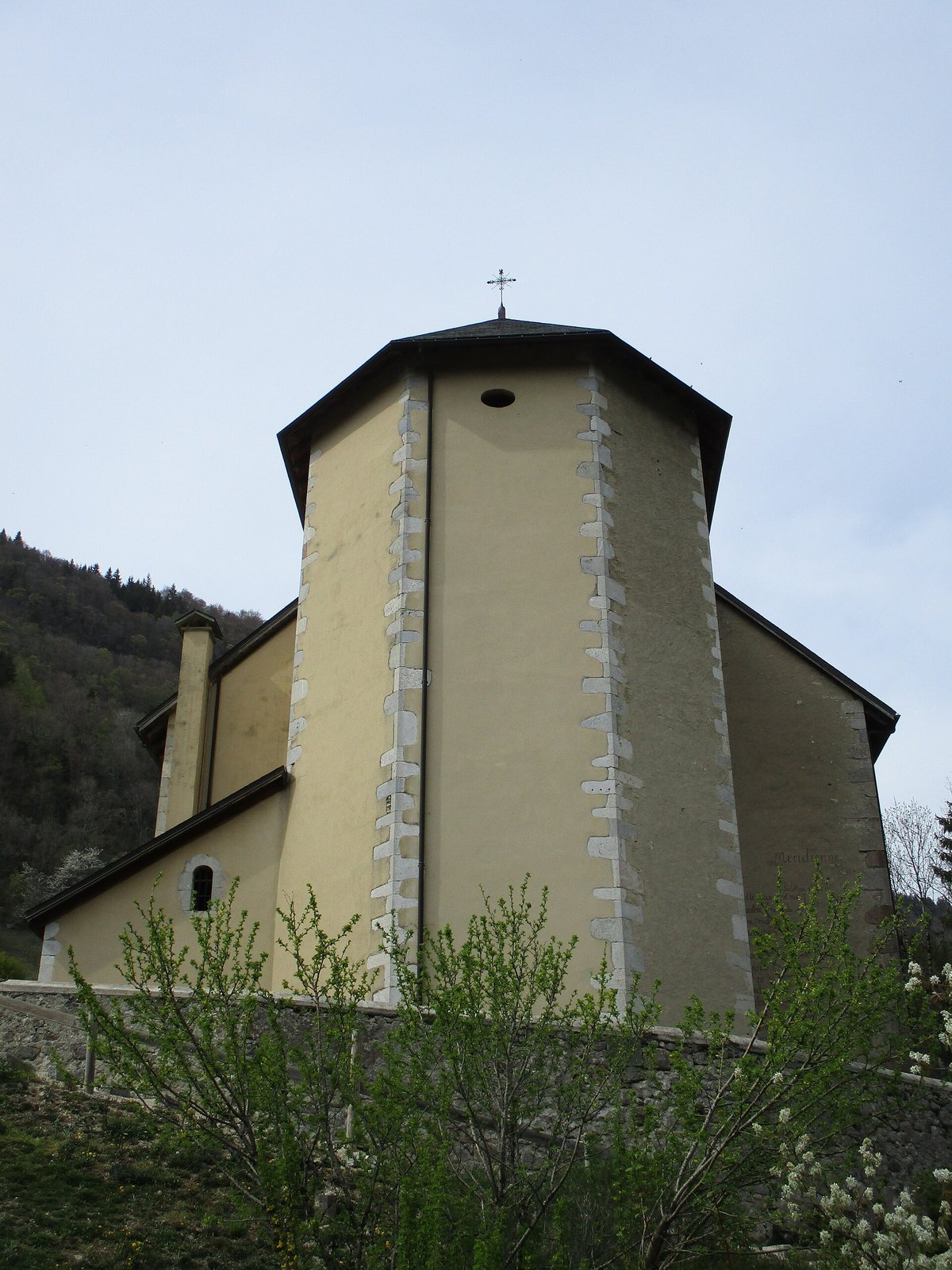
The church has a three-aisled interior in a Sardinian neoclassical style with Baroque influence. Square pillars divide the aisles and support cornices and transverse arches beneath the vault. The bell tower is the oldest part of the building, while its exterior includes west and east façades and a stepped entrance on the west side.
Interior
Painted decoration
Artists from Valsesia, in the Province of Vercelli, painted the interior. Their trompe-l’oeil work, a technique that creates an illusion of three-dimensional form, depicts Faith, Charity, and Hope, and also decorates the areas around the windows.
Baptistery
The baptistery, a place used for Christian baptism, has carved wooden panels in a Gothic style. Laurent Baud of Morzine made them.
Choir stalls
The nineteenth-century choir stalls have Renaissance-style details. One stall is by Laurent Baud.
Other furnishings and artworks
A painting of Saint Francis de Sales, the Catholic bishop and religious writer who served as Bishop of Geneva, dates from before 1660. The church also has a life-size eighteenth-century atlante, a sculpted male figure used as an architectural support, from the Abbey of Aulps, a Cistercian monastery in Savoy. Associated furnishings include an eighteenth-century bell. A mobile organ has been installed since 1992, and a statue of Our Lady of the Rosary of Bellevaux was lent to the church by Joseph Chedal, a merchant from Salzburg.
Tower and exterior
Bell tower
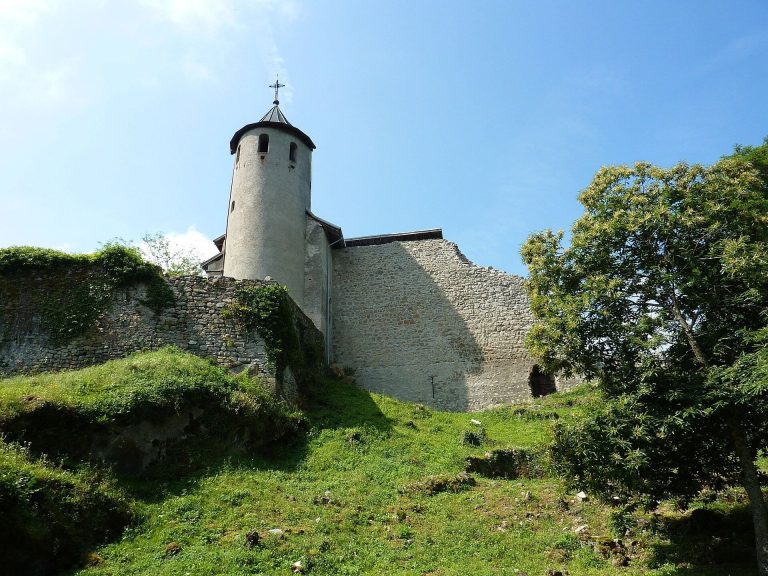
The tower has a bulbous dome topped by a spire. It holds six bells, each weighing more than 270 kilograms, cast by the Paccard foundry in 1956. The largest, Marie-Françoise Alphonsine Jeanne, weighs 1,250 kilograms. The church also contains a bell-ringing wheel, the only one in the Auvergne-Rhône-Alpes region, and an inscription concerning different time zones.
Façades and entrance
The exterior has west and east façades, a western entrance reached by steps, and an emergency exit. A round window in the west façade is probably an attic opening. Ammonite fossils are embedded in the entrance steps.
Crosses and former cemetery
A small cross on a stone base stands between the church and the alpine garden. A separate wrought-iron cross was made by Bellevaux resident Jean Claude Vuagnoux. An old tomb is associated with the former cemetery, which lay in front of the church.