Church of Our Lady of the Assumption of Peillonnex: A Former Augustinian Priory Church
Site at a Glance
- Popularity
- Very Low
- Country
- France
- Primary era
- Medieval
- Eras represented
- Medieval, Modern
- Civilizations
- Holy Roman Empire, Kingdom of Sardinia
- Site type
- Religious
- Remains
- Church
On this page9 sections
History
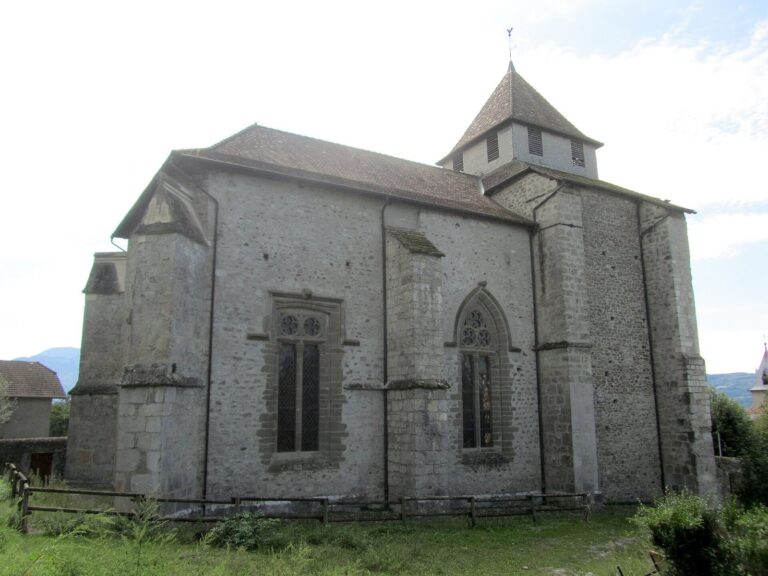
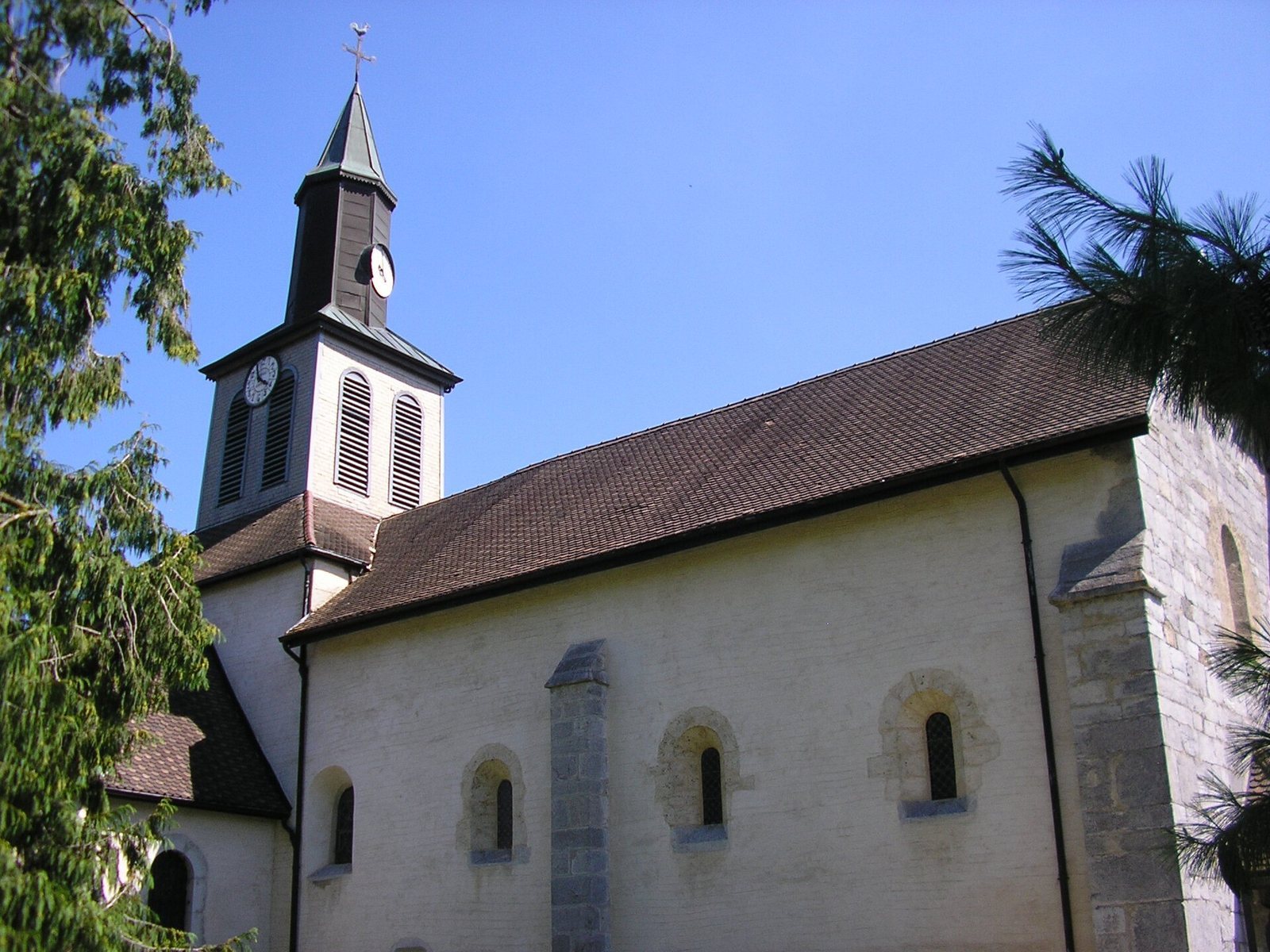
The Church of Our Lady of the Assumption of Peillonnex is a Catholic church in Peillonnex, France, dedicated to the Assumption of Mary, the Christian belief that she was taken into heaven. It formerly served an Augustinian priory, whose religious community followed the Rule of Saint Augustine. The present building dates to the late twelfth or early thirteenth century and is late Romanesque, a medieval architectural style, with a character associated with Cistercian monastic building.
Early church and priory
The church is thought to have existed before 988, though its construction is also attributed to Giraud, bishop of Geneva. In the early eleventh century, Count Robert gave land to a community living near the church. The donation is dated to 1012–1019 and was approved by Giraud’s successor, Hugues, as well as Pope Benedict VIII.
Medieval priory and early modern change
In 1156, Amadeus I, Count of Geneva, transferred the priory to Abondance Abbey, a medieval monastery in Savoy. The priory later sought independence during the fourteenth century but did not secure it. In the fifteenth century, it came under the commendam system, in which a holder administered a religious house’s revenues and might not live there.
After the Bernese occupation, the priory was burned in 1589. Rain-seeking processions took place in 1701, 1861, and 1870. Pilgrims also visited the statue of the Virgin on the Assumption feast, 15 August; requests for rain were especially associated with 1705, 1861, and 1870. The Virgin was apparently invoked during rabies epidemics as well.
In 1781, suppression of the priory was considered, with its property intended for a new college in Carouge. During the occupation of the Duchy of Savoy that began in 1792, the priory was suppressed and its property inventoried in December. The canons were definitively expelled in 1793.
Pilgrimage and later history
On 13 June 1887, Louis-Romain-Ernest Isoard, bishop of Annecy, revived the pilgrimage during a pastoral visit. Some families appear to have continued the practice until the 1980s. The church was listed as a historic monument in 1971.
Remains
The church’s surviving fabric centers on a nave built of porous tufa stone and covered by a pointed barrel vault, a tunnel-shaped ceiling with a pointed cross-section. The building is described as late Romanesque, with a Cistercian architectural character.
Architecture and furnishings
Nave and bell tower
The tufa nave and its pointed vault form the church’s principal architectural features. A new bell tower was installed in 1858. The church has undergone several restorations over the centuries.
North chapel and statue
A small silver statue of the Virgin of the Assumption, dating to the seventeenth century, is housed in the north chapel.
Stucco altarpiece
The church contains an altarpiece made of decorative plaster and painted in tempera, a medium using pigment bound with a water-based substance. The altarpiece was restored in 1959.