Dunmoe Castle: A Fifteenth-Century Anglo-Norman Keep in Ireland
Site at a Glance
- Rating
- 4.2
- Popularity
- Very Low
- Country
- Ireland
- Primary era
- Medieval
- External website
- Open
- Eras represented
- Medieval
- Civilizations
- English
- Site type
- Military
- Remains
- Castle
On this page6 sections
History
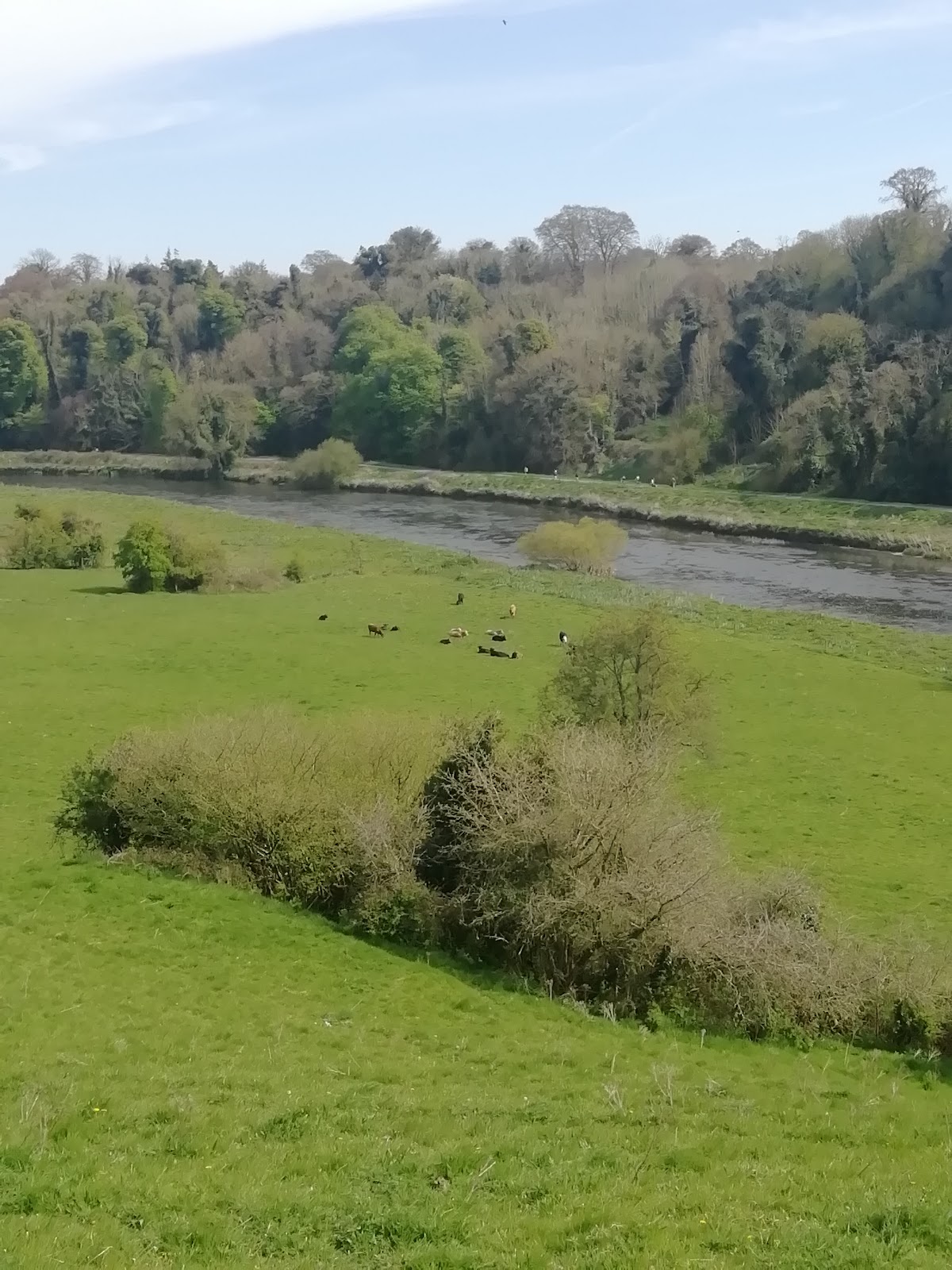
Dunmoe Castle in Ireland was built for the D’Arcy family in the mid-15th century as an Anglo-Norman donjon, or fortified principal keep, and marked the western edge of the Pale, the area under relatively direct English administration during the medieval and early-modern periods. It stands near the Boyne and formed part of the D’Arcy family’s territorial presence in County Meath.
Origins and the D’Arcy estate
The name Dunmoe probably derives from the Irish Dún mBó, meaning “hillfort of cattle.” This may indicate that a Gaelic Irish fort occupied the site before the castle was built. The Civil Survey of 1654–1656 records Thomas Darcy as owner of the entire parish. The estate then included the castle, a church, a mill, an orchard, and a fishing weir, a fixed barrier or trap used to catch fish.
War, royal tradition, and destruction
During the Cromwellian conquest of Ireland in 1649, the English Parliamentarian reconquest during the Wars of the Three Kingdoms, troops travelling from Drogheda to Athboy fired on Dunmoe Castle from the southern bank of the Boyne. The castle avoided serious damage. A later tradition states that George d’Arcy, its occupant, entertained James II on the night before the Battle of the Boyne in 1690 and William III on the following day. The battle was fought between James’s forces and those of William, whose victory secured his position as king in Ireland. The tradition is linked with the couplet, “Who will be king, I do not know, But I’ll be d’Arcy of Dunmoe.”
A drawing from 1795 depicts the castle intact. It was burned during the Irish Rebellion of 1798, a widespread uprising against British rule associated chiefly with the Society of United Irishmen. Two of its towers and the rear part of the castle later crumbled. Dunmoe Castle is now a National Monument of Ireland.
Remains
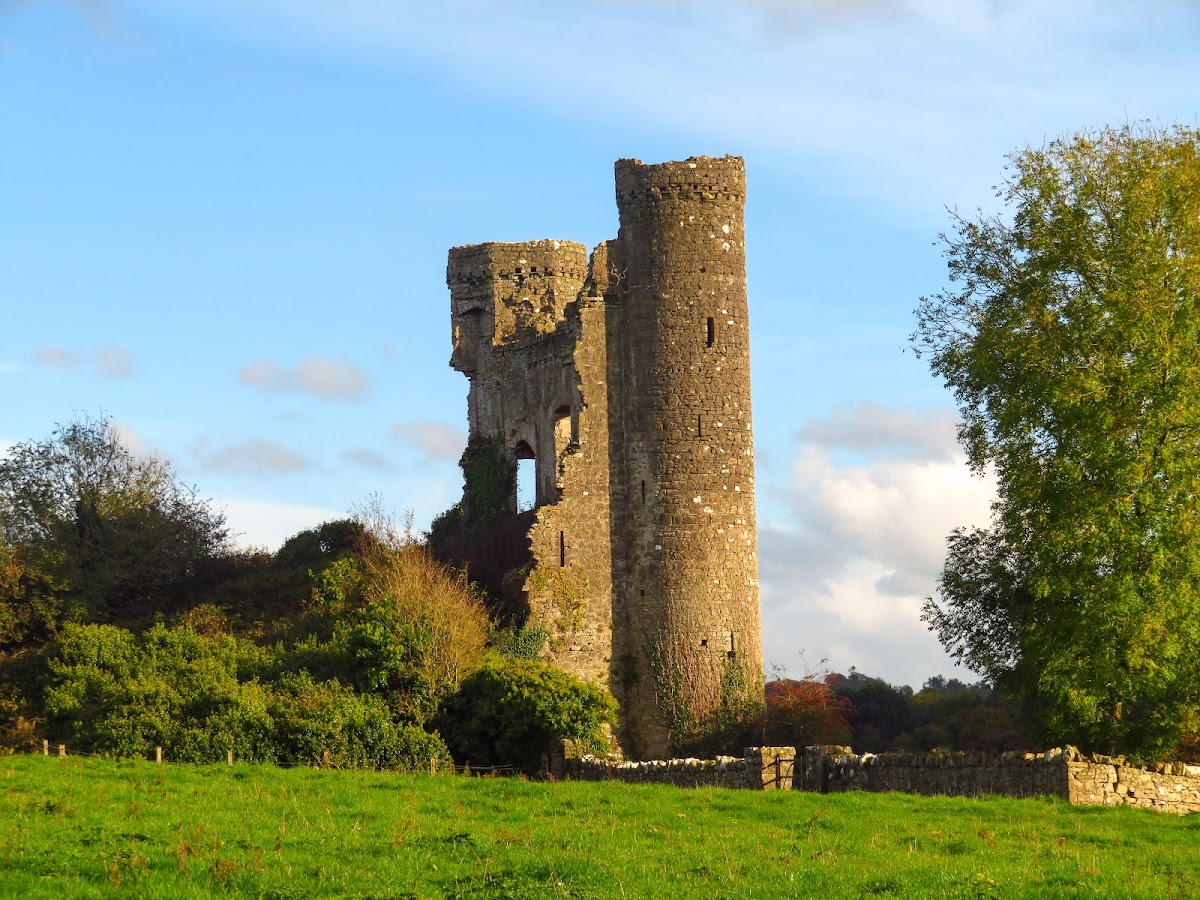
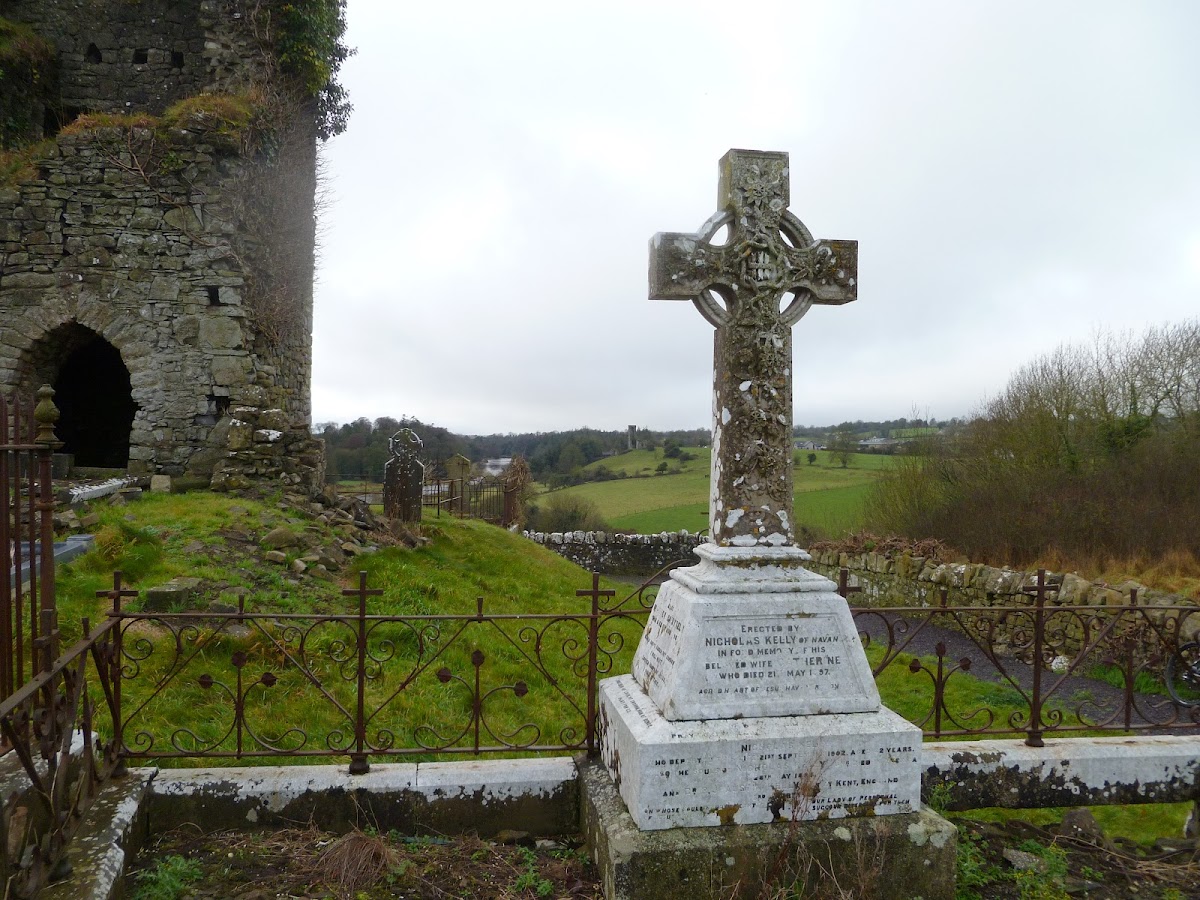
Dunmoe Castle stands on the northwestern bank of the Boyne, about 4 kilometres northeast of Navan in County Meath. The surviving structure represents part of a rectangular Anglo-Norman donjon that originally measured approximately 15 by 10 metres, with a tower at each corner. Its remaining southern towers and sections of wall preserve the defensive layout of the medieval keep.
The keep and southern towers
The ground floor is buried. It was vaulted and included a loft and arrowslits, narrow openings in the southern wall for shooting arrows. The southwest tower contains a newel staircase, built around a solid central core, together with a gun loop for firearms. The castle’s two southern towers and parts of its walls remain, while two original towers and the entire rear section have crumbled.
Later building and family chapel
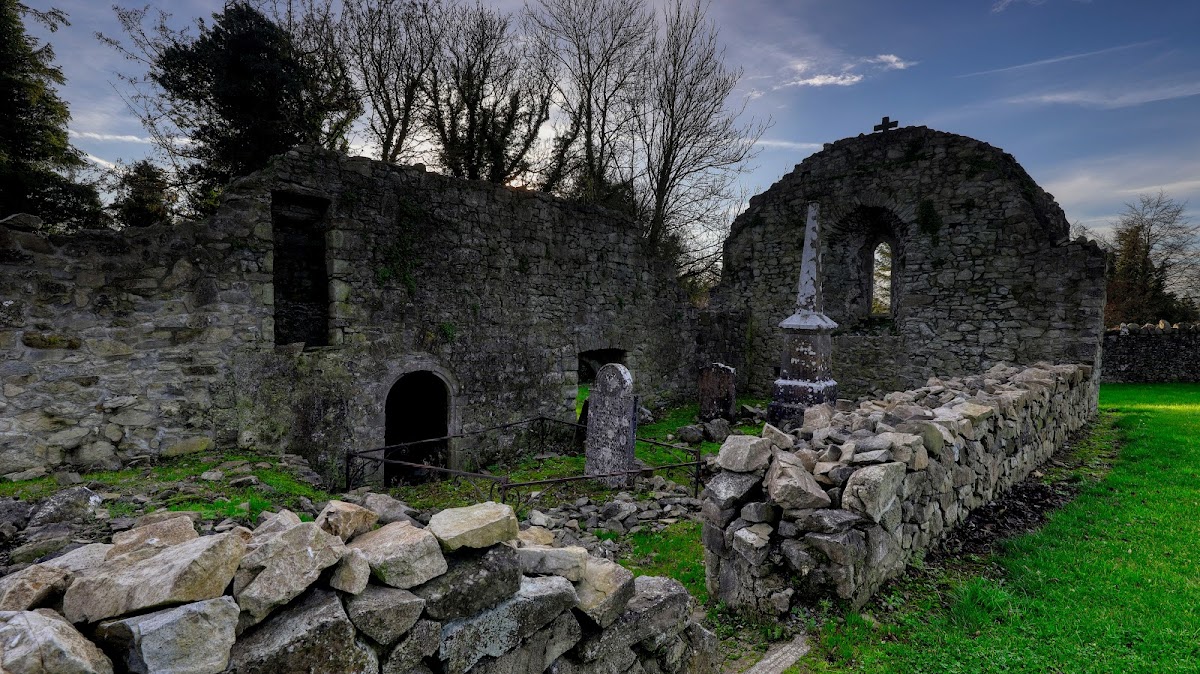
A two-storey building attached to the east may have been added during the 18th century. Nearby, a chapel contains the tombs of members of the D’Arcy family, connecting the surviving castle complex with the family who commissioned the keep.