Château de Romécourt: A Renaissance-Inspired Château in France


Site at a Glance
- Rating
- 4.7
- Popularity
- Very Low
- Country
- France
- Primary era
- Early Modern
- External website
- Open
- Eras represented
- Early Modern, Modern
- Civilizations
- Duchy of Lorraine, French, Holy Roman Empire
- Site type
- Domestic
- Remains
- Castle
On this page8 sections
History
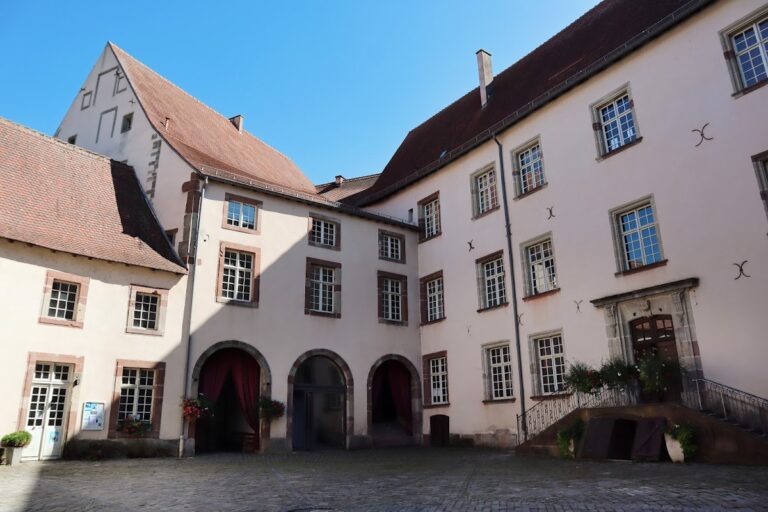
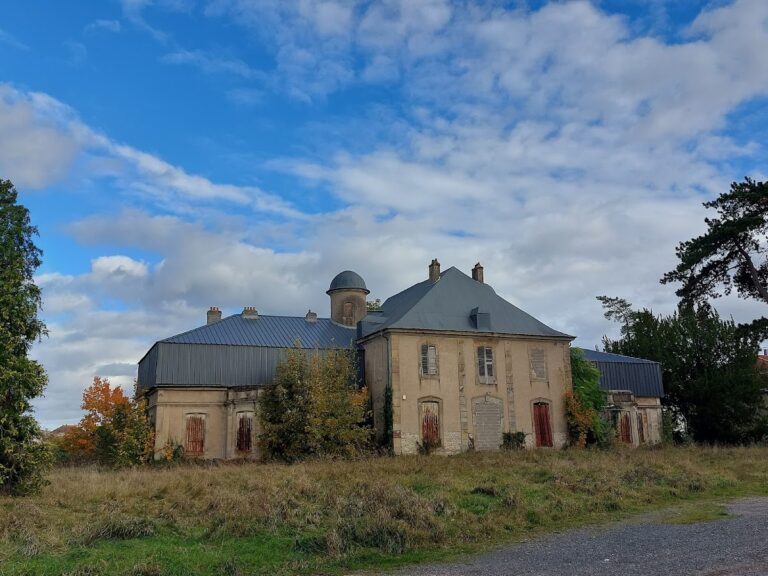
Château de Romécourt is a château in Azoudange, France, built in 1564 by Michel l’Enfant during the Renaissance, a European period associated with renewed interest in classical art, symmetry, and geometric decoration. It was then known as Kinthaus, meaning “House of the Child.” The building’s brick construction and Renaissance-inspired design give it a distinctive place within the architectural history of Lorraine.
Construction and later development
The château underwent further building work during the seventeenth and nineteenth centuries. These changes included the addition of the stables and alterations to the interior of the chapel, extending the complex beyond its original sixteenth-century form.
Religious and family history
The chapel served as the parish place of worship until 1793. Since 1698, it has also been the burial place of the Martimprey de Romécourt family, linking the building’s religious use with the history of the family associated with the estate.
Protection and setting
Château de Romécourt has been listed in the French supplementary inventory of historic monuments since 28 December 1976. The protected elements include its façades, well, and roofs. The château stands in Moselle within the Lorraine Regional Natural Park and the forest-and-lake landscape of the Sarrebourg region.
Remains
Brick château and entrances
The château is built entirely of brick, an unusual feature for a château in Lorraine. Its Renaissance-inspired façades are decorated with geometric diamond patterns that also appear on the doors. Two stone-built entrances provide access to the complex. Known as the “French” and “German” doors, they have rusticated ashlar, dressed stone masonry with strongly emphasized joints or roughened faces. Their treatment reflects the château’s position near a former border between France and Germany.
Estate and park
The estate covers approximately 300 hectares of forests, fields, and natural areas. An English-style park extends through the grounds beneath large centuries-old trees. Two ravines on the estate are said to have been excavated to obtain the earth used to manufacture the château’s bricks and tiles.
Chapel window
A stained-glass window in the chapel depicts Saint Louis, the French king Louis IX, who took part in the Crusades and was later canonized. Hugues de Martimprey, a member of the family associated with the château, is shown accompanying him on a crusade.
Nearby sites