Dudley Priory: A Medieval Cluniac Monastery
Site at a Glance
- Popularity
- Medium
- Country
- United Kingdom
- Primary era
- Medieval
- Eras represented
- Medieval
- Civilizations
- English
- Site type
- Religious
- Remains
- Monastery
On this page8 sections
History
Dudley Priory, formally the Priory of Saint James, was a Cluniac monastic house in the United Kingdom, founded in 1160 by Gervase de Paganel, Lord of Dudley, in memory of his father. It belonged to the Cluniac tradition, a reform movement within Benedictine monasticism associated with the Abbey of Cluny, and began as a dependency of Much Wenlock Priory.
Foundation and holdings
The priory’s charter identifies Osbert as its first known prior, or head of the house. Pope Lucius III, who served from 1181 to 1185, issued a papal decree connected with the priory. Its holdings included the churches of St Edmund and St Thomas at Dudley, churches at Sedgley and Northfield, and a chapel at Cofton Hackett. An associated list names All Saints at Sedgley, St Laurence at Northfield, and St Michael in connection with Cofton Hackett.
Diocesan boundaries and changing status
In 1238, following a papal mandate, the bishops of Worcester and Coventry and Lichfield agreed on the boundary between their dioceses, the church districts under their authority. Dudley town, including its churches and associated properties, was assigned to Worcester, while Dudley Castle and the priory remained under Coventry and Lichfield.
The priory was dissolved in 1395 and re-established soon afterward as a denizen priory, an independent religious house no longer subordinate to a foreign parent monastery. Henry VIII closed it in the 1530s during the Dissolution of the Monasteries, the suppression of religious houses under his rule. In 1540 the dissolved priory was granted to John Dudley, 1st Duke of Northumberland, a Tudor nobleman and statesman. After his execution, the buildings deteriorated into ruins.
Industrial reuse and modern history
During the eighteenth century, parts of the church ruins were used by a tanner and a thread manufacturer. The site also saw glass grinding and steel polishing as industry spread through the surrounding area. Nearby pools were drained, and Priory Hall was built in 1825.
In 1926, Dudley County Borough Council bought the priory and surrounding rural land for a planned residential area. About one-third of the land lay within Sedgley Urban District, prompting a boundary change. The housing development, known as the Priory Estate, was intended to rehouse people from town-centre slums. Archaeologist Ralegh Radford investigated the ruins in 1939. On 14 September 1949, they became a scheduled monument, a nationally important archaeological site protected by law, and received Grade I listing, a category for buildings of exceptional historic or architectural interest.
Remains
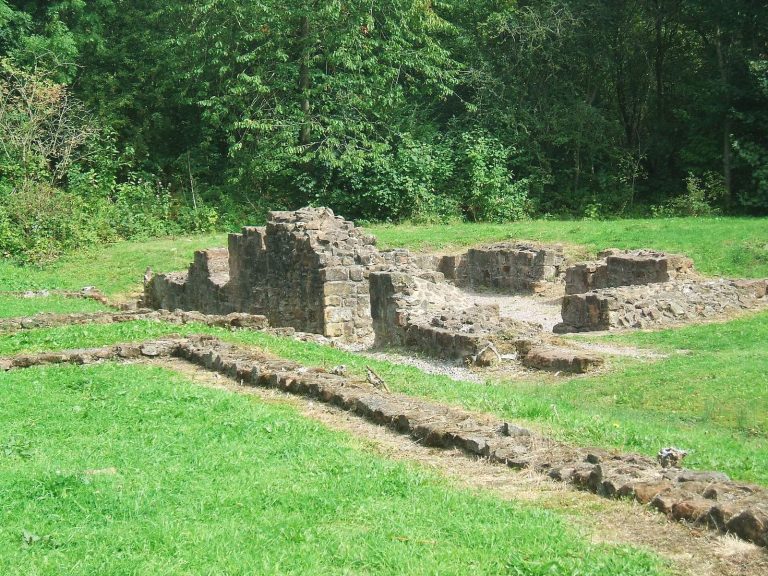
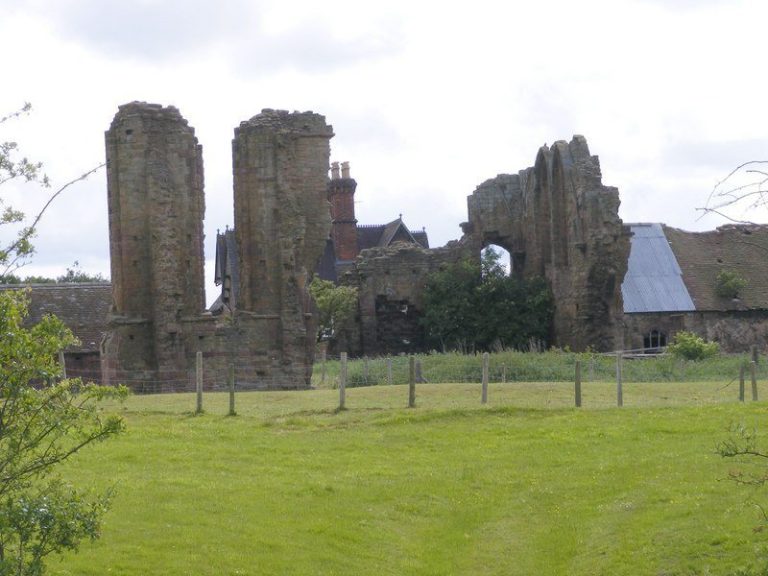
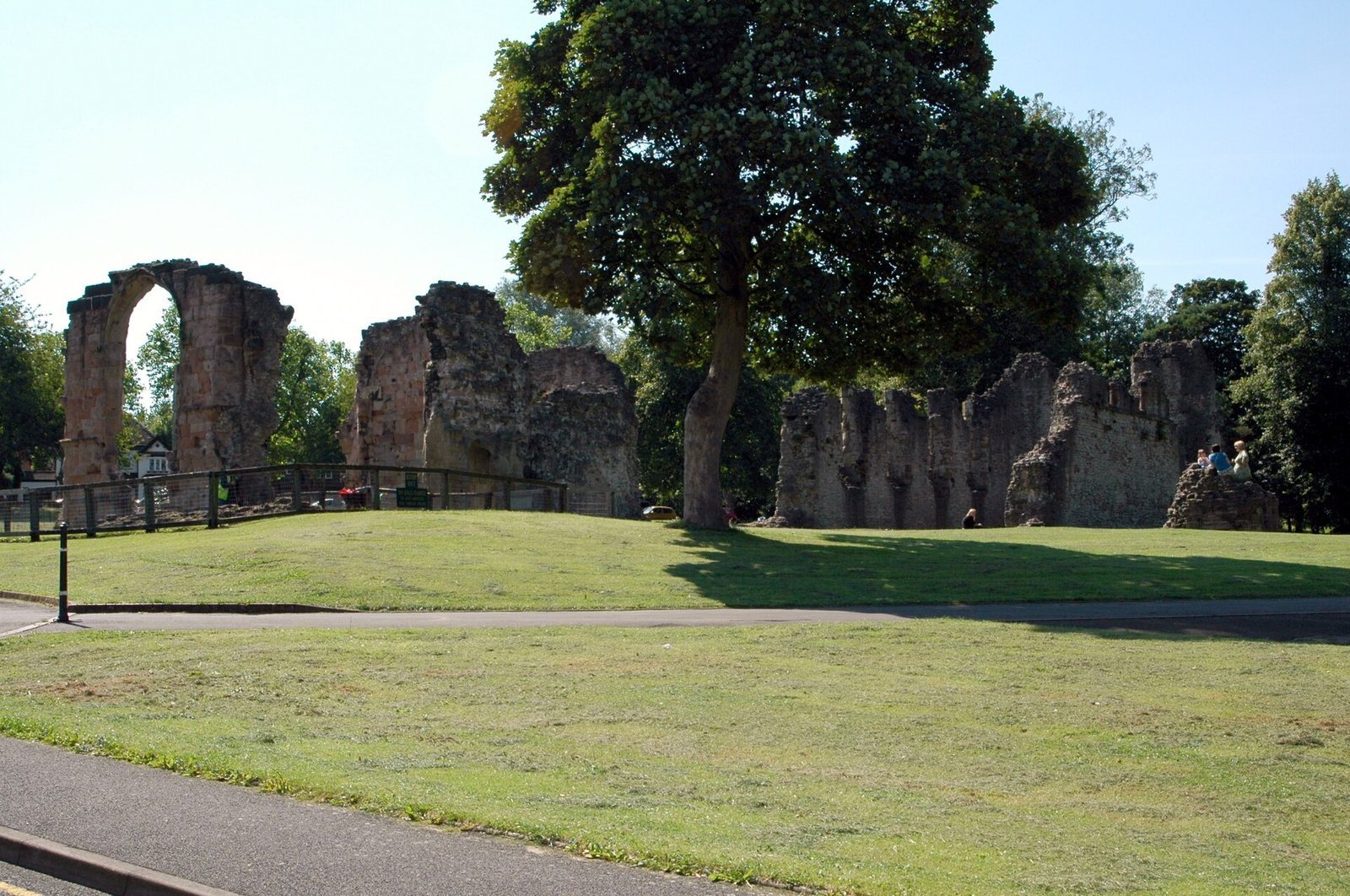
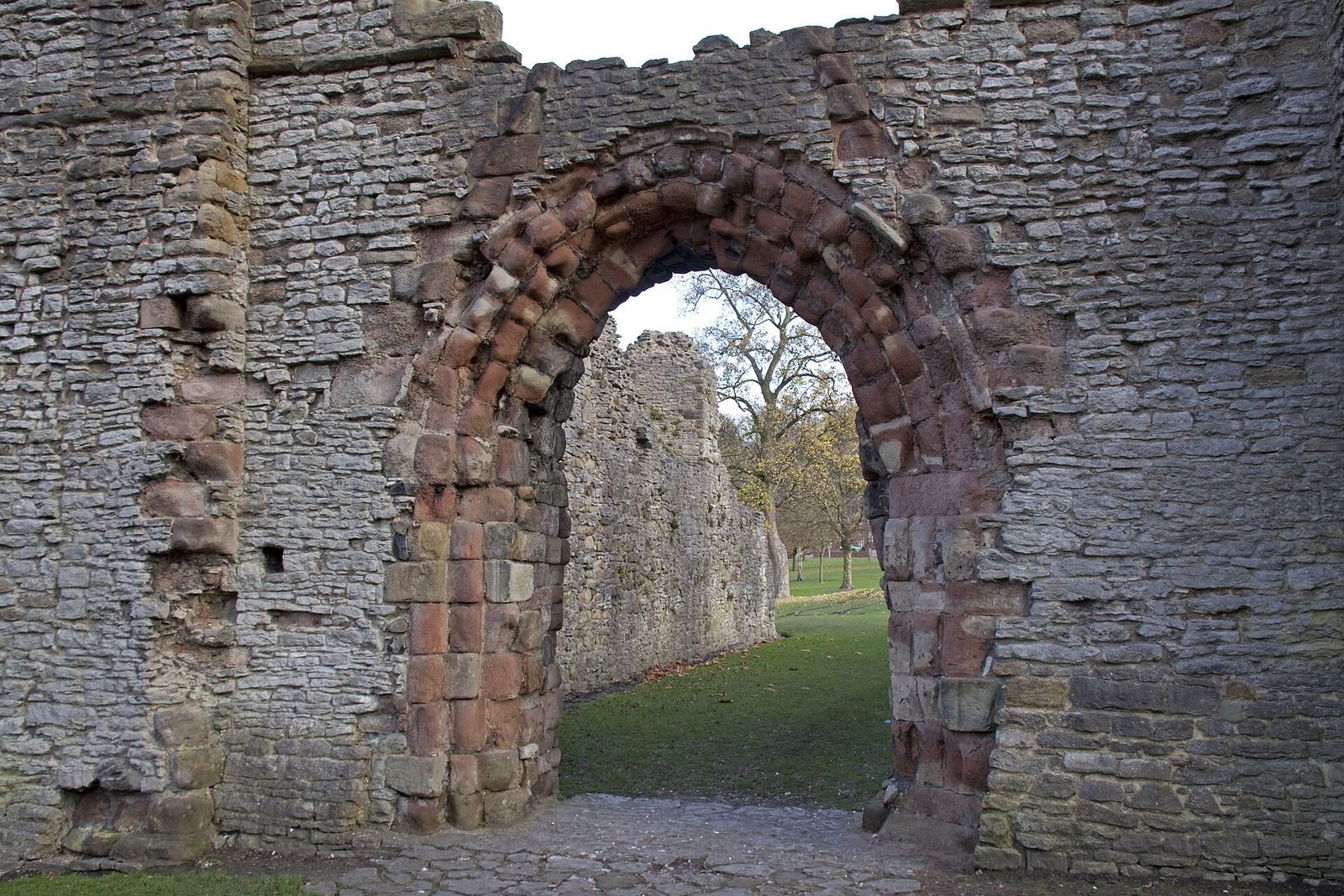
The remains lie within Priory Park beside the Priory Estate. The priory was built from local limestone quarried at Wren’s Nest, and its surviving features include traces of the former ground plan, medieval tiles, and an archway associated with the Lady Chapel.
Layout and surviving structures
Ground plan and tiles
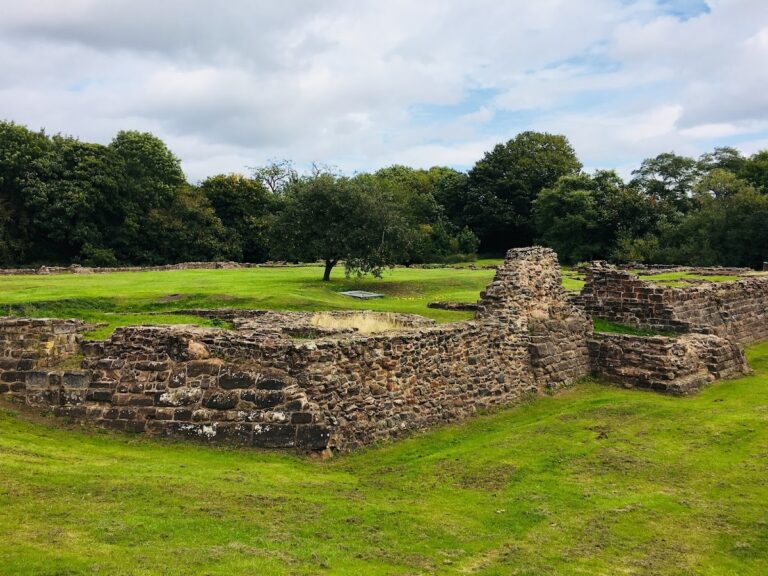
Lines of stone set into the grass mark the positions of rooms and cloisters, the covered walkways around the monastic buildings. Radford excavated medieval tiles in 1939, and tiles from the excavation are exposed at the surface.
Lady Chapel archway
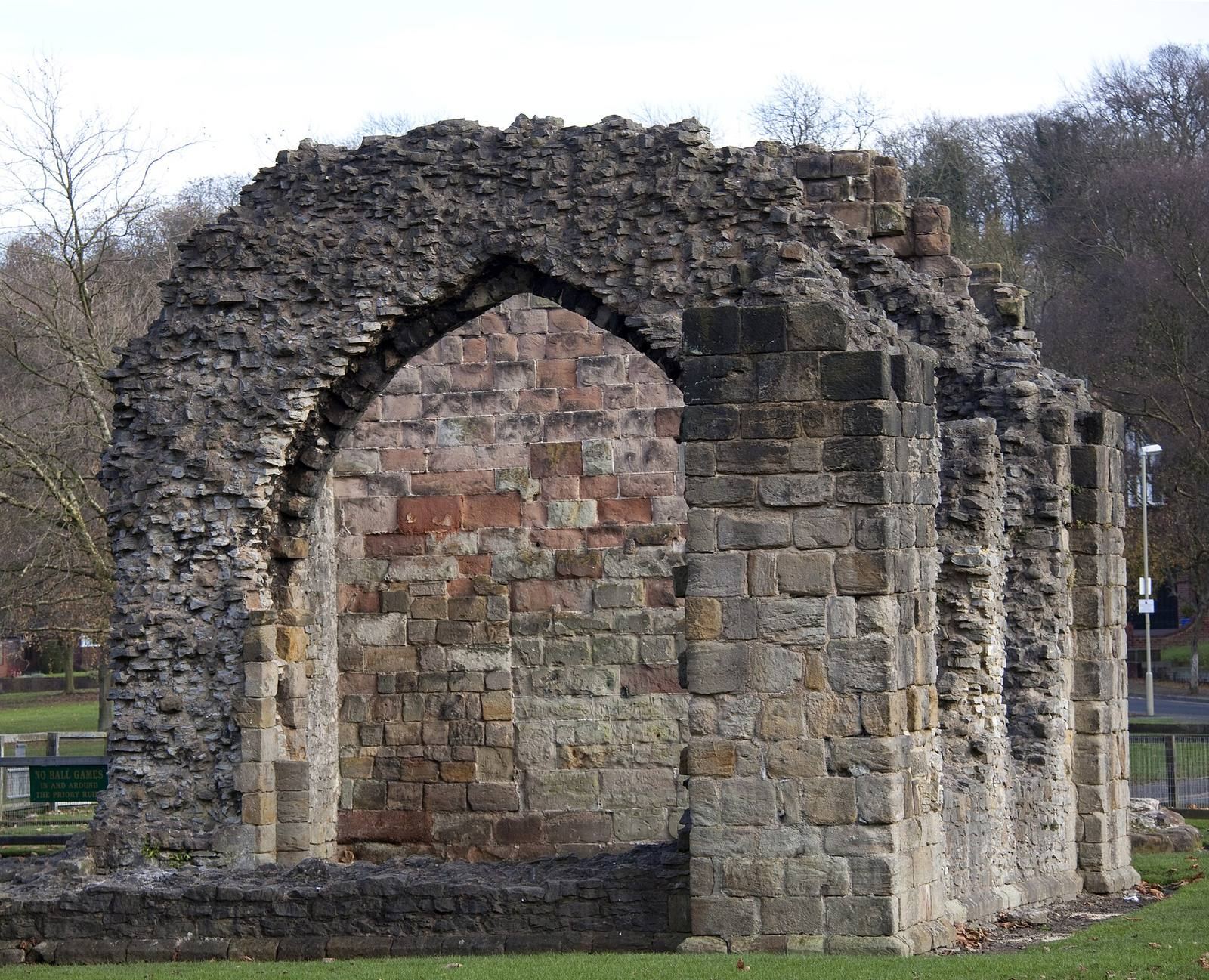
An archway leading to the Lady Chapel area survives from a fourteenth-century enlargement of the priory. The chapel was dedicated to the Virgin Mary and is believed to have been built by the Sutton family, a medieval English noble family.