Jangtsa Dumtseg Lhakhang: A Chorten-Form Buddhist Monastery in Paro, Bhutan
Site at a Glance
- Rating
- 4.5
- Popularity
- Low
- Country
- Bhutan
- Primary era
- Medieval
- External website
- Open
- Eras represented
- Medieval
- Civilizations
- Tibetan
- Site type
- Religious
- Remains
- Stupa
On this page7 sections
History
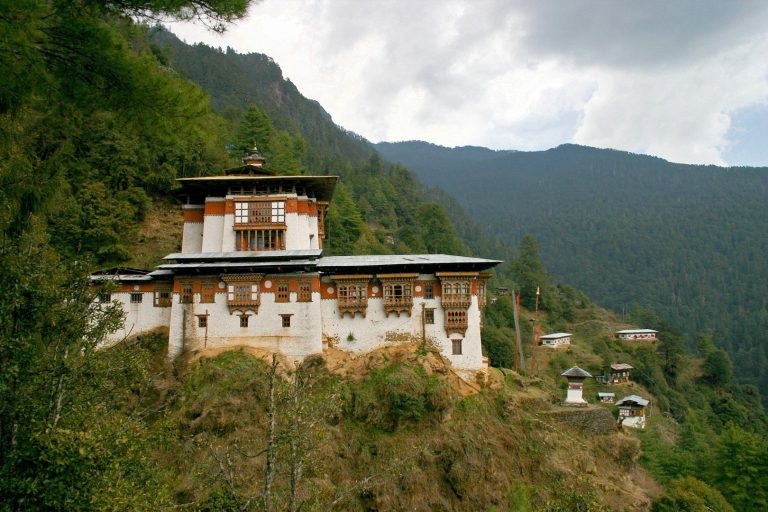
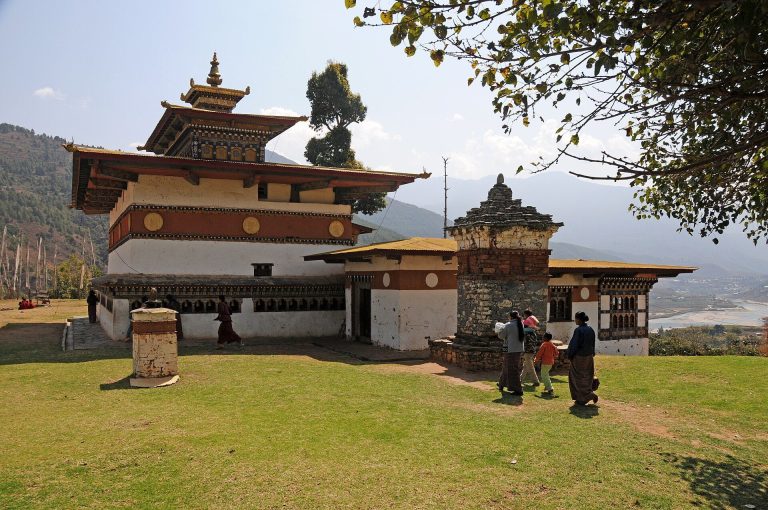
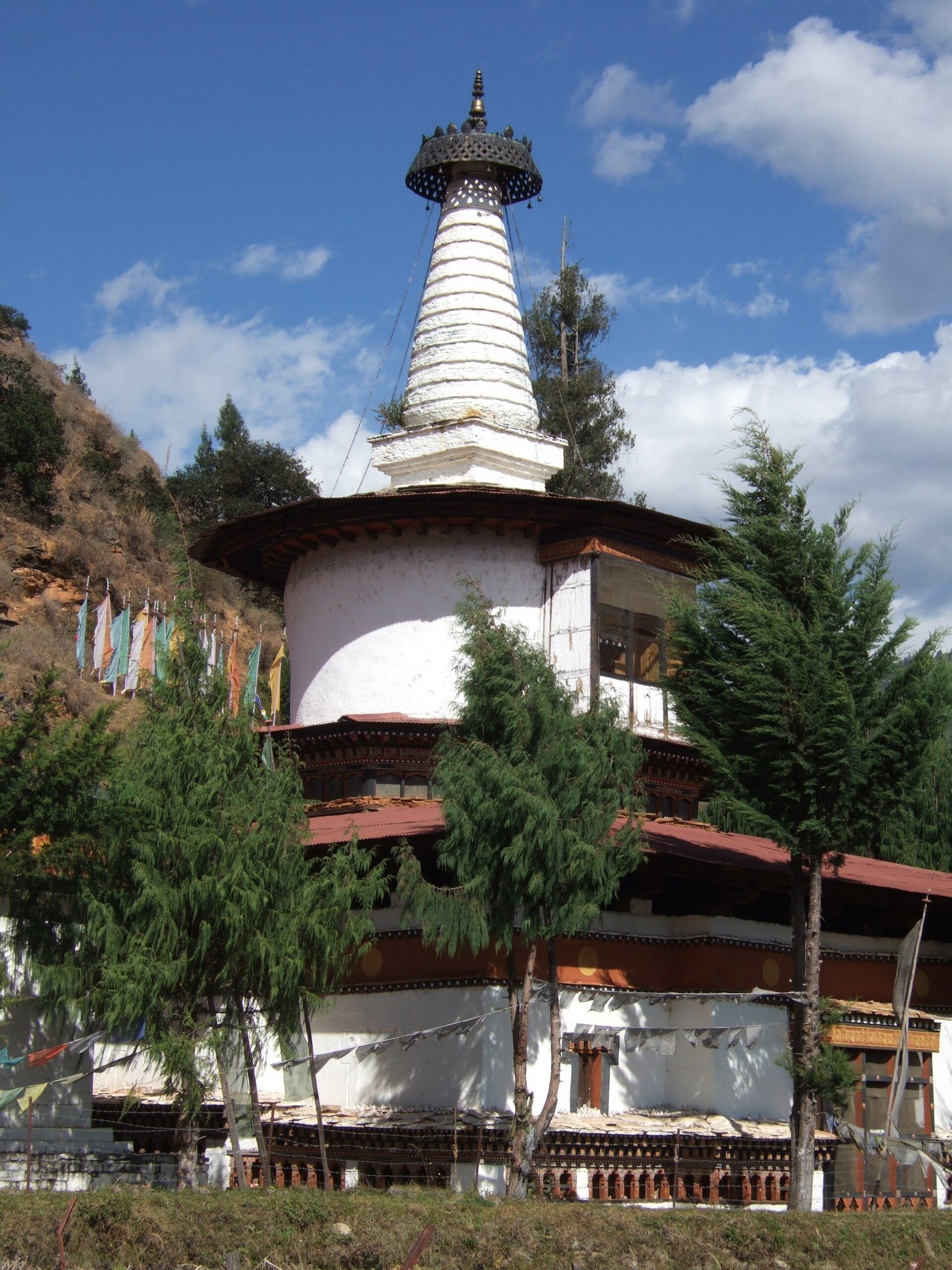
Jangtsa Dumtseg Lhakhang is a Tibetan Buddhist monastery in Paro, Bhutan, constructed in the 15th century in the unusual form of a chorten, or Buddhist stupa. Traditionally associated with the Tibetan lama Thangtong Gyalpo, the monastery belongs to the Drukpa Kagyu school, a major tradition of Tibetan Buddhism with a long institutional history in Bhutan and the Himalayan region. Its construction is dated to 1421, although 1433 is also given, and its sacred design was intended to express the triumph of Buddhism.
Foundation and Sacred Traditions
Thangtong Gyalpo, also known as Chagzampa, is traditionally credited with choosing the chorten form because it was believed to immobilize demons and proclaim Buddhism’s victory. Local traditions place the monastery on the head of a demoness or describe it as subduing a serpentine force beneath its foundations. Another tradition locates it on the nose of a frog-shaped hill, where it was intended to counter an earth-owning spirit and a powerful naga spirit. The hill is also compared with a black snake moving downhill.
The monastery stands across the Paro Chhu from Paro, on a geomantic promontory between the Paro Chhu and Do rivers and between the Paro and Dopshari valleys. Tibetan geomancy regards this position as auspicious. A road crossing the Do River leads toward the National Museum of Bhutan. To the east stands Jangtsa Palnang Lhakhang, traditionally identified as one of 108 temples built in the seventh century by the Tibetan emperor Songtsen Gampo to tame the borders of his realm.
Restoration and Continuing Religious Use
In 1841, Sherab Gyeltsen, the 25th Je Khenpo, restored the monastery with help from villagers in the surrounding settlements. A Je Khenpo is Bhutan’s senior Buddhist religious title, associated with leadership of the country’s central monastic institution. The names of the donors were carved into tree trunks used as columns on the ground floor. Jangtsa Dumtseg Lhakhang remains an active Buddhist institution and continues to be associated with the Drukpa Kagyu tradition.
Remains
The surviving temple is organized as a three-level chorten whose plan is conceived as a mandala, a sacred geometric arrangement used in Buddhist visualization and ritual practice. The levels are interpreted as hell, earth, and heaven, and the building is crowned by a white tower. Steep ladders and stairways connect the successive levels, while paintings, sculptures, and other elements of the iconographic program fill the structure.
Ground Floor
The ground floor contains the Five Buddhas of Meditation, together with representations of Avalokiteshvara, Guru Rinpoche, and Thangtong Gyalpo. Tree trunks used as columns preserve the names of villagers who supported the 1841 restoration, linking the structure’s physical fabric with that later phase of its history.
Second Level
Mahakala appears on the exterior wall of the second level. Inside, the walls depict 100 peaceful and wrathful deities alongside the bardo, the transitional state between death and rebirth in Tibetan Buddhist thought.
Upper Level
The third level contains tantric deities. Its exterior wall depicts Guhyasamaja, Vajrabhairava, Cakrasamvara, Hevajra, Kalacakra, Vajravarahi, Hayagriva, and Mahamaya. Together, this group forms a mandala associated with the Shangpa school, a Tibetan Buddhist lineage linked with the master Khyungpo Naljor and known for distinctive tantric deity arrangements and meditation practices.
The interior wall of the upper level shows the 84 Indian mahasiddhas and Tibetan saints, including Marpa, Milarepa, and Gampopa. A prominent statue of Milarepa is also present. Across the monastery, extensive Buddhist paintings and iconography form a distinctive and highly valuable collection associated with the Drukpa Kagyu tradition.