Hove Church: A Romanesque Parish Church in Norway
Site at a Glance
- Country
- Norway
- Primary era
- Medieval
- Eras represented
- Medieval, Modern
- Civilizations
- Norwegian
- Site type
- Religious
- Remains
- Church
On this page11 sections
History
Origins and early traditions
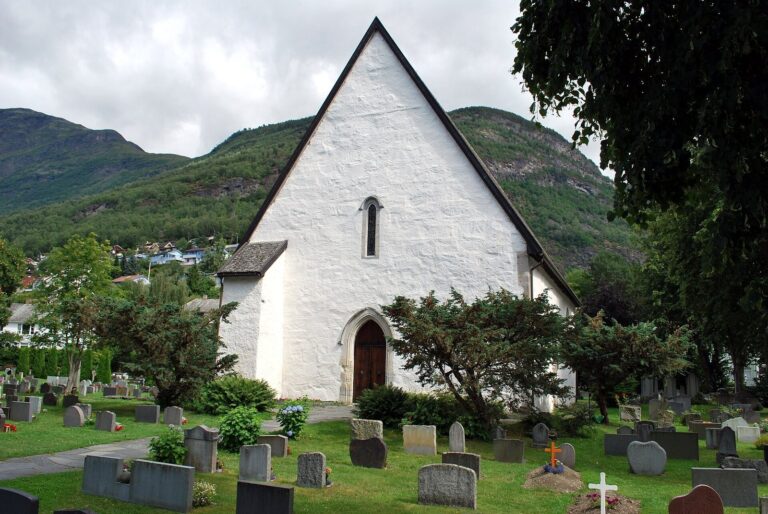
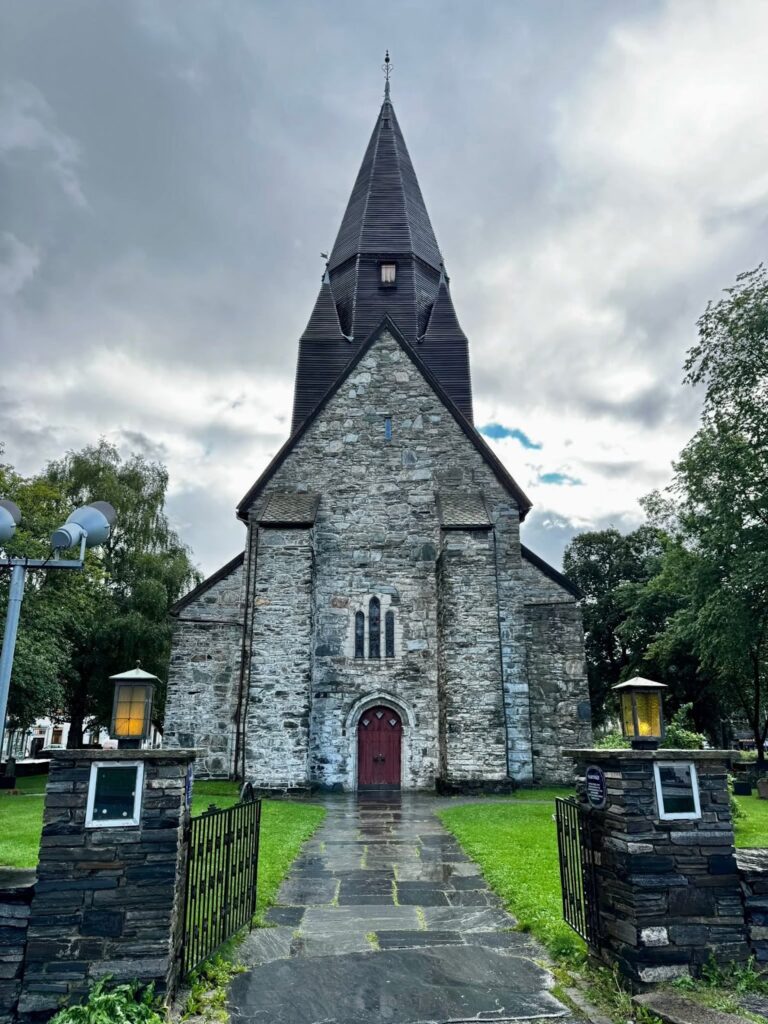
Hove Church is a small Romanesque church at Vikøyri, Norway, probably built around 1170. Romanesque architecture is a medieval style marked by rounded arches and substantial masonry. Named for the old Hove farm, the church became the principal church of Hove parish in the Diocese of Bjørgvin, a regional church jurisdiction. Its consecration is placed around the same time as its construction, while the earliest surviving written record dates to 1340. It may have replaced an earlier church.
Some historians have proposed that the building began as a private chapel for a wealthy landowner, perhaps a member of Norway’s highest aristocracy. Roman-period graves found at Hove have been interpreted as evidence that the area once served as a center of power within Vik. Other archaeological finds have connected the area with ancient Norse religious practice.
A local legend tells of a condemned man promised freedom if he built a stone church within a week. A stranger arranged for workers to build it, but required the man to learn his name before the work was finished. The man overheard a child’s mother call the stranger Ivar Vinkjell and used the name to address him. The stranger then fell from the tower and died.
Parish changes and closure
The church’s affiliation shifted from Catholicism to Evangelical Lutheranism, and it became part of the Church of Norway. In 1875, Hove and neighboring Hopperstad parishes were abolished and combined into a new Vik parish. A royal decree issued on December 11 that year ordered both churches closed and a new church built at Vikøyri. When Vik Church was built in 1877, Hove Church closed and ceased regular use.
Restoration and later use
Hove Church was offered for sale with the intention of demolishing it. Architect Peter Andreas Blix bought it in 1880 after discovering that stone being sold came from the church. At his own expense, he restored the building from 1883 to 1888, seeking to recover its medieval appearance. Blix owned the church until his death in 1901 and left it to his brother, who transferred it to the state. It remains state-owned and is administered by the Society for the Preservation of Ancient Norwegian Monuments. The church is protected as a Norwegian cultural heritage site. Although it no longer hosts regular parish worship, weddings and funerals are among the occasions held there.
Remains
Setting, plan and masonry
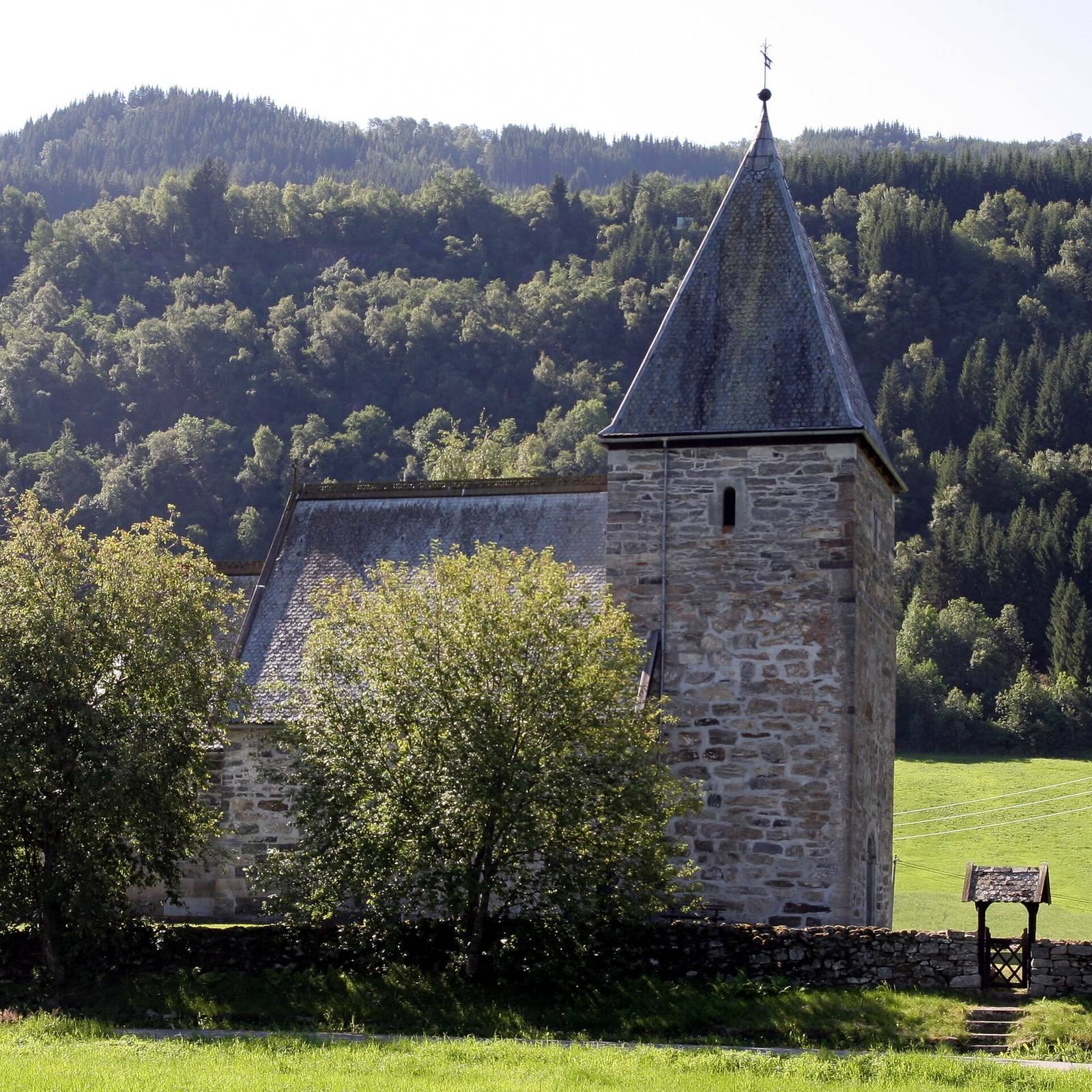
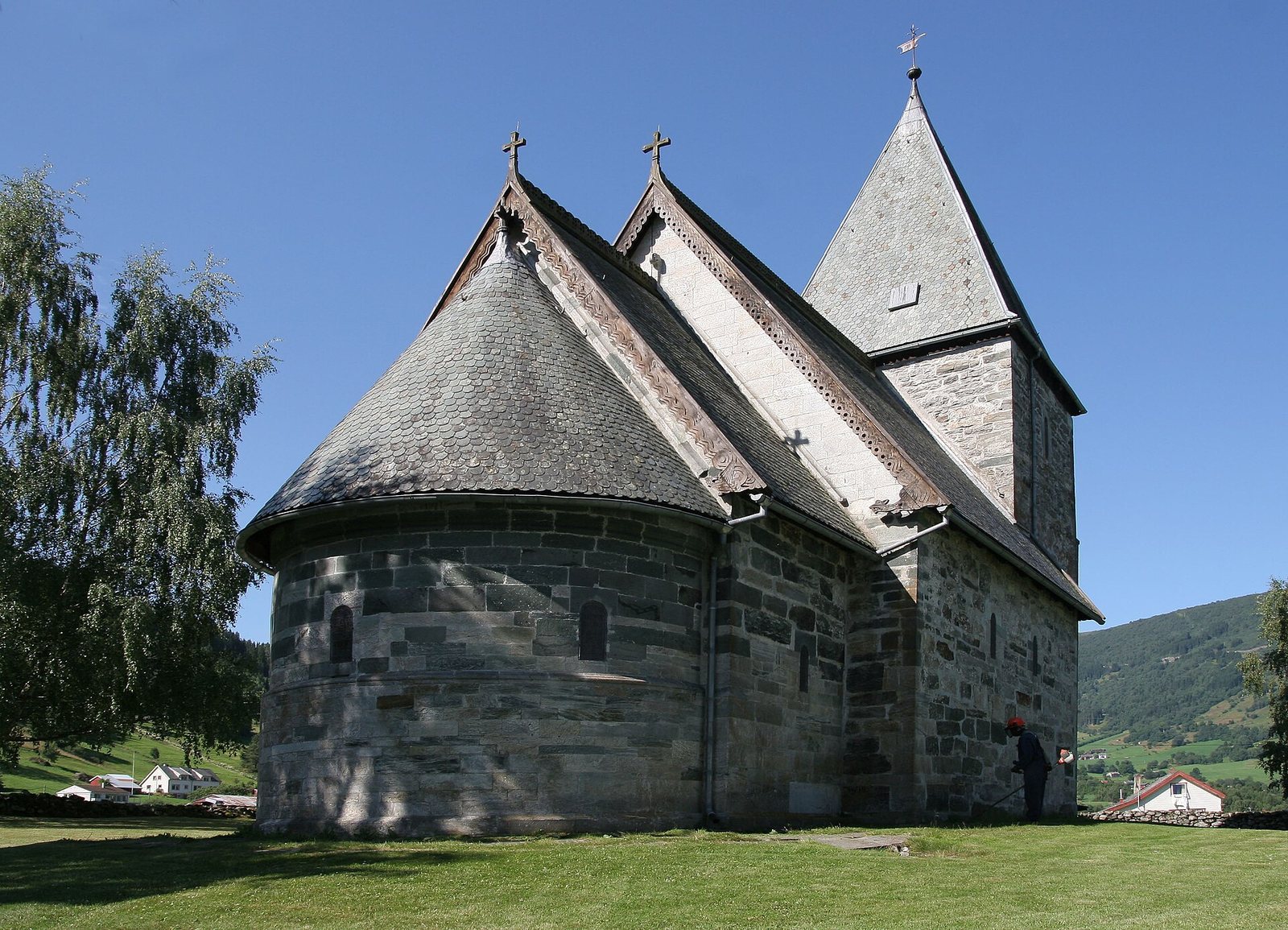
Standing at Vikøyri beside the Arnafjord, an arm of the Sognefjord, Hove Church is a compact gray-stone building with seating for about 35 people. Its plan has a rectangular nave (the main body of the church) and a rectangular chancel (the area around the altar), which ends in a semicircular apse (a rounded projection) to the east. A square tower stands at the west end. The chancel and apse were built first, followed by the nave; a tower with a stone base was added later.
The chancel is made of carefully worked soapstone, fitted so closely that the joints required no lime. It appears to be the earliest part of the church and may have been built by specialists from Bergen. The western masonry is rougher and less carefully worked, perhaps reflecting the skills of the builders or financial limits.
Tower and entrances
A wooden tower stood on the west-end stone base from the seventeenth century until the 1880s. Blix later erected a large stone tower on that base. The church’s original tower form remains uncertain: it may have been made of stone, the roof may have continued at the same height above the base, or a planned tower may never have been completed. Three doorways serve the building: one in the tower front, one on the south side of the nave’s western end, and another on the south side of the chancel. The western doorway was fully restored, with zigzag decoration around its arch.
Interior and commemorative features
Decoration and furnishings
The interior was originally plain. During his restoration, Blix added wall patterns based on medieval artwork, stained-glass windows and wrought-iron chandeliers. The stone altar is medieval. A crucifix dating to the 1880s is set in the triumphal arch, the arch separating the nave from the chancel.
Madonna
An oak Madonna carved in the first half of the thirteenth century, possibly around 1230, was once kept in the church. It is regarded as one of Scandinavia’s finest medieval sculptures and may have been made in Bergen. Its original connection to Hove is uncertain: it may have belonged to this church or come from nearby Hopperstad Stave Church, a medieval wooden church built with upright timber posts. The original sculpture is now at Bergen University Museum; a copy was installed at Hove Church in 2022.
Blix’s grave
Blix is buried beneath the church floor. His memorial inscription credits him with rebuilding the church out of love for art.