Drombeg Stone Circle: A Prehistoric Monument in County Cork
Site at a Glance
- Popularity
- High
- Country
- Ireland
- Primary era
- Iron Age
- Eras represented
- Iron Age
- Civilizations
- Unclassified
- Site type
- Religious
- Remains
- Sanctuary
On this page9 sections
History
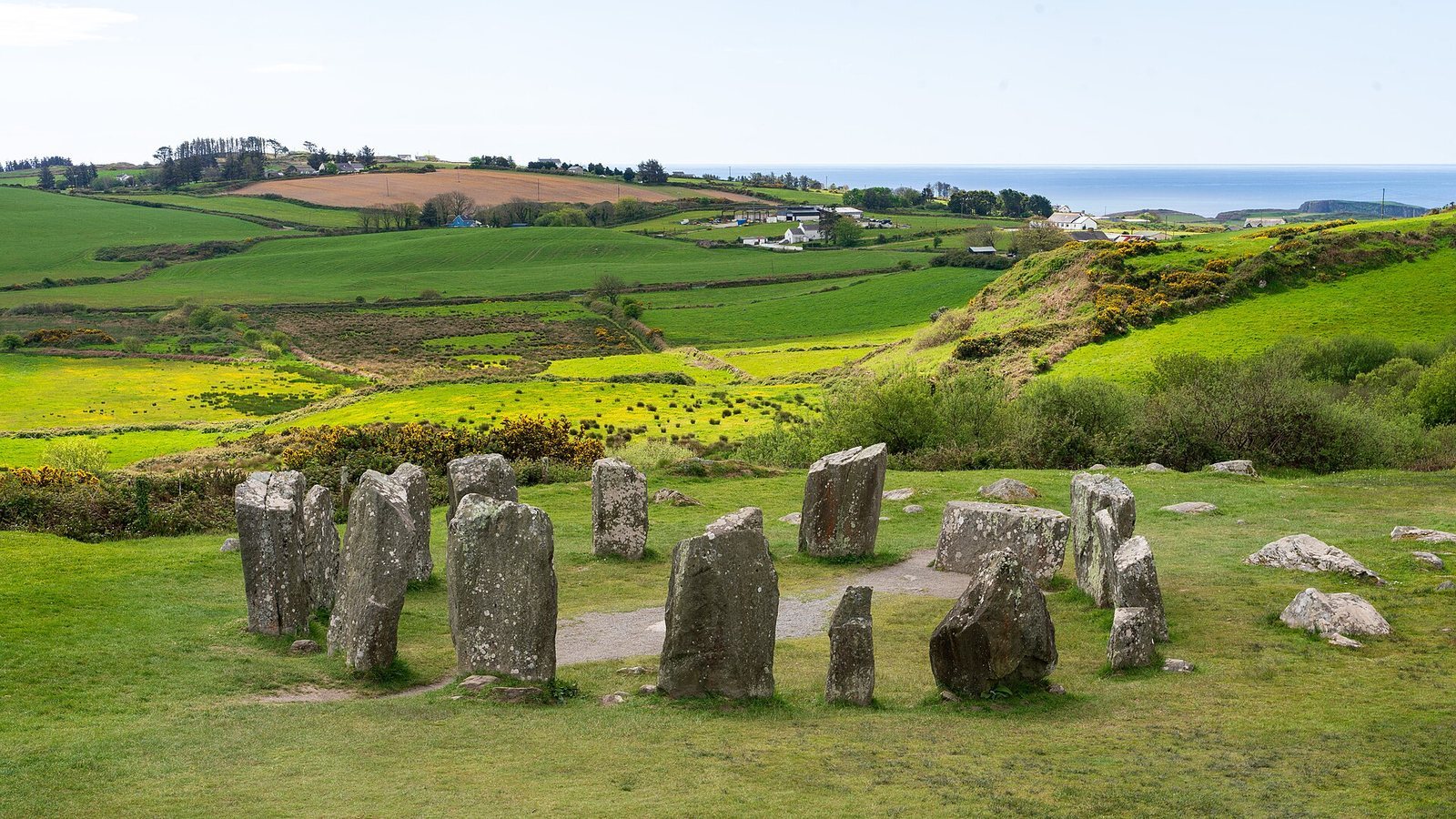
Drombeg stone circle, also known as the Druid’s Altar, is a prehistoric monument at Drombeg near Glandore in County Cork, Ireland. Radiocarbon results place activity at the site around 1100–800 BC.
The two huts west of the circle were probably in use during the fifth century AD. The nearby cooking place appears to have remained in use until about the same century. In 1923, Irish naval officer and antiquarian Boyle Somerville investigated the circle’s alignment. Archaeologist Edward M. Fahy excavated and restored the site in 1957–58. Drombeg is protected under Ireland’s National Monuments Act and listed as National Monument No. 381.
Remains
The site includes a central sandstone circle and, about 40 metres to its west, two linked huts and a prehistoric cooking place. The circle’s interior is covered with gravel to protect it from wear.
The central circle
Stone arrangement
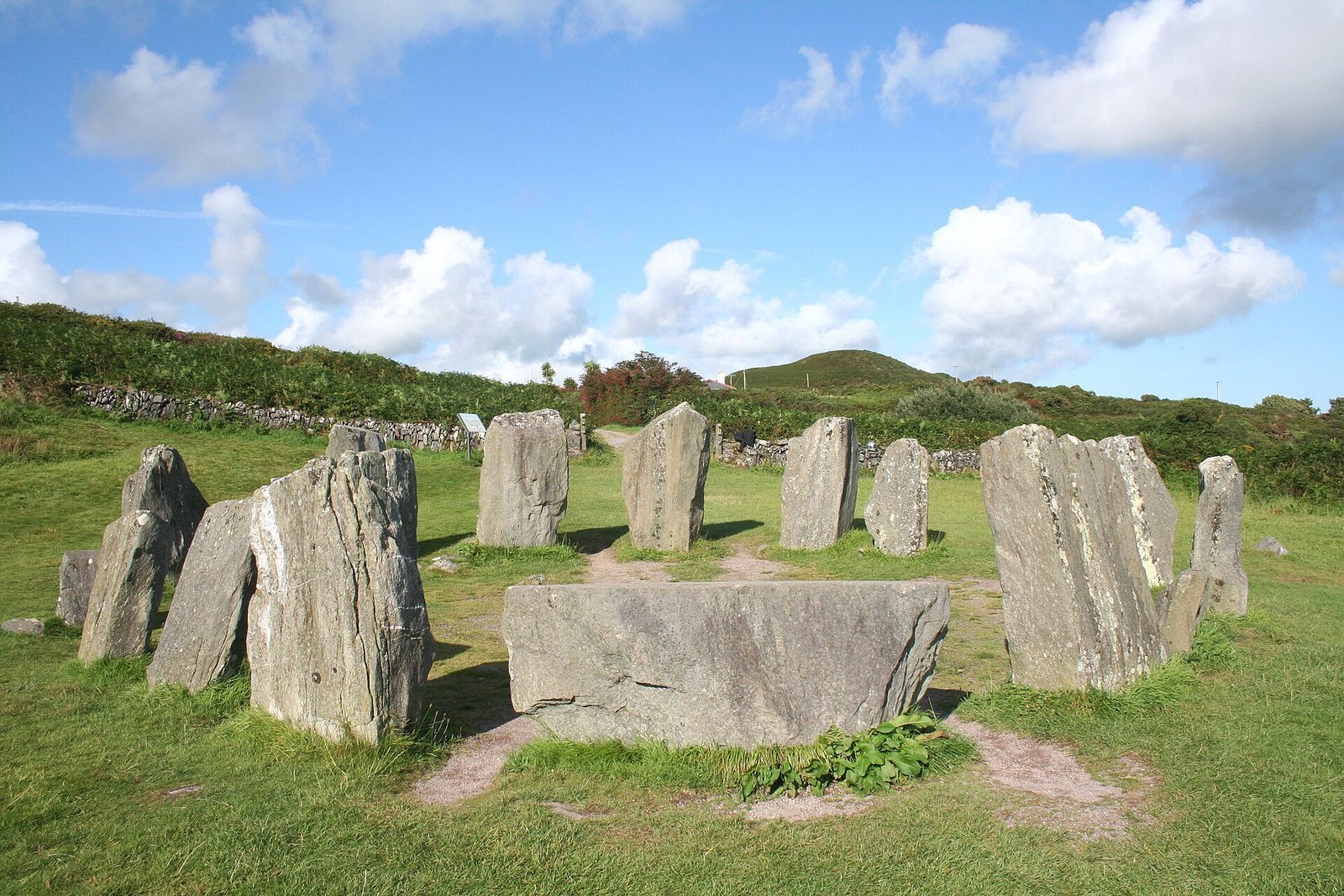
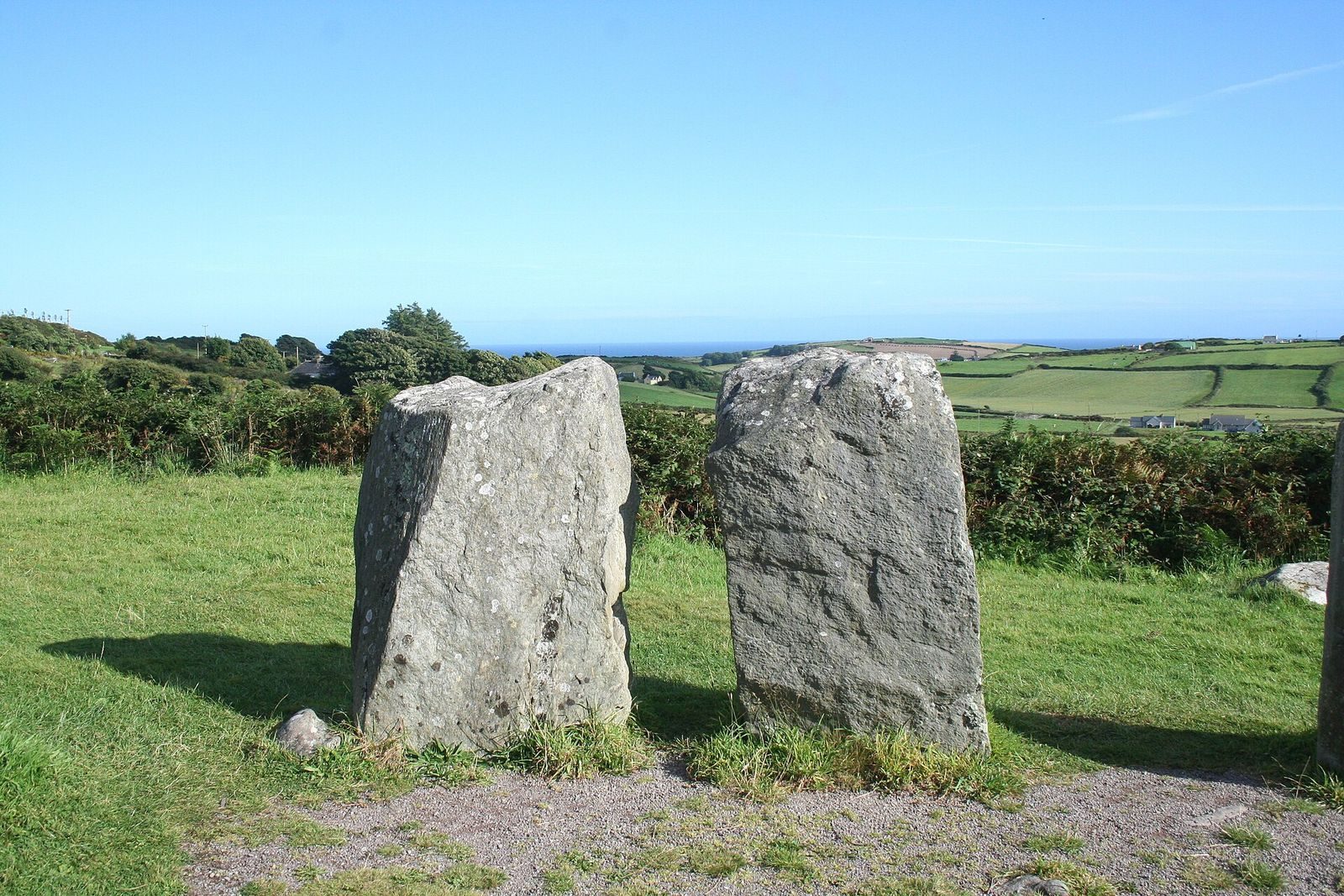
The circle measures 9.3 metres across and was formed from 17 closely spaced local sandstone stones, of which 13 remain. Its tallest stones are about 1.8 metres high. The arrangement follows an axial pattern, with a recumbent stone (a large stone laid horizontally) opposite two portal stones (upright stones at the opening). The recumbent stone is about 1.9 metres long. A line between the upright stones crosses it toward a hill to the southwest. The circle faces the midwinter sunset, though the alignment is not exact.
Carved stones
Two oval cup-shaped marks appear on the westernmost recumbent stone, with one enclosed by a ring. A carving about 200 millimetres long on the north side of another stone has been interpreted by researcher Terence Meaden as an erect penis with two testicles. A separate prehistoric carving, about 280 by 160 millimetres, is on the upper surface of a recumbent stone. It has been described as axe-shaped and also interpreted as representing a vulva.
Cremation burial
Near the circle’s centre, an inverted pot held the cremated remains of an adolescent wrapped in thick cloth. An estimate places the pot’s use around 945–830 BC. The burial also contained 80 broken pottery fragments, four pieces of clay slate, and material swept from a funeral pyre.
Western huts and cooking place
Huts
About 40 metres west of the circle are two round huts with stone walls, joined by connecting walls. Timber posts supported the roof of the larger hut. The smaller hut had a cooking area on its eastern side, including an installation for smoking food.
Cooking place
A path or causeway connected the huts to a fulacht fiadh, an Irish term for a prehistoric cooking place or burnt mound. Its remains include a hearth, a well, and a water trough. Water may have been heated in the trough.