Dowth: A Neolithic Passage-Tomb Complex in County Meath, Ireland
Site at a Glance
- Popularity
- High
- Country
- Ireland
- Primary era
- Stone Age
- Eras represented
- Stone Age, Medieval, Modern
- Civilizations
- Unclassified
- Site type
- Burial
- Remains
- Burial Mound
On this page12 sections
History
Dowth is a Neolithic passage-tomb complex in the Boyne Valley, County Meath, Ireland. Passage tombs are burial monuments entered through passages leading to chambers. Dowth is generally dated to around 3200 BC and is one of the three principal tombs in Brú na Bóinne, a prehistoric landscape in a bend of the River Boyne, alongside Newgrange and Knowth.
Dating and prehistoric setting
Dowth has not been independently dated. Its features have been compared with passage tombs dated to approximately 3200–2900 BC. In 1970, archaeologist Peter Harbison proposed a different date, between 2500 and 2000 BC.
Medieval accounts and place-name lore
The Annals of Ulster and Annals of the Four Masters place a Norse plundering of Dowth’s cave around 862. The reference may mean the site’s souterrain, an underground passage or chamber.
The medieval Dindsenchas, a body of Irish lore explaining place-names and landscapes, gives a legendary explanation for Dubhadh, Dowth’s Irish name, meaning “darkening.” In the tale, King Bresal Bó-Díbad orders a tower to heaven built in a day. His sister’s spell holds the sun in place, but when the two commit incest, the spell ends, the sun sets, and the builders abandon their work. The tale has been linked to the solstice alignments at Brú na Bóinne.
A further proposed connection concerns a 2020 DNA analysis of a man buried at nearby Newgrange. The analysis indicated that his parents were most likely siblings. This has prompted speculation that knowledge of such unions may have survived until the tale was recorded in the Middle Ages, though the relationship between the burial and the story remains uncertain.
Excavation and modern recognition
In 1847, the Royal Irish Academy excavated Dowth, substantially altering the mound. Some of its stone was later quarried. Archaeological and geophysical surveys covering the site and its later monuments took place intermittently from 2012 to 2015. Brú na Bóinne became a UNESCO World Heritage Site in 1993. Dowth is also listed as an Irish National Monument under the names Dowth Mound and Dowth Passage Tomb.
Remains
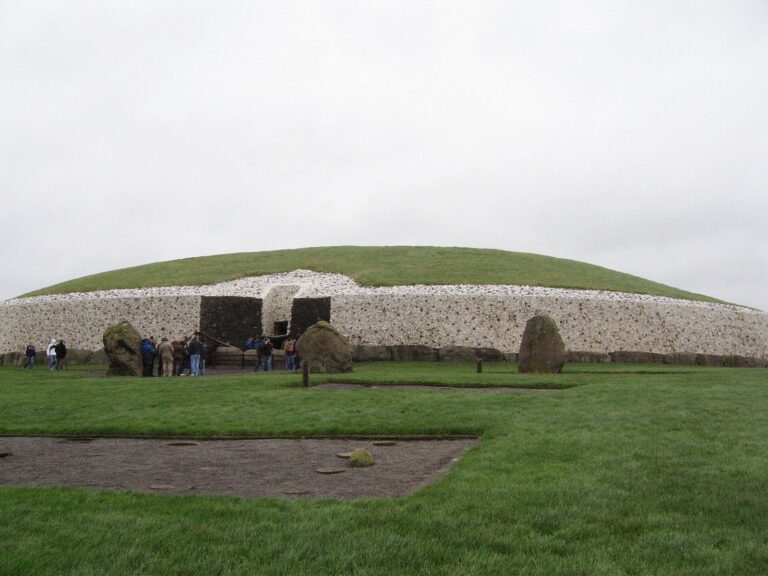
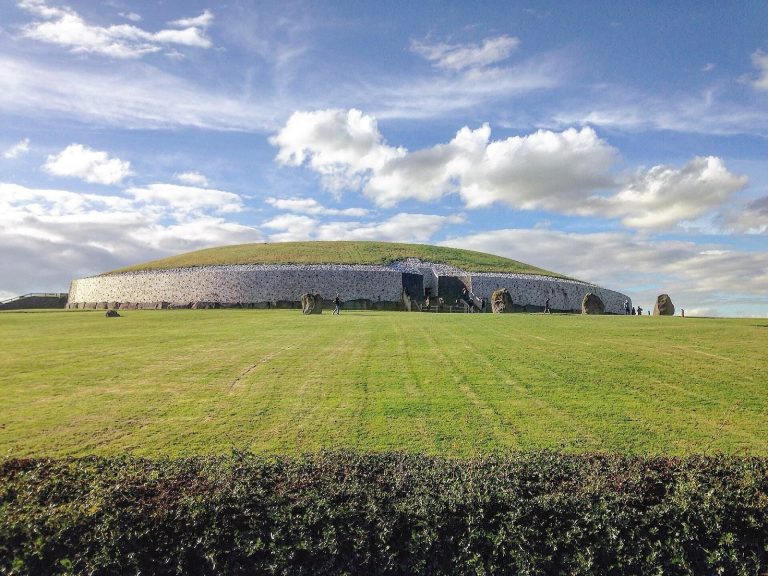
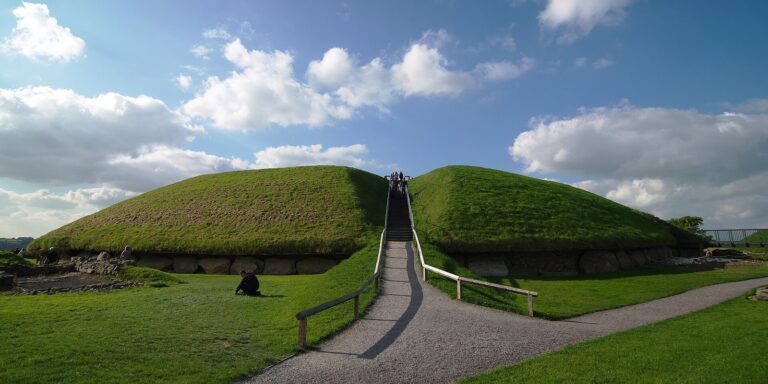
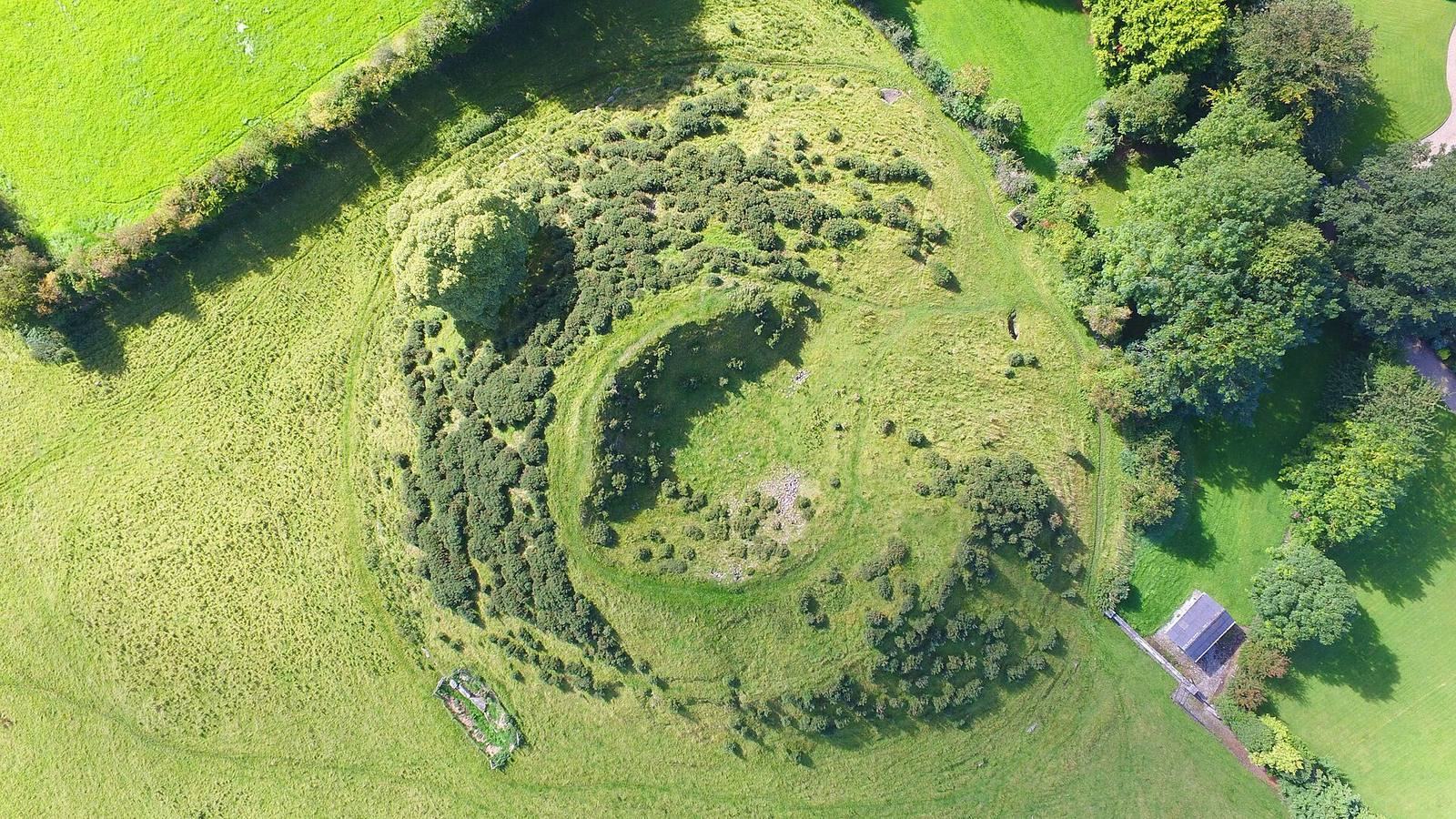
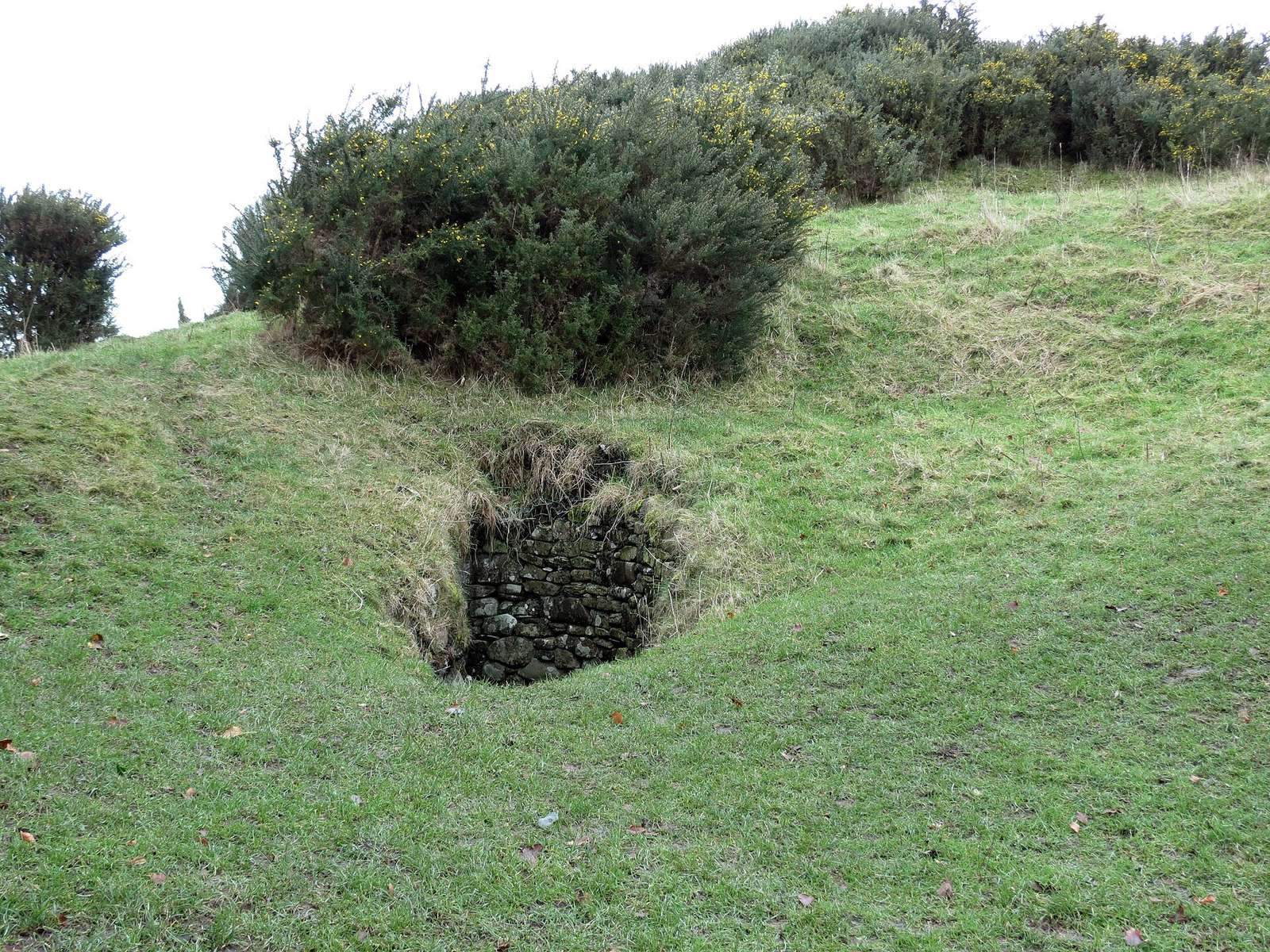
The complex is arranged within a stone mound, with three stone-lined entrances on its western side. Two lead to prehistoric tombs, while the third enters a later underground passage connected to the northern tomb. Dowth is largely ruinous, although the smaller inner chambers of both tombs remain mostly intact.
Mound and tomb chambers
Cairn and kerbing
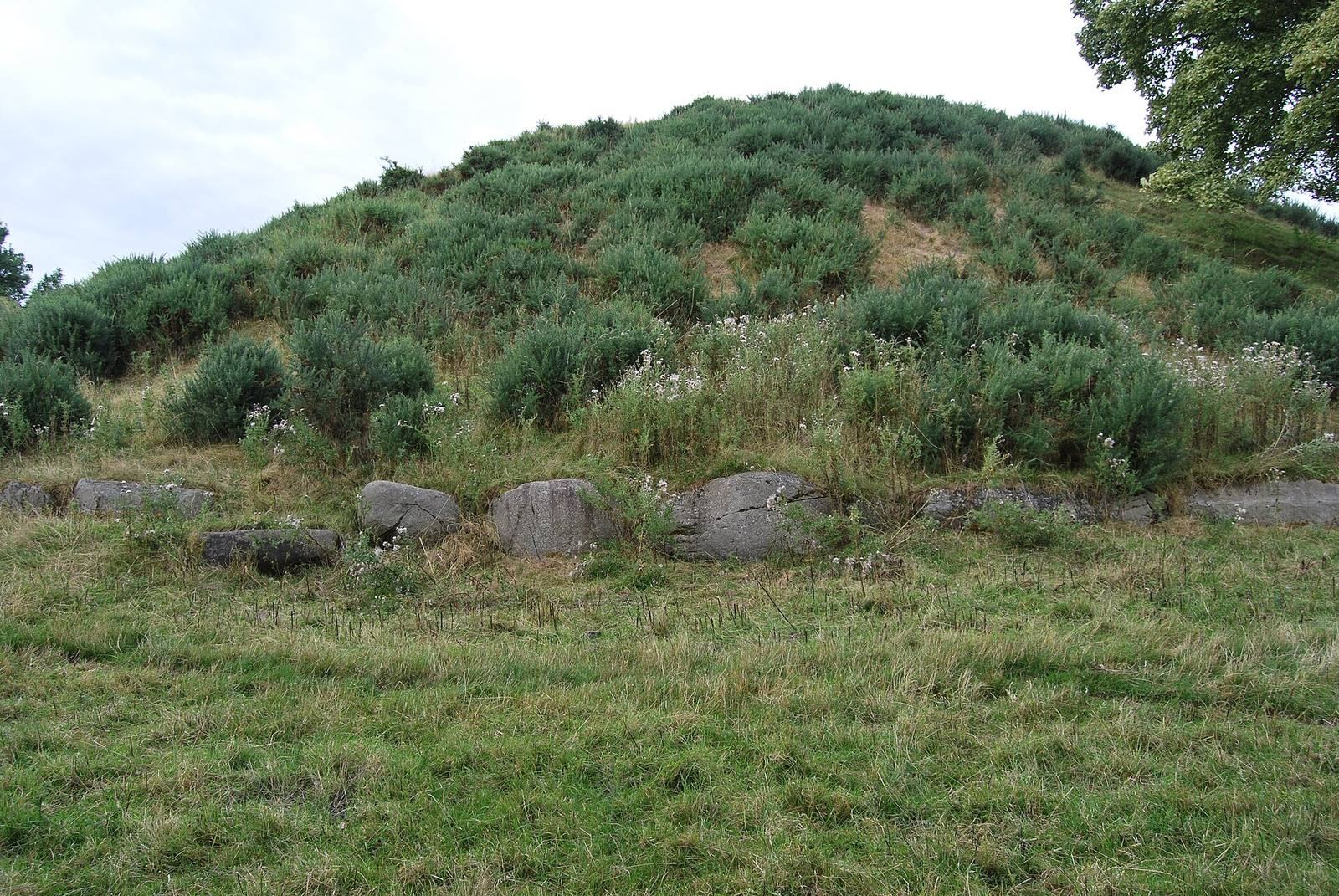
The cairn, a mound of stones, measures about 85 metres across and 15 metres high. It was bordered by approximately 115 large kerbstones, some carved. Quartz found fallen beyond the stone border may indicate that the entrance was once framed with bright white stone. Kerbstone 51, also called the Stone of the Seven Suns, bears radiating circular carvings comparable to designs at Loughcrew. The 1847 excavation left a large, unrepaired crater in the mound after its centre was almost entirely dug out and dynamited; some of the stone was subsequently quarried.
Dowth North
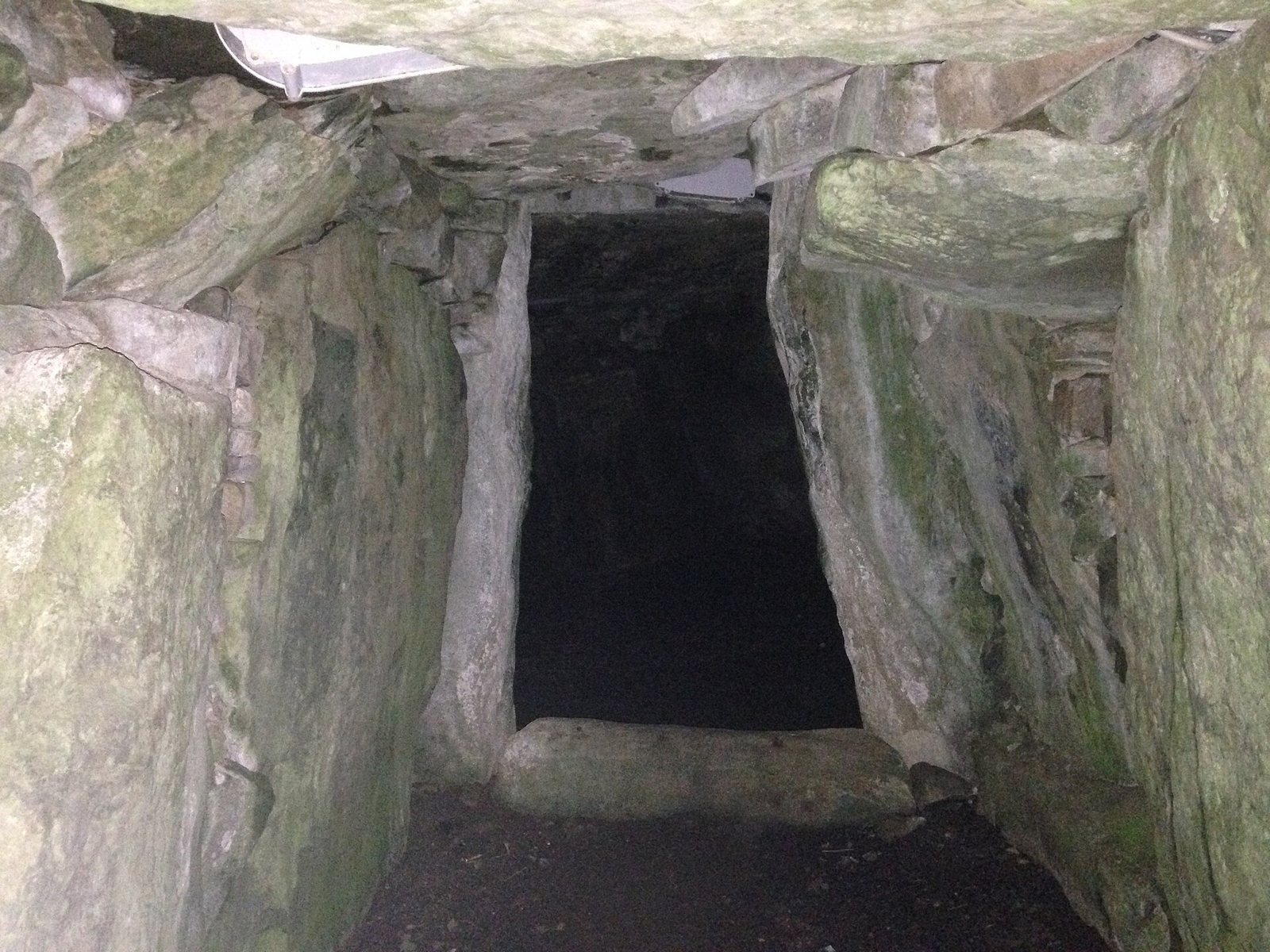
Dowth North has an 18.2-metre passage crossed by three threshold stones. It ends in a cross-shaped chamber roofed with horizontal lintel stones. Upright stones in the passage and chamber are carved with spirals, chevrons, diamond shapes, and radiating circles. A stone basin measuring 1.4 by 1 metre stands on the chamber floor.
North tomb’s side chambers
The right arm of the cross-shaped chamber leads to a long rectangular chamber. A low threshold opens into an L-shaped extension that may be the tomb’s earliest part, later incorporated into the cross-shaped plan. Its flagstone floor, measuring 2.4 metres, contains an oval artificial hollow.
Dowth South
Dowth South has a 3.5-metre passage leading to an approximately circular chamber. Its original roof collapsed, and a modern concrete roof now covers the chamber; the earlier roof may have been built from stones set in courses projecting inward from the walls. Decorated stones and a large recess occupy the chamber. A kerbstone at the entrance bears cup-shaped marks, a spiral, and a flower-like carving.
Western souterrain
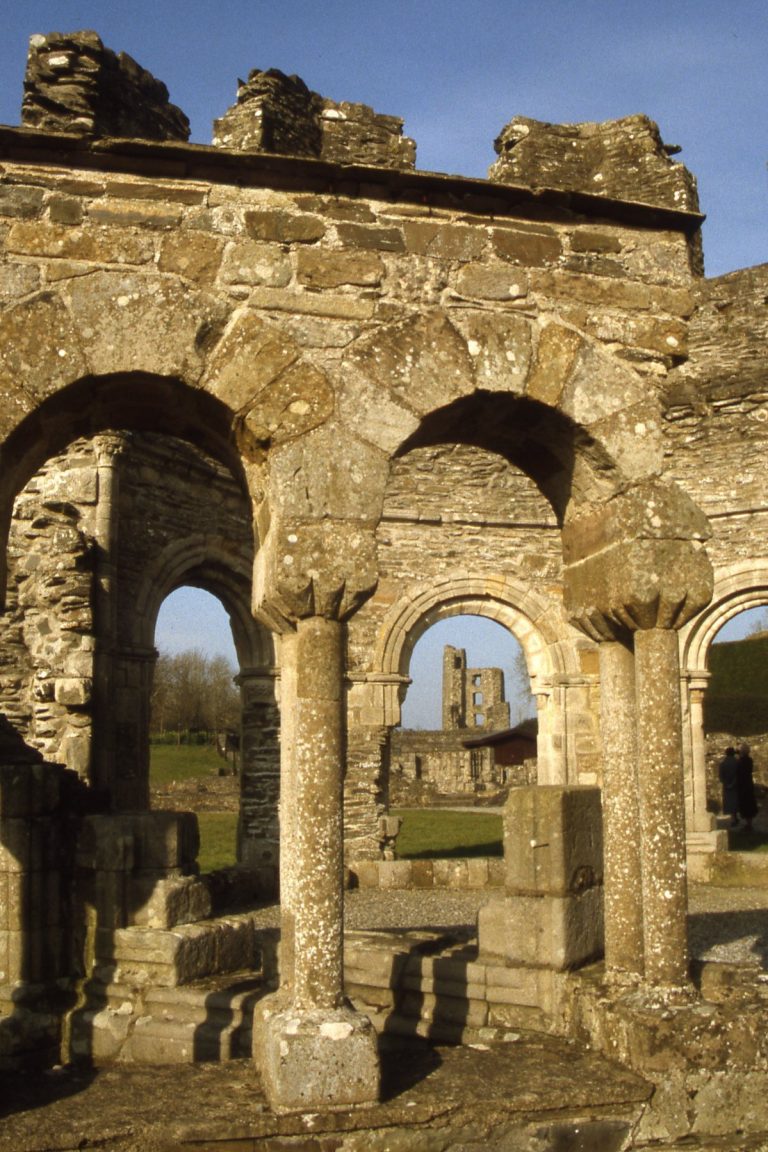
The third western entrance opens into an early Christian souterrain built around the tenth or eleventh century. Its underground route connects with the passage of Dowth North.
Winter-solstice illumination
From November to February, evening sunlight reaches the passage and chamber of Dowth South. At the winter solstice, light travels along the passage’s left side and illuminates three stones in the chamber. A convex central stone reflects sunlight into a dark recess, lighting decorated stones there. The rays then recede along the passage’s right side, and the sun’s light leaves the tomb after about two hours.