Mellifont Abbey: Ireland’s First Cistercian Abbey
Site at a Glance
- Rating
- 4.6
- Popularity
- Medium
- Country
- Ireland
- Primary era
- Medieval
- External website
- Open
- Eras represented
- Medieval, Early Modern
- Civilizations
- English, Irish
- Site type
- Religious
- Remains
- Monastery
On this page10 sections
History
Mellifont Abbey is a Cistercian monastery in Ireland, founded in 1142 beside the River Mattock at Mellifont, near Tullyallen and about 10 kilometres northwest of Drogheda. Monks from Clairvaux, a leading Cistercian abbey in France, established it at the invitation of Saint Malachy, Archbishop of Armagh, who sought to introduce the order’s austere observance to Ireland. The Cistercians were a Catholic monastic order devoted to enclosure, manual labour, austere worship, and strict observance of the Benedictine Rule.
Foundation and ecclesiastical importance
Saint Malachy chose the site away from aristocratic hunting grounds, reducing the risk of conflict, while keeping it close to the centres of power of Airgíalla, also known as Oriel, a medieval kingdom in northeastern Ireland. This position offered access to royal protection. The foundation received land, cattle, gold, a chalice, and altar cloths from Muirchertach Ua Lochlainn, king of Ulster, Donnchad Ua Cearbhall, king of Airgíalla, and Derbforgaill, the wife of Tigernan Ua Ruairc.
Mellifont’s church was consecrated in 1157. Five years earlier, the abbey hosted the Synod of Kells-Mellifont, a major Irish church council concerned with ecclesiastical organization and reform. Irish bishops, kings, monks, and clerics attended under the papal legate Giovanni Cardinal Paparoni. The synod divided Ireland into the archbishoprics of Armagh, Cashel, Tuam, and Dublin, and condemned simony, the buying or selling of church offices or spiritual privileges, as well as clerical concubinage. The church consecration further asserted ecclesiastical authority, including through the expulsion of Donnchadh Ua Maeleachlainn, king of Meath.
Growth and monastic influence
By 1170, the community contained 100 monks and 300 lay brothers. Lay brothers were non-ordained members who generally carried out manual work and practical duties. Mellifont became the principal Cistercian abbey in Ireland and a model for later foundations. Through direct and indirect affiliation, it established 38 daughter abbeys, commonly described as the “daughters of Mellifont.” From about 1275, these houses were free from English control.
The community initially brought together Irish monks from the surrounding region and monks sent from Clairvaux to teach Cistercian observance. Relations between the two groups later deteriorated. Tensions also grew between Mellifont’s Irish affiliated houses and monasteries dependent on foundations in England, Wales, or Norman Ireland. In 1200, an abbot who cooperated with English authority in an effort to reform monastic conduct was deposed by his community.
These disputes continued into the thirteenth century. In 1227, the abbot of Mellifont and the abbots of five other monasteries became involved in the Mellifont conspiracy, during which Cistercian visitors investigating Irish monastic independence were harassed and insulted. The conflict reflected the competing pressures of Irish ecclesiastical independence and wider Cistercian oversight.
Dissolution and later political history
Mellifont remained Ireland’s largest or leading abbey until the dissolution of the monasteries in 1539. This process was the suppression and confiscation of religious houses by Henry VIII during the sixteenth-century Reformation. About 150 monks were still living at Mellifont when it was suppressed.
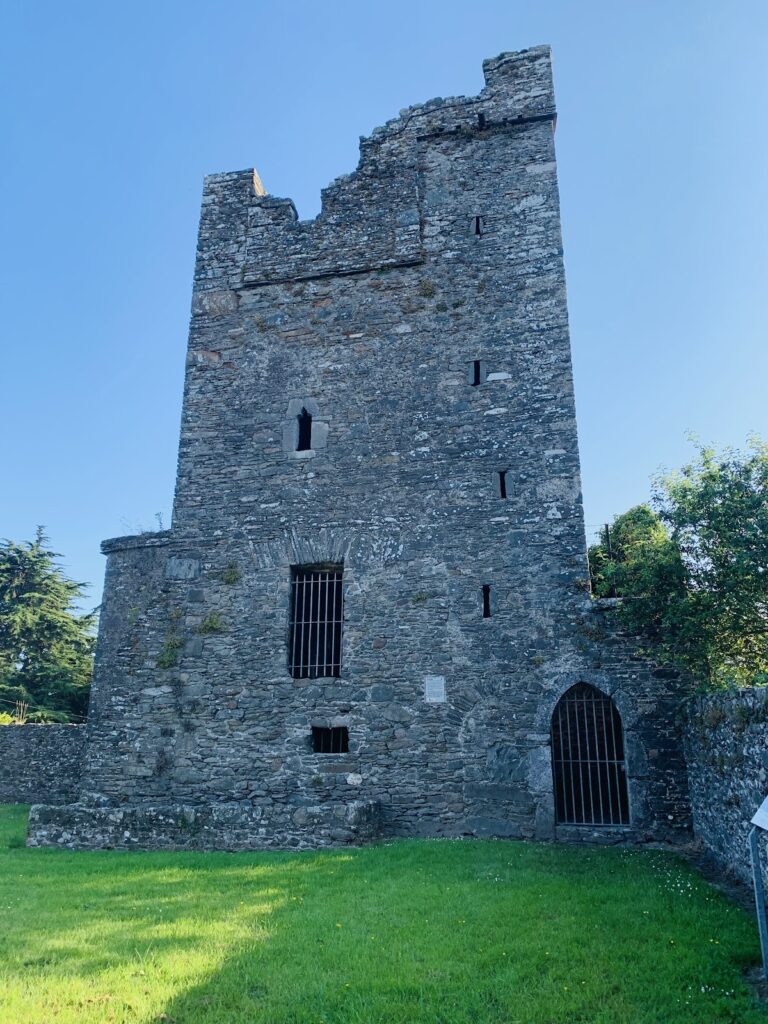
After the dissolution, the former abbey became a private manor. In 1556, Edward Moore built a fortified house there using material taken from the medieval buildings. The Treaty of Mellifont was agreed on the abbey grounds in 1603 between the English Crown and Hugh O’Neill, Earl of Tyrone. At that time Mellifont belonged to the 1st Viscount Moore, who helped persuade O’Neill to sign the treaty. The Moore family, later the Earls of Drogheda, retained ownership until 1727.
The site was attacked and looted during the Irish Rebellion of 1641. In 1690, William of Orange used Mellifont Abbey House as his headquarters during the Battle of the Boyne. These events added later political and military associations to the history of the medieval foundation.
Re-established Cistercian community
A new Cistercian community was established in 1938 by Trappist monks from Mount Melleray under Abbot Celsus O’Connell. Trappists are the stricter reform branch of the Cistercian order. The community settled at Oriel Temple, about five kilometres from the medieval site, on land that had previously belonged to Mellifont Abbey. Oriel Temple had formerly been associated with Lord Massareene and John Foster, the first Baron Oriel.
The new foundation attained abbey status on 21 November 1945, when its temporary church was consecrated, retaining the Cistercian affiliation of the medieval monastery. During celebrations for the eighth centenary of the medieval church’s consecration, the foundation stone of a new abbey church was laid at the re-established community on 21 July 1957, in the presence of President Seán T. O’Kelly and other dignitaries. The ruined medieval site is a national monument of Ireland.
Remains
The medieval abbey stood beside the River Mattock, and its surviving remains reflect a Cistercian architectural plan derived directly from Clairvaux. Mellifont adapted that model to Irish traditions. Local influence is especially visible in the sculpture and pavement patterns of the chapter house. While many continental Cistercian buildings favoured Gothic forms, the Irish houses associated with Mellifont generally used Romanesque architecture, a medieval style known for rounded arches and substantial masonry.
Church and monastic buildings
Abbey church
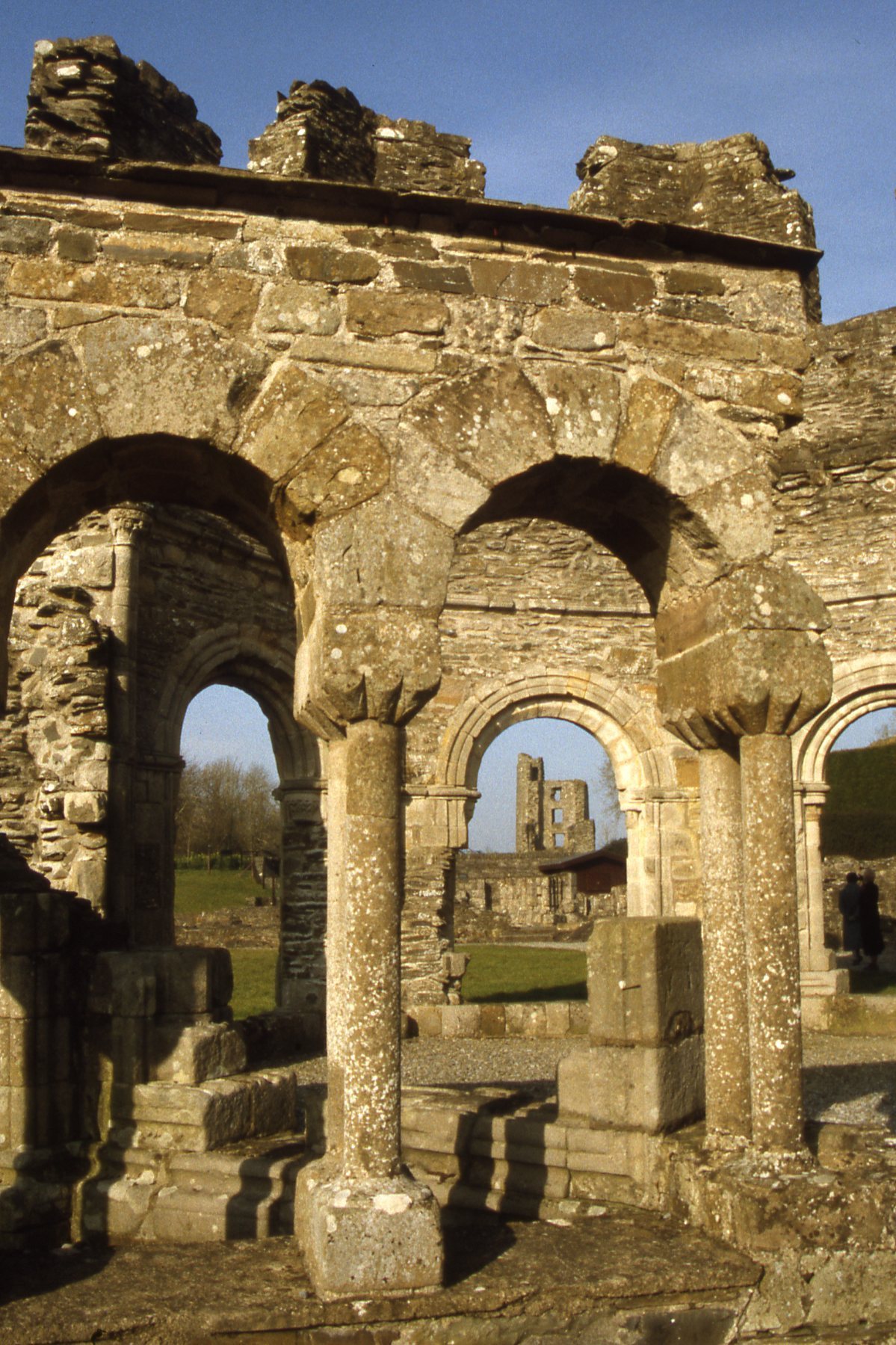
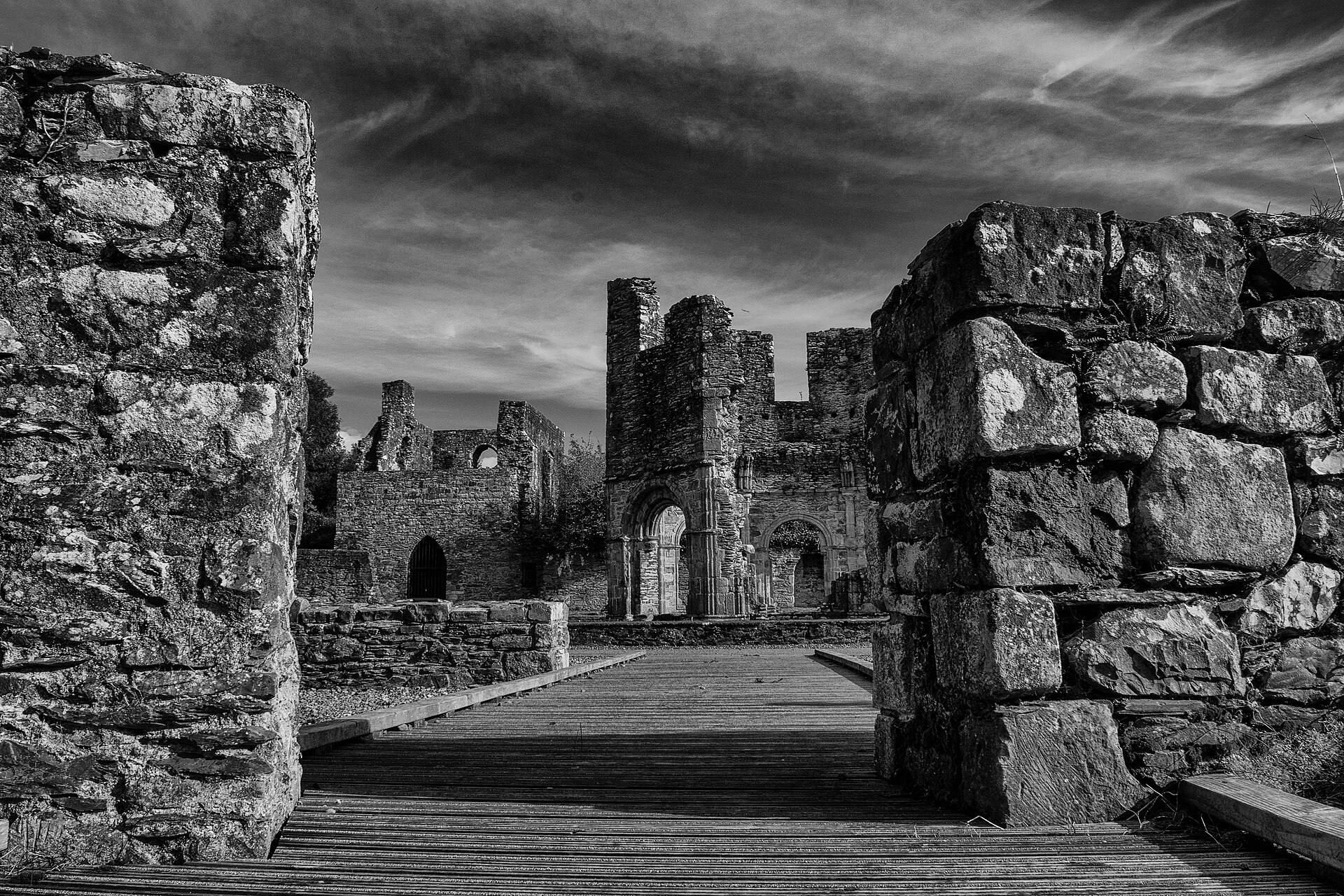
The abbey church contained a massive bell tower built on a square base. This was an unusual feature within the austere Cistercian tradition, which generally rejected large bell towers or reduced them to small bellcotes, structures or openings designed to hold a bell. As the community expanded, successive abbots enlarged the church, particularly during the fourteenth and fifteenth centuries. Several Romanesque arches survive among the medieval remains.
Cloister and chapter house
The cloister and conventual buildings were restored and enlarged during the fourteenth and fifteenth centuries. The fourteenth-century chapter house preserves the local character of Mellifont’s architecture through its sculptural ornament and pavement motifs. A chapter house was the room where the monastic community met for readings, discipline, and administrative business.
Lavabo
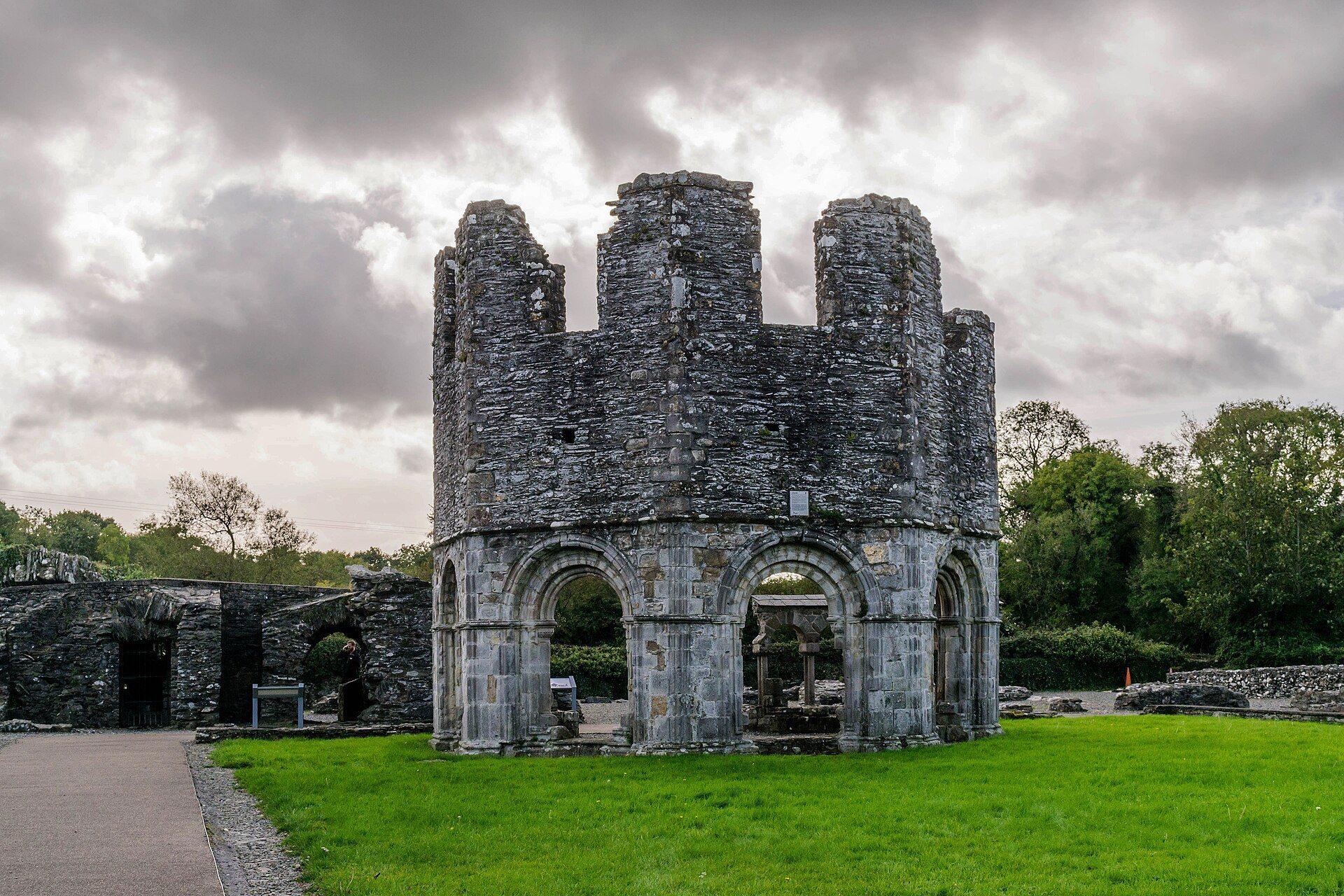
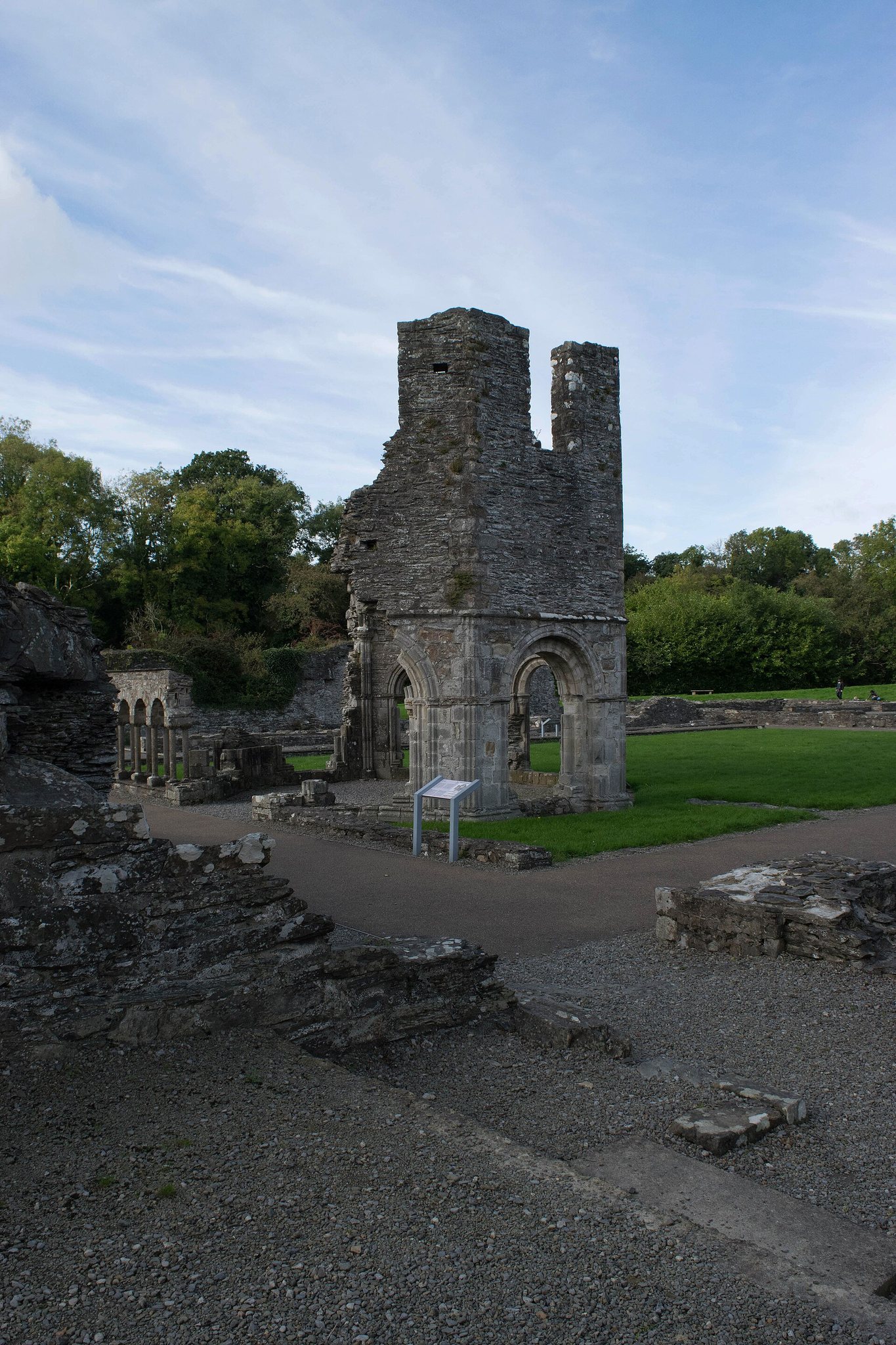
Opposite the church and beside the refectory stands a thirteenth-century lavabo, a monastic washing installation used by monks to clean their hands before meals. The structure is an approximately intact, two-storey octagon containing a fountain. Its position within the cloister made washing part of the organized movement between the community’s religious and communal spaces.