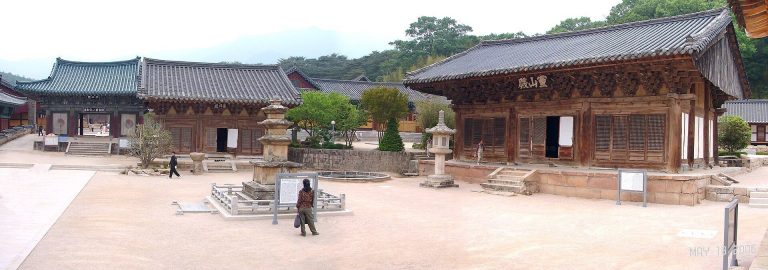
Dongnaeeupseong Fortress: A Historic Korean Fortification
Site at a Glance
- Popularity
- Medium
- Country
- South Korea
- Primary era
- Early Modern
- Eras represented
- Medieval, Early Modern
- Civilizations
- Goryeo, Joseon
- Site type
- Military
- Remains
- Wall
On this page8 sections
History
Early fortifications and Joseon rebuilding
Dongnaeeupseong Fortress is a Korean fortification on Maansan Mountain in Busan, South Korea. A stronghold may have occupied the site as early as the first century CE, while its first recorded wall repair took place in 1021 under Goryeo, one of Korea’s historical dynasties. Work at the fortress in 1387 lasted more than a month. In 1446, during the later Joseon dynasty, a stone wall was built there.
Invasion and recovery
During the Japanese invasions of Korea, campaigns launched against Joseon between 1592 and 1598, Dongnaeeupseong was among the first targets, together with Busanjinseong. At the Siege of Dongnae, Song Sang-hyeon, the local district administrator, other senior Korean officials, and many civilians were killed. The fortress was destroyed and then fell into a long period of neglect.
In 1713, Dongnae’s magistrate restored and enlarged the walls. Further rebuilding followed in 1731, when a town was established within the fortress and 52,003 people were mobilized for the work. The fortress served for many centuries, with a period of disuse from around the seventeenth century until the mid-eighteenth century.
Later defenses and modern changes
Rebuilding of the main wall and several turrets began in 1870 in anticipation of a possible Japanese invasion. During Japanese colonial rule from 1910 to 1945, parts of the fortress were demolished, including the walls between the western and southern gates. Restoration took place after the war, and the Busan Metropolitan Government began further work in 1979. The site became Busan Metropolitan City Monument No. 5 in 1972. More than 20 archaeological investigations between 1979 and 2022 examined the fortress’s former facilities and their character.
Remains
Setting and walls
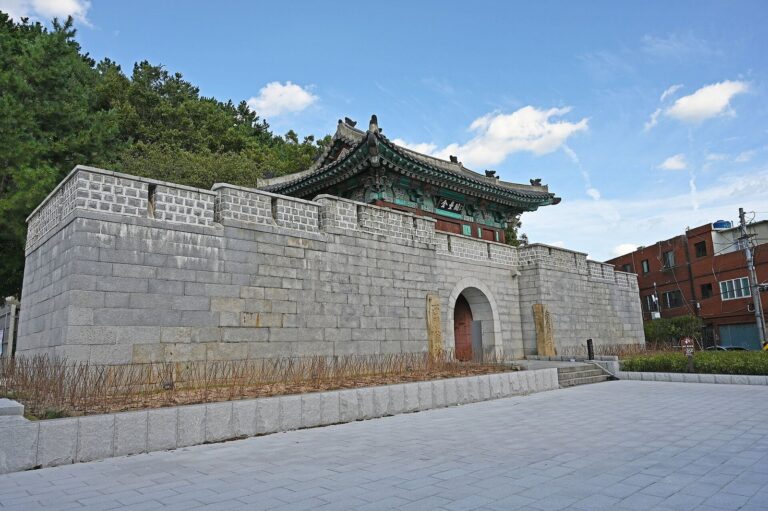
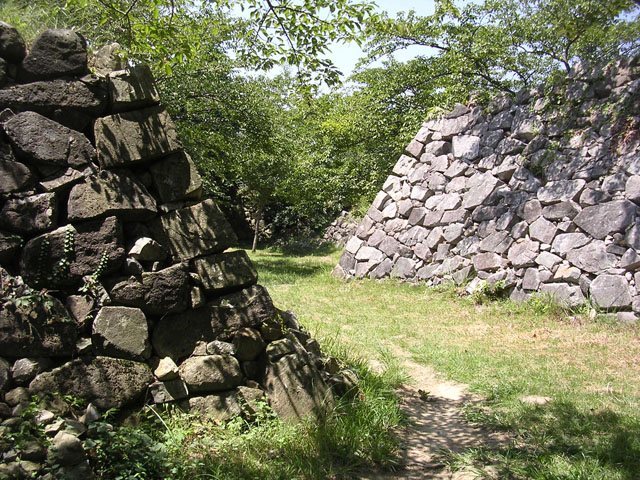
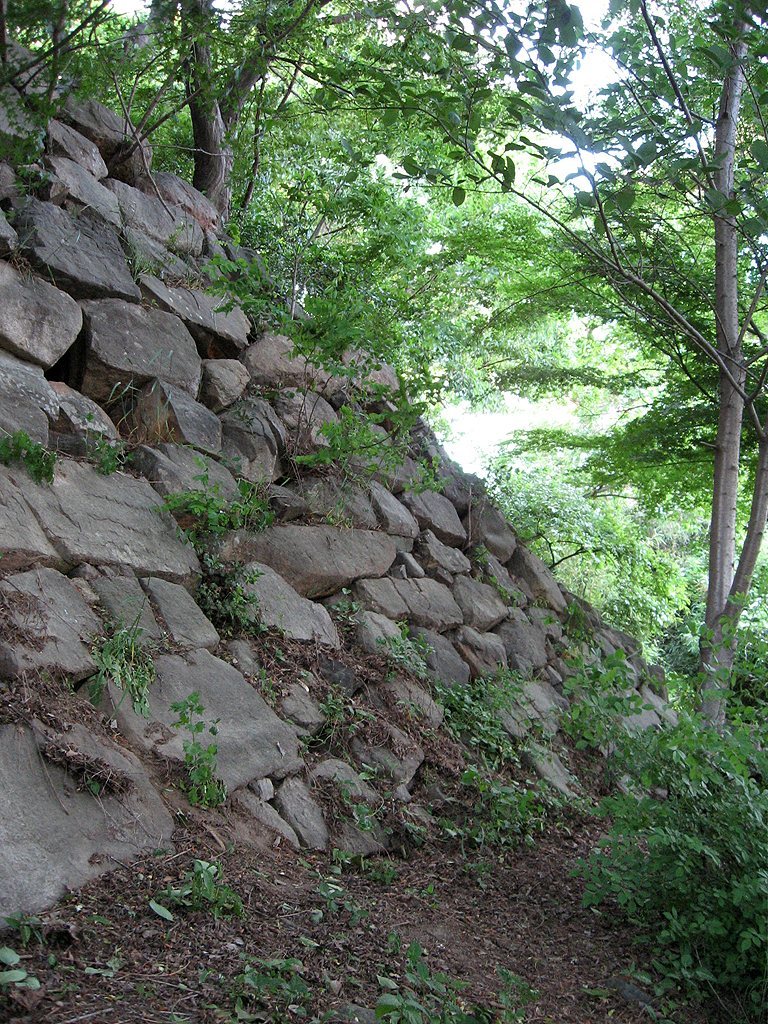
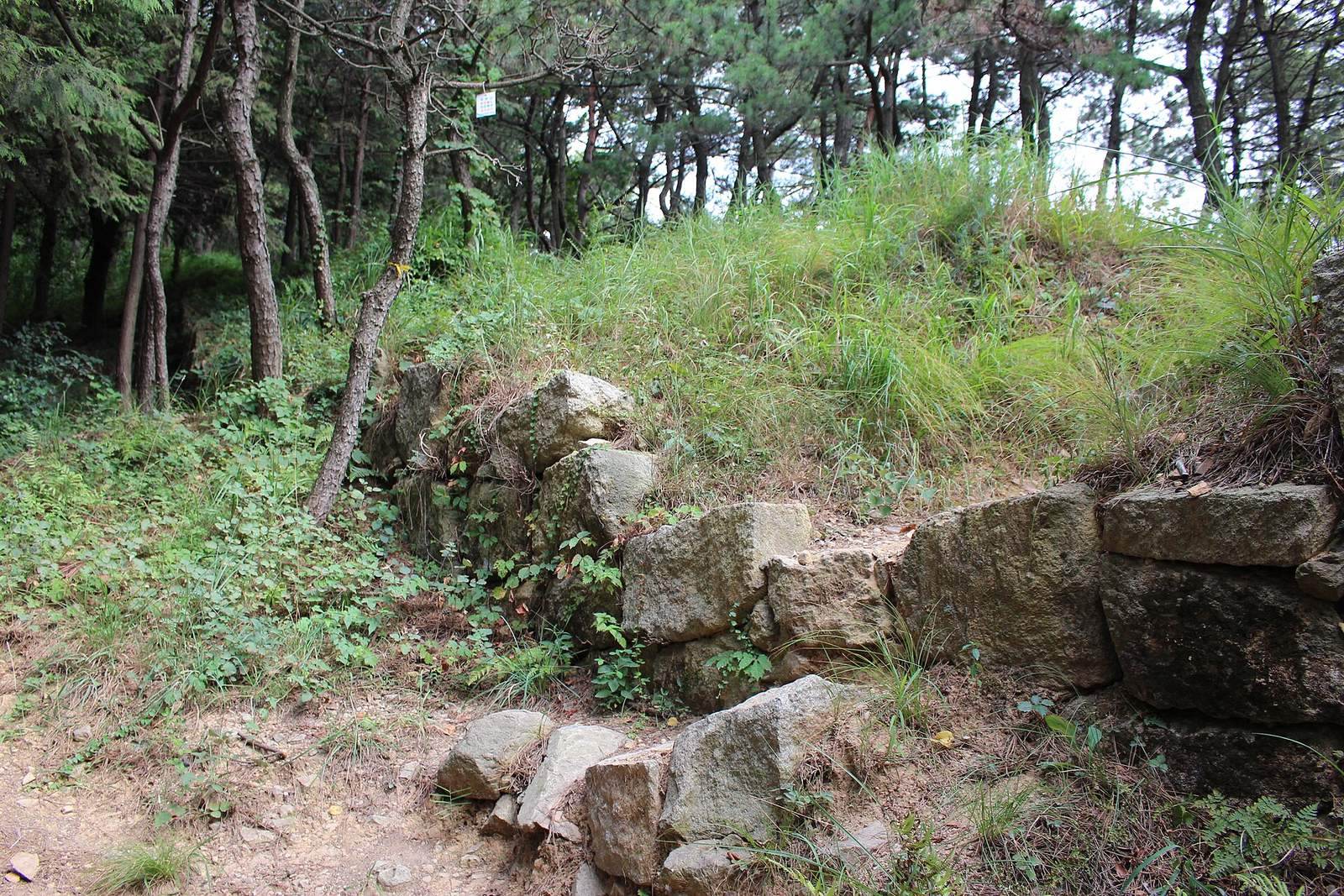
The fortress occupies Maansan Mountain within Dongnae Historic Park and has a roughly oval plan. Mountains border its northern and eastern sides, while the ground opens out to the south and west. Inner and outer walls form its defenses. The wall system measures about 2.7 kilometres, with 1.3 kilometres lost through urbanization. Surviving wall sections stand about 1.5 to 3 metres high and are 2.4 metres thick at the top; their bases use small stones and sandy clay. The 1713 enlargement brought the perimeter to 5,240 metres. Although much of the wall fabric has disappeared, surviving foundations enabled reconstruction to the fortress’s original shape, and the site now includes both rebuilt sections and ruins.
Gates and defensive works
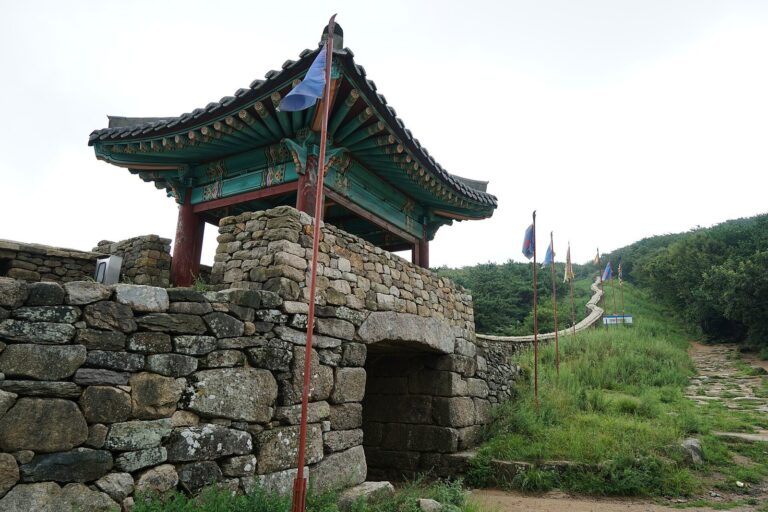
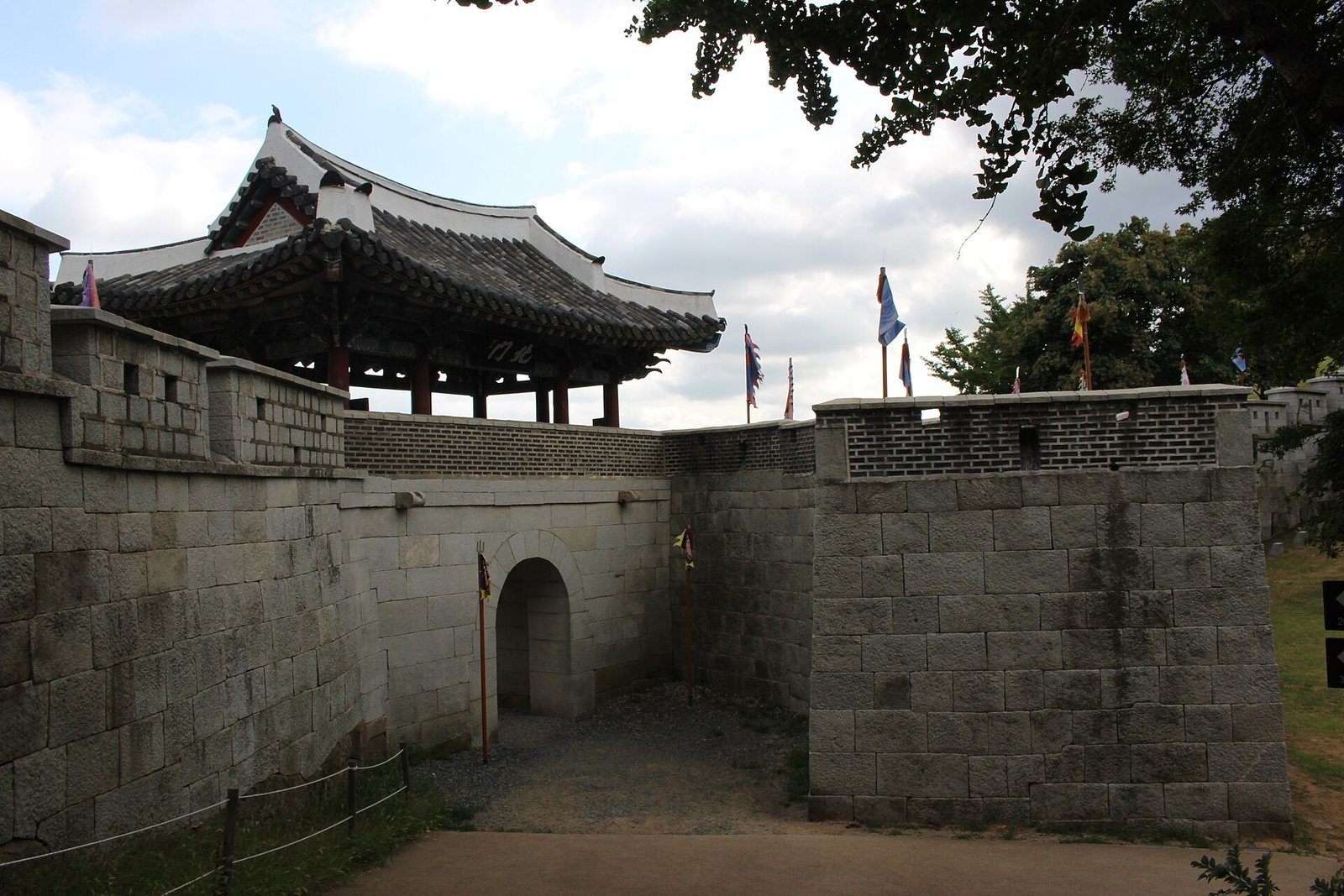
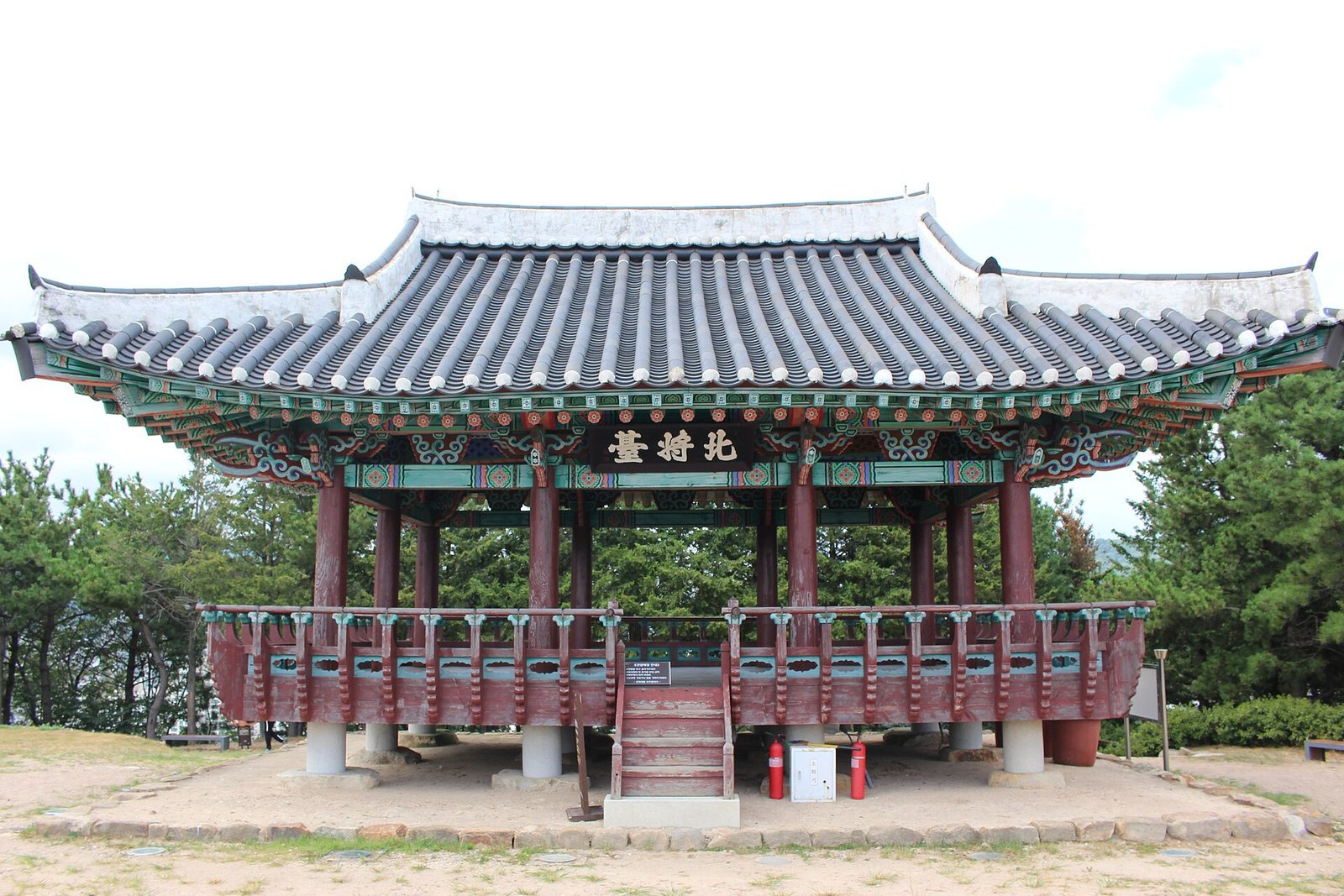
The fortress has six gates, with the south gate serving as the main entrance. Four principal gates face east, west, south, and north. Each had a gate tower, and several towers have been restored. The defenses also included a raised fortification above the south gate and smaller watchtowers at the other gates, including eastern, western, and northern towers.
Archaeological finds
Excavations have recovered relics and human remains associated with the Japanese invasions. Some of these discoveries are displayed at Suan station on Busan Metro Line 4.