Farah Citadel: A Fortified Site in Afghanistan
Site at a Glance
- Popularity
- Medium
- Country
- Afghanistan
- Primary era
- Classical
- Eras represented
- Iron Age, Classical
- Civilizations
- Achaemenid, Kingdom of Macedon
- Site type
- Military
- Remains
- Citadel
History
Farah Citadel is a fortified complex at the edge of Farah, Afghanistan. Occupation at the site reaches back at least 2,500 years, but its original construction date is unknown. Its construction has been attributed either to Alexander the Great or to Zoroastrian warriors during the reign of Darius the Great, king of the Achaemenid Persian Empire from 522 to 486 BC. Later building over older foundations may have contributed to the uncertainty about its beginnings.
In 330 BC, the ancient region of Drangiana, in what is now southwestern Afghanistan and southeastern Iran, was under Achaemenid rule when Alexander arrived. He renamed its capital, Phrada, Prophthasia, meaning “Anticipation.” The new name is associated with Alexander’s discovery of an alleged plot against his life, said to have been organized by Philotas, a Macedonian noble and cavalry commander. Modern Farah is identified with the ancient city.
Farah served as a minor way station on the Silk Road, a network of trade routes linking regions across Asia. Routes between Persia and India carried textiles, spices, and other valuable goods.
During the 1980s, mujahideen, or armed resistance fighters, used the citadel as an arms depot.
Remains
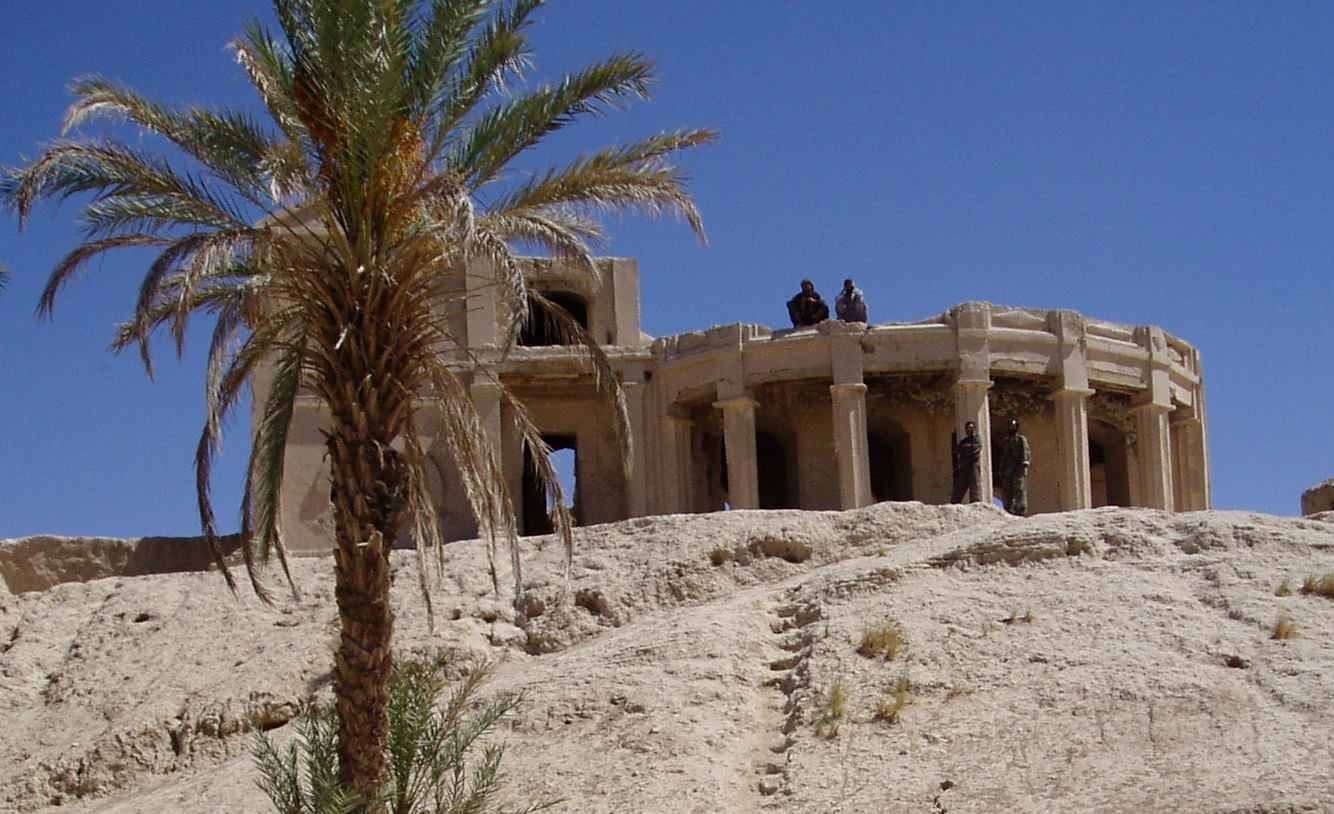
The citadel’s weathered earthen walls stand on a low rise a short distance from Farah’s main bazaar. Its inner wall circuit extends about one kilometre from one corner to the opposite corner, and the walls reach approximately 15 metres in height.
Within the walls, mud-built rooms have domed ceilings. Their forms and natural materials, also used in many Farah homes, help keep interiors cooler in summer and warmer in winter. The citadel is now in disrepair, and its interior contains unexploded ordnance and the remains of rusting Soviet-style vehicles.