Dòlmens de la Serra de l’Arca: Prehistoric Tombs in the Montseny Massif
Site at a Glance
- Popularity
- Very Low
- Country
- Spain
- Primary era
- Stone Age
- Eras represented
- Stone Age
- Civilizations
- Unclassified
- Site type
- Burial
- Remains
- Necropolis
On this page10 sections
History
Dòlmens de la Serra de l’Arca is a group of seven prehistoric tombs in Aiguafreda and El Brull, Spain, in the northwestern Montseny Massif. The tombs date to 2200–1800 BCE, during the Chalcolithic, or Copper Age, when people used copper alongside stone tools. The word arca was formerly used for megalithic constructions.
The Dolmen of Serra de l’Arca II was discovered in 1915, excavated by Ricard Batista in 1962, and reconstructed in 1965. The Dolmen of Cruïlles was discovered in 1917 and excavated in 2003. Batista, a Catalan archaeologist whose work included prehistoric archaeology, excavated the two Paradolmens of the Duc in 1961.
Remains
The dolmens in Aiguafreda and El Brull occupy the northwestern sector of the Montseny Massif, at a stated elevation of 710 m. Their remains include stone chambers, fallen slabs and burial mounds. The Paradolmens of the Duc are in Centelles.
Dolmens in Aiguafreda and El Brull
Dolmen of Pla del Boix
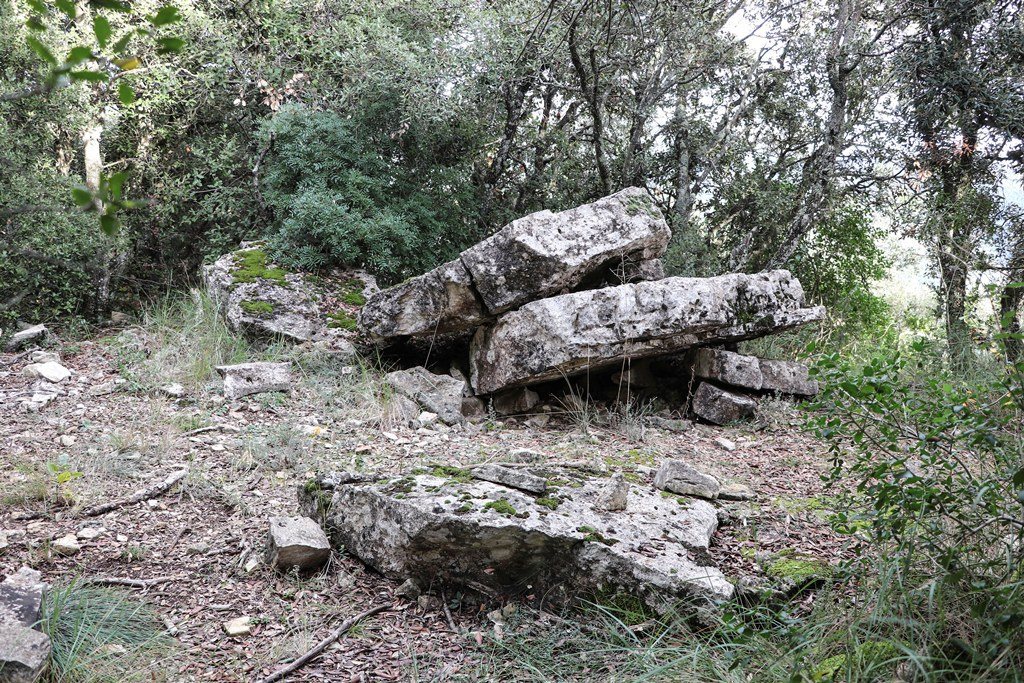
In El Brull, about 100 m east of the junction leading to Bruguer, the Dolmen of Pla del Boix has a simple rectangular chamber built from five large limestone slabs. The slabs have fallen and lie piled beside the monument.
Dolmen of Creu de la Parròquia
At the Dolmen of Creu de la Parròquia, also known as the Dolmen of Can Brull, a burial mound survives among the remains.
Dolmen of Serra de l’Arca I
At Serra de l’Arca I, a fallen slab lies among stones that may have formed part of the tomb.
Dolmen of Serra de l’Arca II
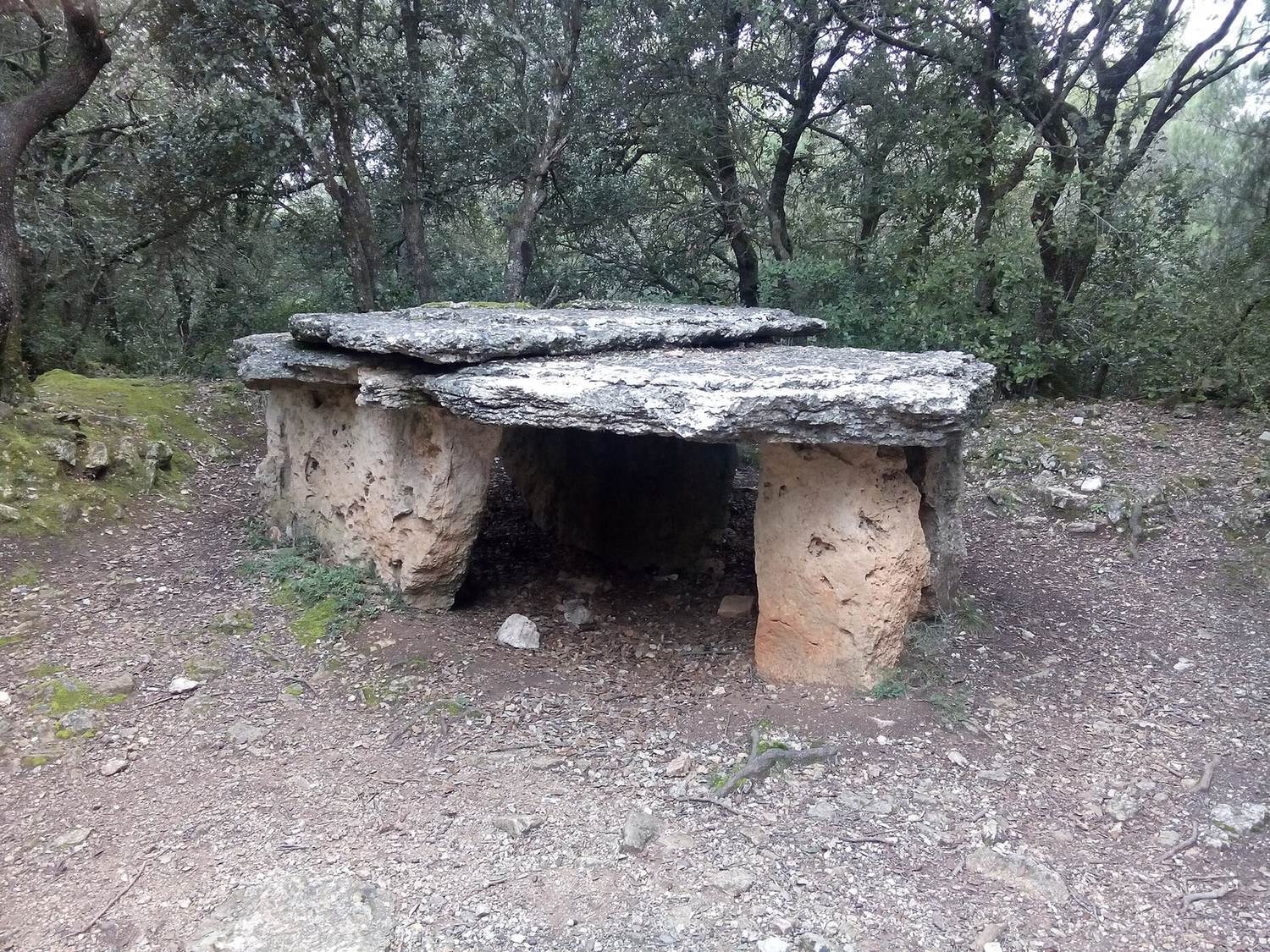
Beside the track from Aiguafreda to El Brull, Serra de l’Arca II measures 2.90 m long, 1.2 m wide and 1.90 m high. Two upright slabs stand on a mound about 8 m in diameter. Excavation recovered small bone fragments and teeth, now held at the Episcopal Museum of Vic.
Dolmen of Casa Nova de Can Serra
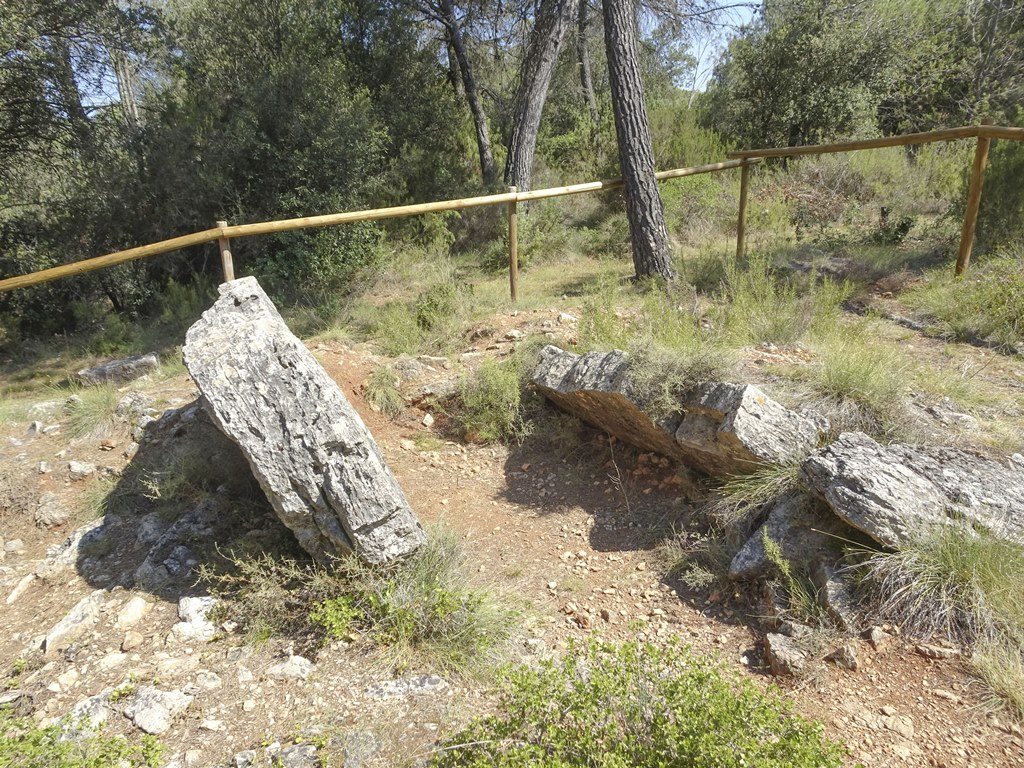
Beside the ruins of Casa Nova de Can Serra, two large slabs remain upright at the tomb, one forming a side and the other the head end.
Dolmen of Cruïlles
The Dolmen of Cruïlles, also called the Dolmen of Cal Cabrer, sits in a pine-covered area around a small hill, near the crossroads of the Vilargent and Pinedes paths and about 400 m east of Cruïlles Castle. Its two large side slabs lean slightly and run southeast to northwest; part of its burial mound also survives. The monument measures 3.40 m long, 1.70 m wide and 1.30 m high. Pottery fragments and bone discs recovered during excavation are held at the Episcopal Museum of Vic.
Paradolmens of the Duc
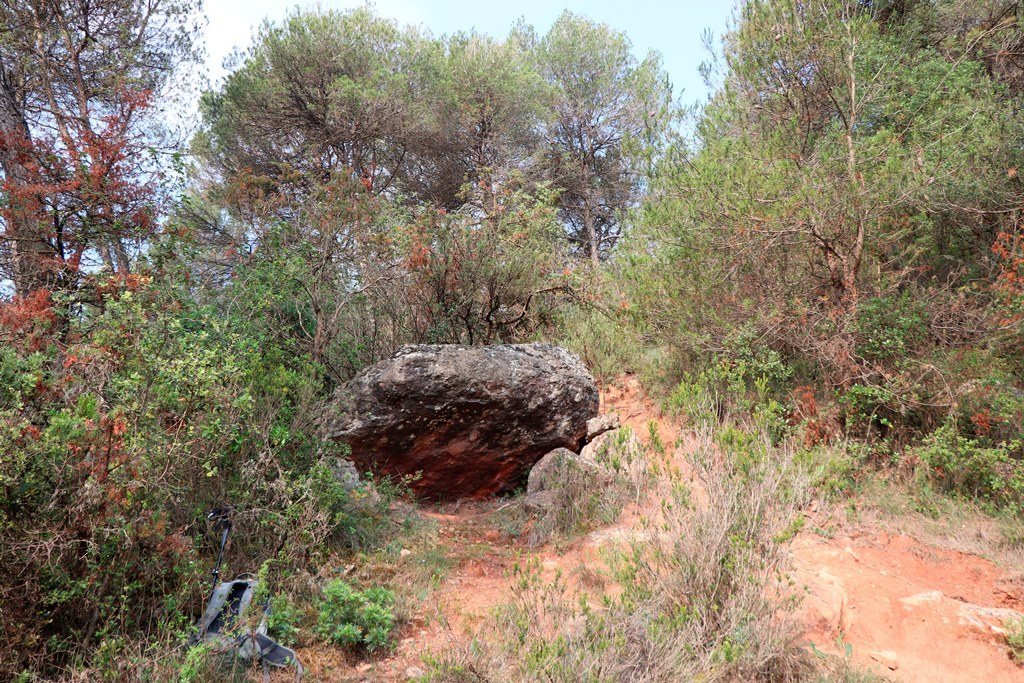
The two Paradolmens of the Duc, funerary monuments that incorporate natural rock formations, lie in Centelles, 9 m apart beside the path from Terrissos Vermells in Sant Martí de Centelles to the Sant Pau track. Each takes the form of a small, open stone-lined burial chamber with an irregular, roughly polygonal plan. Pottery fragments and bones recovered from the surrounding area were deposited at the Episcopal Museum of Vic.