Dolmen du Coll de la Llosa: A Probable Prehistoric Burial Monument in France
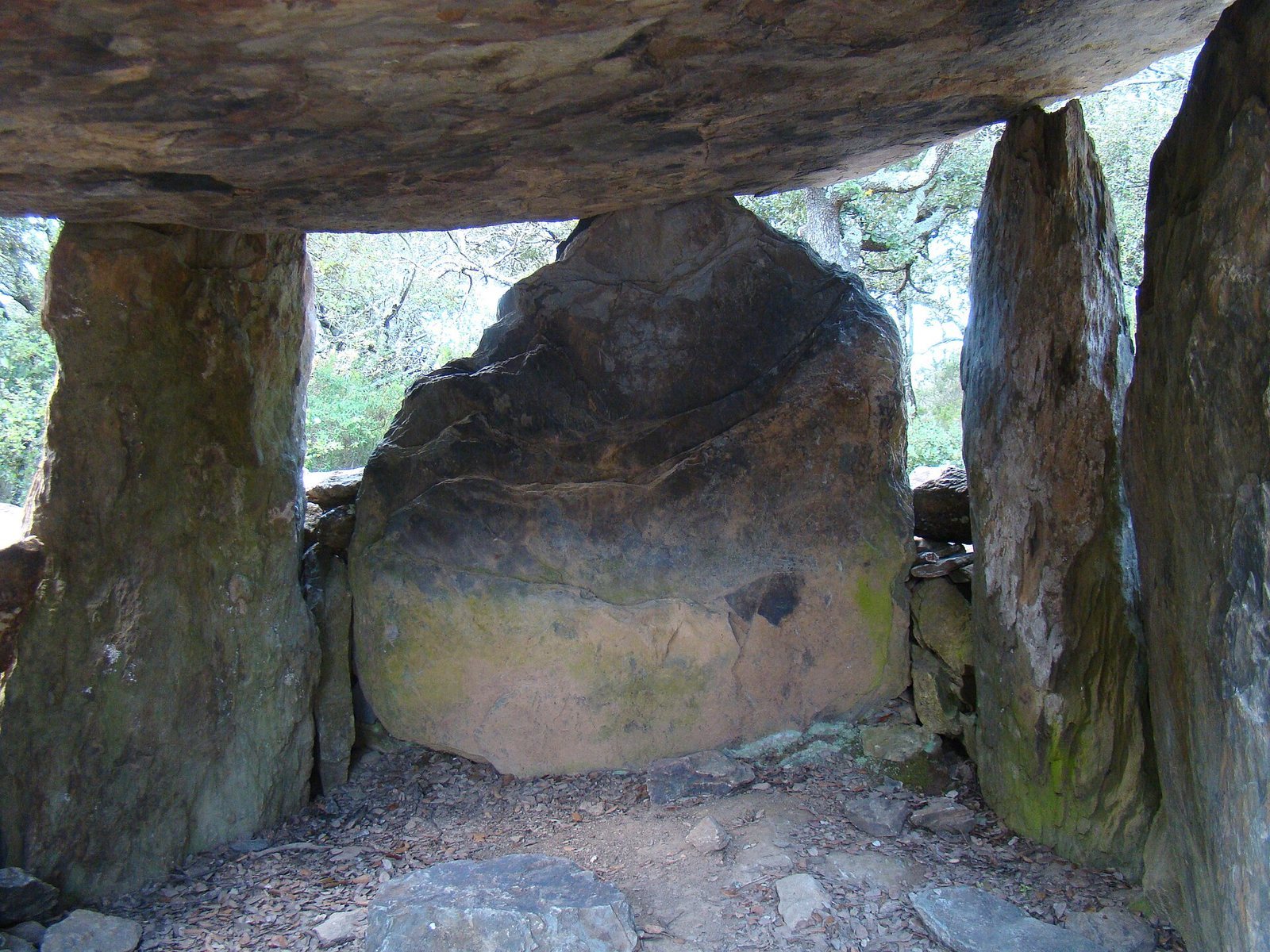
Site at a Glance
- Popularity
- Very Low
- Country
- France
- Primary era
- Stone Age
- Eras represented
- Stone Age
- Civilizations
- Unclassified
- Site type
- Burial
- Remains
- Tomb
On this page8 sections
History
Neolithic origins and local boundaries
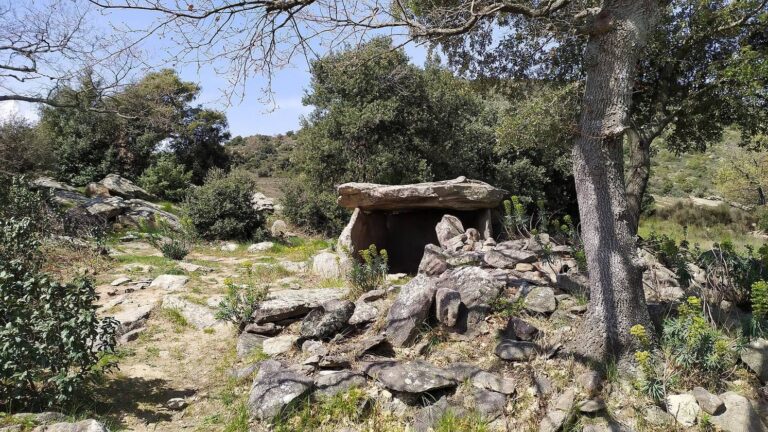
The Dolmen du Coll de la Llosa, a prehistoric monument built from large stones, stands in the Aspres of France, on the eastern foothills of the Canigou massif. Its proposed date is about 3500 BC, within the fourth millennium BC, and it probably served as a collective burial place. Jean-Paul Demoule and colleagues connect it with the Southern Chasséen, a Neolithic culture of southern France. Jean Guilaine considered an early date plausible for dolmens in Pyrénées-Orientales, while noting that archaeological proof was lacking.
The monument has long marked boundaries associated with Bouleternère, Casefabre, and Saint-Michel-de-Llotes. An 1828 description places the boundary between Casefabre and Saint-Michel-de-Llotes at a large flat stone on the pass. The site’s administrative assignment has varied: Eugène Devaux placed it in Casefabre, while Carreras and Tarrús assigned it to Saint-Michel-de-Llotes. The name Coll de la Llosa combines Catalan words for pass and large flat rock. Terms for such stones were also used for dolmens and contributed to names in the surrounding area.
Ancient disturbance and modern study
The chamber was looted in antiquity, and its floor was dug so deeply that the monument’s stability was threatened. Devaux published the first account of the dolmen in 1934. Pierre Ponsich and Maurice Iché studied it in connection with publications in 1949. Jean-Philippe Bocquenet studied and restored the monument in 1994, and a further study followed in 1996.
Remains
Setting and plan
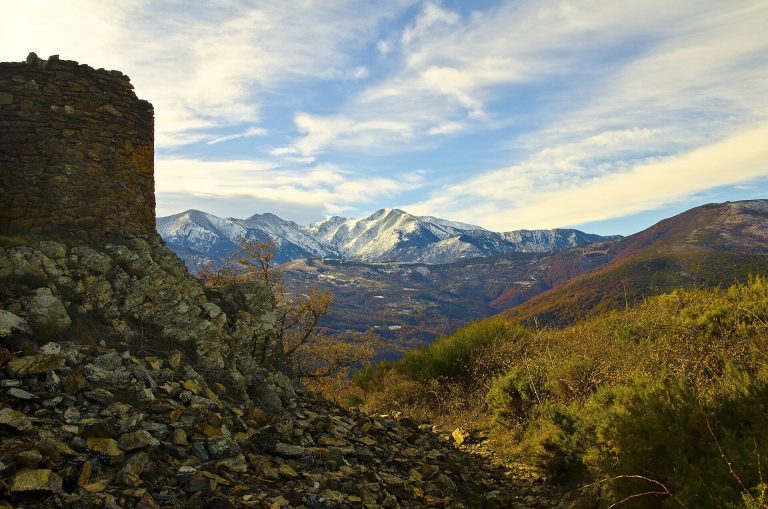
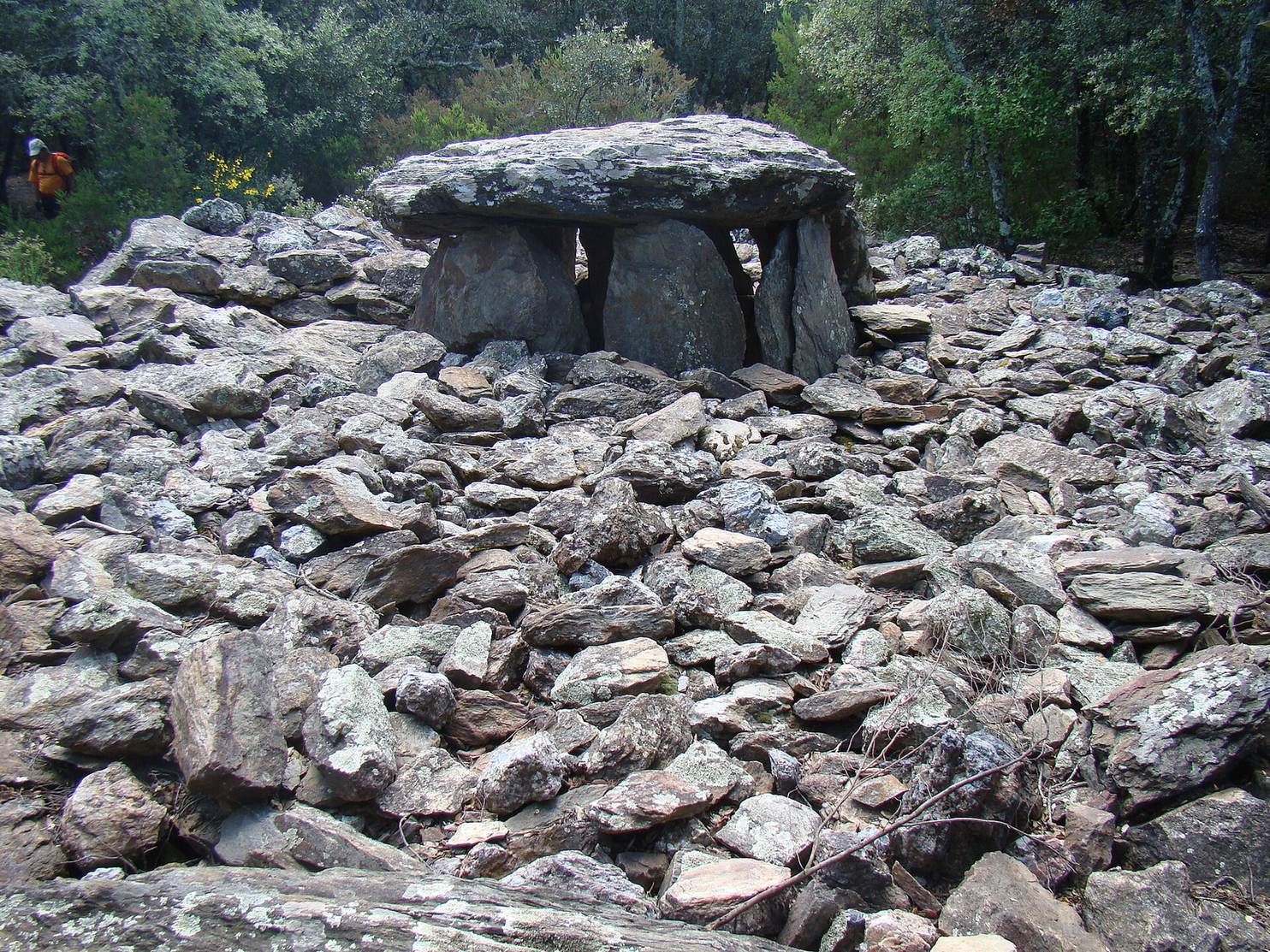
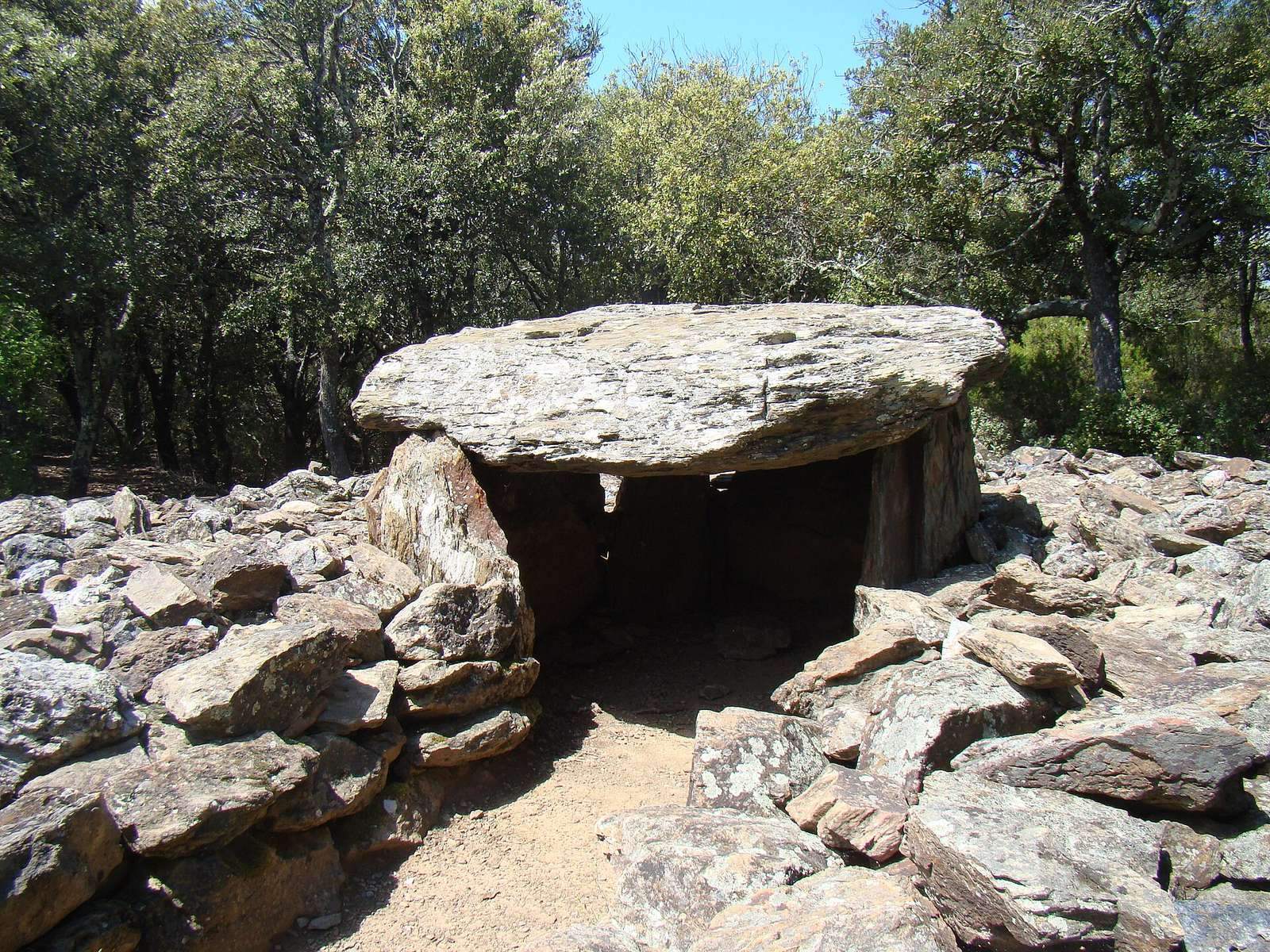
The dolmen stands at 592 m on the Coll de la Llosa pass, amid Mediterranean-type woodland. It overlooks the deep Boulès valley to the west and lies just above one of the river’s springs. Carreras and Tarrús classify it as an early corridor dolmen, a burial monument whose chamber is reached by a passage. Here, a trapezoidal chamber opens into a narrowed passage about 2.50 m long and 50 cm wide. The passage crosses a circular mound about 10 m in diameter. The monument is aligned west to east, with its entrance facing east, and follows a natural hollow at the top of a rise. This setting reduced the need to cut into rocky ground or bring in material for the mound.
Stonework and condition
The six chamber supports are made of gneiss and schist quarried on site. The schist covering slab measures about 2.4 by 1.5 m and averages 35 cm thick. Only one end slab appears to remain in its original position; the others had been tilted or moved before restoration.
Engraved cover slab
The covering slab bears at least 82 cup-shaped hollows, some linked by short engraved grooves, and 34 crosses. Among the larger markings are a cross near the slab’s centre and an oval hollow near its upper part. Jean Abélanet counted the engravings. Their purpose remains uncertain.
Finds
The mound yielded mostly fragments of contemporary or non-diagnostic objects, along with about a dozen fragments of Bell Beaker pottery, a distinctive pottery type associated with a prehistoric European culture.