Dhauli: A Mauryan and Buddhist Heritage Site in Odisha
Site at a Glance
- Rating
- 4.5
- Popularity
- Low
- Country
- India
- Primary era
- Classical
- Eras represented
- Classical, Modern
- Civilizations
- Mauryan
- Site type
- Religious
- Remains
- Sanctuary
On this page13 sections
History
Dhauli is a historic hill and Buddhist heritage site beside the Daya River in Odisha, India, about 8 kilometres south of Bhubaneswar. Its history is associated with the Mauryan emperor Ashoka and the Kalinga War, fought around 261 BC between Ashoka’s forces and the ruler of Kalinga.
The Kalinga War and Ashoka
The Mauryan army won the conflict, but the fighting caused extensive deaths among soldiers and civilians. Dhauli is widely believed to have been one of the principal locations connected with the war. The traditional interpretation holds that the suffering caused Ashoka to regret the conquest, embrace Buddhism, and promote nonviolence and public welfare. Ashoka was the third Mauryan emperor, ruling much of the Indian subcontinent in the third century BC. The extent and nature of this transformation remain debated, and some researchers do not accept the war as the decisive cause of his change in outlook.
The Buddhist phase
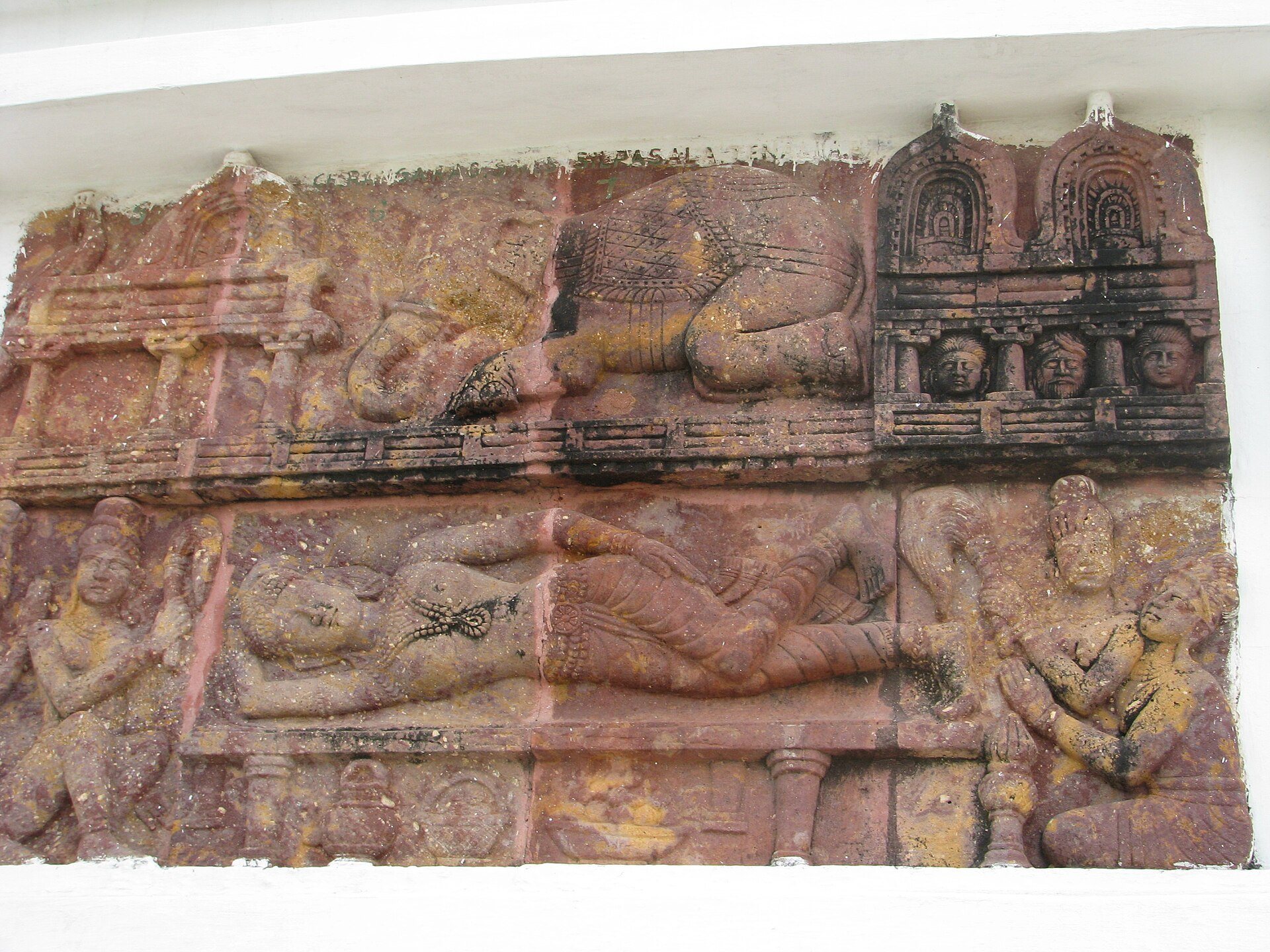
After the shift in outlook associated with Ashoka, Dhauli received special attention within his realm. The hill became associated with Buddhist stupas, pillars, monastic residences, chaityas, or Buddhist prayer halls, and administrative inscriptions. A stupa is a Buddhist monument generally linked with relics, remembrance, or worship, while a monastery served as a residence and institutional center for monks. Dhauli was consequently regarded as an important center of Buddhist activity and as a place connected with the spread of Buddhism in the region.
Later traditions and religious activity
The hill was formerly associated with the name Surabhigiri, and traditions also describe its summit as having contained a medicinal garden and an amusement garden. Local stories connect the stone elephant with Ashvatthama, a warrior figure from the Mahabharata, and associate caves on the hill with the five Pandavas and their mother Kunti. These epic traditions are distinct from the historical evidence linked with Ashoka. An ancient Shiva temple continues to be associated with religious activity, including gatherings during the Shivaratri festival.
The peace pagoda
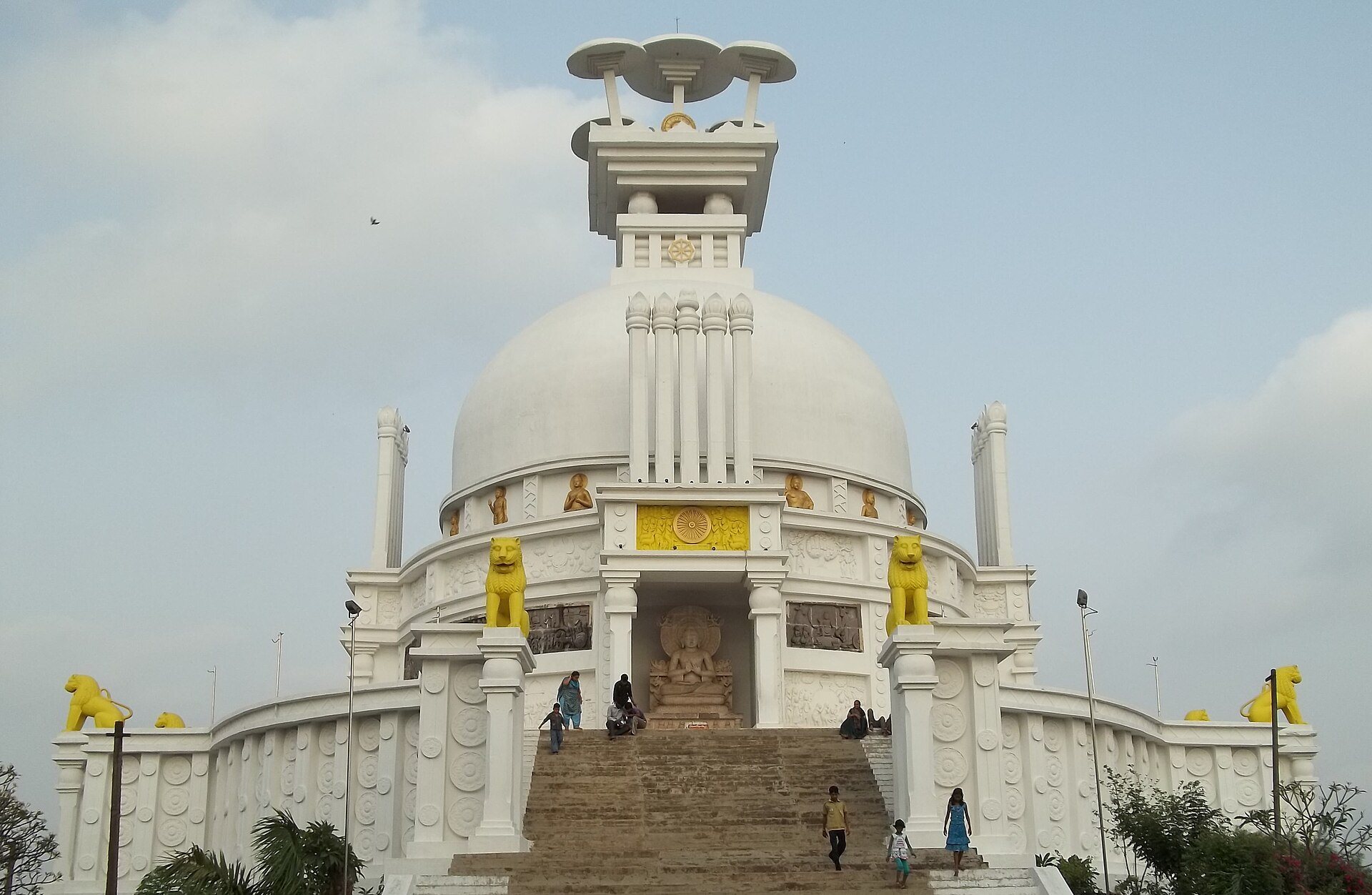
In the 1970s, the Japan Buddha Sangha and the Kalinga Nippon Buddha Sangha jointly supported the construction of Dhauli Santi Stupa. Generally dated to 1972, the white peace pagoda added a modern Buddhist monument to the hill’s older associations with Ashokan inscriptions and Buddhist activity.
Remains
Dhauli occupies a hill beside the Daya River, with open ground extending across part of the slope and a route leading toward the summit. Its principal archaeological evidence is concentrated around the rocky outcrop beside this route, while later Buddhist and Hindu monuments occupy other parts of the hill.
Ashokan inscriptions and sculpture
Rock edicts
Ashoka’s inscriptions are carved in Brahmi, an ancient South Asian writing system used for early public texts, on a rocky outcrop near the summit route. They include Major Rock Edicts I to X and XIV, together with two Kalinga Edicts. A rock edict is a directive or statement carved into stone for public communication. The inscriptions are also described as containing thirteen injunctions or prohibitions. Kalinga Edict VI expresses Ashoka’s intention to promote the welfare of the entire world.
Stone elephant
A stone elephant is carved above or in front of the inscriptions. Only the front portion of the animal is represented, but the carving conveys movement through its carefully rendered form. It is regarded as one of Odisha’s oldest Buddhist sculptural works and is interpreted by some Buddhist followers as a symbolic representation of the Buddha.
Buddhist and religious monuments
Dhauli Santi Stupa
Dhauli Santi Stupa is a white peace pagoda on the summit of the hill. Built in the 1970s through the joint efforts of the Japan Buddha Sangha and the Kalinga Nippon Buddha Sangha, it is generally dated to 1972.
Caves and Shiva temple
Caves on the hill are associated by local tradition with the five Pandavas and Kunti. An ancient Shiva temple is also located on Dhauli Hill and remains connected with religious activity. The traditions surrounding the caves belong to local epic memory rather than to the Ashokan inscriptional evidence.
Earlier Buddhist remains
Dhauli is associated with descriptions and traditions concerning stupas, pillars, monastic buildings, and chaityas established during the Buddhist phase attributed to Ashoka. These associations place the surviving inscriptions and sculpture within a wider religious landscape linked with the Mauryan period.