Denny Abbey: A Medieval Monastic and Farming Complex in England
Site at a Glance
- Rating
- 4.5
- Popularity
- Low
- Country
- United Kingdom
- Primary era
- Medieval
- External website
- Open
- Eras represented
- Medieval
- Civilizations
- Crusader, English, Knights Templar
- Site type
- Religious
- Remains
- Monastery
On this page12 sections
History
Denny Abbey is a former medieval abbey in the United Kingdom near Waterbeach, founded by Benedictine monks in the twelfth century. The church and monastery opened in 1159, and the site later became a Knights Templar hospital before being transformed into a Franciscan Poor Clare community. It stands beside an ancient road between Cambridge and Ely, in a landscape settled by farmers from at least the Roman period.
Landholding and Benedictine foundation
The estate was recorded in the Domesday Book in 1066 as belonging to Edith the Fair, also known as Swanneck, the consort of King Harold. It later came into the possession of Alan, 1st Earl of Richmond. The place-name appears in Templar records of 1176 as Daneya and Deneia, and is thought to mean “Danes’ Island.”
During the 1150s, Benedictine monks dependent on Ely Abbey moved to the site from their flood-prone monastery at Elmeney, a settlement about 1.6 kilometres to the northeast that later disappeared. The move was suggested by Conan IV, Duke of Brittany. Their church and monastery, known as Denny Priory, opened in 1159, but the monks returned to Ely in 1169. Denny was then transferred to the Knights Templar, a medieval military-religious order.
Templar and Hospitaller ownership
The Knights Templar expanded Denny and made it a hospital for sick members of the order in the mid-thirteenth century. In 1308, Edward II ordered the arrest and imprisonment of the Templars for alleged heresy and confiscated their property. Denny was subsequently granted to the Knights Hospitaller, a separate military-religious order that inherited some former Templar properties. They took no active interest in the site, which the Crown reclaimed in 1324.
Marie de St Pol and the Poor Clares
In 1327, Edward III granted the priory to Marie de St Pol, Countess of Pembroke. She converted the former abbey church into her lodgings, built a new church, and gave the remainder of the priory to the Franciscan Poor Clares, a contemplative order of nuns in the Franciscan tradition. The nuns moved there from their flood-prone house at Waterbeach Abbey.
The enlarged priory provided more comfortable accommodation for the Countess and more austere quarters for the nuns. It began to be called Denny Abbey during this period, although the Poor Clares did not use “abbey” for their institutions. Marie de St Pol, who founded Pembroke College, Cambridge, in 1347, died in 1377 and was buried before the high altar of the nuns’ church. The precise location of her grave is now lost.
The recorded abbesses included Katherine de Bolewyk, Margaret, Joan Colcestre, Isabel Kendale, Agnes Massingham, Agnes Bernard, Margery Milley, Katherine Sybyle, Joan Keteryche, Margaret Assheby, and Elizabeth Throckmorton. Elizabeth, the last abbess, retired to live with her nephew George Throckmorton at Coughton Court and took Denny’s carved wooden dole-gate with her.
Dissolution and later farming history
Denny Abbey closed in 1536 during the Dissolution of the Monasteries, the suppression and confiscation of England’s monastic institutions under Henry VIII. The last nuns had left within two years. The former abbess’s lodge became a farmhouse, the refectory became a barn, and the nave was demolished. The property entered private ownership in 1628.
Richard Kettle’s will valued the estate at £58 4s. 4d. in 1663. By 1686, Joseph Kettle of Denny Abbey had recorded its value as £1,223 15s. His responsibility for substantial alterations to the farm buildings during the late seventeenth century is possible but uncertain.
Pembroke College purchased the site in 1928. The abbey, the nuns’ refectory, and the surrounding land continued as a farm until they were leased to the Ministry of Works in 1947 and later transferred to English Heritage. Partial restoration took place during the 1960s. The Farmland Museum opened in 1997, and the site is now managed for English Heritage as the Farmland Museum and Denny Abbey. Denny is a scheduled monument, while its church and refectory are Grade I listed buildings, a status for buildings of exceptional national architectural or historic interest. Their Grade I listing dates from 1962.
Remains
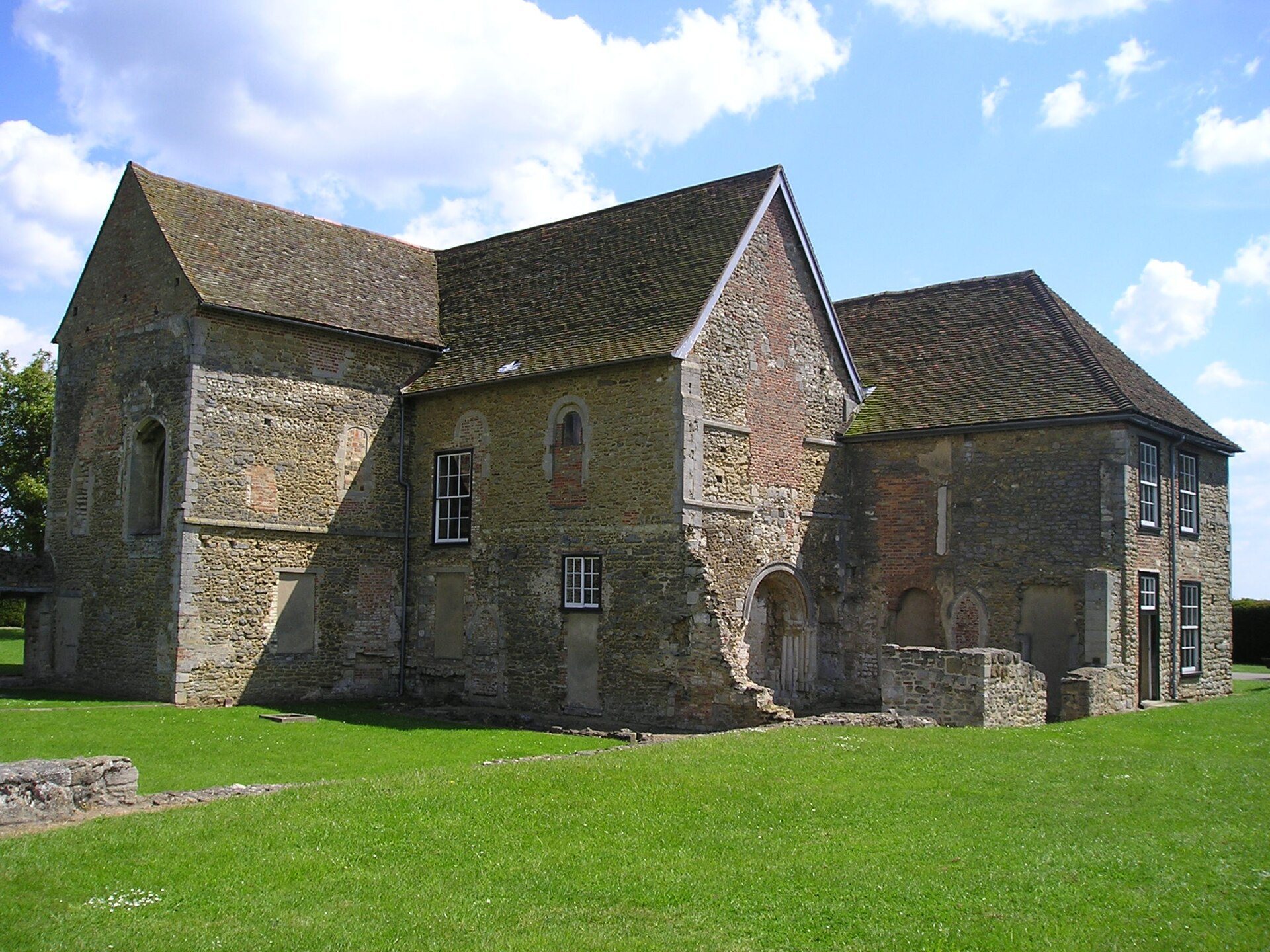
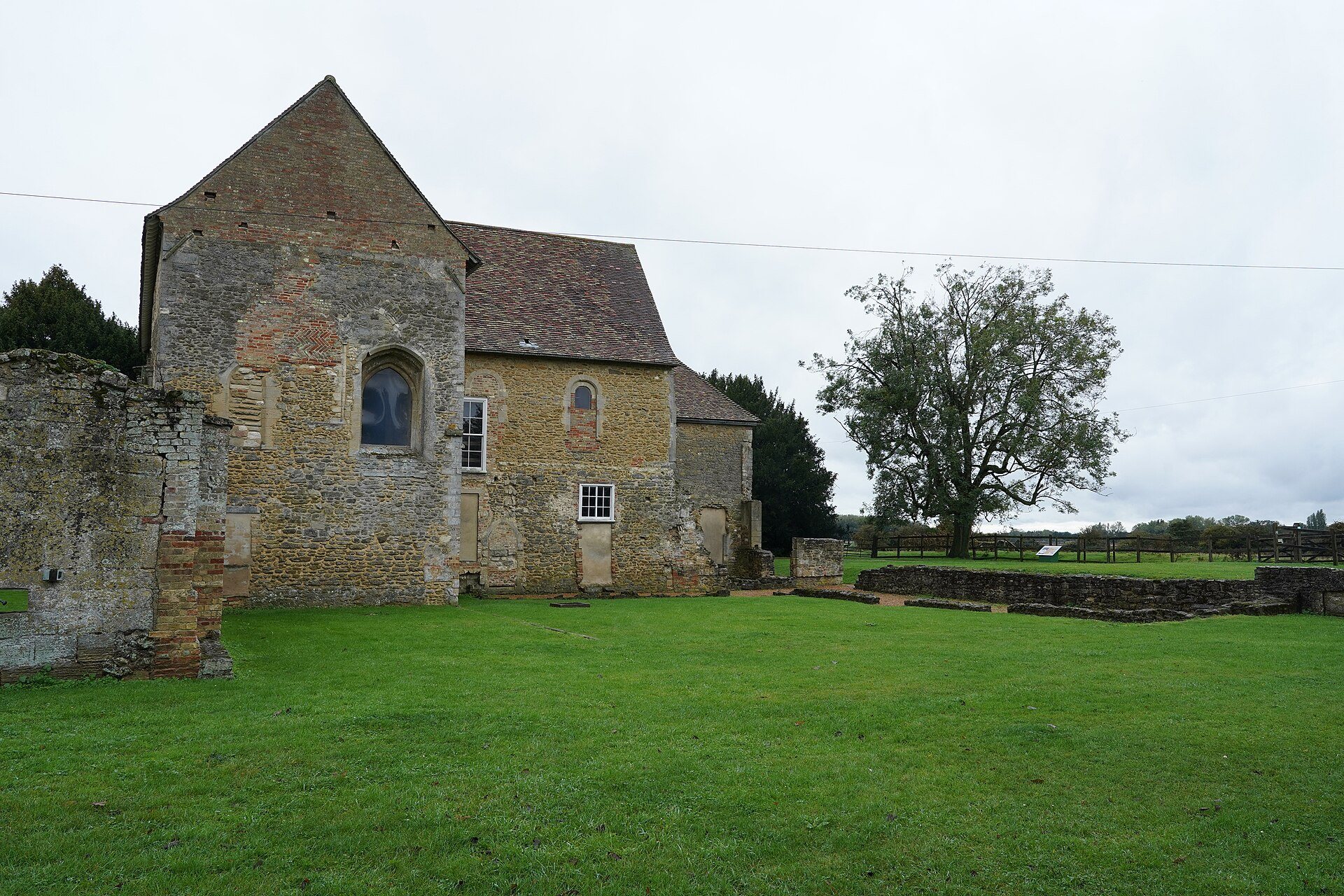
The surviving complex combines the church and refectory of the medieval religious houses with later farm buildings and museum structures. From the Benedictine foundation, the crossing and transepts remain, while later work added a large Norman-style arched doorway and the refectory. The monastic buildings were subsequently adapted to agricultural use, and parts of the farm have become displays on local history, farming, crafts, and traditional skills.
Medieval monastic buildings
Church and former lodgings
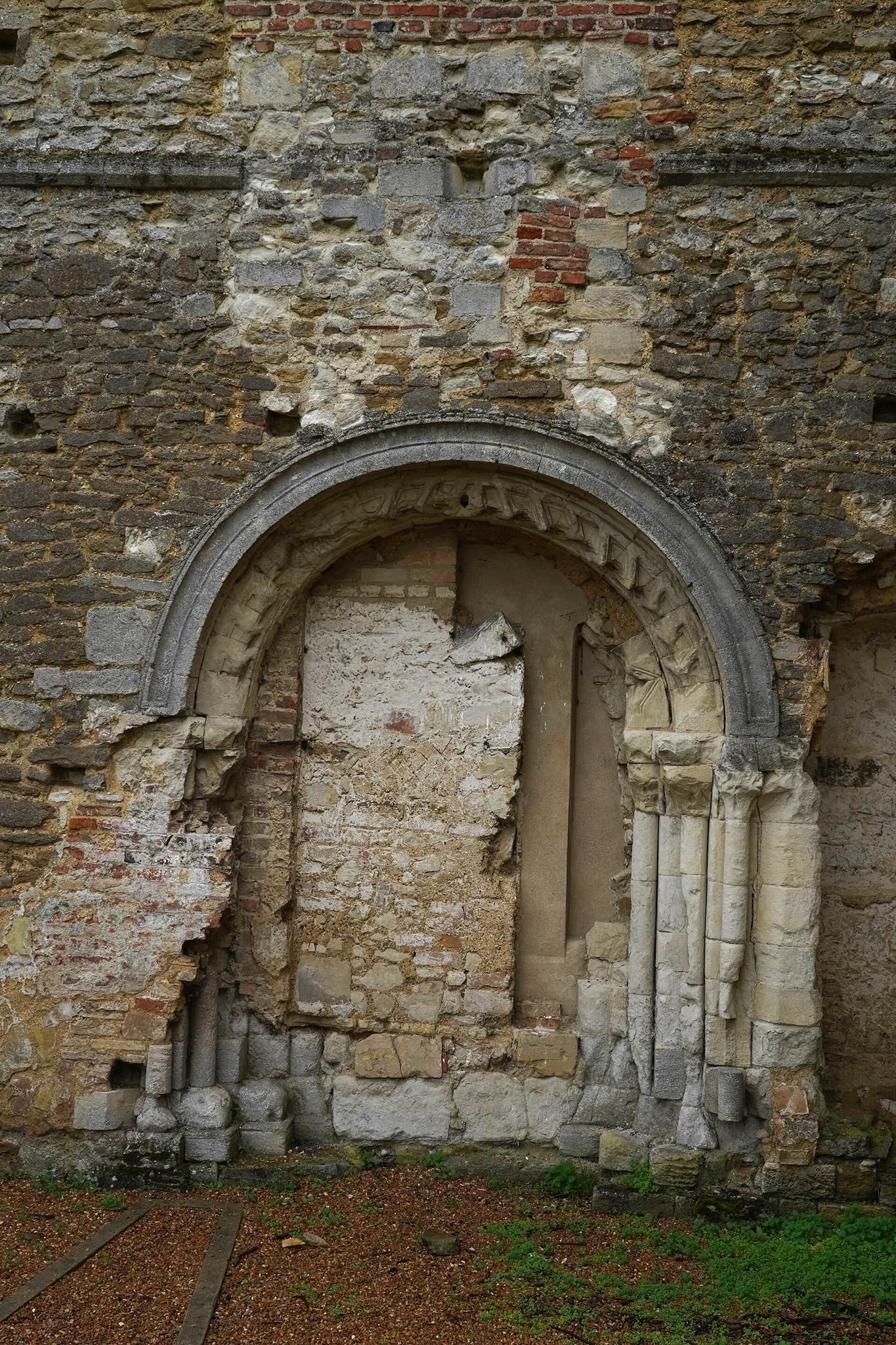
The surviving church preserves the crossing and transepts of the original Benedictine complex. A large arched doorway in the Norman style was added during the period of Knights Templar ownership. After Marie de St Pol received the priory in 1327, the former abbey church was converted into her lodgings, while a separate church was built for the Franciscan Poor Clares. The former abbess’s lodge, originally constructed for the Countess of Pembroke, survives as a farmhouse.
Refectory and nuns’ accommodation
The refectory, where the religious community took its meals, was added to the earlier complex by the Knights Templar. It later became a barn and survives as part of the agricultural remains. The enlarged Poor Clare priory included distinct accommodation for Marie de St Pol and for the nuns, with the Countess’s quarters more comfortable and the nuns’ quarters more austere.
Farm buildings and museum displays
Seventeenth-century barn
A seventeenth-century barn was built with stone taken from the abbey. Like other farm buildings on the site, it was later adapted for museum displays, linking the surviving monastic fabric with the estate’s post-Dissolution agricultural history.
Later farm and village displays
The present heritage complex includes a 1940s farm labourer’s cottage and a 1930s village shop, together with displays of local crafts and skills. These later structures stand alongside the surviving monastic buildings and archaeological remains as part of the Farmland Museum and Denny Abbey.
The carved wooden dole-gate removed by Elizabeth Throckmorton is preserved at Coughton Court rather than at Denny Abbey. Archaeological and historical remains of the abbey form part of the museum and heritage complex, where they are presented with the surviving religious buildings and later farm structures.