Jesus College: A Constituent College of the University of Cambridge
Site at a Glance
- Popularity
- Very High
- Country
- United Kingdom
- Primary era
- Medieval
- Eras represented
- Medieval, Modern
- Civilizations
- British, English
- Site type
- Civic
- Remains
- University
On this page13 sections
History
Jesus College is a constituent college of the University of Cambridge in Cambridge, England, United Kingdom. Founded in 1496 by John Alcock, then Bishop of Ely, it was established on the site of a Benedictine nunnery, a community of women following the Rule of St Benedict. Alcock dissolved the convent, and the college took over its buildings.
The familiar name comes from Jesus Chapel and refers to Jesus Christ. The cockerel in the college emblem alludes to the surname of its founder.
Parish and college identity
During the 15th century, the college precinct became Jesus parish, and its churchyard continued to receive burials. By the middle of the 16th century, the parish had been absorbed into that of All Saints.
Education and modern changes
From 1560 to 1860, the college primarily trained clergy, the ordained ministers of the Church of England, the Anglican church established in England.
Jesus College began admitting women as students in 1976. In 2019, Sonita Alleyne was elected Master, the college’s head, becoming the first Black leader of a college at Oxford or Cambridge.
In 2014, the college regained the freehold, a form of land ownership without a fixed lease term, of the Wesley House site.
Remains
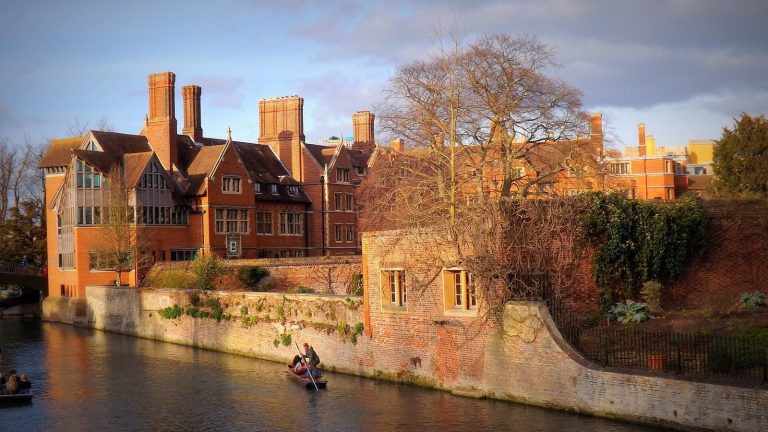
The college’s historic core retains a monastic character. Its central group includes the former convent chapel and attached cloister, the nuns’ refectory, now the college hall, and the prioress’s former lodging, now the Master’s Lodge. A library was added soon after the college’s foundation.
The medieval core
Chapel
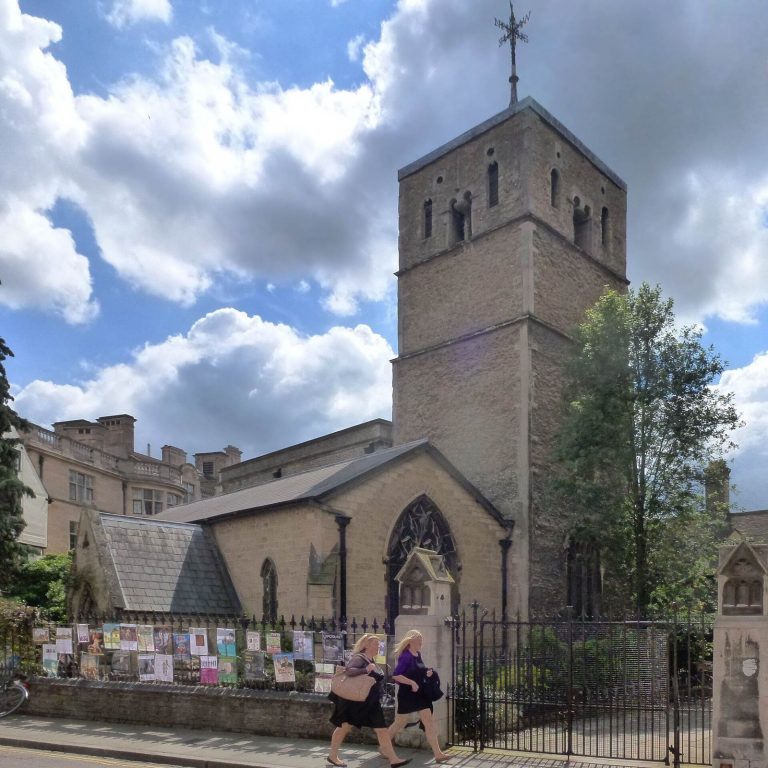
The nunnery was founded in the early 12th century, and work on its chapel began in 1157 and ended in 1245. The chapel is the oldest university building in Cambridge still in use. It predates the college by about 350 years and the university by roughly half a century.
Originally cross-shaped, the chapel had a central nave with aisles along its north and south sides. Its steep roof, bell tower and steeple collapsed in 1277, and fires badly damaged the building in 1313 and 1376. During Alcock’s alterations, the church, then the largest in Cambridge and built on a cathedral scale, was reduced to a chapel for a small scholarly community. Much of its nave gave way to college rooms and, later, part of the Master’s Lodge.
Between 1849 and 1853, architect Augustus Welby Pugin made the chapel’s misericords, small ledges beneath raised choir seats, using fragments dating from 1500 as models. George Frederick Bodley repaired the chapel between 1864 and 1867 and commissioned decorative work from Morris, Marshall, Faulkner & Co., a Victorian decorative arts firm. The firm returned in the 1870s to install stained glass.
Cloister and convent buildings
The covered cloister, a walkway around a courtyard, was attached to the chapel. The convent’s communal dining hall became the college hall, while the prioress’s former lodging, once the home of the convent’s female head, became the Master’s Lodge.
Courts and later buildings
Entrance and courts
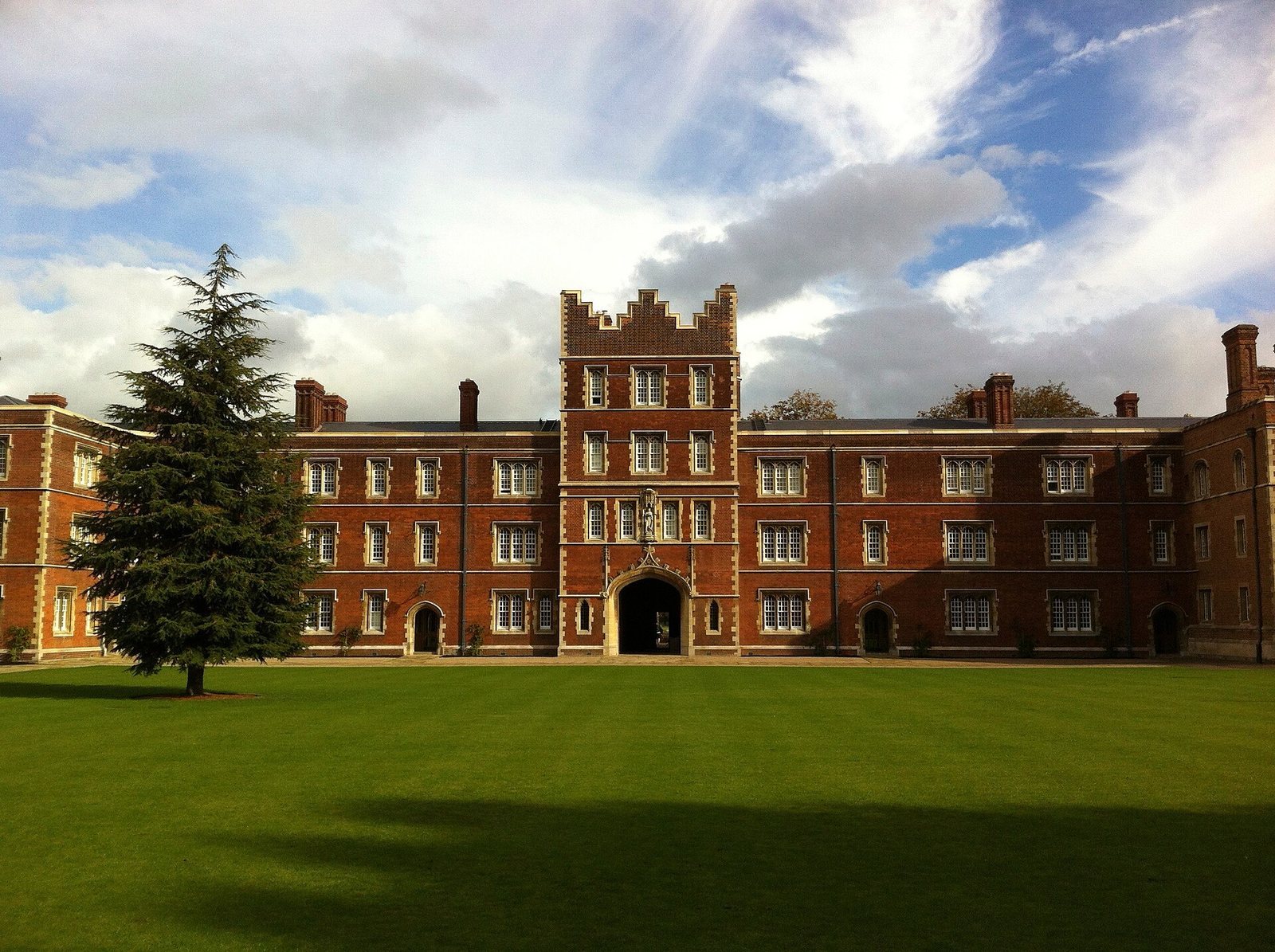
The main entrance is a walled passage known as the Chimney. It leads to the Porter’s Lodge, an entrance lodge staffed by college porters, and then to First Court, the courtyard beyond. Apart from the cloister, each court is open on at least one side.
Old Library
The Old Library remained in regular use until 1912 and still holds more than 9,000 books. Its Malthus Collection is the family collection of alumnus Thomas Malthus, an English economist and clergyman known for his work on population.
Quincentenary Library and Library Court
The Quincentenary Library was built to mark the college’s 500th anniversary in 1996. Its ground-floor law library holds a substantial law collection. A new accommodation building followed in 2000 and is now called Library Court.
West Court
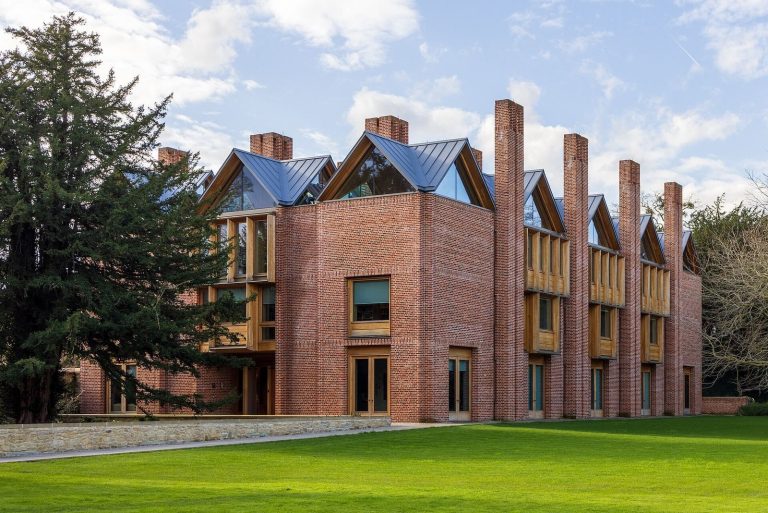
West Court, built on part of the Wesley House site, is the college’s largest modern addition. Its facilities include a 180-seat lecture theatre, a medical teaching suite, guest and conference accommodation, a café, a bar, research space and student social areas.
Grounds and boathouse
The college grounds include sports fields and a nature trail inspired by poems Samuel Taylor Coleridge wrote while a student. The Jesus College boathouse stands about 370 metres (400 yards) away, across Midsummer Common.