Dar Jamaï Palace: A Moroccan Palace and National Museum of Music
Site at a Glance
- Rating
- 4.5
- Popularity
- Low
- Country
- Morocco
- Primary era
- Modern
- External website
- Open
- Eras represented
- Modern
- Civilizations
- Alaouite, French
- Site type
- Domestic
- Remains
- Elite Residence
On this page10 sections
History
Construction and dynastic change
Dar Jamaï palace is a nineteenth-century palace in Meknes, Morocco, built in 1882 by the Jamaï family in traditional Moroccan Islamic architecture. Its builder was Mokhtar ben Arbi el Jamaï, who served as Grand Vizier, the chief administrative minister under the Moroccan sultan, alongside his brother during the reign of Sultan Moulay Hassan from 1873 to 1894. The family also constructed the Jamaï Palace in Fes.
After Moulay Hassan died in 1894, his younger son Moulay Abdelaziz succeeded him as sultan with the support of Ba Ahmed, a senior court official who opposed the Jamaï family. The family then lost political favour, and much of its property, including Dar Jamaï palace, was confiscated. The building was later transferred to the Glaoui family, a powerful Moroccan political family of the late nineteenth and early twentieth centuries.
Colonial and museum use
When French colonial rule began in Morocco in 1912, the palace was taken over for military purposes. It first served as a military hospital and then as a military court. In 1916, it became a fine-arts establishment. Four years later, the building was converted into a Museum of Indigenous Arts, displaying Moroccan local art and housing an initial museum collection and an institution devoted to traditional crafts.
Restoration and musical heritage
Restoration began in 2019 and addressed the palace’s woodwork, stucco, zellij mosaic decoration, and Andalusian-style garden. The museum reopened in March 2022 as Dar Jamaï, National Museum of Music. Its permanent exhibition was reorganized around Morocco’s musical heritage, including traditions associated with Amazigh, Andalusi, Hassani, Gnawa, Aissawa, and Judeo-Moroccan communities, as well as al-ala Andalusi music, Malhun, Gharnati music, and traditional instrument making.
Remains
Palace layout and domestic facilities
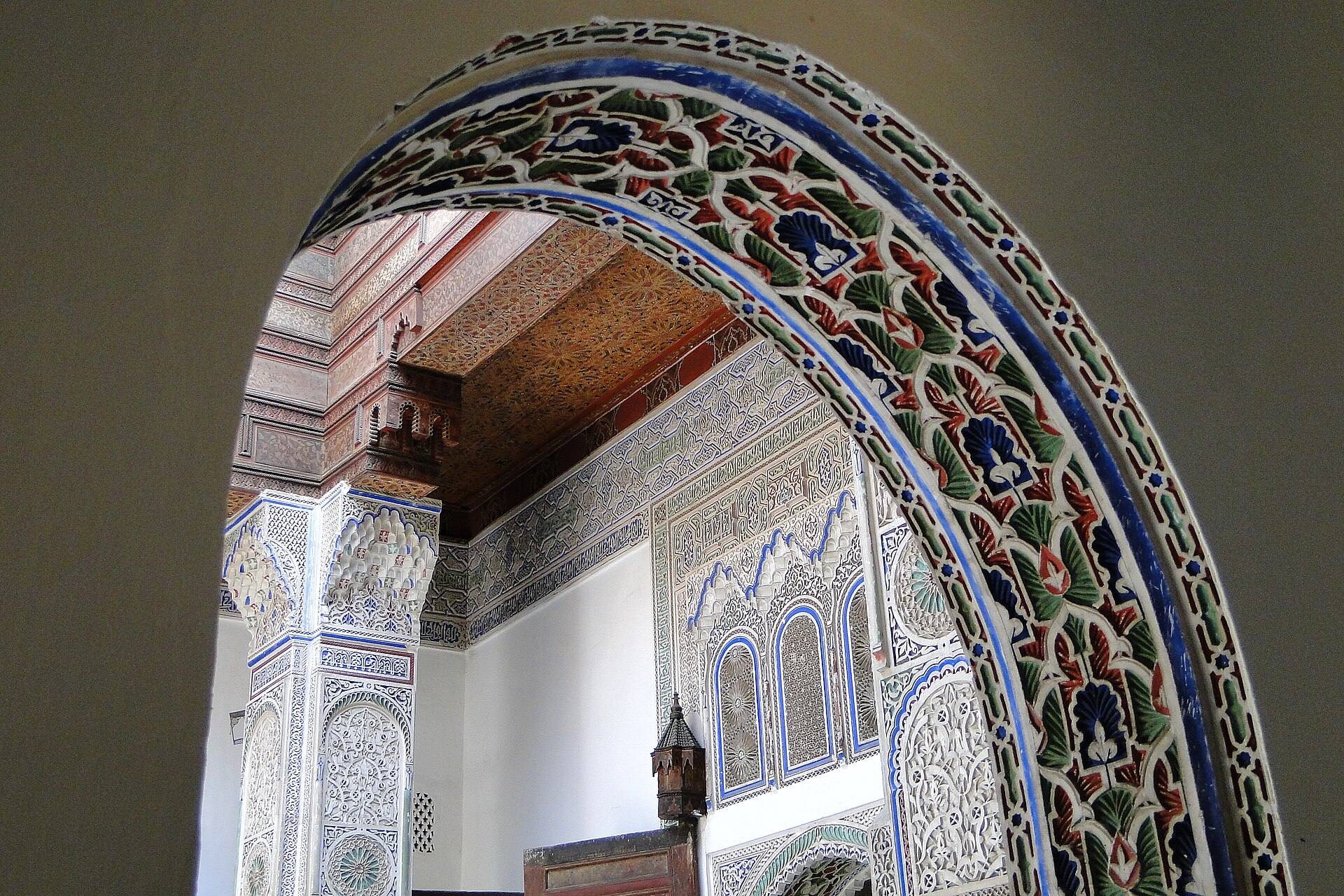
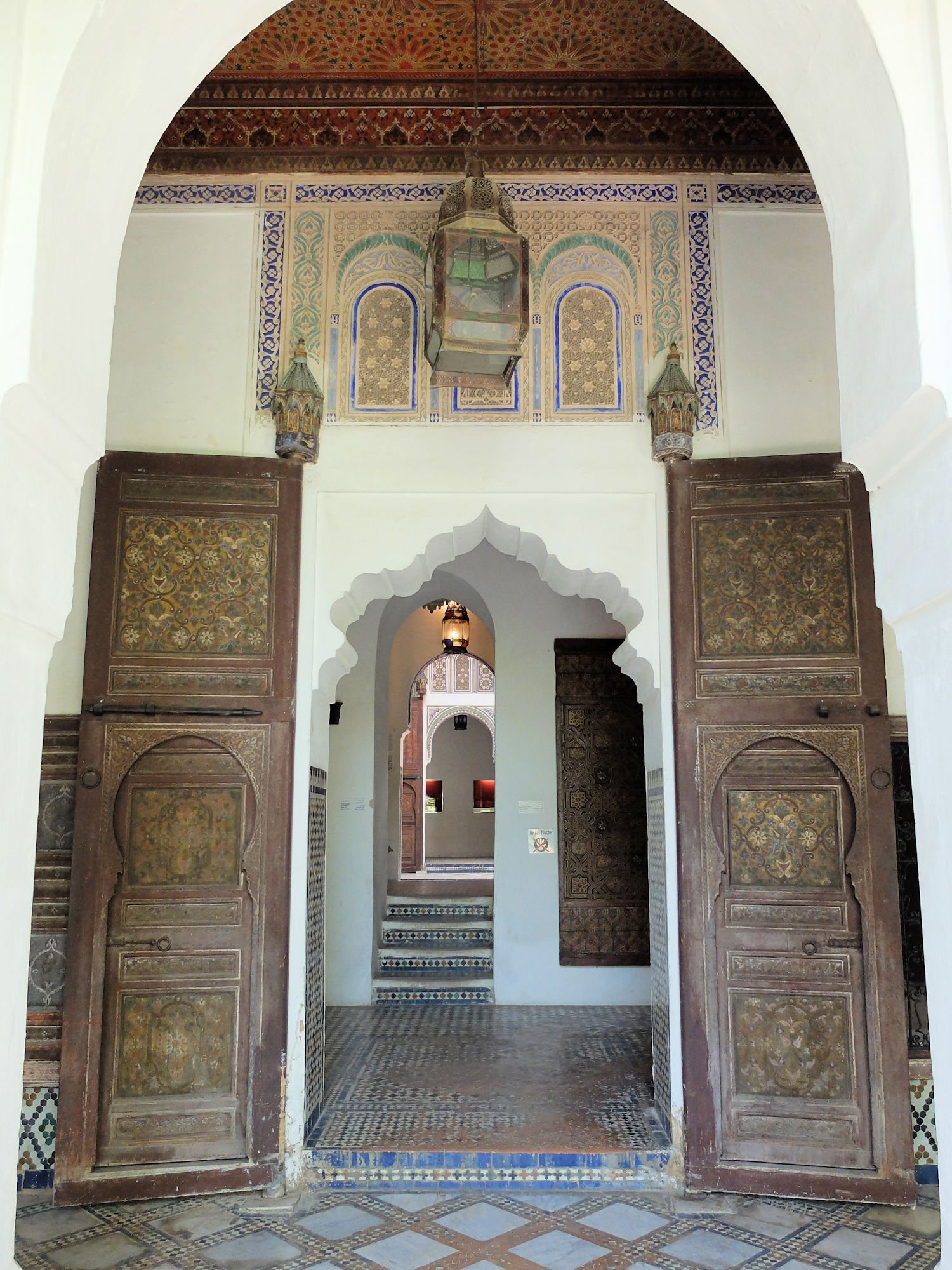
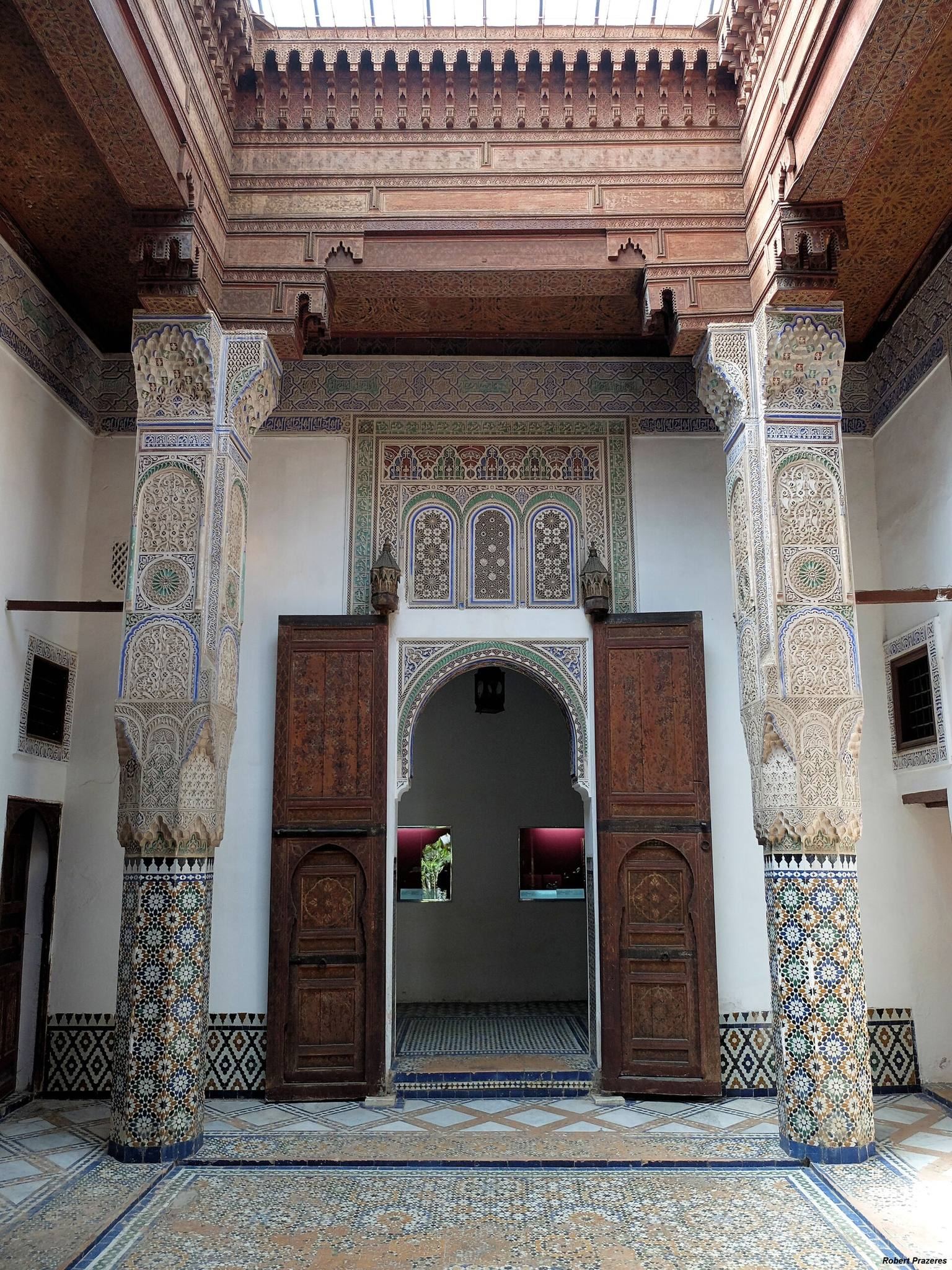
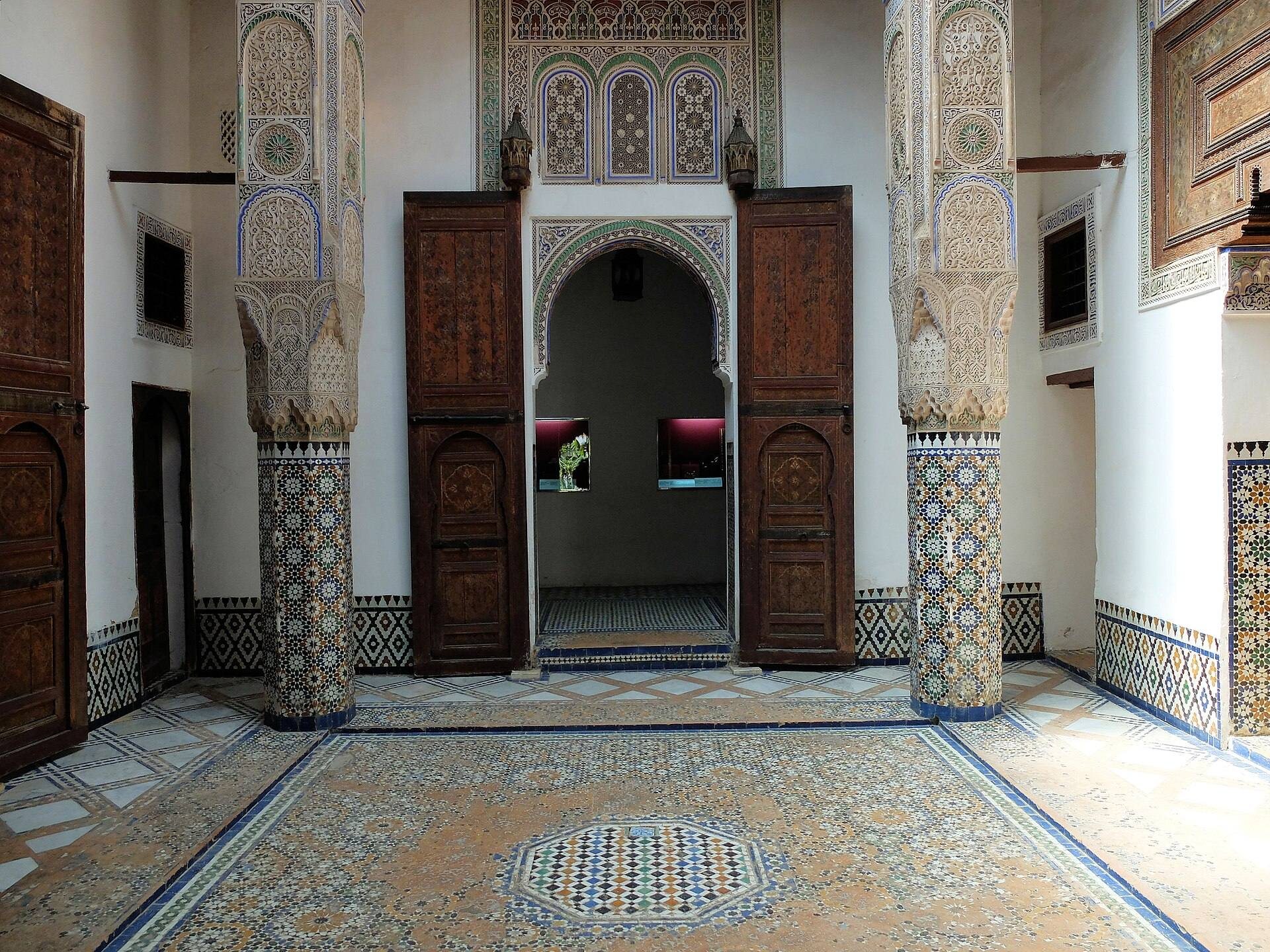
The palace occupies a relatively large site at the northern edge of Place el-Hedim in Meknes’s old city. Its stated area is 276 square metres. Rooms are distributed across several floors, with carved stucco, sculpted and painted wood, and colourful zellij tilework forming the principal decorative materials. The complex includes kitchens, a mosque, and a small hammam, a traditional bathhouse.
An upstairs reception room, or salon, retains rich decoration, traditional upper-class furnishings, and a wooden cupola. The restored salon is one of the museum’s notable features. A plaster inscription within the cupola gives the construction date as 1882.
Garden and exterior features
Riad courtyard and garden structures
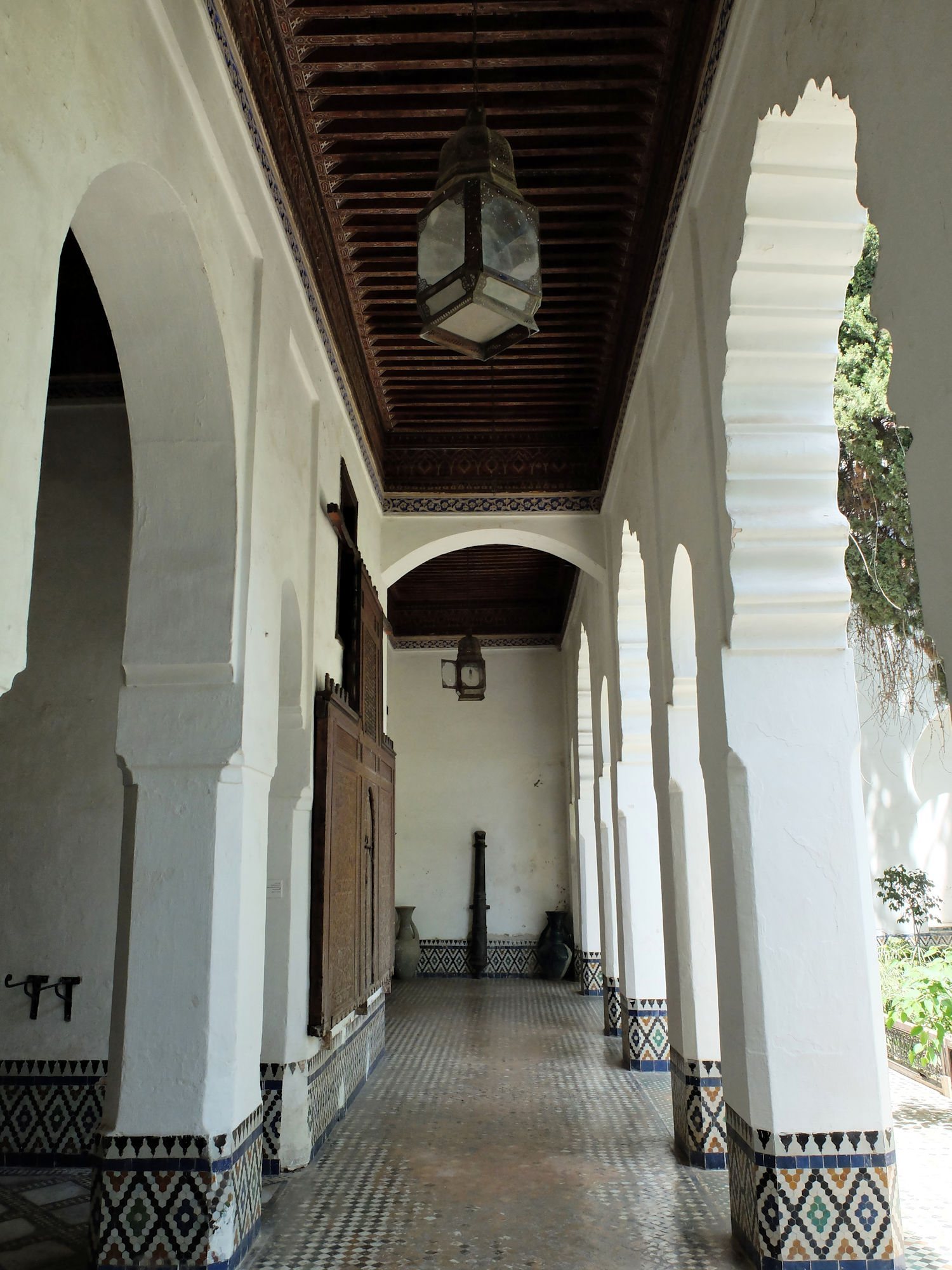
The principal garden courtyard is a riad, a courtyard house or garden arranged around an inward-facing planted space. It contains orange trees, a fountain, and a menzeh, an elevated pavilion or garden platform used for observation and leisure. An Andalusian-style section has passages lined with zellij and a kiosk for musicians and singers.
Place el-Hedim fountain
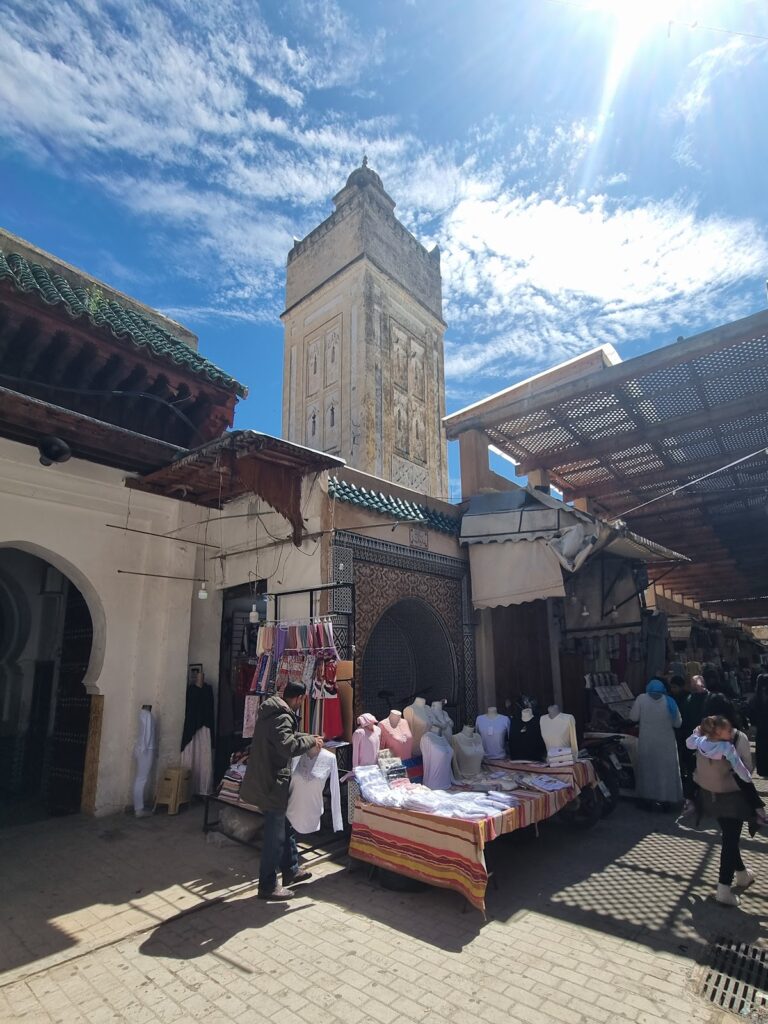
The exterior wall facing Place el-Hedim carries a large street fountain covered with elaborate zellij. Meknes’s municipal services commissioned it in 1913, and it remains in place beside the present entrance. That entrance is a later replacement for the original, which opened onto a nearby street.
Museum collections
The collections include ceramics, carved and painted woodwork, architectural woodwork, household furniture, embroidery, traditional clothing, silk belts, carpets, jewellery, and more than 100 musical instruments. The instruments are grouped as aerophones, which produce sound through air; chordophones, through strings; membranophones, through stretched membranes; and idiophones, through the vibration of the instrument’s body. Most of the collection dates from the nineteenth and twentieth centuries. Older material includes the wooden minbar, or mosque pulpit, and maqsura, an enclosed or screened high-status area, from Lalla Aouda Mosque. These pieces date from the late seventeenth century, when Moulay Isma’il built the mosque.