Cotmeana Monastery: A Medieval Orthodox Monastic Complex in Romania


Site at a Glance
- Rating
- 4.6
- Popularity
- Low
- Country
- Romania
- Primary era
- Medieval
- External website
- Open
- Eras represented
- Medieval, Modern
- Civilizations
- Principality of Wallachia
- Site type
- Religious
- Remains
- Fortified Monastery
On this page6 sections
History
Cotmeana Monastery is a historic Orthodox female monastery in Romania, near Cotmeana in Argeș County, whose medieval complex took shape during the rule of Wallachian princes in the late fourteenth century. Its masonry church, built in the Byzantine-Balkan architectural tradition, is generally dated to 1387–1389, although the earliest phases of the site remain uncertain.
Early origins and the Wallachian rulers
Cotmeana is regarded as one of the oldest monastic establishments in Wallachia, a medieval principality in what is now southern Romania. Its earliest possible date is 1292, a period associated with the presence of Cumans, a medieval Turkic-speaking nomadic confederation active across the Eurasian steppe and parts of southeastern Europe. The precise relationship between that early activity and the later monastery is not established.
During the reign of Radu I of Wallachia, from 1377 to 1383, the Cotmeana hermitage became a monastery. Radu I founded a wooden church there, but the building later burned. A completion date of 1385 is also associated with his reign, while the masonry church is dated to 1387–1389 and attributed to Mircea the Elder. These differing dates leave the early chronology partly unresolved.
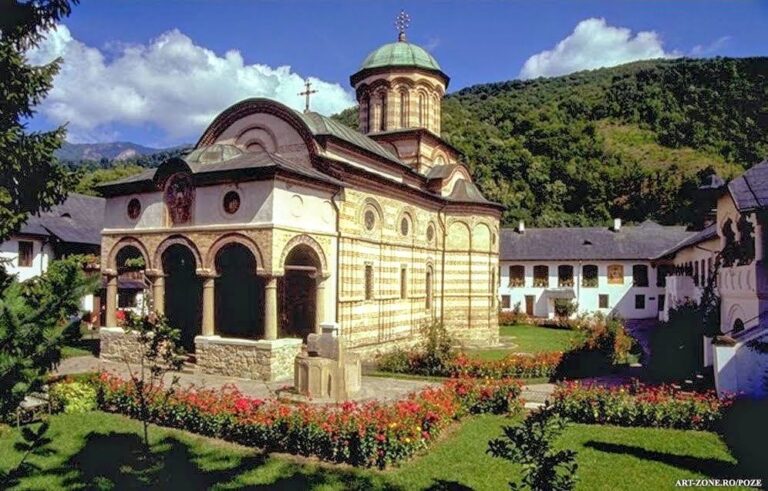
Mircea the Elder constructed the masonry church after the wooden building was destroyed. The earliest documentary evidence for Cotmeana dates to 20 May 1388, during Mircea’s reign, when the monastery was mentioned in connection with the construction of Cozia Monastery, another medieval Romanian Orthodox foundation in Wallachia. The monastery took its name from the Cotmeana River.
Restoration and continuing religious use
Constantin Brâncoveanu, a Wallachian prince and major patron of ecclesiastical architecture, restored the church in 1711. Further repairs followed in 1855–1857, with later restoration campaigns in 1922–1924, 1959, 1972, and 1990. The monastery reopened in 1990 with the blessing of Calinic, Archbishop of Argeș.
Cotmeana belongs to the Archdiocese of Argeș and Muscel of the Romanian Orthodox Church. The monastic complex is listed as a legally protected historic monument under registration number AG-II-a-A-13622, while the old church is itself preserved as a historic monument.
Remains
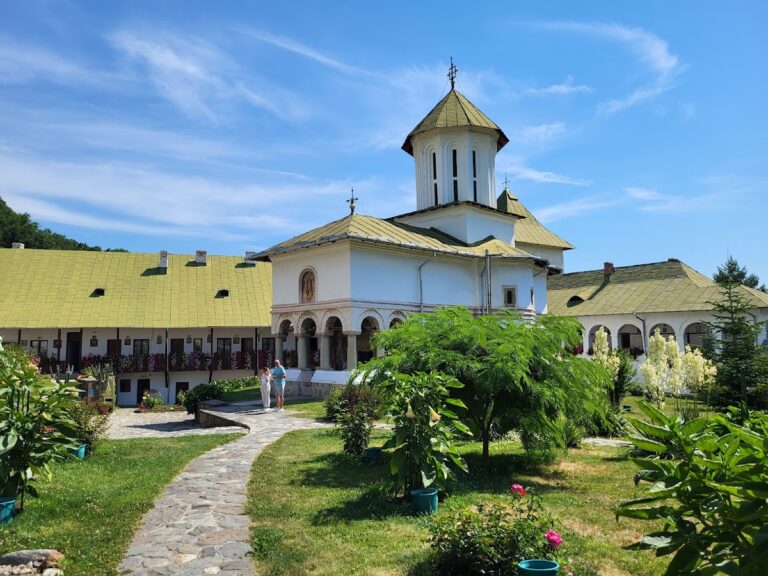
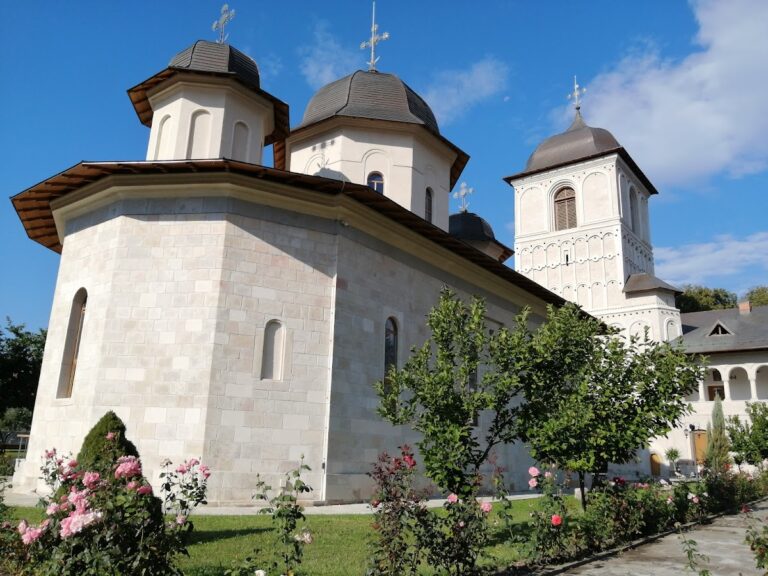
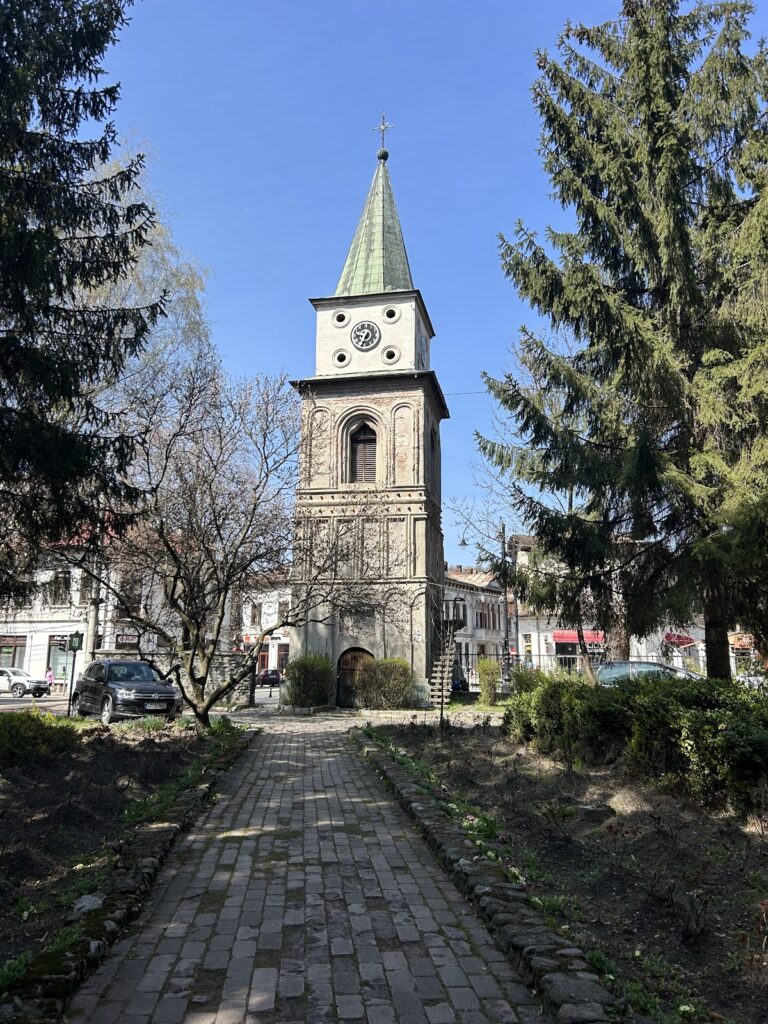
The historic complex is arranged around a brick church, a bell tower, and enclosing walls built for defensive purposes. Its Byzantine-Balkan architecture combines Byzantine traditions with forms and construction techniques developed in the medieval Balkans. The old church remains the principal historic building within a wider monastic compound.
The historic church and bell
Dedicated to the Annunciation, the church was constructed in masonry after the earlier wooden church burned. Its brick fabric belongs to the medieval architectural character associated with the thirteenth and fourteenth centuries. Portraits of Mircea the Elder and Petru Cercel, a sixteenth-century prince of Wallachia, are preserved inside the historic-monument church.
Cotmeana also keeps the oldest bell in Wallachia. Jupân Dragomir donated it to the monastery in 1385. The title Jupân was a Romanian honorific formerly used for a man of social status, and the bell provides a material connection with the monastery’s early medieval history.
Enclosure and later monastic buildings
The bell tower and defensive enclosing walls form part of the historic complex with the church. Together they define the protected architectural core and reflect the compound’s medieval organization.
In recent years, monastic cells, a chapel dedicated to the Protection of the Mother of God, a refectory, and other buildings have been erected beside the old church. These additions form part of the continuing monastic compound alongside the medieval monument.