Collegiate Church of Notre-Dame and Saint-Laurent of Eu: A Gothic Church and Former Abbey
Site at a Glance
- Popularity
- Medium
- Country
- France
- Primary era
- Medieval
- Eras represented
- Medieval, Early Modern, Modern
- Civilizations
- French, Norman
- Site type
- Religious
- Remains
- Church
On this page20 sections
History
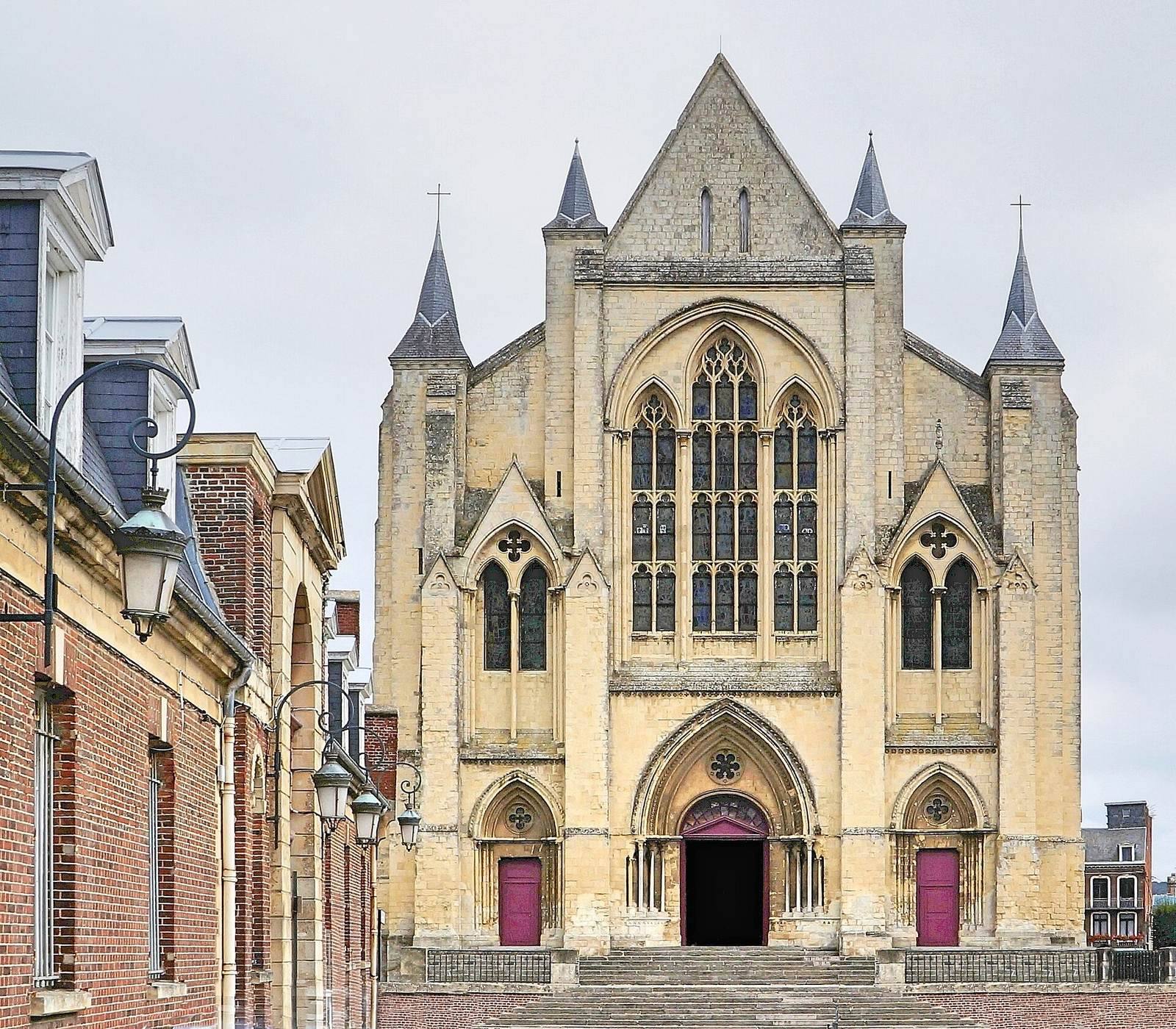
The Collegiate Church of Notre-Dame and Saint-Laurent of Eu, in France, began in the tenth century as the collegiate church of Sainte-Marie, founded by William I, Count of Eu. The present Gothic church was rebuilt between 1186 and 1240. Its history reflects its changing role from a community of clergy to an abbey and, after the French Revolution, a parish church.
From collegiate church to abbey
The church was first served by secular clergy, who did not belong to a monastic community. In 1119, Henry I, Count of Eu, replaced them with regular canons of Saint-Victor, members of a religious community who followed the Rule of Saint Augustine. The institution thereby became an abbey. Its other buildings were completed in 1230.
In 1161, the abbey at Eu and the Abbey of Saint Michael at Tréport formed a confraternity. Under their agreement, a member of either community who disputed with his abbot could move to the other abbey until the matter was settled.
Laurent O’Toole and rebuilding
Laurent O’Toole, Archbishop of Dublin and an Irish church leader, died at the abbey on 14 November 1180 while travelling on a diplomatic mission to the English king, who was then in Rouen. He was buried in the church. Pope Honorius III canonized him in 1225, and the church was dedicated to Laurent as well as to Notre-Dame.
Fires and religious reform
Fires in Eu in 1426 and 1475 damaged the church. Another fire, attributed to a thunderstorm, caused damage in 1455. After the 1516 Concordat of Bologna, an agreement between the French king Francis I and Pope Leo X concerning church appointments, commendatory abbots held the abbey’s office and temporal lordship. Such an abbot held the title and revenues without necessarily leading the resident community. Jean de Montpelé, the last regular abbot, held office until 1531.
In 1632, the abbey joined the Congregation of France, a reforming association of Augustinian canons based at Sainte-Geneviève in Paris. Its aim was to renew religious discipline in keeping with the aims of the Council of Trent, the major Catholic council of the sixteenth century.
Suppression and parish use
On 13 February 1790, France’s National Constituent Assembly, the revolutionary legislature, abolished monastic vows and suppressed religious orders. The abbey buildings were destroyed, and the owners of the château bought the grounds. The church survived and became the parish church of Saint-Laurent d’Eu.
Restoration and present status
The crypt was restored in 1828 at the expense of the future Louis-Philippe I. He later restored and embellished the church. The building was classified as a French historic monument in 1840. It remains a Roman Catholic church dedicated to Notre-Dame and Saint Laurent and is attached to the Archdiocese of Rouen.
Remains
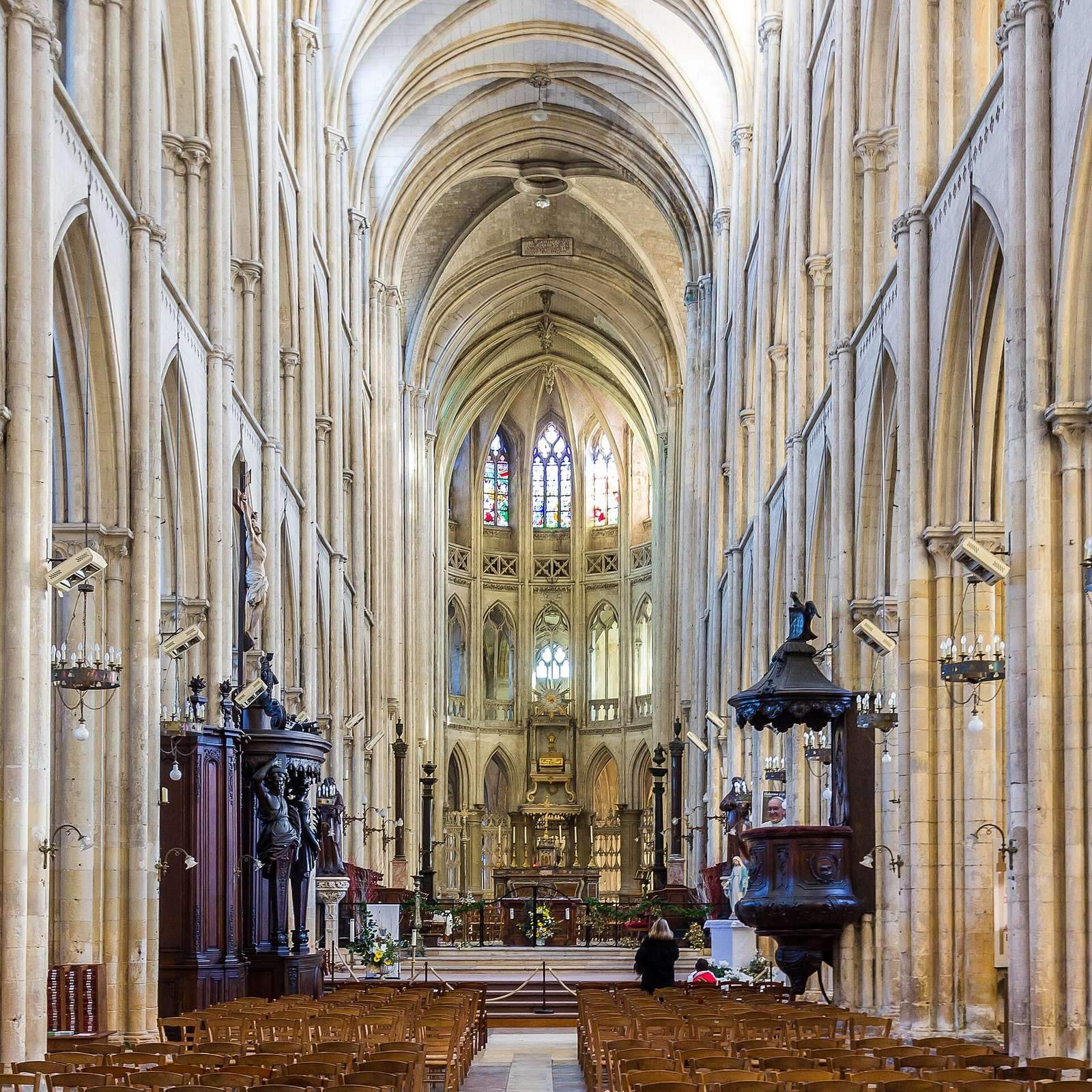
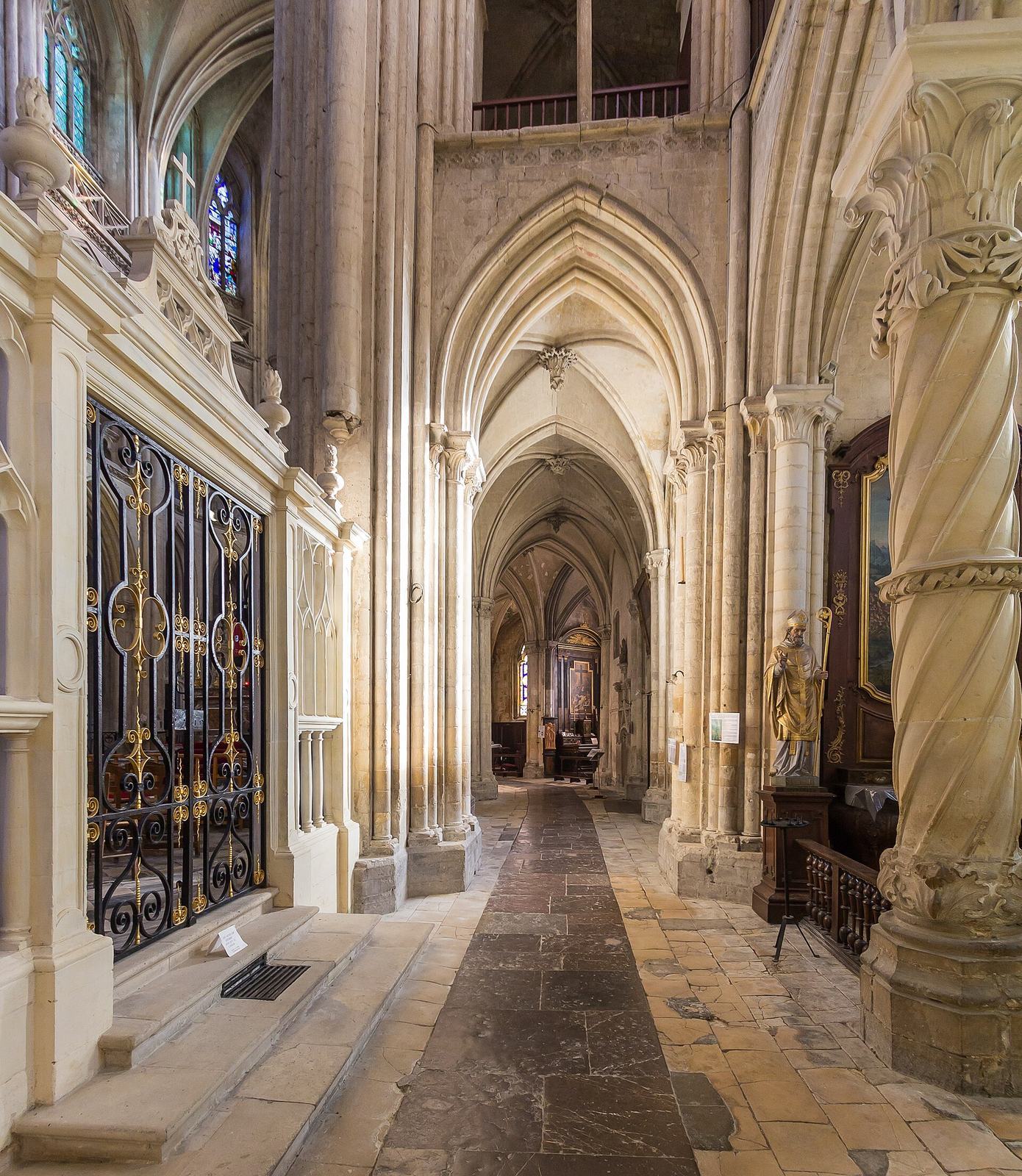
The Gothic church has a cross-shaped plan, with a long central nave crossed by a shorter transept. Two aisles run alongside the nave. The choir faces east beyond the transept, raised seven steps above the nave, and is surrounded by a passage with seven chapels extending around its eastern end. The thirteenth-century nave has eleven structural sections and a three-level elevation.
The crypt
The crypt measures 31 metres by 6.5 metres and extends beneath the choir and the last two sections of the nave. Its main space has one aisle and five rectangular bays, each covered by a groin vault, a ceiling formed where two vaults intersect. At the eastern end, a seven-sided chamber has seven arches. Archaeologist Jean Benoît Désiré Cochet likened the crypt to Saint-Denis, the church near Paris associated with the burials of French kings, referring to its tombs.
Burials and memorials
Laurent O’Toole and the Bourbon princes
Laurent O’Toole’s tomb lies to the left after the steps descend into the crypt. A reliquary containing his relics is kept in the choir. In the centre of the crypt are the tombs of Louis-Auguste de Bourbon (1700–1755), Prince of Dombes, and Charles de Bourbon (1704–1708), Duke of Aumale.
Counts of Eu and members of the Artois family
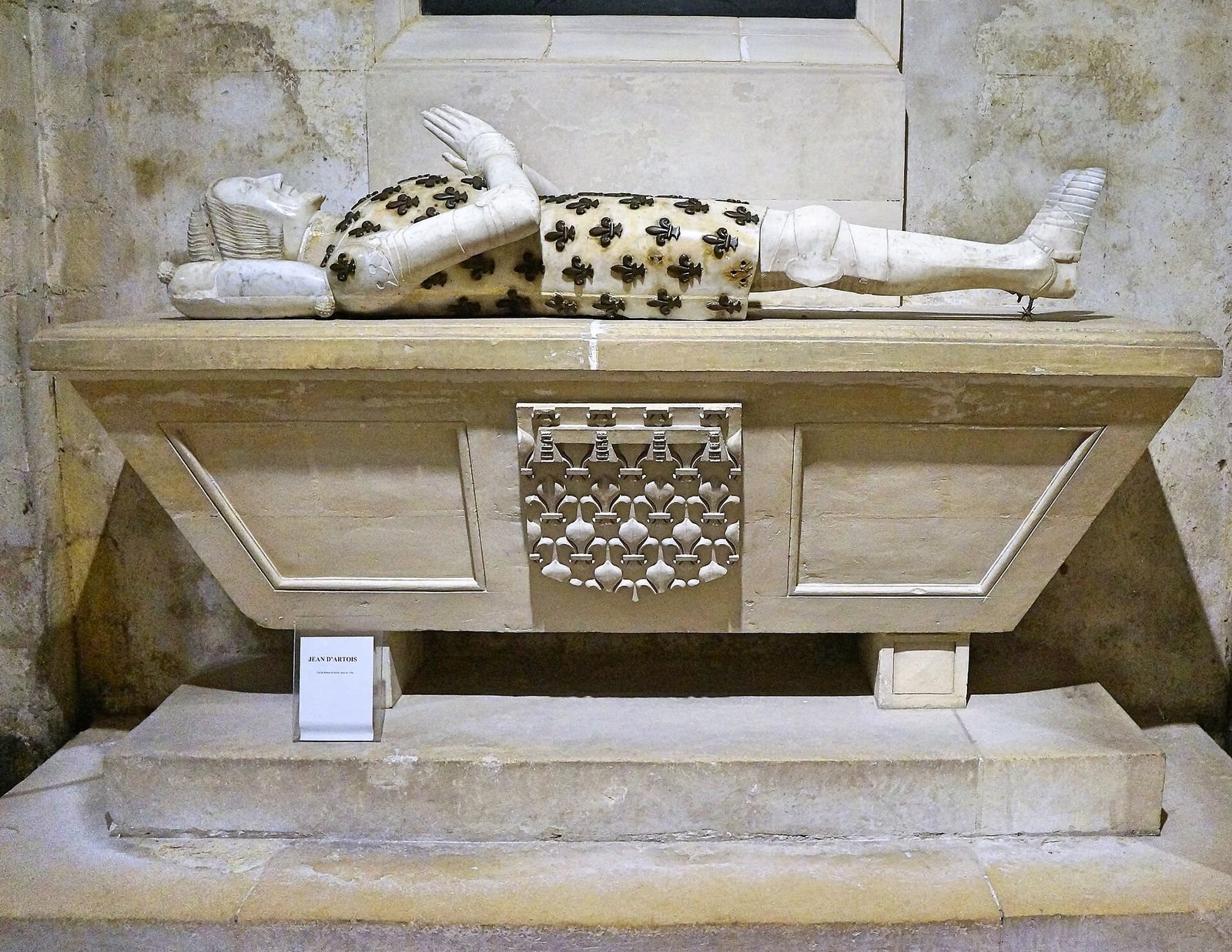
Effigies of Jean d’Artois, Count of Eu (1321–1387), Philippe d’Artois, Count of Eu (1358–1397), and Charles d’Artois, Count of Eu (born in 1394 and deceased in the 1470s), are on the left, alongside those of Philippe d’Artois, Prince of Artois (1395–1397), and Charles d’Artois, Prince of Artois (1359–1368). On the right are effigies of Isabelle de Melun (1330–1389), Jeanne de Saveuse (died in the 1440s), Hélène de Melun (died in the 1470s), and Isabelle d’Artois, Princess of Artois (1361–1379). The remains of these counts, countesses, and princes are kept in the crypt’s ossuary.
Memorial of Nicolas de Melleville
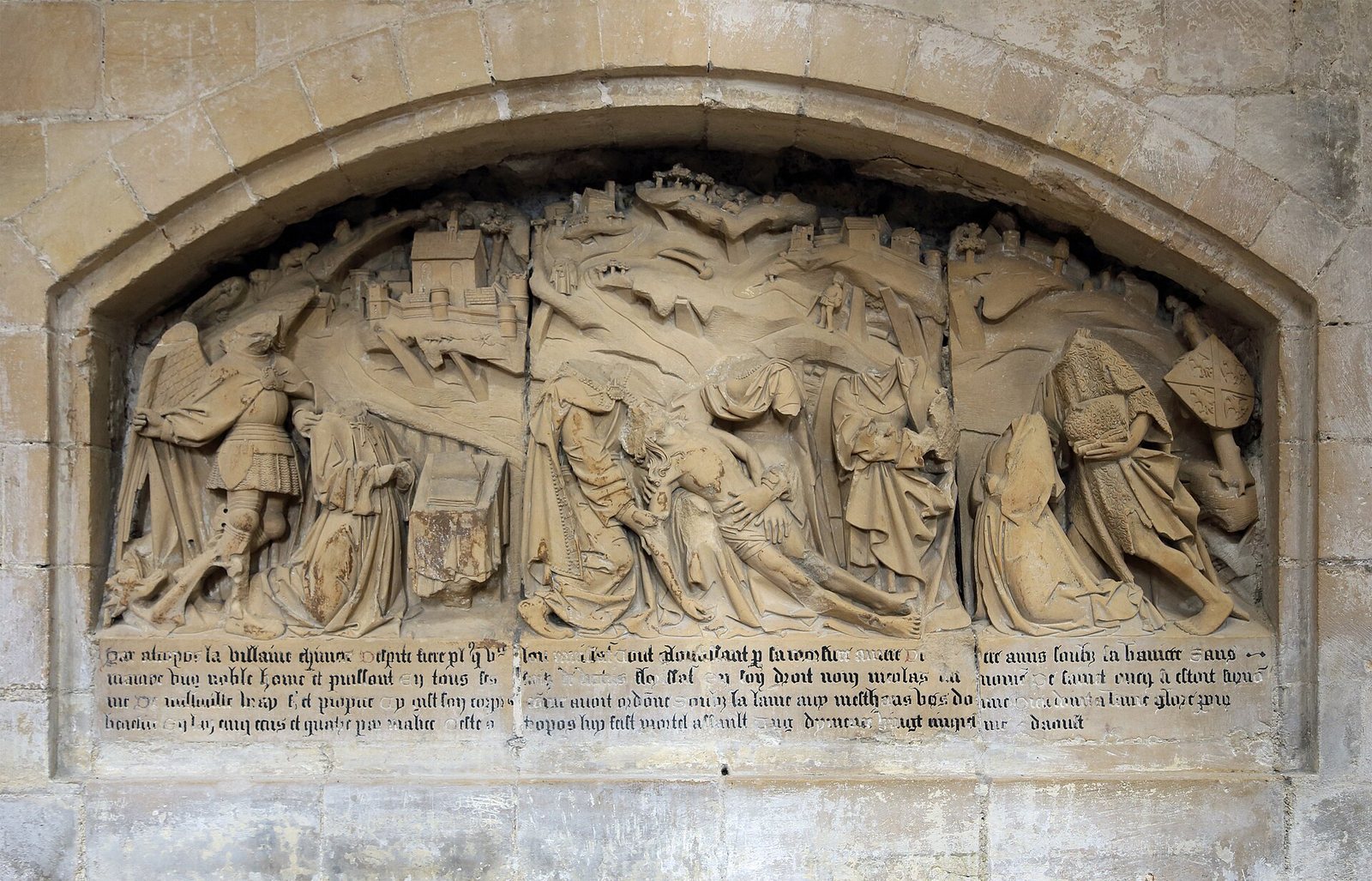
A carved relief commemorates Nicolas de Melleville, a former mayor of Eu who died in 1504. It depicts a Pietà, showing Mary holding the dead Christ, and was defaced during the Revolution.
Windows and furnishings
Stained glass
The windows were made between 1833 and 1847 in the glass-painting workshop of the Sèvres manufactory. The western window contains numerous panels, with designs by Wattier and Ziegler. Aisle windows depict Saint John the Evangelist and Saint Victoire from designs by Eugène Delacroix, and Saint Adelaide and Saint Ferdinand from designs by Achille Déveria. Aimé Chenavard, Feuchères, and other artists also contributed to the program.
Carved canopy
A wooden furnishing made in 1731 by Adrien Le Jeune of Abbeville takes the form of an oval canopy supported by two sculpted female figures. Its hanging decorative panels once held carved lily emblems in their oval sections. A statue representing Religion stands above the canopy, while cannon barrels below refer to the donor, Louis Auguste de Bourbon, Duke of Maine and Count of Eu, who supplied the wood.
Choir furnishings and organ
The choir stalls date from the seventeenth and eighteenth centuries. Carpenter Grimpel made the pulpit in 1752. The gallery organ was built by Louis Isoré in 1614 and restored by Cavaillé-Coll in 1841.
Sculpture, paintings, and heraldry
Sculpture
A sixteenth-century polychrome Entombment, depicting Christ’s burial, stands in the second chapel to the right of the passage around the choir. The chapel at the eastern end contains a Virgin and Child possibly attributable to François Anguier. Seventeenth-century wooden statues of Saint Francis of Paola and Saint Francis of Assisi stand on either side of the choir.
Paintings
A Descent from the Cross is attributed to Jacques Blanchard. Bernard Gaillot’s Assumption, depicting Mary’s bodily assumption into heaven, was shown at the Salon of 1827. An eighteenth-century work depicts Saint Laurent discovering the city.
Abbey arms
The abbey’s arms show the Virgin Mary surrounded by a rosary, with four flaming hearts in the corners. The figures and emblems are silver against a blue background.