Palais Schwerin: A Baroque Palace in Berlin
Site at a Glance
- Popularity
- Medium
- Country
- Germany
- Primary era
- Modern
- Eras represented
- Early Modern, Modern
- Civilizations
- German, Holy Roman Empire, Margraviate of Brandenburg
- Site type
- Economic
- Remains
- Production Complex
On this page9 sections
History
Baroque palace and early occupants
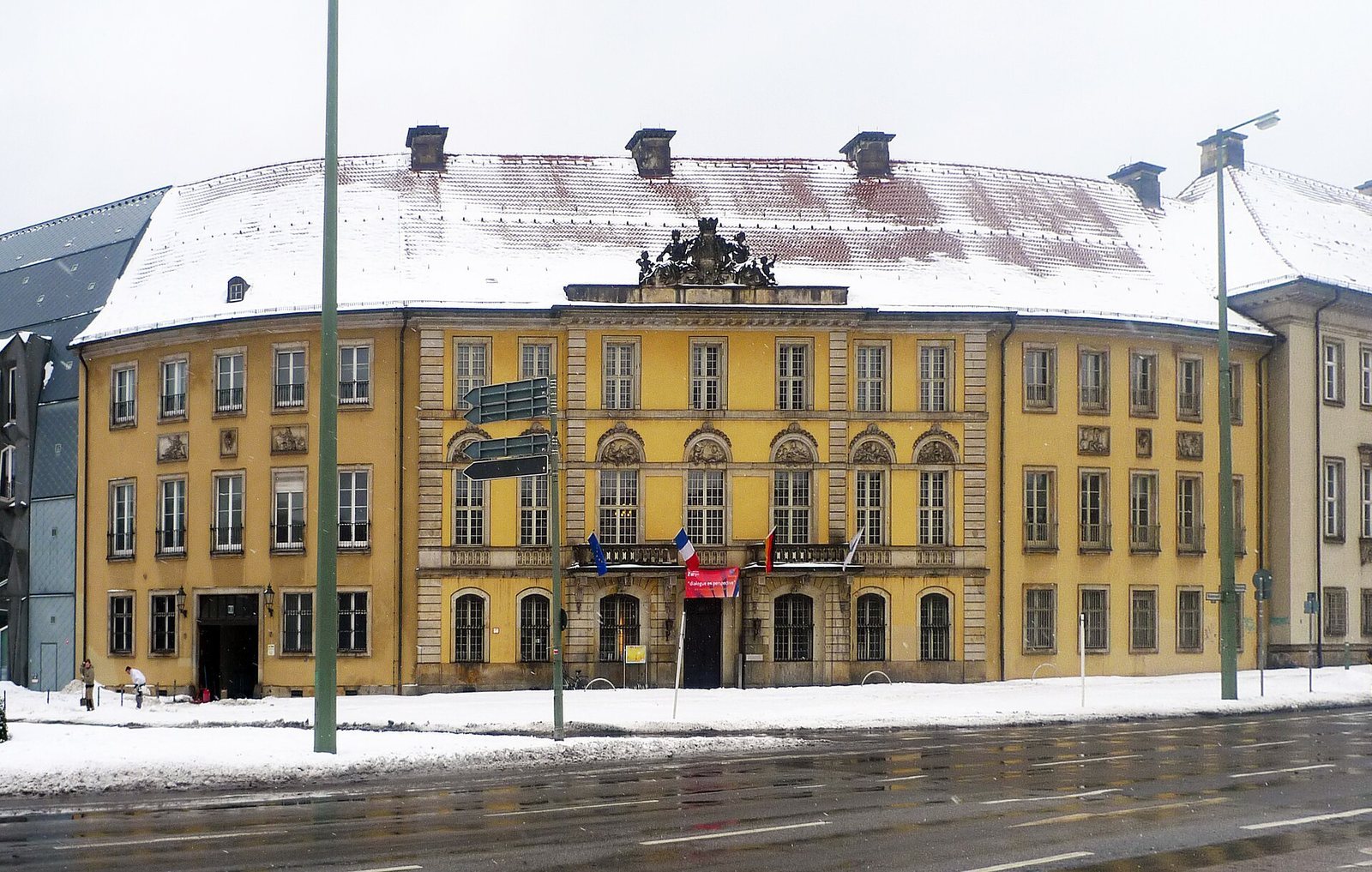
Palais Schwerin is a Baroque urban palace in Berlin, Germany, probably built after the city fire of 1690. Prussian state minister Otto von Schwerin purchased it in 1698 and likely commissioned architect Jean de Bodt to remodel it between 1702 and 1704. Schwerin received the Order of the Black Eagle, Prussia’s highest order of chivalry, in 1701.
After Schwerin’s death in 1705, his heirs either occupied the palace or rented it out. From 1741 to 1746, it served as the Berlin residence of Russian imperial minister Pjotr Grigorjewitsch Tschernyschow.
Government, courts, and policing
Schwerin’s heirs sold the palace in 1764. It briefly belonged to court gold embroiderers Pally and Kolbe before the Prussian state acquired it in 1765 for the General Tobacco Administration. When the tobacco monopoly ended in 1787, the Royal Stamp and Card Chamber moved in. This Prussian office administered stamps and playing cards.
In 1822, the building became the seat of the General Widows’ Pension Institution. From 1829, it housed the criminal division of the City Court and later a prison. The Berlin Police Presidium also used the palace from 1882. Its association with imprisonment became so strong that its name was long used as a byword for a prison. In 1889, the police and prison functions moved to the Police Presidium at Alexanderplatz.
The palace continued to serve various purposes, including justice administration, until 1910. In the 1920s, the Prussian state rented it to an operator of a furniture business.
Mint complex and later uses
As part of the construction of the Reich Mint, the German Reich’s state coin-producing institution, the palace was extensively gutted and altered in 1937–38, and two adjoining buildings were added. From 1951, the complex housed the GDR State Art Commission, followed by the GDR Ministry of Culture and Central Mint. The GDR, or German Democratic Republic, was East Germany from 1949 to 1990.
Minting of German federal coins began at the site on 16 July 1990. In 2010, parts of the complex by the Spree and Spandauer Straße housed the Berlin Mint and offices for the Federal Commissioner for the Stasi Records. The Stasi was East Germany’s state security service. Palais Schwerin is now the seat of the Franco-German Youth Office, a binational organization that promotes exchange and cooperation between young people in France and Germany.
Remains
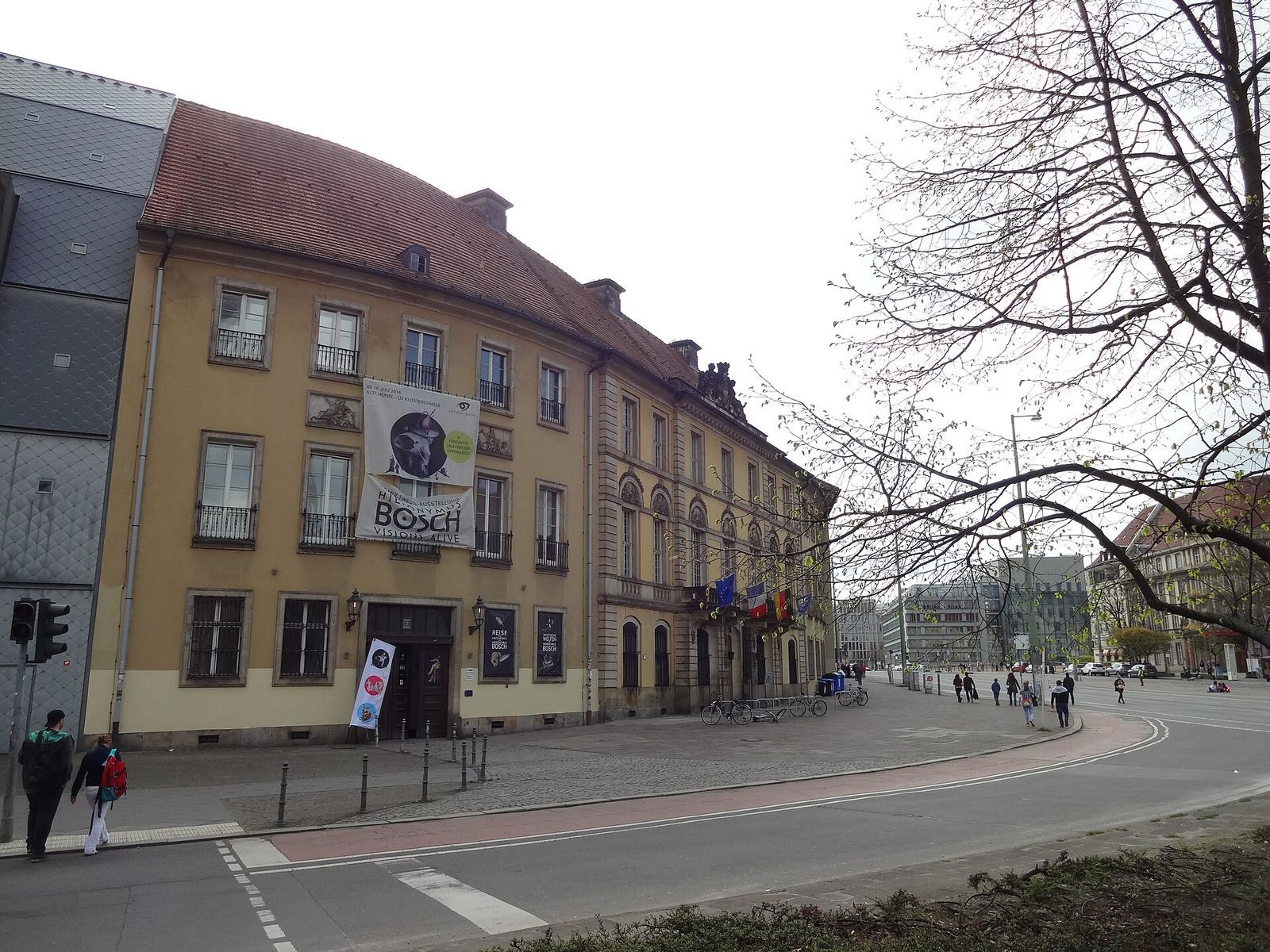
The complex combines the surviving frontage of a Baroque palace with buildings added during its redevelopment. Palais Schwerin stands at Molkenmarkt 1, on the eastern side of Mühlendamm, opposite the Nikolaiviertel and beside the Alte Münze at Mühlendamm 3.
Surviving palace fabric and additions
Facade and entrance
The original facade and a few reused architectural fragments are among the principal surviving parts of the palace. The facade remains in its original position, and copies have replaced its sculptural decoration. Above the main entrance, a framed ornamental panel displays the Order of the Black Eagle.
Main staircase
An eighteenth-century wooden main staircase was incorporated into the new building. Numerous swastikas were added to its carved railing.
Adjoining buildings and ensemble
Two buildings in the same architectural style were added beside the palace: Molkenmarkt 2 to the north and Mühlendamm 1 to the south. Palais Schwerin and the building at Mühlendamm 3 formed a single ensemble. The building at Mühlendamm 3 received a copy of a sculpted horizontal band by German sculptor Johann Gottfried Schadow. The original was made for the earlier mint at Werderscher Markt on Unterwasserstraße.