Ciuflea Monastery: An Orthodox Monastic Complex in Chișinău
Site at a Glance
- Popularity
- Medium
- Country
- Moldova
- Primary era
- Modern
- Eras represented
- Modern
- Civilizations
- Russian
- Site type
- Religious
- Remains
- Monastery
On this page12 sections
History
Foundation and consecration
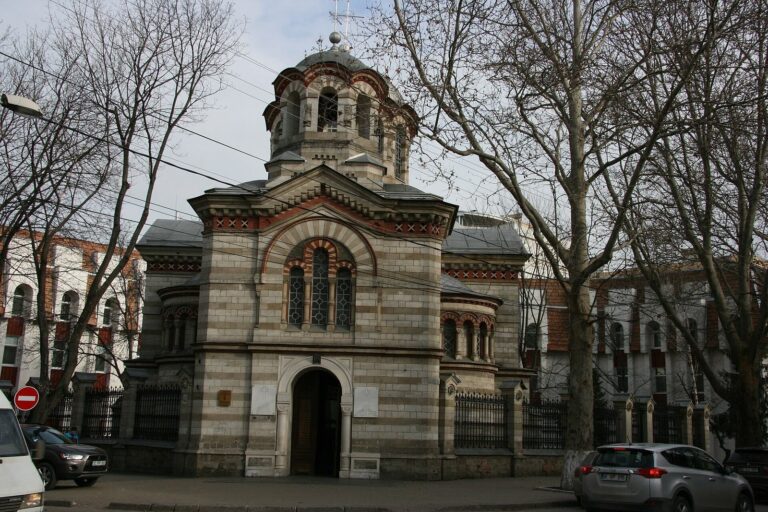
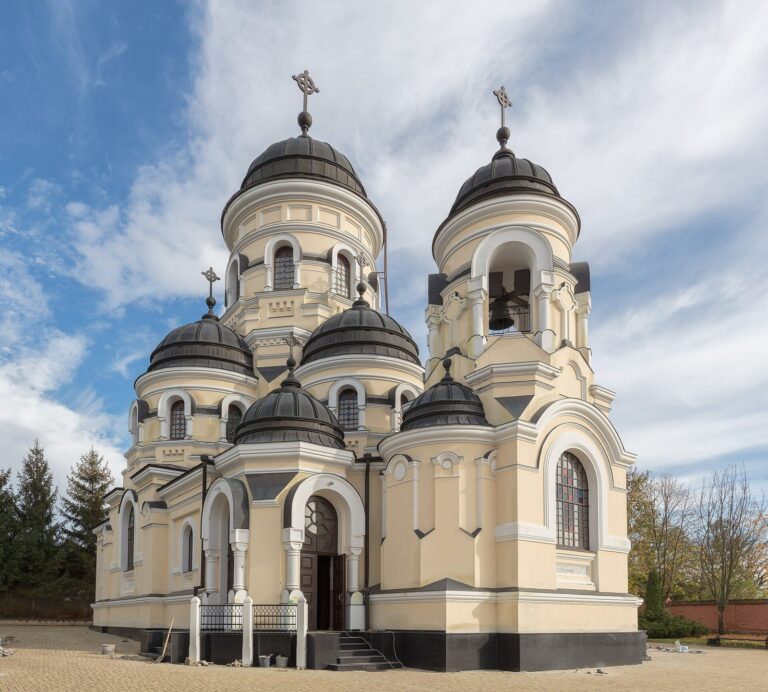
Ciuflea Monastery is an Orthodox monastic complex in Chișinău, Moldova, centered on a church dedicated to Saint Theodore Tiron, an early Christian soldier-martyr revered in Eastern Christianity. The white-stone church was built between 1854 and 1858 in the Russo-Byzantine style. Anastase Ciufli, a first-guild merchant, meaning a member of the highest class of registered merchants in the Russian Empire, paid for its construction in accordance with the wishes of his elder brother Teodor, who died in 1854.
The Aromanian brothers Teodor (1796–1854) and Anastase (1801–1870) had emigrated from Macedonia to Bessarabia in 1821; Anastase was from Epirus. The church was designed by Luka Zaushkevich and consecrated on July 6, 1858. Archpriest Ioan Butuc, a senior Eastern Orthodox priest, became its first parish priest. Both brothers were buried beside the church’s south wall.
Rebuilding and changing role
The church was substantially rebuilt in the early twentieth century to accommodate more people. On Easter, April 6, 1903, the first Chișinău pogrom began in the square in front of it. A pogrom is a violent attack on an ethnic or religious minority, particularly a Jewish community.
In 1962, after the Nativity Cathedral was closed and converted into an exhibition building, the church became the episcopal cathedral of the Chișinău diocese, the principal church of a bishop’s district. For an extended period from the early 1960s to the late 1980s, it was the only Orthodox church in the city where services were held. Major repairs began in 1962, followed by extensive repair work in 1972. Artist A. I. Burbela restored damaged wall paintings in a style associated with the Russian painter Viktor Vasnetsov.
Monastery status and later events
In the 1990s, the Nativity Cathedral returned to church use, and the episcopal see moved back there. At the request of the monastic community, and following a report by Metropolitan Vladimir, the Holy Synod, the Russian Orthodox Church’s governing body, approved monastery status for the church on July 17, 2002. State registration followed on August 8. Teodor Roșca was appointed spiritual guide and administrator of the new monastery.
Ciuflea is a women’s Orthodox monastery within the Moldovan-Chișinău Metropolis of the Russian Orthodox Church. Its services follow the old calendar, based on the Julian calendar. The monastery is recognized as a monument of national architectural importance and appears in both Chișinău’s register of historical and cultural monuments and Moldova’s state-protected monuments register, where it is listed as number 25. The Academy of Sciences of Moldova initiated its inclusion in the municipal register. A memorial was unveiled at the monastery on July 20, 2019, during an international conference on Suvorov’s historical legacy.
Remains
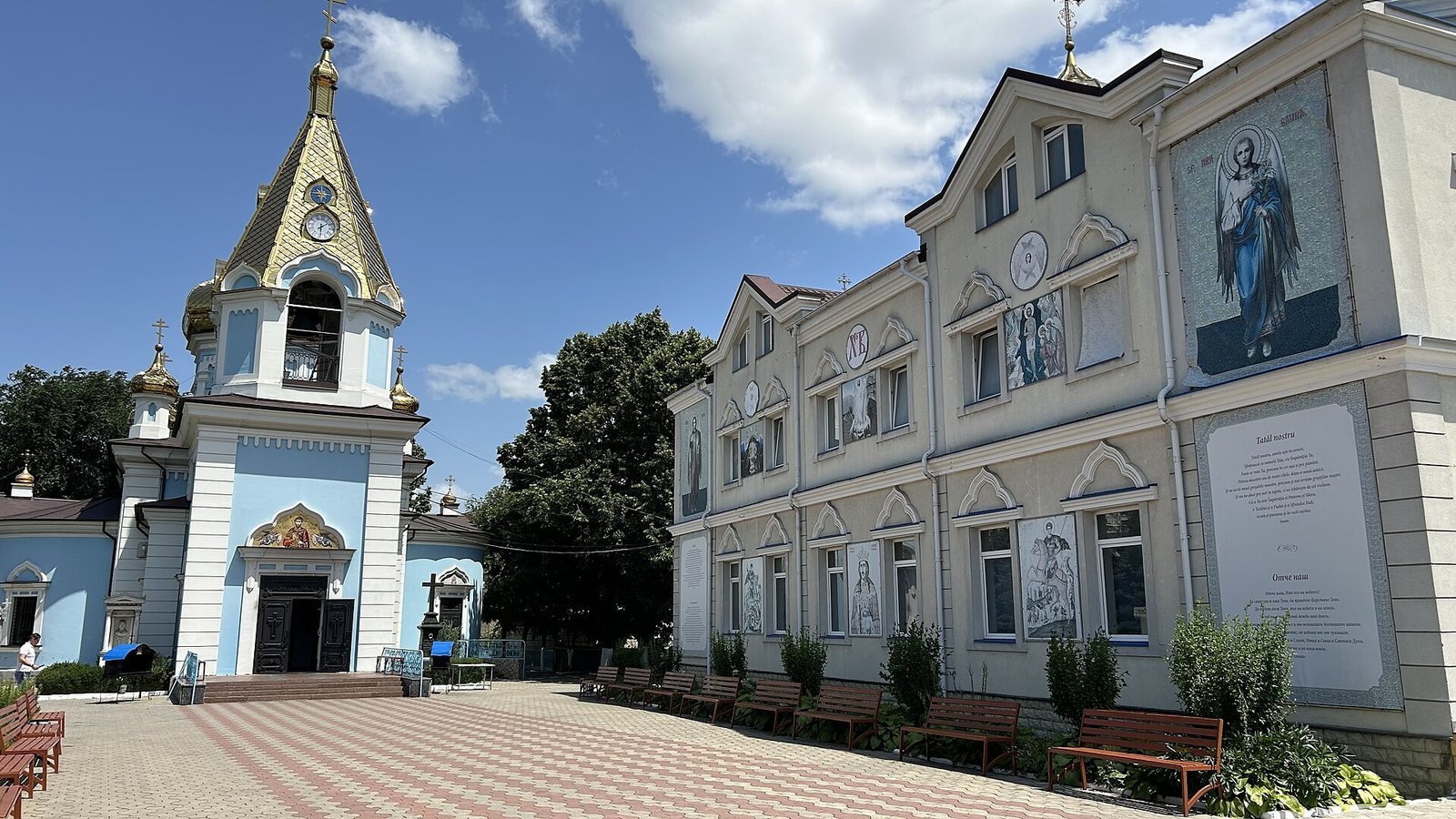
The complex centers on a white-stone church, with its bell tower attached on the west and a side chapel on the south. Other buildings serve worship and monastic life. The principal church’s nine domes and adjoining buildings give the site its documented architectural and functional layout.
Church and burial sites
Main church
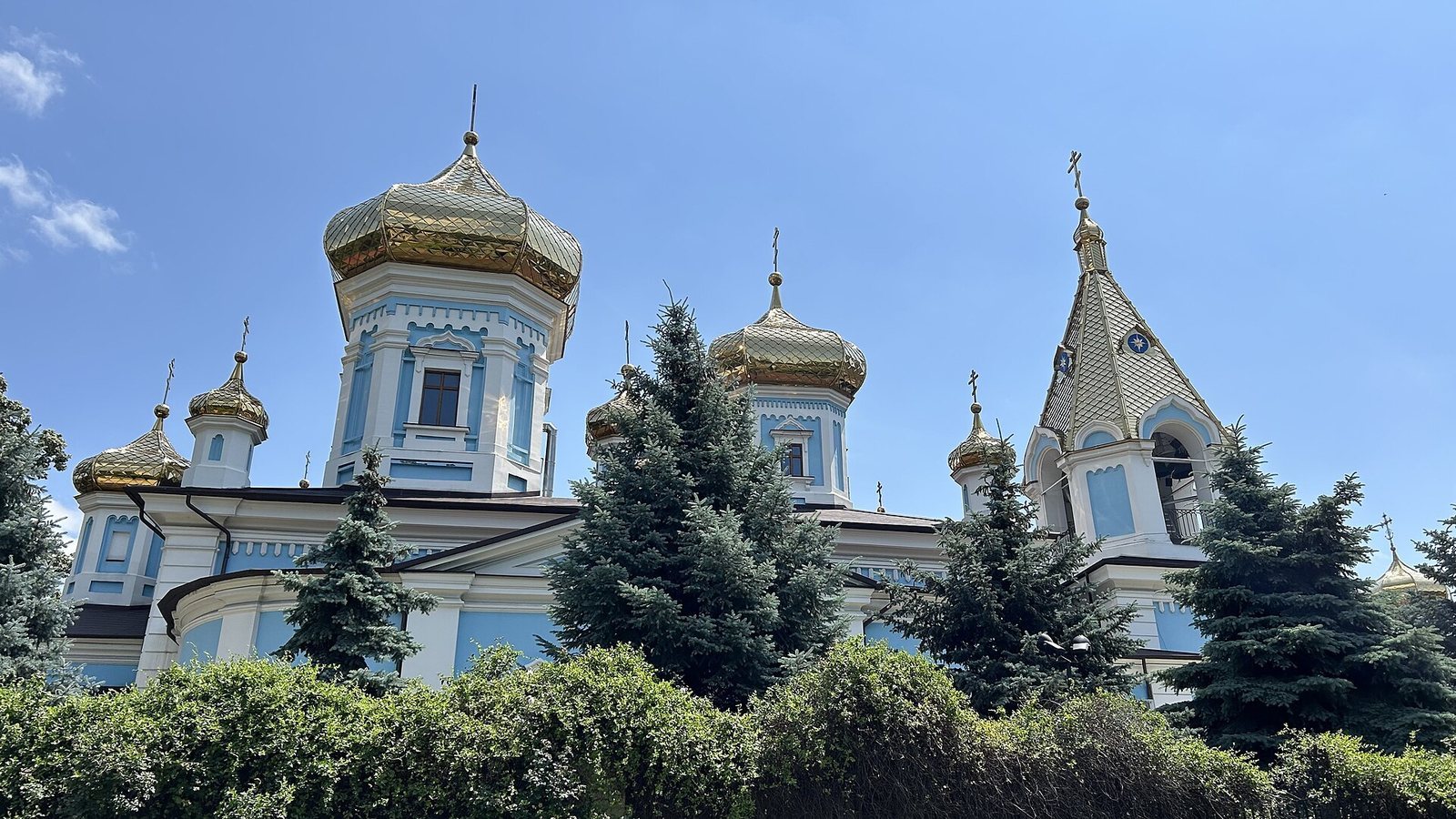
The church has nine domes set on octagonal drums, the eight-sided supports beneath them. A bell tower with a steep, tent-like roof is attached to the west. The domes were gilded during restoration work in the 2010s.
South chapel and graves
A side chapel dedicated to the Intercession of the Mother of God was built in 1974 on the church’s southern side. The graves of Teodor and Anastase Ciufli lie beside the south wall; a funerary stone marks Anastase’s grave.
Monastic buildings and commemorative features
Worship and living spaces
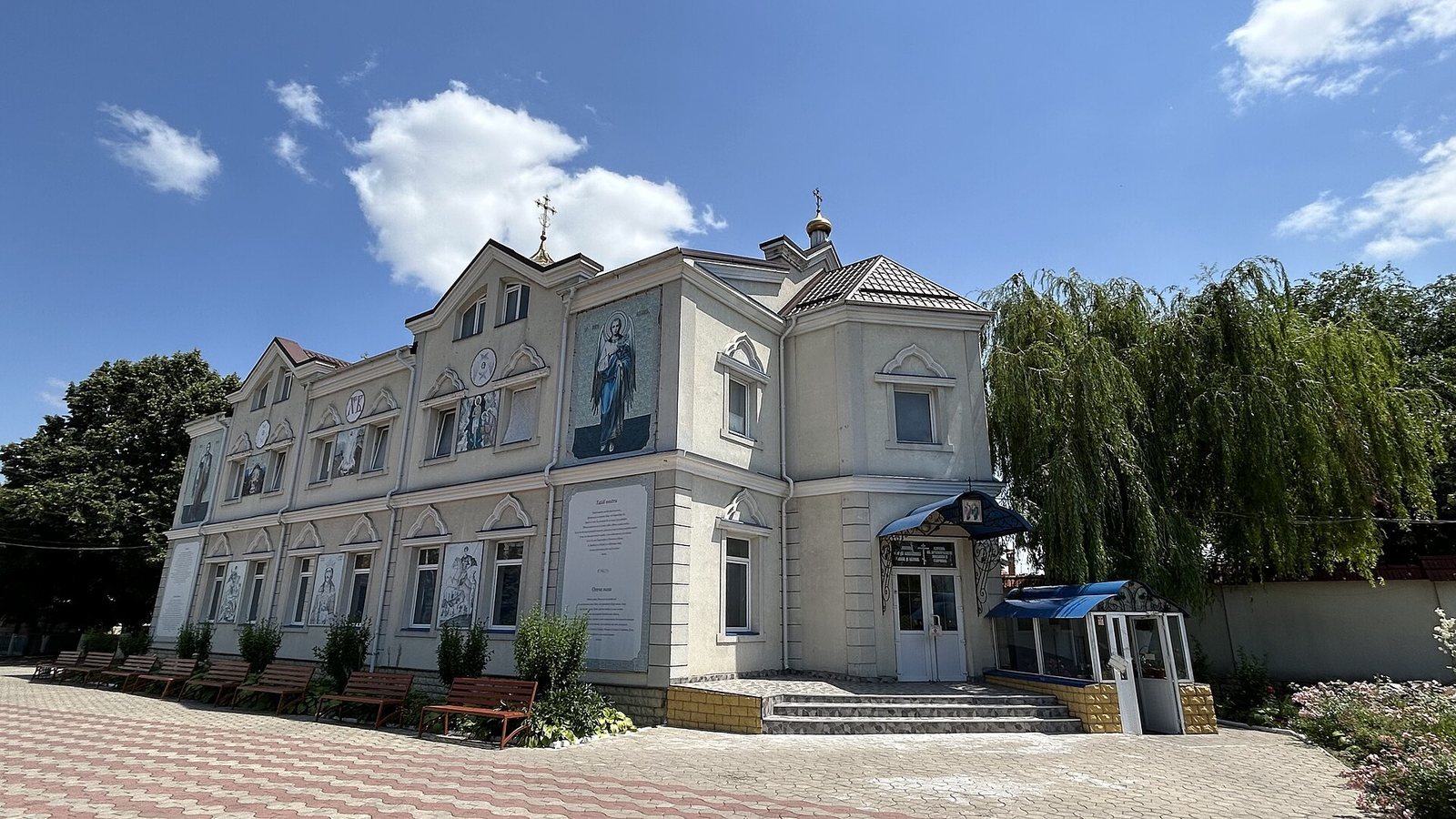
The monastery complex includes a residential building, a winter church dedicated to the Archangels Michael and Gabriel, a refectory church dedicated to Michael the Archangel, and a chapel dedicated to the Iveron Icon of the Mother of God. A social and administrative building contains cells for nuns and novices, a Museum of Church Art, a kitchen, a refectory, a vestment room, a bakery for liturgical bread, and other work and living spaces.
Icons and relics
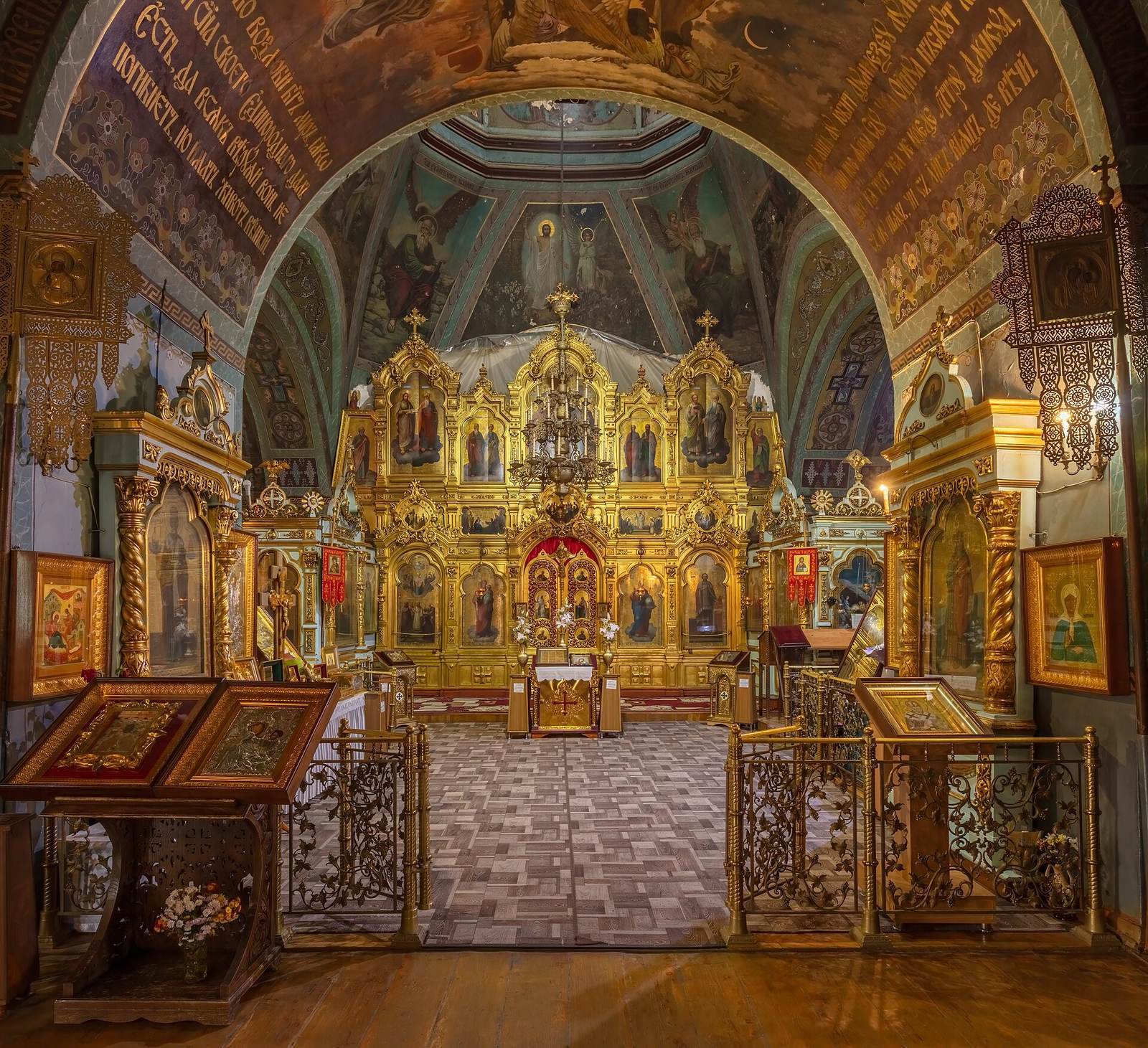
Sacred objects at the monastery include revered copies of the Hârbovăț and Kazan icons, venerated images of the Mother of God. Relic fragments are associated with Saint Theodore Tiron, Panteleimon the Healer, an Orthodox saint linked with healing, Seraphim of Sarov, Antipa of Athos, Job of Pochaev, Amphilochius of Pochaev, and other saints.
Cadet memorial
The monastery’s memorial commemorates cadets, including Suvorov and Nakhimov cadets, who died in battle, from wounds or illness, or in service to their faith and homeland.