National Museum of Ethnography and Natural History: A Museum of Moldova’s Nature and Culture
Site at a Glance
- Popularity
- Medium
- Country
- Moldova
- Primary era
- Modern
- Eras represented
- Early Modern, Modern
- Civilizations
- Unclassified
- Site type
- Museum
On this page11 sections
History
Founding and early development
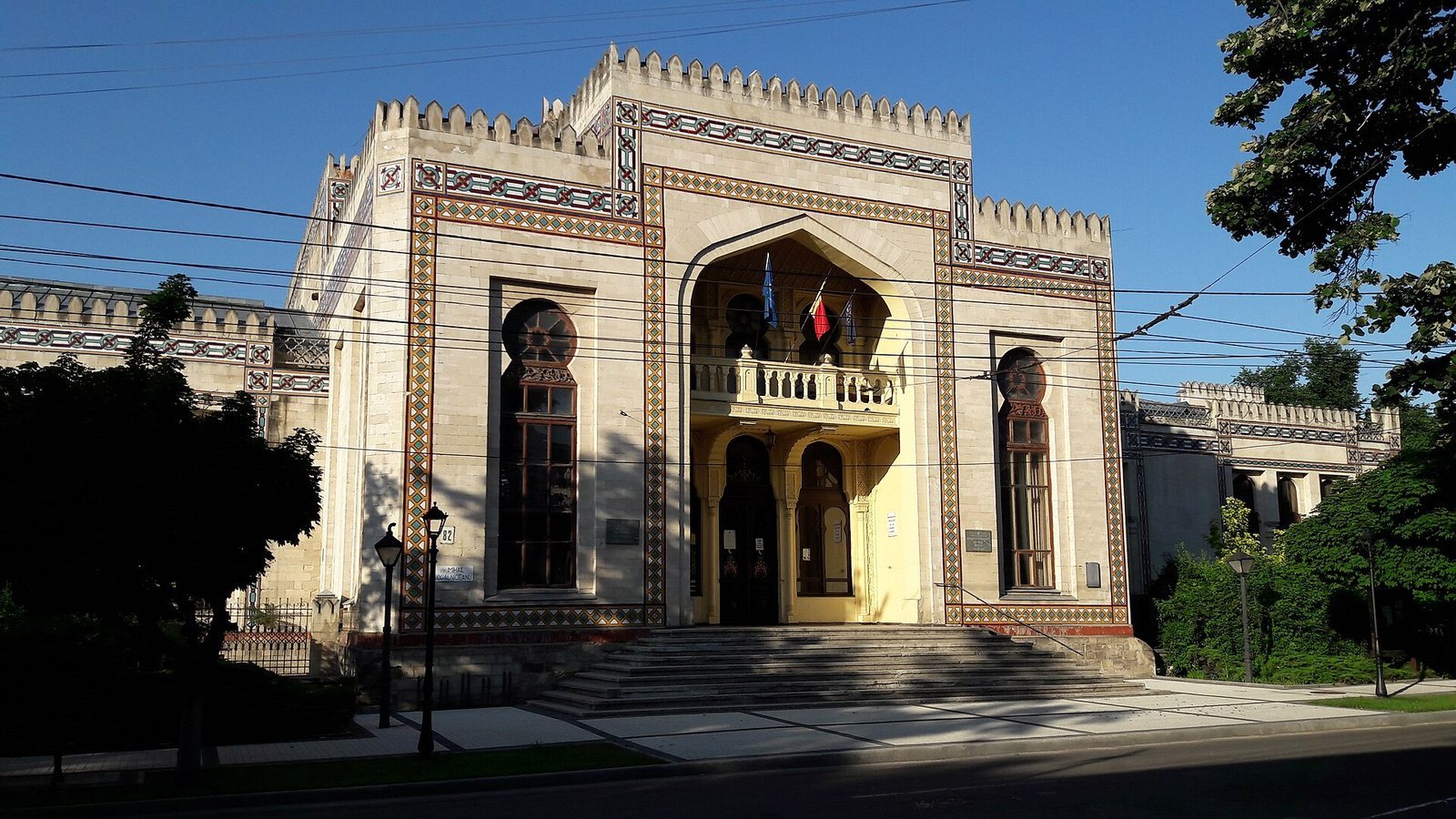
The National Museum of Ethnography and Natural History is a museum in Moldova, founded in October 1889 from exhibits at Bessarabia’s first agricultural exhibition. Established at the initiative of Baron A. Stuart, it is the oldest museum still operating in the Republic of Moldova. It began as the Agricultural Museum and initially occupied the provincial zemstvo building, an office of provincial local government in the Russian Empire. A purpose-built museum building was erected in 1903–1905. The institution became an important scientific and cultural center in Bessarabia, known in the Russian Empire and elsewhere in Europe.
Its early development was shaped by its first administrator, Frant Osterman, by Albina Osterman, who founded the ethnographic collection, and by naturalists. The Society of Naturalists of Bessarabia, established in 1904, also supported the museum’s work. In 1906, a botanical garden was created on the grounds. It was the first in Bessarabia and remains in existence.
Changing institutional roles
The museum’s name and formal role changed repeatedly. In 1926 it became the Chisinau National Museum of Natural History, then the Regional Museum of Bessarabia in 1937. From 1940 it was the Republican Museum of the Moldavian SSR, the Moldavian Soviet Socialist Republic, a constituent republic of the Soviet Union. It was renamed the State Museum of History and Local Studies in 1957 and the State Museum of Local Studies in 1983. In 1991 it took its present name, the National Museum of Ethnography and Natural History.
Continuity and later work
Despite these reorganizations, the museum maintained its focus on the nature and culture of Bessarabia. It helped establish most of Moldova’s other museums. It also oversees a museum complex in Ivancea village, Orhei District, where the Museum of Folk Crafts of Moldova opened after restoration work. In 1994, a new permanent exhibition, “Nature. Man. Culture,” opened in the museum building. The institution is designated a monument of history and a monument of architecture in the Republic of Moldova.
Remains
The site’s principal physical elements are its purpose-built museum building and the botanical garden on the grounds. The building houses collections and a permanent exhibition devoted to natural and cultural subjects.
Museum building and grounds
Museum building
Designed by architect V. Tsyganko, the purpose-built building remains the museum’s home. It contains the permanent exhibition and the museum’s diverse collections.
Botanical garden
A botanical garden forms part of the museum grounds. Established in 1906, it continues to exist as part of the site.
Collections and exhibition
Collections
The collections include geological and fossil specimens, animal and insect material, archaeological and ethnographic objects, and coins. Among the notable holdings are a giant deinothere skeleton, from an extinct group of large trunked mammals related to elephants; archaeological finds from settlement sites near Cărbuna, Lărguța, and Dorotcaia; and Bessarabian carpets dating from the 18th to the 20th centuries. The museum also has a scientific library. Its objects have appeared in exhibitions in Europe, the Americas, Africa, and Asia.
Permanent exhibition
“Nature. Man. Culture” explores relationships between people and nature across historical periods, the evolution of the organic world, changing uses of natural resources, and ecology.