Cisterns of La Malga: A Roman Hydraulic Complex at Carthage
Site at a Glance
- Rating
- 4.5
- Popularity
- Low
- Country
- Tunisia
- Primary era
- Classical
- Eras represented
- Classical
- Civilizations
- Roman
- Site type
- Infrastructure
- Remains
- Cistern
On this page8 sections
History
The Cisterns of La Malga are a Roman hydraulic complex at the northern edge of ancient Carthage in Tunisia. Developed during the High Empire, the early imperial period when Carthage was a major city of Roman Africa, they were initially intended to collect rainwater. From AD 131, a branch of the Zaghouan Aqueduct supplied the complex, although the exact route of that branch remains uncertain.
Roman water supply
The cisterns helped supply Carthage, including the Baths of Antoninus, a large public bathing complex that required a dependable volume of water. The storage system worked alongside other major installations at Carthage, such as the so-called Basins of Hamilcar and the cisterns on Bordj Djedid Hill. Channels running mainly underground connected La Malga with the Baths of Antoninus, using the steep gradient of the terrain to carry water downward.
Reuse and modern protection
From the Middle Ages, local communities adapted the cisterns as makeshift dwellings, stables, barns, and cellars. These uses continued into the twentieth century and delayed archaeological investigation. Historical descriptions also differ in their accounts of the complex. Al-Idrisi wrote of 24 cisterns in a single line, while Christian Tuxen Falbe described fifteen cisterns, four ruined cisterns farther west, and nineteen basins. Henri Saladin considered one of the dimensions given by Al-Idrisi excessive.
In 1888, one cistern was restored and equipped with a cast-iron pipe connected to the Zaghouan Aqueduct. That aqueduct had supplied Tunis again since 1861, and its water also served La Goulette, La Marsa, and settlements and villas around the former area of Carthage. The cisterns have been protected as a historical monument in Tunisia since 1901. They form part of the Archaeological Site of Carthage, inscribed on the UNESCO World Heritage List in 1979. In 2012, Tunisia proposed the wider Zaghouan–Carthage Roman hydraulic complex, including La Malga, for future World Heritage inscription.
Remains
Layout and construction
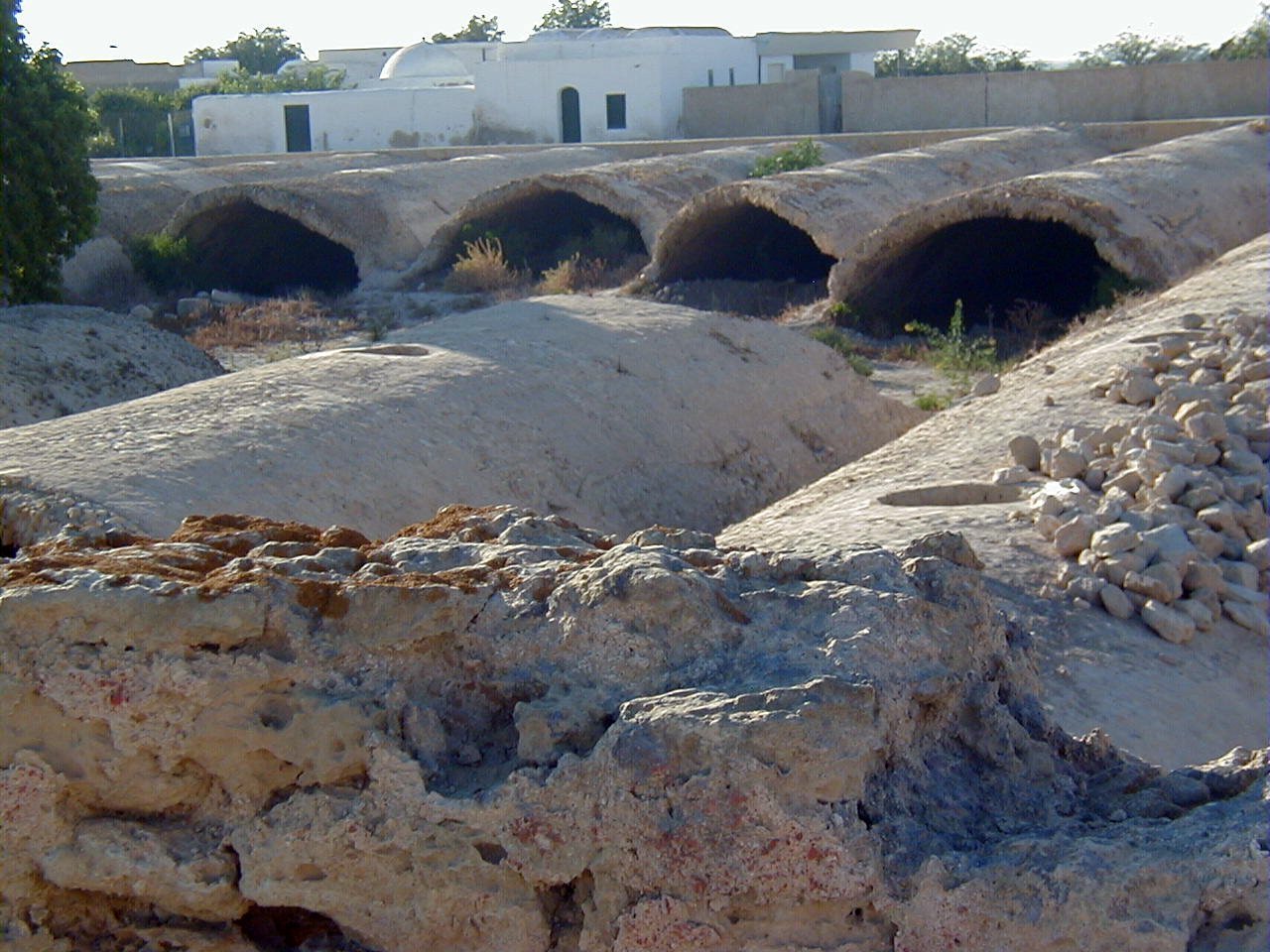
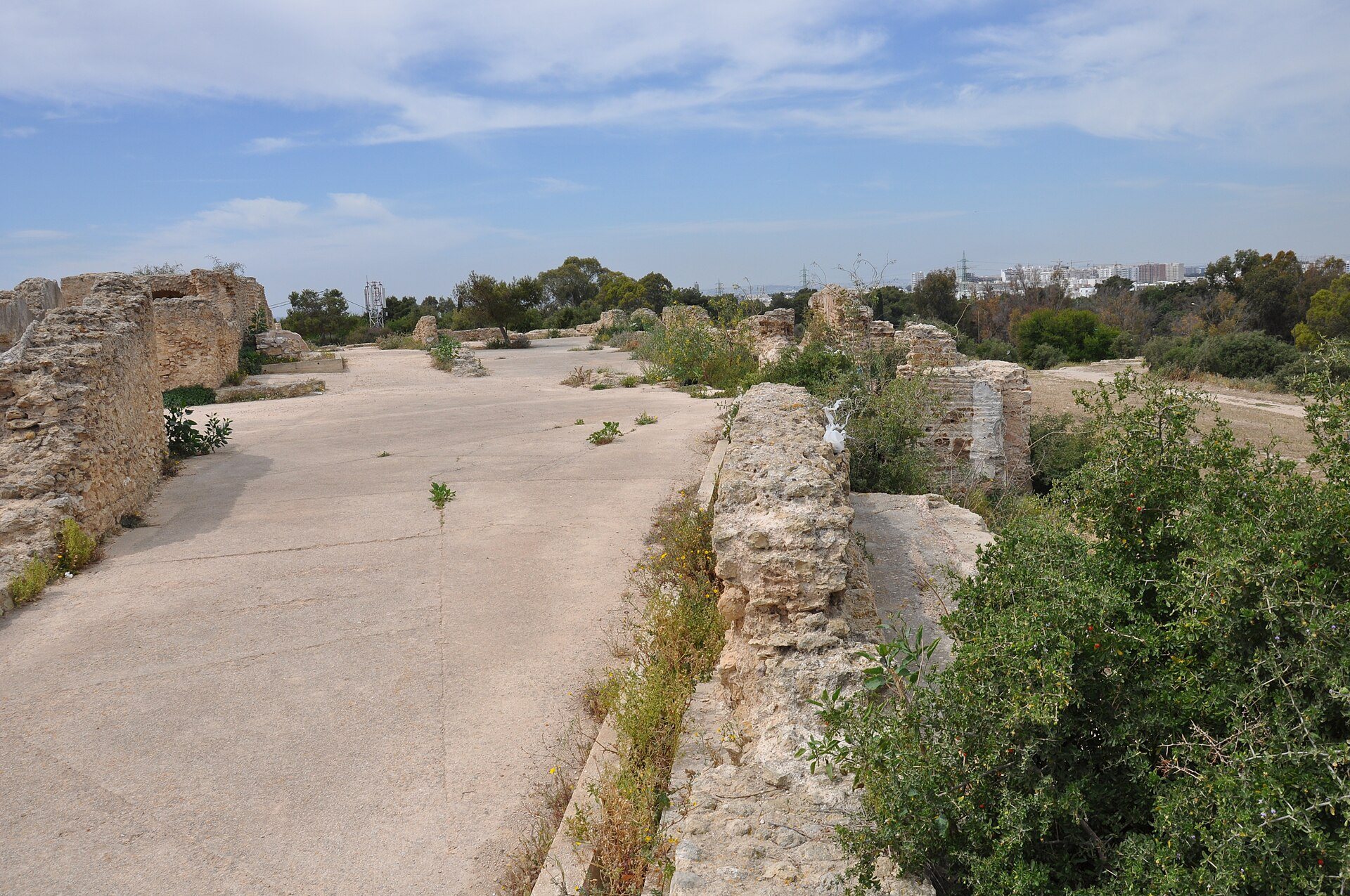
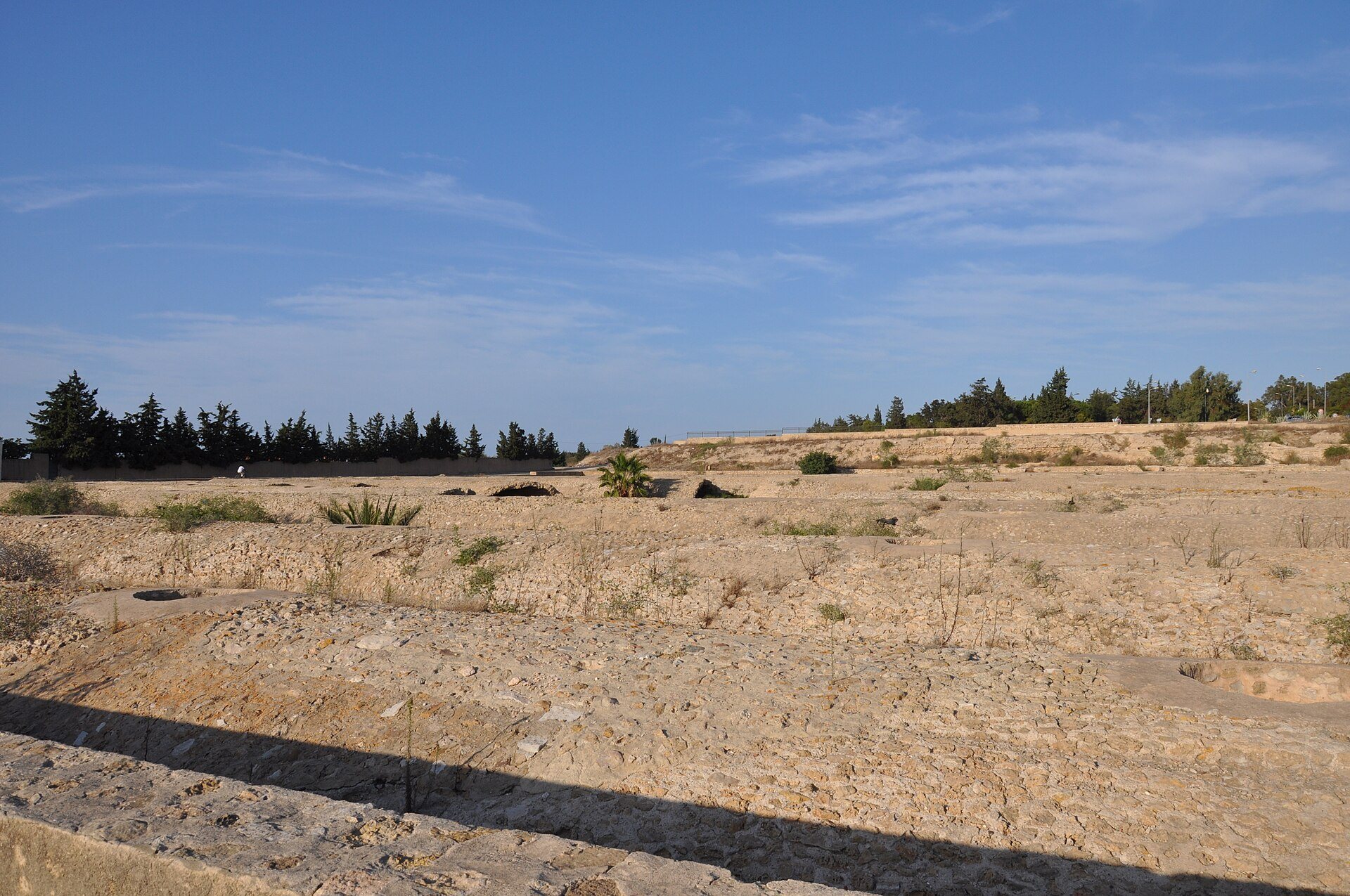
The complex occupies a rectangle approximately 127 metres by 102 metres, covering about 12,945 square metres. Its principal remains are fifteen parallel, vaulted cistern compartments built as an extensive water-storage installation. A distribution cistern lies at right angles to these chambers, organizing the movement of water through the complex.
Parallel cisterns
Each cleared compartment forms a vaulted chamber about 102 metres long, 7.4 metres wide, and 7 metres high beneath the vault. Together, the cisterns have a stated capacity of approximately 60,000 cubic metres, with broader estimates ranging from 50,000 to 60,000 cubic metres. Each vault has about ten circular openings. These may have helped with overflow or rainwater collection, and an additional upper level of collection tanks is considered probable, comparable to two-level reservoirs known from the Roman world of Gaul.
Distribution cistern
The perpendicular distribution cistern received water from a subsidiary branch of the Zaghouan Aqueduct that ran alongside it. Lateral openings allowed water to enter before it was distributed to the parallel chambers. The aqueduct-and-cistern arrangement formed part of a wider system that carried stored water toward Carthage and its public baths.
Surrounding archaeological remains
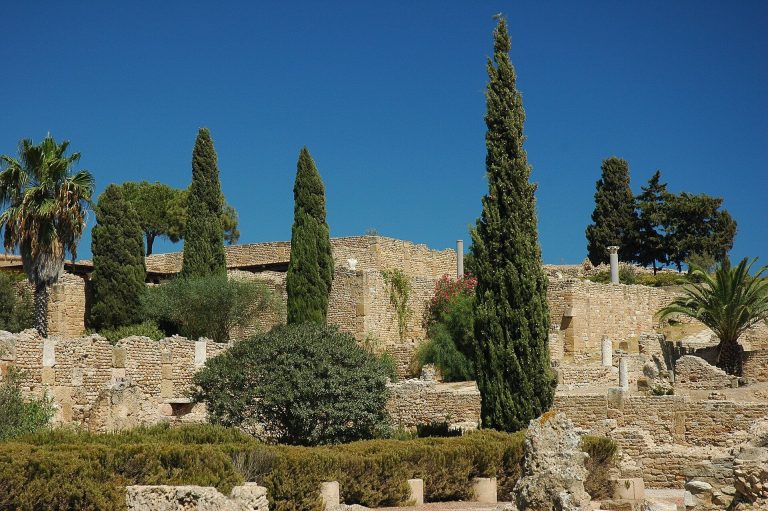
The area around the cisterns included the cemetery known as that of the officials, the Villa of Scorpianus, and several mausoleums. One mausoleum has been reconstructed in a dedicated room at the Bardo National Museum in Tunis. The cistern complex itself is exceptionally well preserved, although its long domestic, agricultural, and storage reuse shaped the condition in which it was later studied.