Carthage Amphitheatre: A Roman Arena in Tunisia
Site at a Glance
- Rating
- 4.3
- Popularity
- Low
- Country
- Tunisia
- Primary era
- Classical
- Eras represented
- Classical, Modern
- Civilizations
- Roman
- Site type
- Entertainment
- Remains
- Amphitheatre
On this page7 sections
History
The Carthage amphitheatre is a Roman arena in Carthage, Tunisia, built during the late first or early second century CE as part of the Roman rebuilding of the city. Carthage had been re-established under Julius Caesar as Colonia Julia Karthago and became the capital of the Roman province of Africa. A dated inscription shows that the amphitheatre was in use between 133 and 139 CE.
Roman construction and enlargement
The monument was later expanded during the third century. This enlargement increased its major axis to approximately 156 metres and its width to 128 metres, creating an arena complex estimated to accommodate about 30,000 spectators. The amphitheatre stood on level ground west of Byrsa Hill rather than being built into a slope, an arrangement also identified at the African amphitheatres of El Jem and Thapsus.
Use through the Vandal period
The amphitheatre continued to function long after its Roman construction. The poet Luxorius indicates that it was still in use in the early sixth century, when Carthage was under Vandal rule. This testimony places the arena among the city’s active public monuments during a later phase of its history.
Medieval memory and modern intervention
By the eleventh century, the geographer and writer Al-Bakri described the amphitheatre as Carthage’s most wonderful monument. Al-Idrissi and other medieval visitors admired its high arcades and reported reliefs showing people, animals, ships, and figures representing the winds. Stone and metal were later removed from the structure, leaving most of it at ground level. Excavations at the end of the nineteenth century and the beginning of the twentieth century exposed the arena, while restoration and other alterations were influenced in part by Christian traditions linking the monument with the martyrdom of Christians.
In 1887, a cross was placed at the centre of the arena in memory of Christian martyrs, including Perpetua and Felicity. The tradition that these saints died in this particular amphitheatre remains uncertain, since they may have been martyred in another unidentified monument. A modern chapel dedicated to them was subsequently associated with the site and disturbed underground amphitheatre installations. The archaeological site of Carthage, including the amphitheatre, was added to the UNESCO World Heritage List in 1979 under criteria (ii), (iii), and (vi).
Remains
Arena and surviving structure
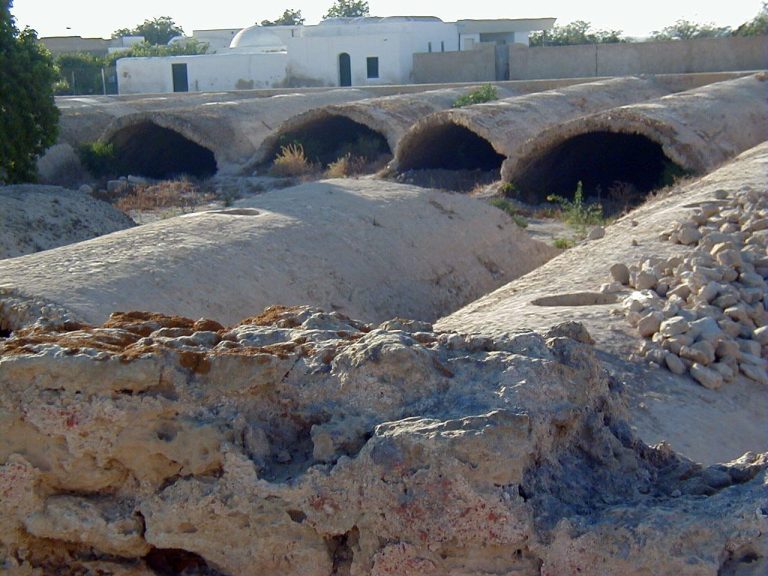
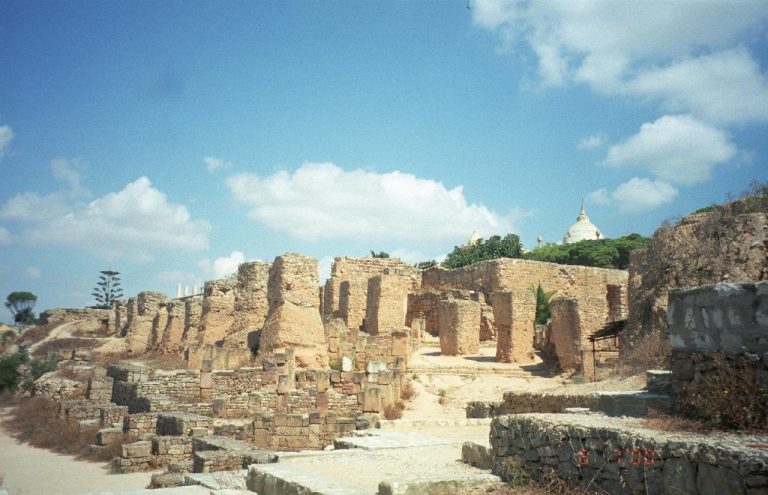
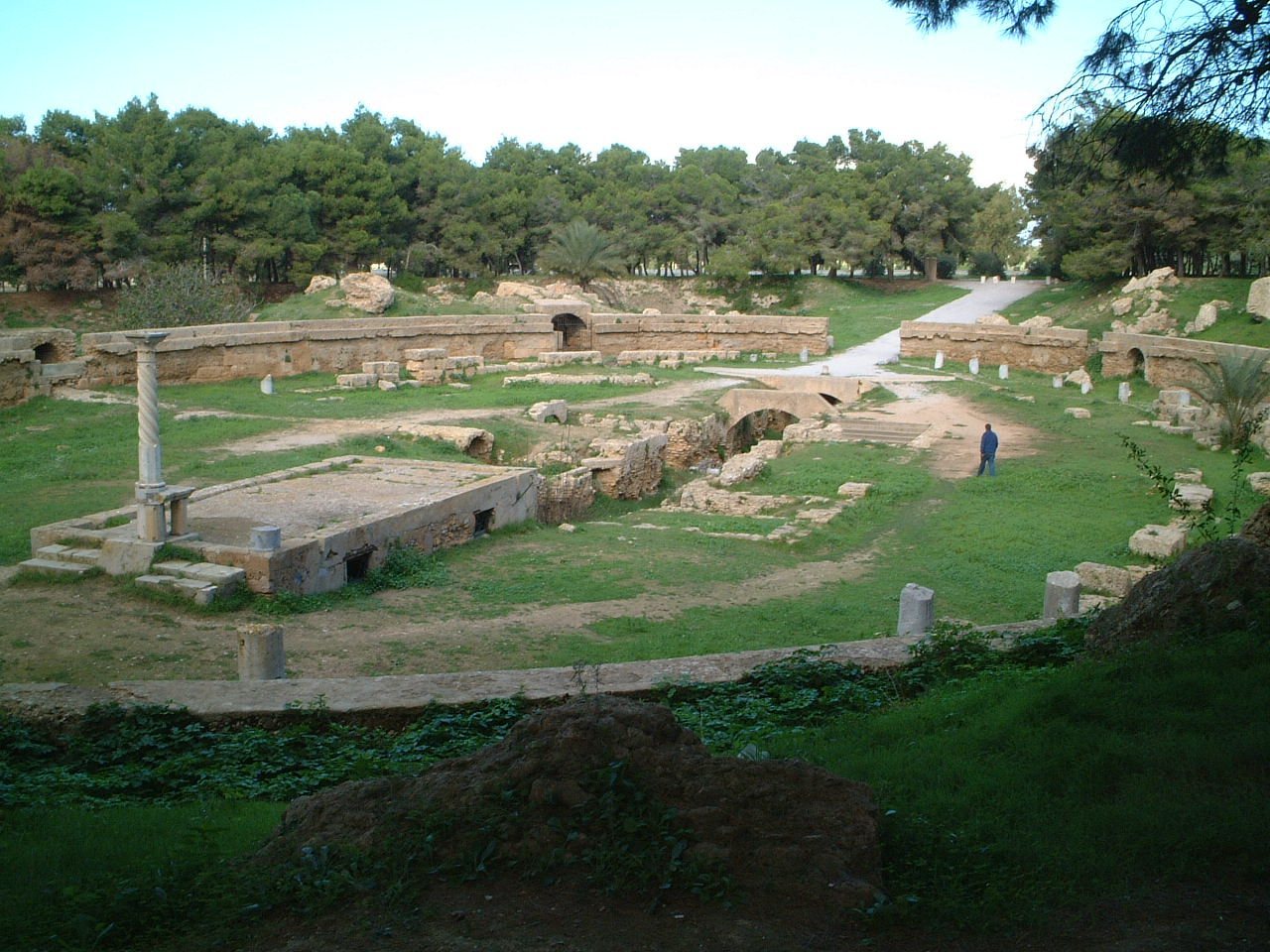
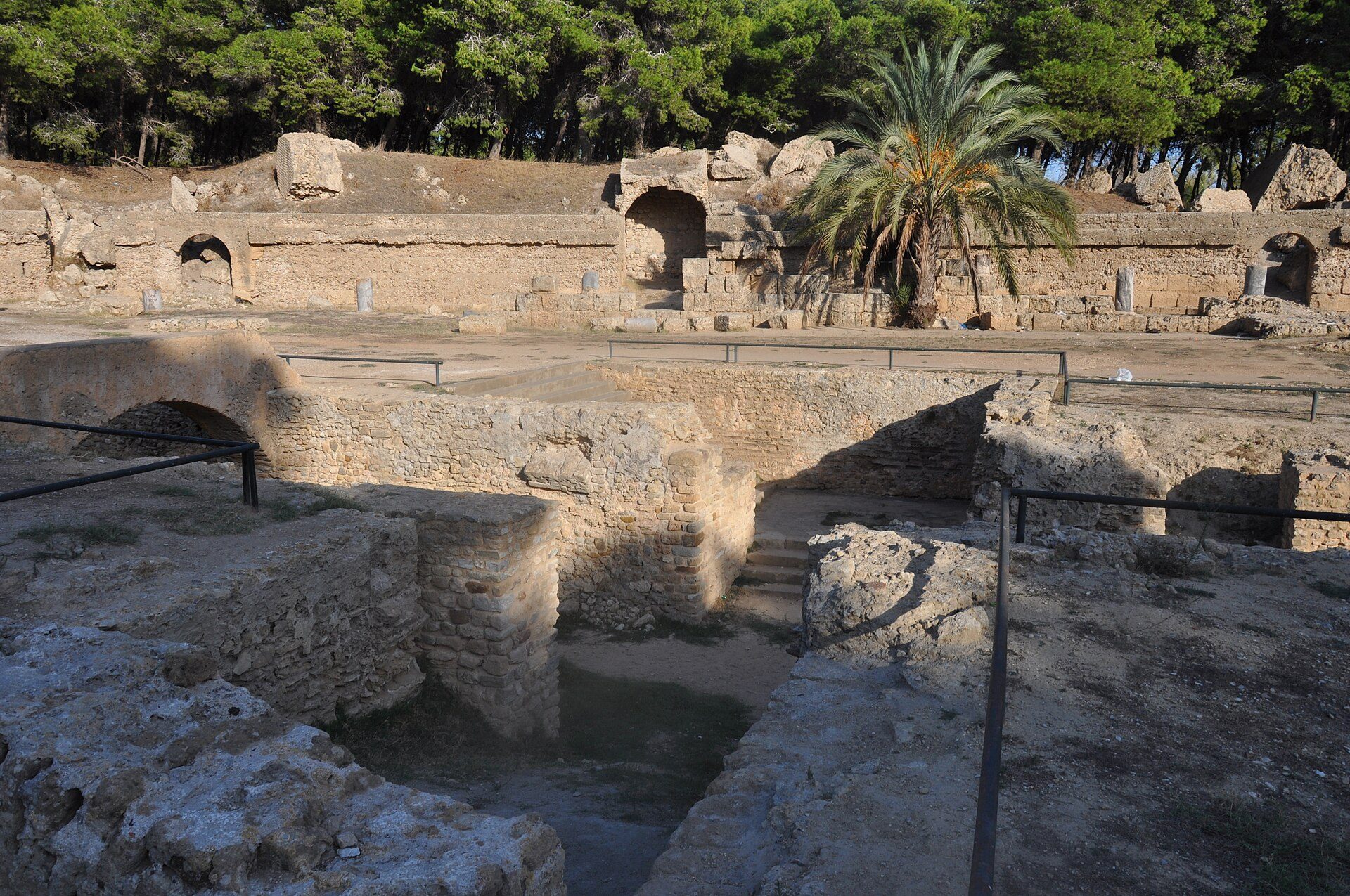
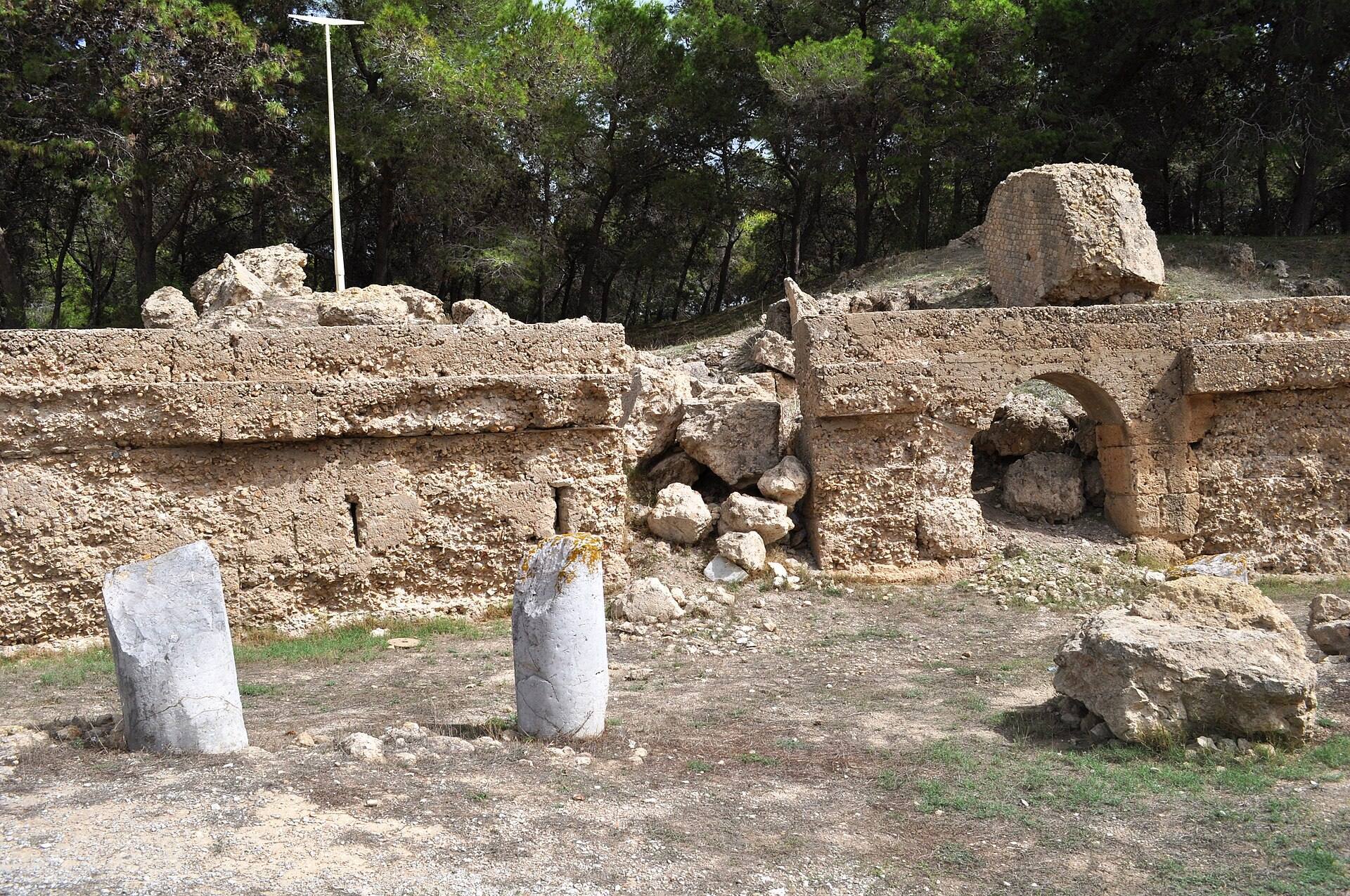
The surviving monument is centred on the arena, which measures approximately 64.66 by 36.70 metres and lies among pine trees. It is enclosed by a surrounding wall that has been restored. A 2.5-metre-high podium, built in opus quadratum, a Roman technique using regularly cut blocks laid in horizontal courses, surrounded the arena. The seating was supported by a series of 54 spans. The amphitheatre’s original exterior measured about 120 by 93 metres, while the third-century enlargement extended the major axis to 156 metres and the width to 128 metres. Its façade was constructed from Kadhel limestone blocks.
Medieval descriptions portray a circular exterior formed by arcades carried on columns and topped by additional arcades. They also mention reliefs of humans, animals, ships, and personified winds. The arena’s centre now contains the cross erected in 1887, and the chapel dedicated to Perpetua and Felicity is associated with the site. Its construction disturbed the amphitheatre’s subterranean installations.
Curse tablets and the underground installations
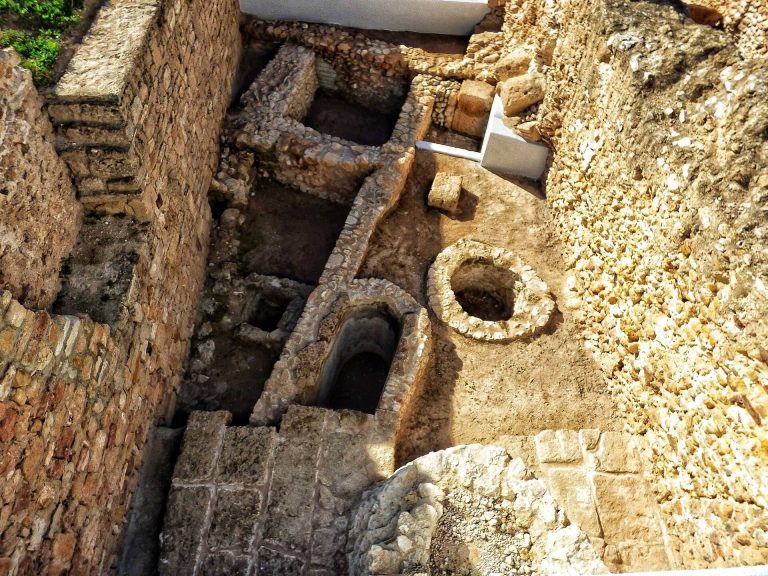
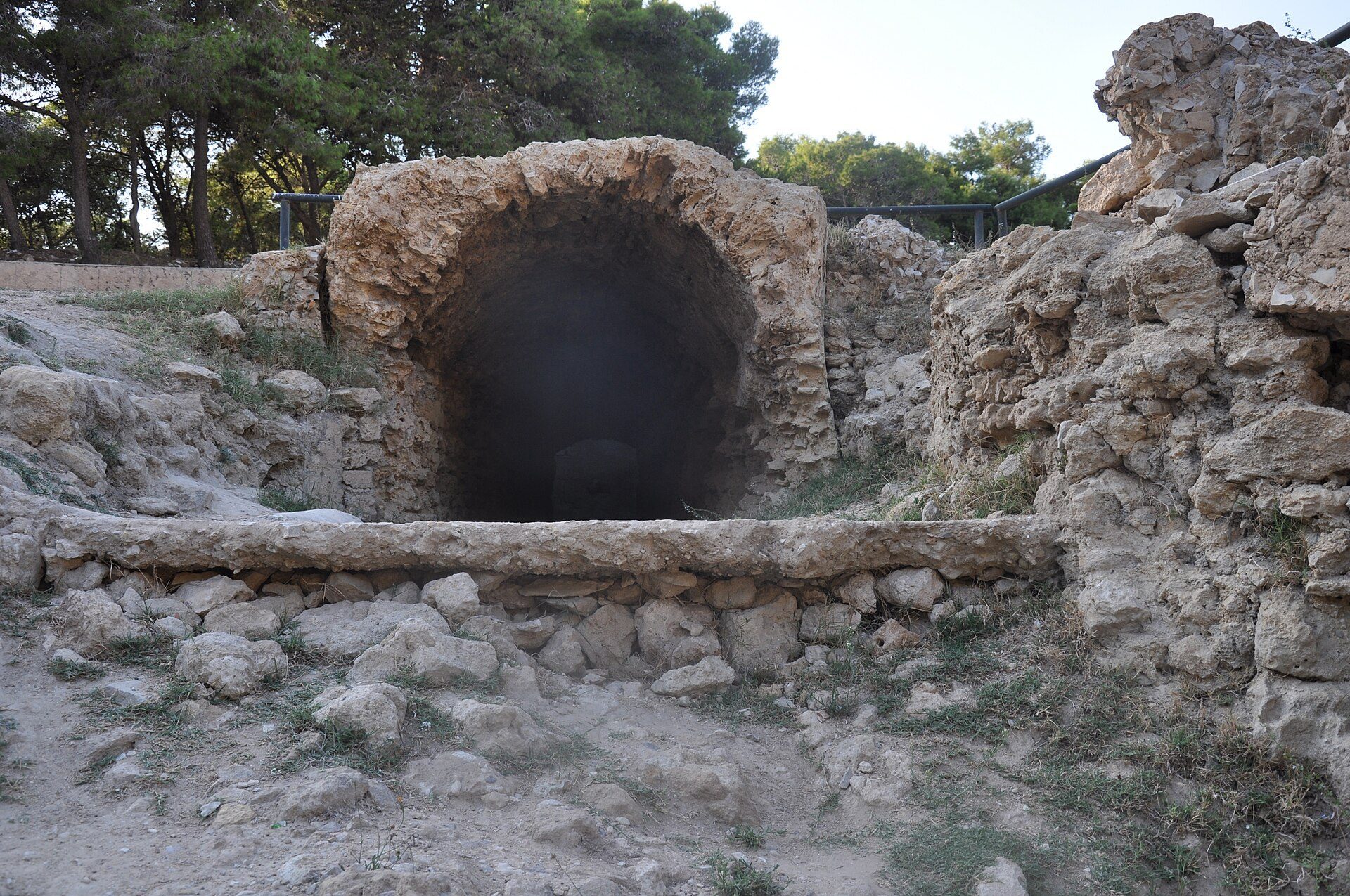
About ten of the 52 lead defixion tablets found at Carthage were connected with the amphitheatre. A defixion tablet is a written curse, usually inscribed on lead and placed in a ritual setting. These texts were deposited in locations associated with underworld deities. At the amphitheatre, the tablets were probably placed in a chamber where bestiarii, arena fighters who fought wild animals, were deposited after being killed. One tablet curses a bestiarius named Gallicus, asking that a bear kill or injure him and prevent him from killing a bear or bull.