Cistern of Aetius: A Byzantine Reservoir in Istanbul
Site at a Glance
- Popularity
- Medium
- Country
- Turkey
- Primary era
- Classical
- Eras represented
- Classical
- Civilizations
- Byzantine, Roman
- Site type
- Infrastructure
- Remains
- Cistern
On this page4 sections
History
Construction and Byzantine use
The Cistern of Aetius is a Byzantine open-air reservoir in Istanbul, Turkey, built in 421 by Aetius under Emperor Theodosius II. Aetius had served as prefect responsible for Constantinople’s administration in 419 and became a senior administrator of the eastern prefecture in 425. The reservoir was connected to the Valens Aqueduct. Although it has been proposed that it supplied the moat of the city walls, it more likely served as a central storage point distributing water through Constantinople. Its great scale also made it a landmark used to locate nearby monasteries, including those of Prodomos of Petra, the Romans, and Mara.
A later tradition attributed the cistern to Emperor Valens, who ruled from 364 to 378, and placed it in Constantinople’s fourteenth region, one of the city’s numbered districts in late antiquity. The reservoir was long confused with other structures: one near the Palace of the Porphyrogenitus that has since disappeared, one in the courtyard of the small Kefeli Mosque, and a vaulted cistern southeast of the Çukurbostan near the Gate of Adrianople, known as Zina Yokusu Bodrumi. Its identification with the Çukurbostan near the gate became established after it was associated with the monastery of Prodomos of Petra. Prodomos is a title for John the Baptist meaning “Forerunner.”
Ottoman and modern use
After the Ottoman conquest of Constantinople in 1453, the cistern fell out of use as a reservoir. The French scholar and traveler Pierre Gilles reported that it was already empty around 1540. During the Ottoman period, the basin was used as a vegetable garden and became known as Çukurbostan, meaning “sunken garden.”
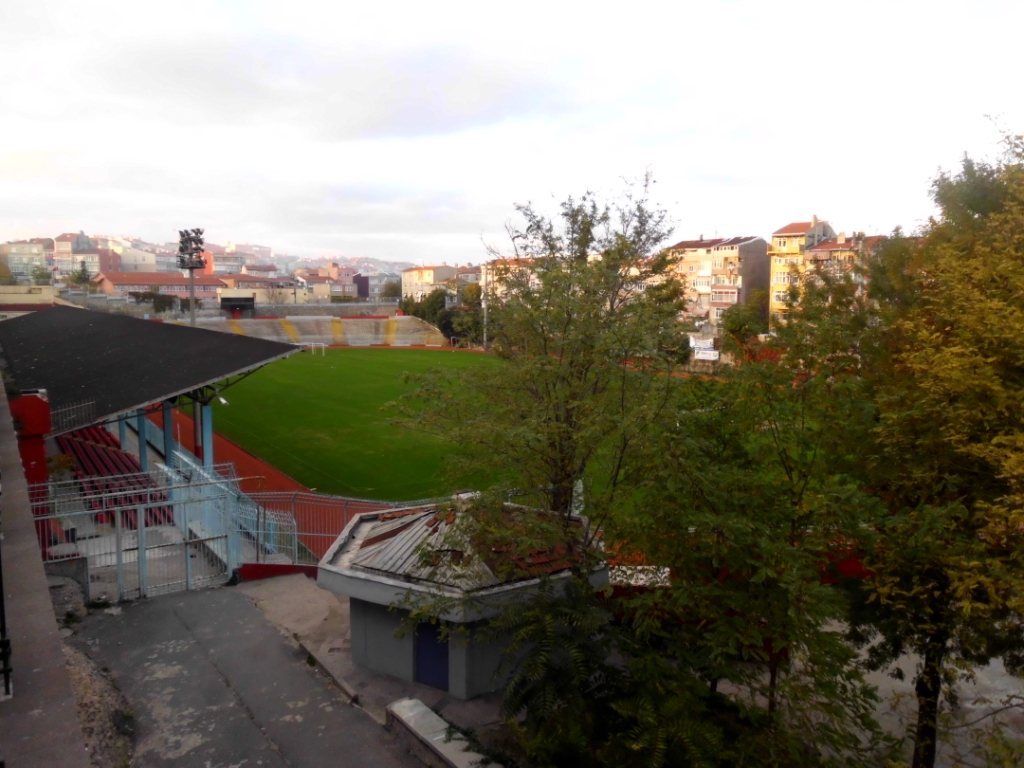
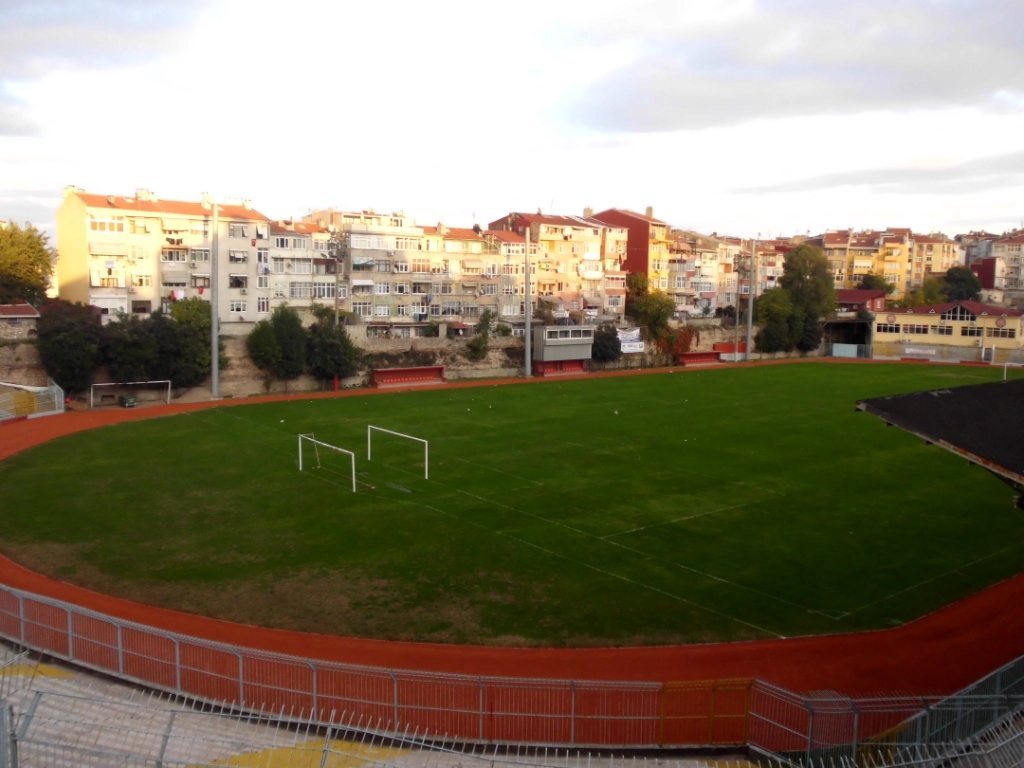
The site became a sports ground in the 1920s, and a football stadium has occupied it since 1928. The stadium is known as Karagümrük Stadium or Vefa Stadium, the latter name taken from the Vefa S.K. football team. It is the home ground of Fatih Karagümrük SK.
Remains
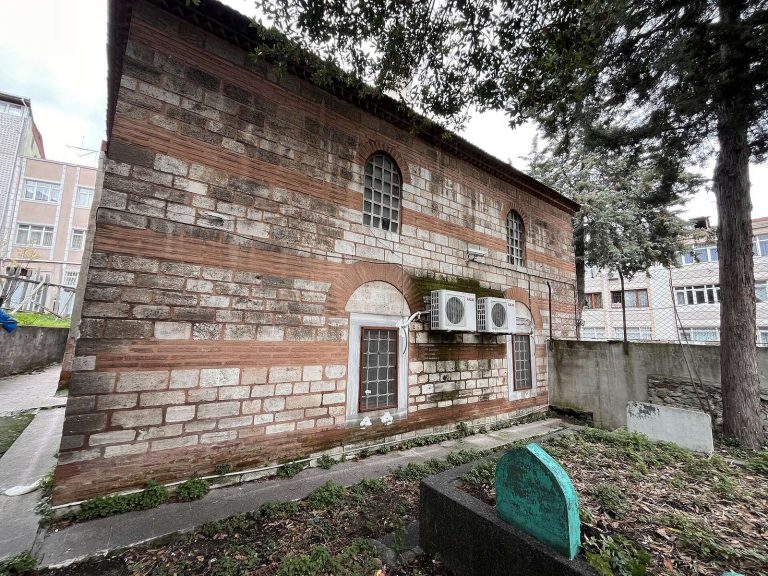
The cistern lay within Istanbul’s walled historic city, in Karagümrük at the upper end of the valley between the fifth and sixth hills, about 300 metres southeast of Edirne Gate. Its rectangular basin measured 244 by 85 metres, with an average depth of 13 to 15 metres and an estimated capacity of 250,000 to 300,000 cubic metres. It was one of Constantinople’s four open-air cisterns and among the largest Byzantine reservoirs. The structure’s walls were 5.2 metres thick and survive in part. Their construction alternated four courses of brick with ten courses of stone, a pattern also used at the cisterns of Aspar and Mocius.
The cistern was aligned parallel to a branch of the Mese, Constantinople’s principal avenue. That branch connected the Gate of Charisius, later called the Gate of Adrianople, with the city centre and passed near the Church of the Holy Apostles.