San Giorgio Monastery: A Benedictine Monastery in Venice
Site at a Glance
- Popularity
- High
- Country
- Italy
- Primary era
- Early Modern
- Eras represented
- Medieval, Early Modern, Modern
- Civilizations
- Venetian
- Site type
- Religious
- Remains
- Monastery
On this page16 sections
History
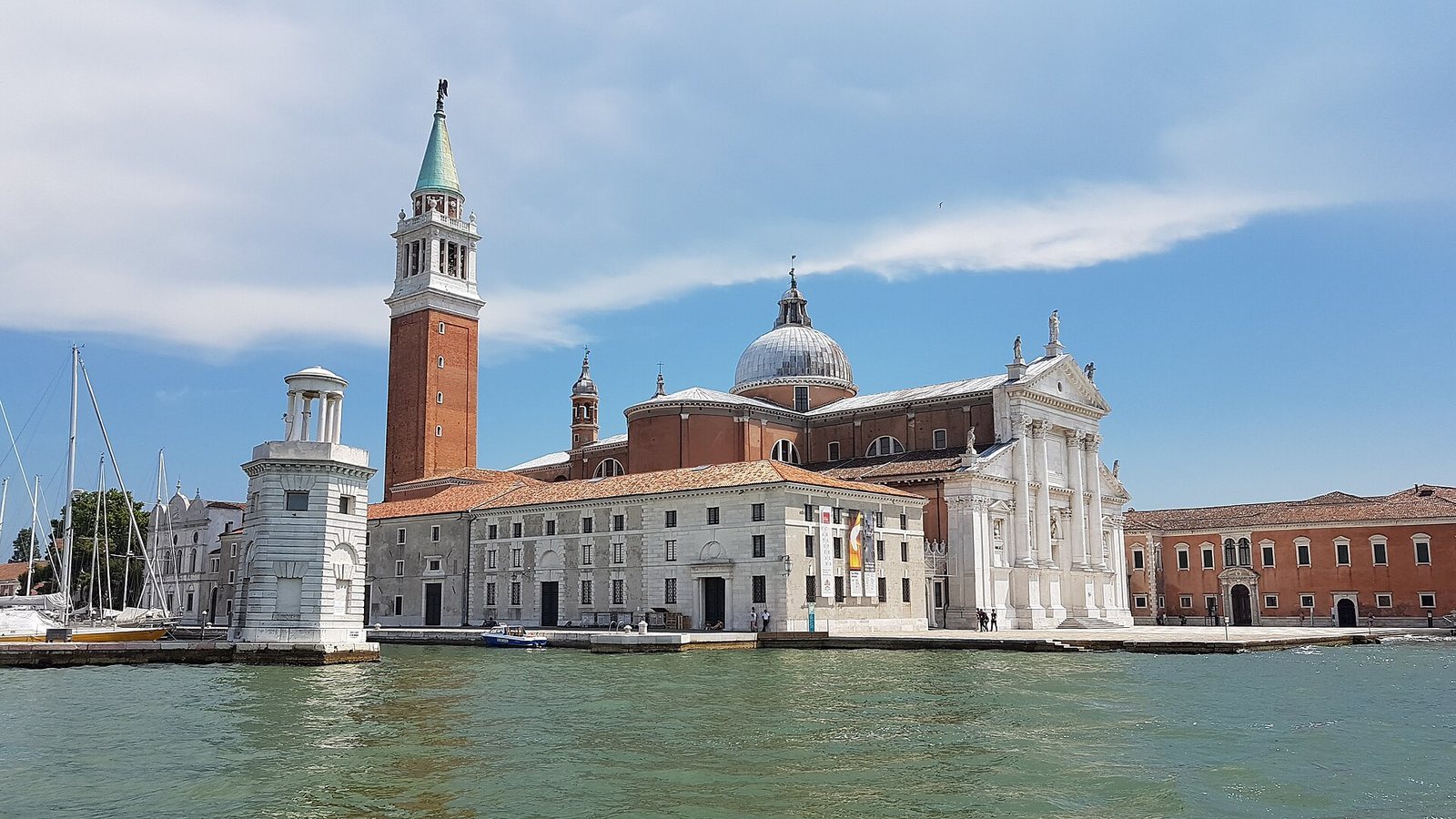
San Giorgio Monastery is a Benedictine monastery on the island of San Giorgio Maggiore in Venice, Italy. Founded in 982 beside an existing church, it grew into a major European centre of theology, culture, and art. Benedictine monks follow the Rule of St. Benedict; the monk John Morosini, who became the monastery’s first abbot, or head, requested the island from Doge Tribuno Memmo, Venice’s elected ruler.
Foundation and medieval history
After giving up his position following a popular revolt, Memmo lived at the monastery as a monk until his death. St. Gerard of Csanád was among its early monks. A bishop and martyr, Gerard was associated with the establishment of Christianity in Hungary.
Over the following centuries, the monastery’s monks maintained close connections with Florence and Padua and enjoyed considerable autonomy. The institution also became a favored place for foreign dignitaries staying in Venice.
In 1177, Pope Alexander III and Holy Roman Emperor Frederick Barbarossa met at the monastery in a meeting promoted by Doge Sebastiano Ziani, who was later buried there. Doge Pietro Ziani was buried at the monastery in 1229.
Doge Enrico Dandolo secured relics of St. Lucy for the monastery in 1204. Relics are remains or objects associated with a saint and venerated by believers; these were transferred to the church of Santa Lucia in Cannaregio in 1279. A violent earthquake devastated the monastery in 1223. In 1433, the Florentine statesman and patron Cosimo de’ Medici took refuge there and established a library.
Renaissance and Baroque building campaigns
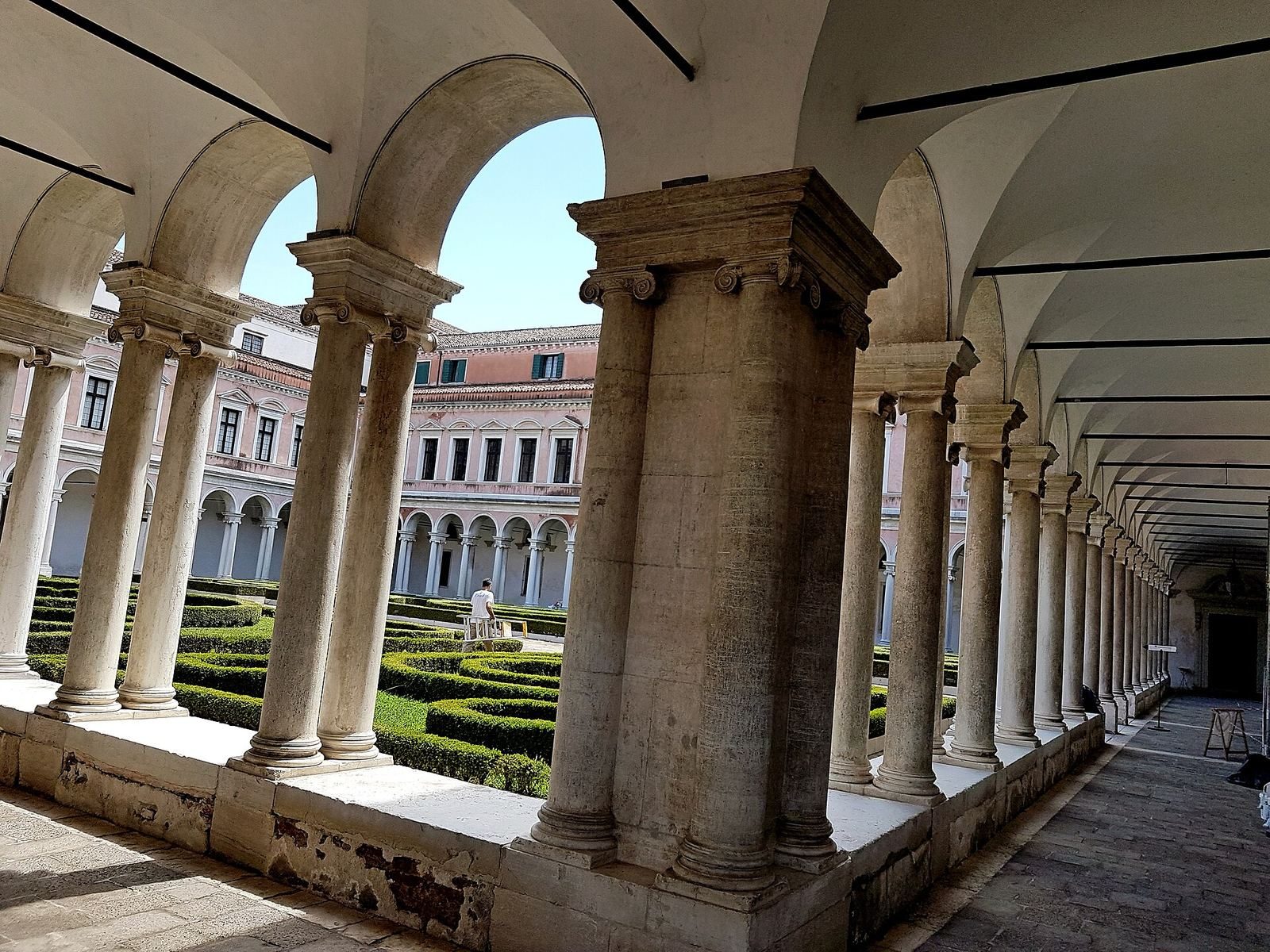
The monastery’s architectural development included major Renaissance works, part of a European movement that renewed interest in classical art and learning. Andrea Palladio built a new refectory, or communal dining hall, between 1560 and 1562. He began work on a new church in 1566 and later designed the cloister, a covered walkway around an enclosed courtyard, now known as the Palladian cloister.
Between 1641 and 1680, architect Baldassarre Longhena directed work on the library, grand staircase, façade, novitiate, infirmary, and guest quarters. The staircase dates to 1643, the façade to 1652, the novitiate, where people prepared to become monks, to 1657, the infirmary to 1677, and the guest quarters to 1680.
Suppression and military occupation
After the Republic of Venice fell in 1797, valuable books and artworks were taken from the monastery. Napoleon sent Paolo Veronese’s The Wedding Feast at Cana to Paris; the painting is now in the Louvre.
At the turn of 1799–1800, while Rome was under French occupation, cardinals met at the monastery in a papal conclave, an assembly to elect a pope. They chose Pope Pius VII. The meeting took place in the Night Choir, also called the Winter Choir.
Napoleonic laws suppressed the monastery in 1806, and most of its monks were expelled. A few stayed to serve the church, while the monastery was converted first into an arms depot and then a military garrison. It continued in military use under Austro-Hungarian and Italian rule. After more than a century of this use, the buildings had deteriorated severely, and many of the remaining treasures had been sold or stolen.
Restoration and continued use
In 1951, the Italian government granted the Cini Foundation use of much of the monastery. Established by industrialist and patron Vittorio Cini, the cultural foundation restored the buildings and renewed their cultural role. On 29–30 May 1956, the monastery hosted foreign ministers from the six member states of the European Coal and Steel Community, an early organization for European cooperation. They met to discuss the Spaak Report, which proposed closer economic integration.
Some of the older, smaller monastic buildings remain in use by a Benedictine community, whose monks continue to offer hospitality. The monastery is affiliated with the Catholic Church and the Benedictine order under the Patriarchate of Venice.
Remains
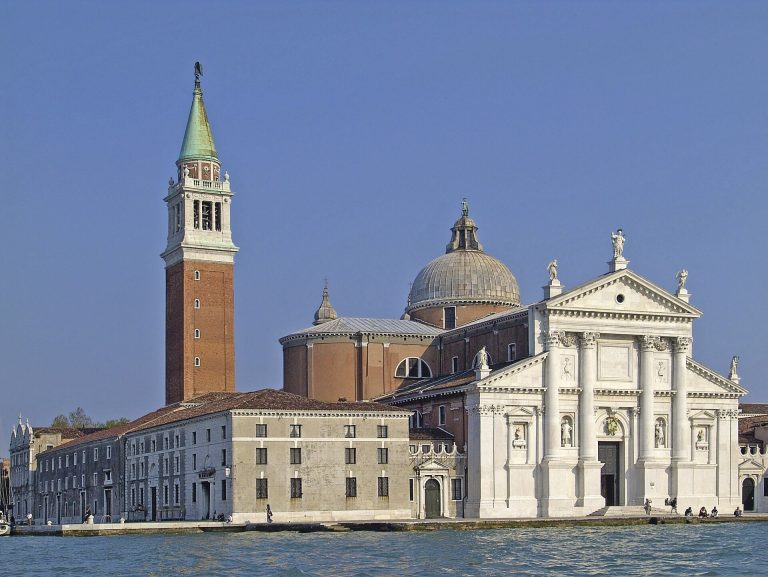
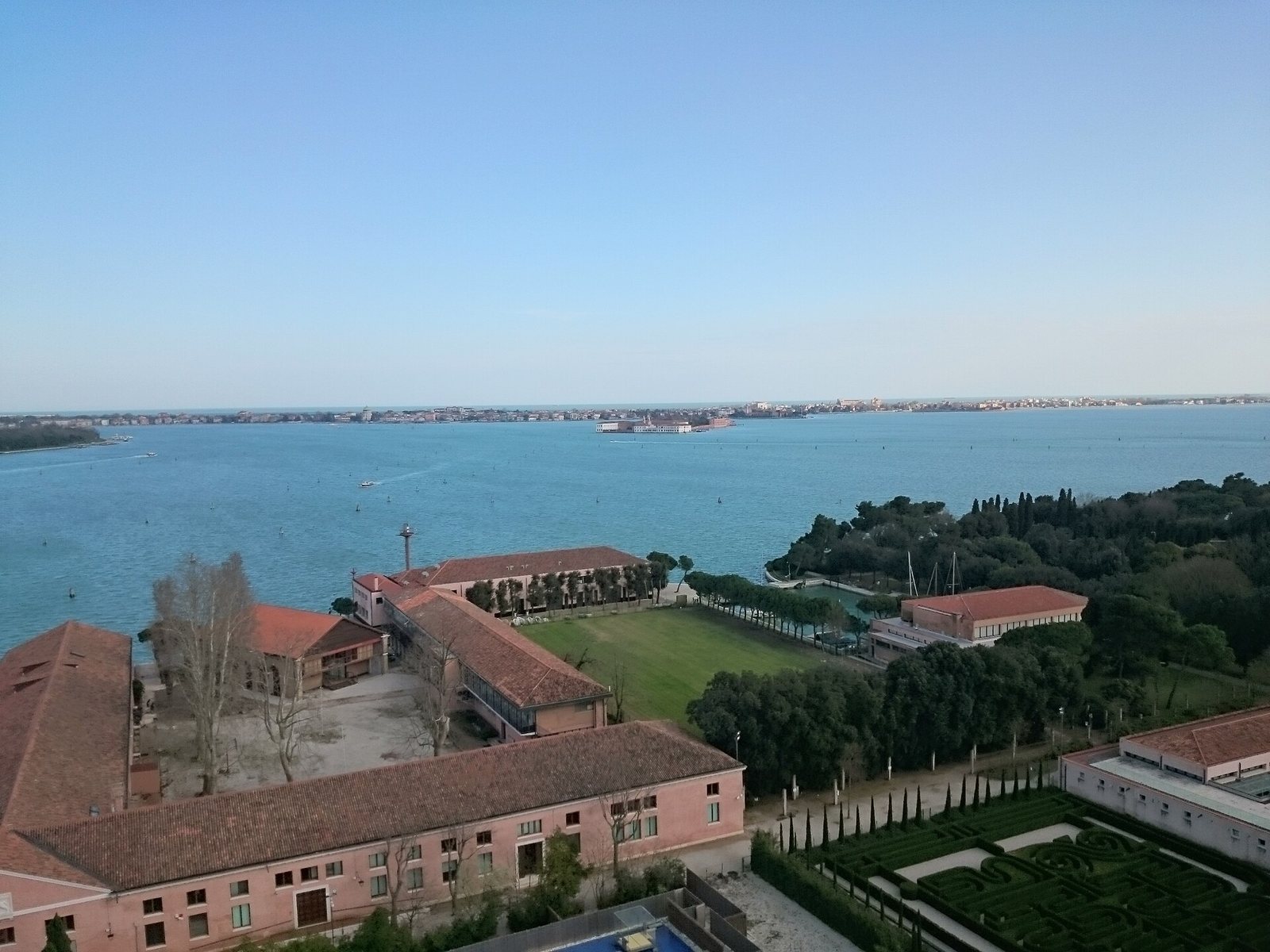
The complex occupies San Giorgio Maggiore opposite Piazza San Marco. Its historic buildings combine the church with monastic quarters and Renaissance architecture. The complex includes the church, refectory, cloister, and buildings associated with Longhena’s work.
Church and monastic buildings
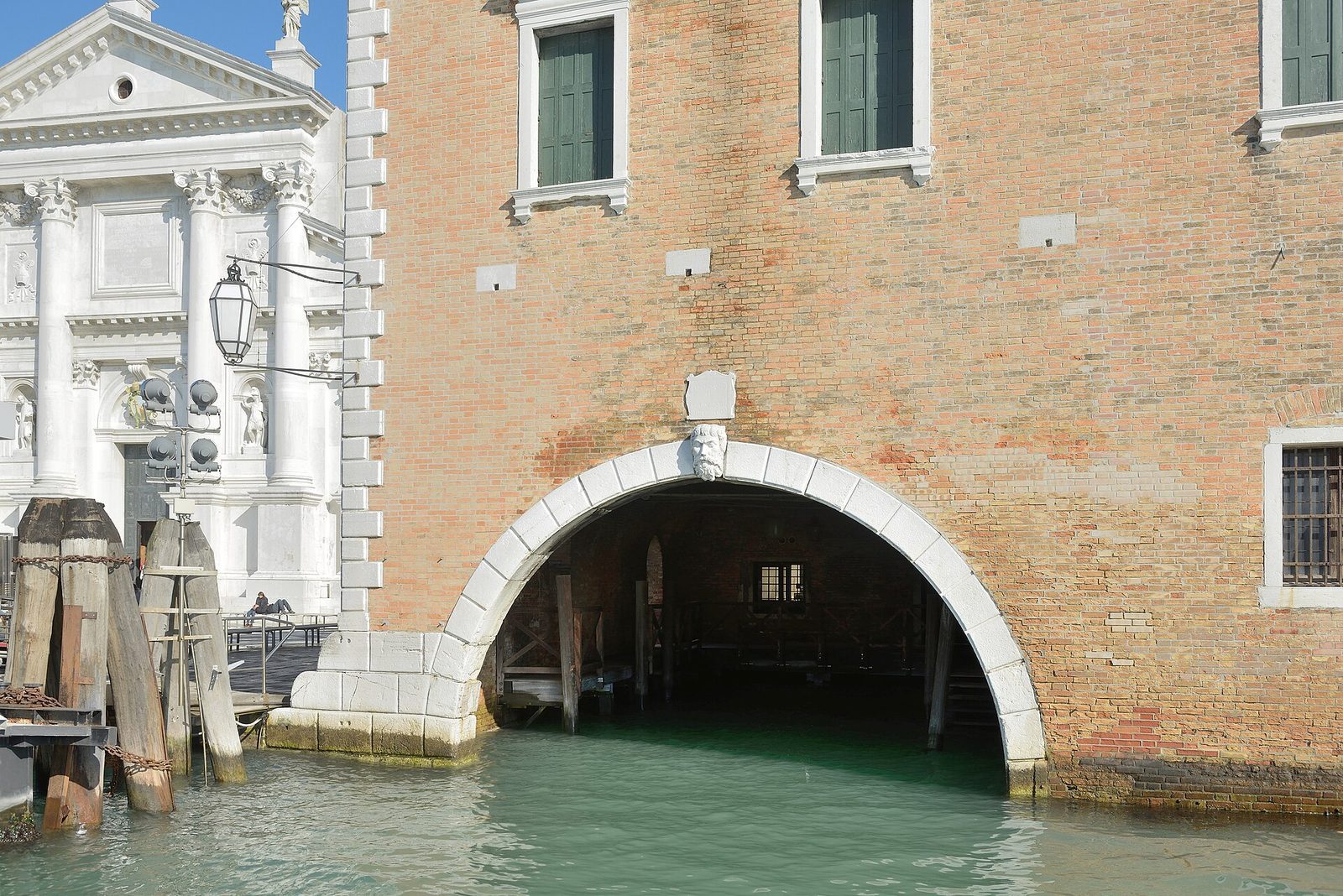
Church of San Giorgio Maggiore
The church stands beside the monastery and serves its monastic community. It is one of the principal buildings in the complex.
Monastic quarters
Most of the old monastic buildings now house the Cini Foundation. Smaller buildings to the left and behind the church serve as the Benedictine monastery.
Renaissance and Baroque structures
Refectory
The refectory is the monastery’s communal dining hall. A copy of Veronese’s The Wedding Feast at Cana hangs there in the place for which the original was painted.
Church and Palladian cloister
The church and the cloister are among the complex’s historic architectural features. The cloister is a covered walkway enclosing a courtyard.
Longhena’s additions
The monastery also includes a library, grand staircase, façade, novitiate, infirmary, and guest quarters associated with Longhena’s direction of building work. Together, these features form part of the complex’s historic fabric.
Interior artwork and garden
Night Choir
Vittore Carpaccio’s painting Saint George Slaying the Dragon is displayed in the Night Choir, the chamber also known as the Winter Choir.
Garden labyrinth
A labyrinth in the monastery garden was created in 2011, inspired by Argentine writer Jorge Luis Borges’s story The Garden of Forking Paths.