Cistercian Abbey Magerau: A Women’s Monastery in Fribourg


Site at a Glance
- Rating
- 4.7
- Popularity
- Low
- Country
- Switzerland
- Primary era
- Medieval
- External website
- Open
- Eras represented
- Medieval, Early Modern
- Civilizations
- Duchy of Savoy, Swiss
- Site type
- Religious
- Remains
- Monastery
On this page13 sections
History
Cistercian Abbey Magerau is a monastery of Cistercian nuns in Fribourg, Switzerland, founded in 1255 during the medieval period. It belongs to the Diocese of Lausanne, Geneva and Fribourg and remains affiliated with the Cistercian Order, a Western Christian monastic community rooted in the Benedictine tradition and devoted to communal prayer, discipline, and the Rule of Saint Benedict.
Foundation and Cistercian affiliation
A small group of women gathered in the Fribourg region in the mid-thirteenth century to live according to the Rule of Saint Benedict, a monastic code governing prayer, work, communal life, and discipline. On 3 July 1255, a document authorized them, through the pastor of Tavel, to form a religious community. The nuns regard this date as the foundation of the abbey. They were permitted to settle in an isolated area at the western end of the parish, a place called Richenza.
In 1259, Count Hartmann V of Kyburg granted the community the land it occupied. The area later became known as Auge maigre, meaning “Narrow Valley.” In 1261, the community entered the Cistercian Order and was placed under the care of the nearby male Abbey of Hauterive. This institutional relationship continued into the twenty-first century.
Magerau was Fribourg’s first monastery for women and remained the city’s only women’s monastery until the seventeenth century. The nuns educated young girls, while gifts and dowries brought by incoming novices gradually increased the abbey’s property. These resources did not always secure prosperity. The community experienced periods of poverty, especially when many novices entered without financial contributions.
Hardship and reform
During the fifteenth century, poor harvests, storms, and floods placed additional pressure on the abbey’s finances. The admission of novices without financial support contributed to recurring hardship, and an abbess was deposed in 1518. The Protestant Reformation, a sixteenth-century movement that challenged Roman Catholic institutions and doctrine, further worsened the political and financial circumstances of the monastery. Although the community had declined, the nuns resisted proposals to close it on financial grounds.
In 1602, the nuns sought to restore strict observance of the Benedictine Rule, including rigorous abstinence. The reform began roughly fifty years of renewed prosperity. Abbess Anne Techtermann, who led Magerau from 1607 to 1654, promoted both internal discipline and extensive renovation and enlargement of the abbey’s buildings and walls. In 1625, the members of the community signed a commitment to perpetual abstinence and strict observance of the Rule. That document remains preserved at the abbey.
Anne-Elisabeth Gottrau succeeded Techtermann as abbess and served from 1654 to 1657. Within the community, she was remembered for her deep spirituality and mystical reputation.
Fire and reconstruction
On the evening of 17 November 1660, a candle left burning in a nun’s cell caused a fire that destroyed most of the largely wooden monastery. The dormitory, cells, cloister, refectory, much of the stored food, and other parts of the complex were lost. The church and several stone-built structures survived, and most of the abbey was rebuilt during the second half of the seventeenth century.
In the eighteenth century, monastic discipline gradually weakened, while the canonical visitations required by Church law became infrequent or ceased. Financial difficulties again prompted Church authorities to consider closure, this time through a merger with the Cistercian nuns’ monastery of La Fille-Dieu at Romont. The proposed union did not take place.
From the nineteenth century to the present
The abbey survived the occupation of Fribourg by the French Revolutionary Army and was little affected by the French Revolution and the Helvetic period, the centralized Swiss republic created under French influence between 1798 and 1803. The Swiss civil war of November 1847 had more serious consequences. After Hauterive was suppressed in 1848, Abbess Marie-Bernardine Castella surrendered the abbey’s goods and archives to the cantonal authorities and was forbidden to receive new candidates. Magerau could not admit novices until 1857. The dissolution of Hauterive and the destruction of the Cistercian order in France also deprived the abbey of its former institutional support.
Magerau joined the Mehrerau Congregation in 1901. Abbess Jeanne-Marie Comte, who served from 1915 to 1954, encouraged paid work within the monastery, helping the community recover gradually. Hauterive was reoccupied in 1939 by Cistercian nuns from Austria.
Under Abbess Marie-Gertrude Schaller, who served from 1974 to 2011, Magerau undertook a series of renovations. The church was restored in 1982–1984, followed by the guesthouse in 2004 and the former abbess’s house in 2005. Further work concerned the infirmary, convent interiors, roofs, and drainage systems. Marianne Zürcher served as abbess from 2011 to 2025. On 25 March 2025, Sister Marie-Agnès Berger was elected to succeed her. In 2025, the community comprised approximately a dozen nuns. The abbey is a cultural property of national importance, and its bilingual community reflects its position between French-speaking and German-speaking Switzerland.
Remains
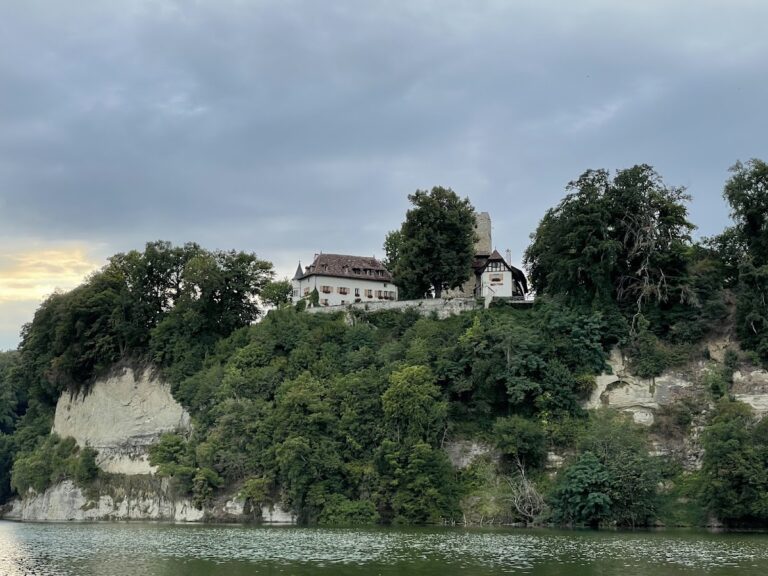
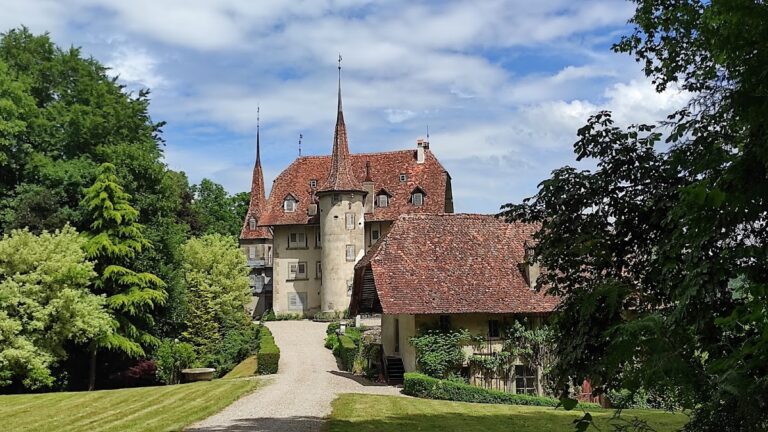
Standing on the banks of the Sarine River, Magerau combines a largely thirteenth-century church with conventual buildings mostly rebuilt after the fire of 1660. Construction of the conventual complex continued until 1284, and the church was inaugurated around that date. A plan made in 1777 records the historical arrangement of the monastery and its surroundings.
Medieval church and furnishings
Abbey church
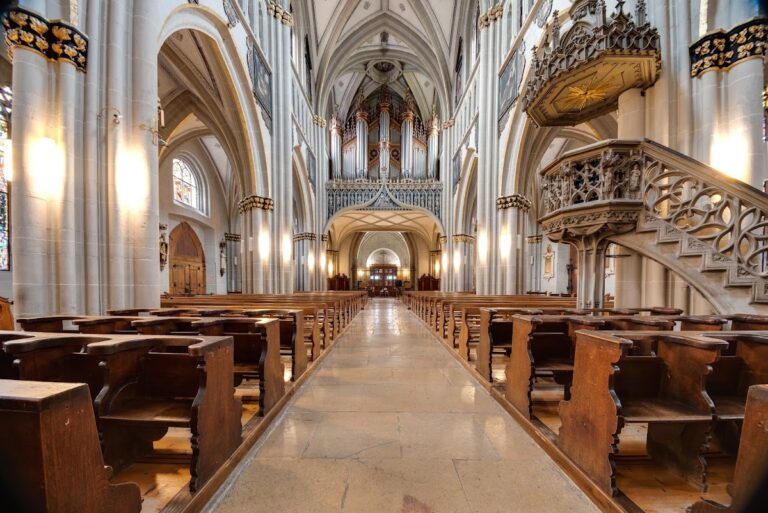
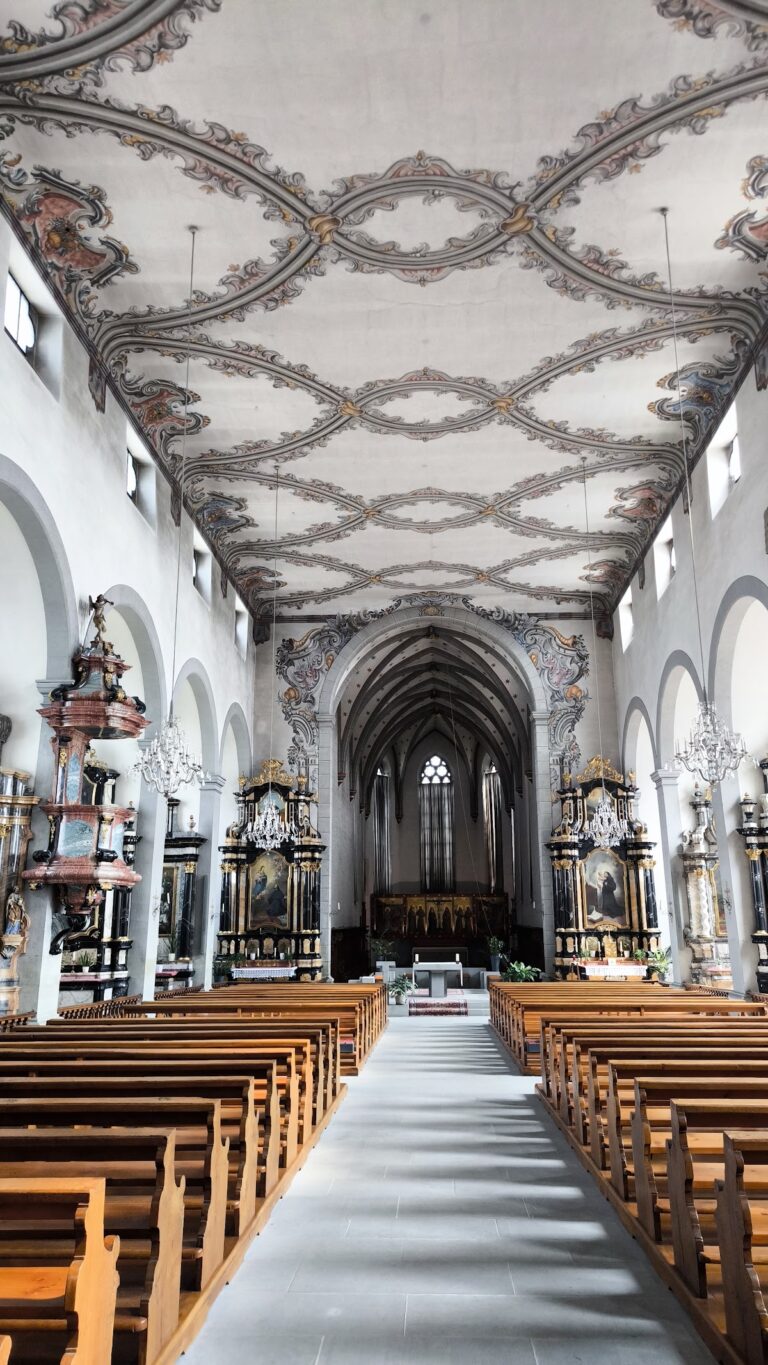
The abbey church follows the style of Burgundian Cistercian churches, particularly the church of Hauterive Abbey. Its medieval fabric belongs chiefly to the thirteenth century. In the middle of the fourteenth century, the building was remodeled in the Gothic style, giving the church a later architectural phase while preserving its earlier Cistercian foundation.
Choir stalls
The choir stalls were installed toward the end of the fourteenth century and survive within the church. They form part of the building’s medieval furnishings and belong to the period following its Gothic remodeling.
Easter tomb
The church contains a late-medieval Easter tomb, a Christian liturgical installation representing Christ’s burial and resurrection. Dating from the first third of the fourteenth century, it includes a nearly life-sized wooden figure of the dead Christ, measuring 155 centimeters in length. The figure is covered with canvas bearing polychrome decoration, meaning that several colors were applied to its surface, and lies in a painted wooden sarcophagus shaped like an ark with a hinged lid.
Since August 2009, the Easter tomb has been represented at the abbey by a faithful copy. The original is held by the Museum of Art and History in Fribourg.
Conventual complex
Seventeenth-century rebuilding
Most of the conventual buildings date from the reconstruction carried out during the second half of the seventeenth century after the fire. The earlier complex had included a dormitory, cells, cloister, refectory, infirmary, chapterhouse, abbess’s house, and other structures. The fire destroyed the wooden dormitory, cells, cloister, refectory, and much of the stored provisions, while the infirmary, chapterhouse, abbess’s house, church, and other stone-built sections survived.
Historical layout
The 1777 plan preserves the arrangement of the monastery and its surrounding area after the rebuilding period. It provides a record of the conventual complex as an organized group of buildings beside the Sarine River, linking the surviving medieval church with the later convent structures.