Wihr-au-Val Cemetery and the Saint Michael Chapel-Ossuary
Site at a Glance
- Popularity
- Very Low
- Country
- France
- Primary era
- Medieval
- Eras represented
- Medieval, Early Modern
- Civilizations
- French, Holy Roman Empire
- Site type
- Religious
- Remains
- Chapel
On this page14 sections
History
Foundation and cemetery use
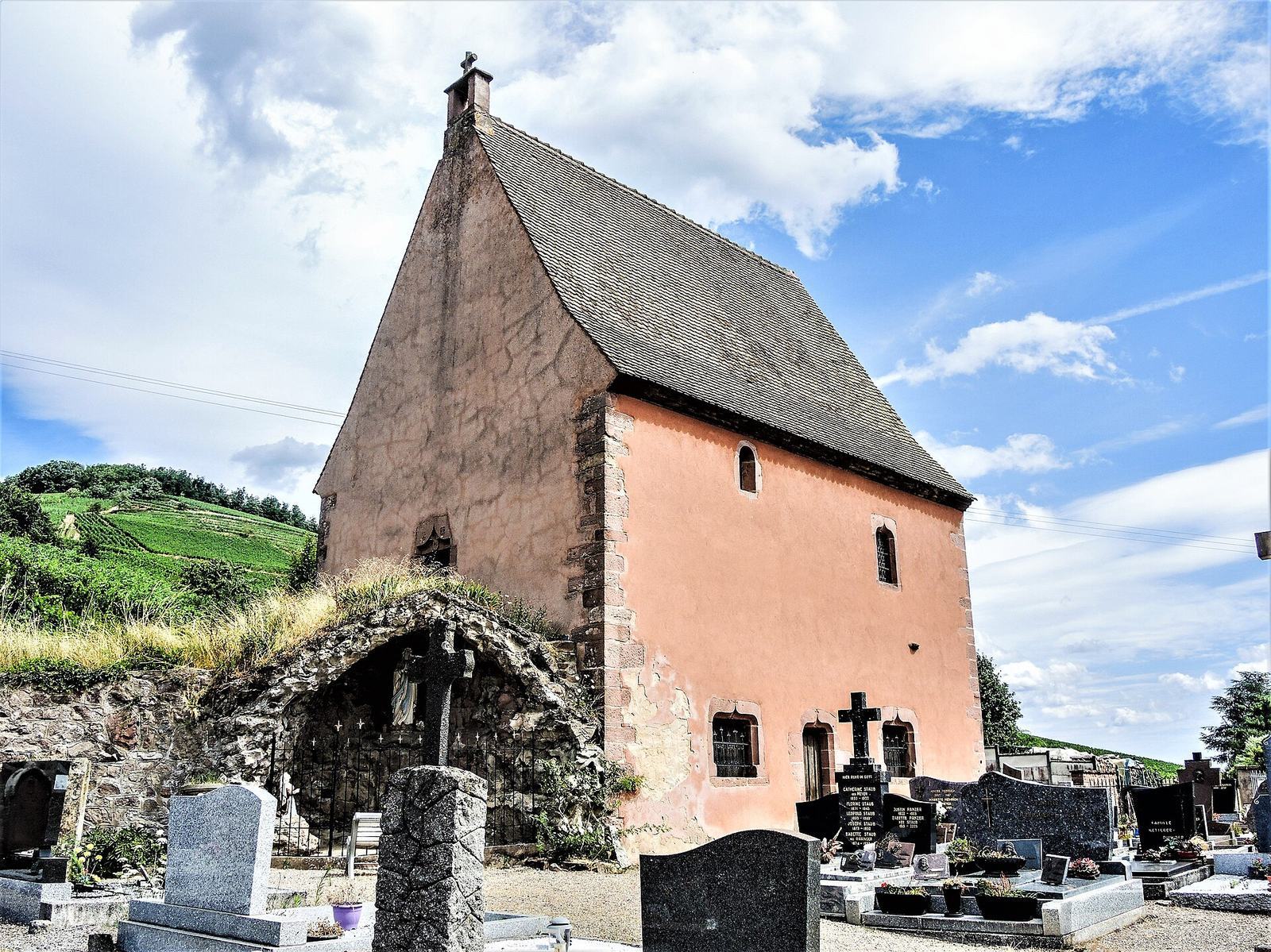
Wihr-au-Val Cemetery in France includes the Saint Michael Chapel-Ossuary, built around 1500 to serve as a chapel and a place for keeping bones removed from graves. Saint Michael, an archangel regarded in Christian tradition as a protector of the dead, gave the chapel its dedication. The cemetery also served the village of Walbach until 1696.
Before the 19th century, the cemetery surrounded the chapel and the old parish church and was probably larger than it is today. The old church stood close to the chapel, roughly where the present cemetery lies. Graves have also been found uphill to the north, in an area called Gräber (“graves”), and beyond the church choir. Since these graves have not been dated, their age and what they indicate about the cemetery’s former extent remain uncertain.
Nineteenth-century changes
The old parish church was destroyed around 1873 and replaced that year by the Church of Saint Martin, now south of the chapel. In 1870, the chapel was in poor condition and its roof was at risk of collapse. Basic repairs followed in 1871. More extensive work in 1889 replaced the roof framework, the upper-floor flooring, and the glazing; the chapel’s altar, already stripped of its decoration, was destroyed during this work.
Most of the chapel’s furnishings appear to have been transferred to the Chapel of the Holy Cross. In the first half of the 19th century, the chapel probably held an altar with a Baroque altarpiece, another altarpiece showing Saint Michael, and a sculptural group of the Virgin of Pity.
Devotional prints and protection
Twenty-three devotional prints on vellum, a fine material made from prepared animal skin, were found in the ossuary in 1997. Most date to the 18th century, with some from the 17th. Their first use is uncertain: they may have been placed on a cross or in a coffin, then moved with the bones when graves were cleared. They were probably brought from the Augsburg or Antwerp areas rather than made locally. Their association with the Counter-Reformation, the Catholic Church’s response to the Protestant Reformation and its efforts to reaffirm Catholic belief and practice, may help explain their presence in predominantly Protestant Alsace, where image-making and printing towns were hostile to religious images. The chapel and its decorative features are protected as a historic monument.
Remains
The chapel is a rectangular building measuring 11 by 8.70 metres and rising 12 metres over three levels. Built partly into the slope on its north side, it has an upper floor that meets ground level there. Most of the exterior consists of rough stonework covered with render; cut sandstone forms the corners and the surrounds of doors and windows. An open structure for a bell, topped by a cross, rises above the west gable.
The chapel and its rooms
Exterior and access
The upper room is entered through a door in the west wall. Above it, a double-curved ogee arch, with inward and outward curves, is surrounded by three coats of arms: those of Wihr-au-Val, a branch of the Hattstatt noble family of Alsace marked by a star, and an unidentified third coat. Stairs from the cemetery once led to the door; an earth ramp later replaced them.
Ground-floor ossuary
The ground floor faces the cemetery to the south through a door and two openings with ogee arches. Its single room has a floor paved with pebbles from the Fecht River and is divided by a Baroque-style railing. The southern part contains an altar and is used for prayer; bones taken from the cemetery are kept in the northern part.
Upper chapel
The upper floor is a plain, rectangular chapel room, now without furnishings. Its floorboards rest on supporting beams. A Gothic window in the east wall has two narrow pointed openings and Flamboyant tracery, an ornate late Gothic pattern of flowing, flame-like forms. Plain ogee-arched windows face one another in the north and south walls. A small round-arched window at the southwest corner differs in style from the other openings and may have been reused from an earlier building.
Decoration and objects
Mortality imagery
The ground-floor decoration includes several 18th-century reminders of death. A square wall painting, 1.20 metres on each side, carries a German quotation from 2 Maccabees 12:46, a passage concerning prayer for the dead. A painted skull appears at each end of the railing. The west end bears the words “Good to the devout, bad to the wicked,” and the east end reads “Today for me, tomorrow for you.”
Devotional prints
The 23 prints are rectangular, with longer sides measuring about 6 to 10 centimetres. They depict the Virgin, saints, and religious emblems such as the Sacred Heart. Some retain traces of color, while perforations or glue marks on many indicate that they were attached to another object.
Former church furnishings and fragments
A painting of the Resurrection of the Dead may have come from the old parish church. The chapel also holds Gothic remains from a 15th-century portal and a 14th-century holy-water font, which may share that origin. A 15th-century pinnacle from the old church portal is associated with the cemetery.
Cemetery memorials
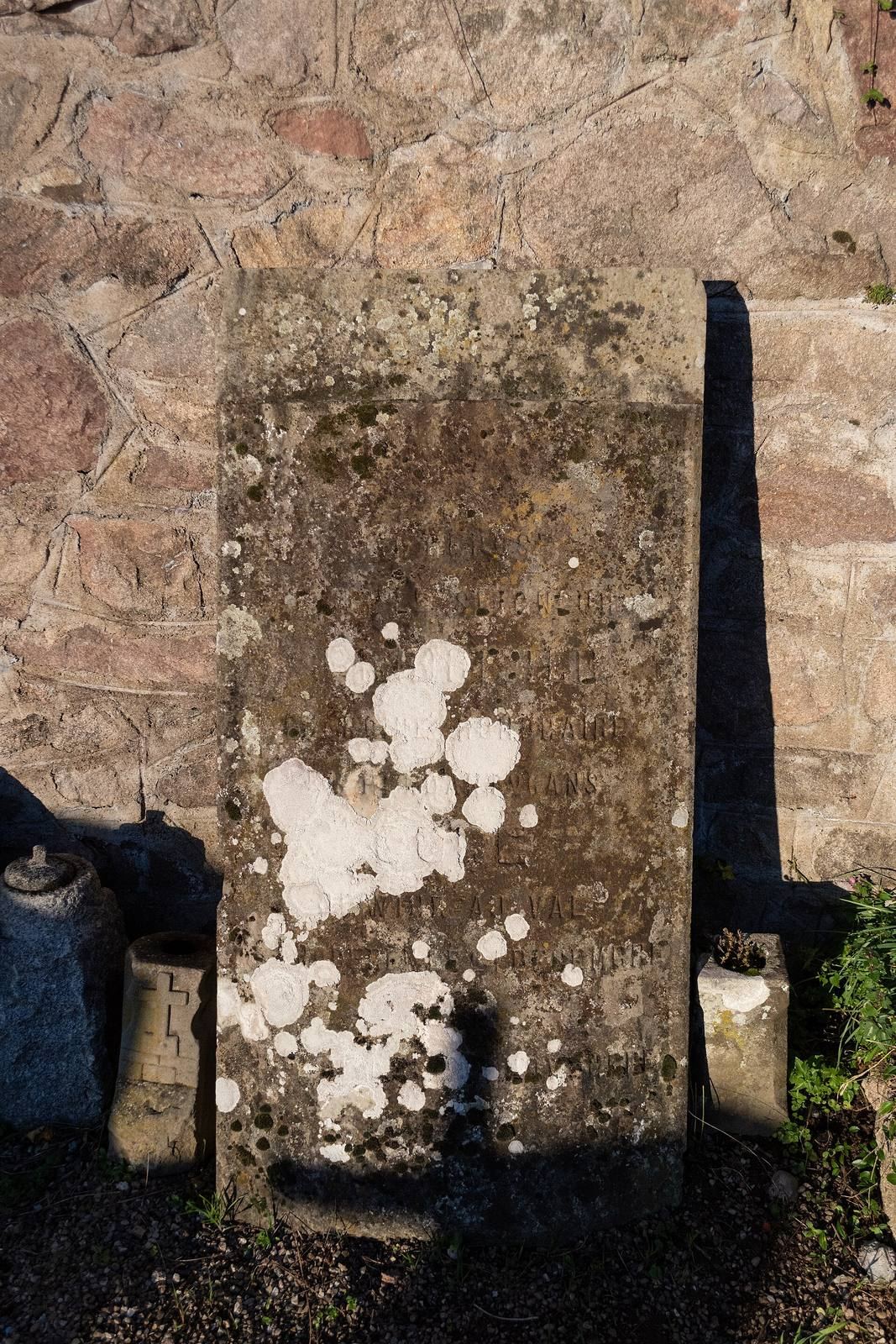
The cemetery contains the funerary monument of Anna Maria Schumacher, dated 1842, and monuments to two parish priests. François Antoine Biellmann served from 1838 until his death on 15 October 1845, aged 38. J. Michel Eschbach served from 1818 until his death in August 1832, aged 73. Another gravestone marks someone who died in 1732 at the age of 35, but the name is no longer legible.