Church of the Nativity of Theotokos of Koronisia: A Byzantine Monastery Church
Site at a Glance
- Popularity
- Low
- Country
- Greece
- Primary era
- Medieval
- Eras represented
- Medieval, Modern
- Civilizations
- Byzantine, Ottoman
- Site type
- Religious
- Remains
- Church
On this page10 sections
History
The Church of the Nativity of Theotokos of Koronisia is a Byzantine church in the island settlement of Koronisia, Greece. Built at the end of the 10th century, it belongs to the Middle Byzantine period, the middle phase of Byzantine history and art. Theotokos, meaning “God-bearer,” is an Eastern Christian title for Mary. The church belonged to a monastery that played an important role in the Ambracian Gulf region for centuries.
Medieval records and regional activity
The monastery is first noted in two entries dated 1193 in the Gospel of the Monastery of Mega Spilaio. They name its abbot as Methodios. In 1436, the Italian humanist and traveler Cyriacus of Ancona visited Arta, attended a liturgy in the church, and stayed at the monastery.
The monastery owned substantial property, much of it along the coasts of Aetolia-Acarnania. It operated fish farms at Kalogeriko in Arta and eel farms in the Ambracian Gulf. The eel farming led to threats against the monks from inhabitants of Vonitsa.
Ottoman-era protections
In 1530, Ecumenical Patriarch Jeremiah I wrote to the bishop of Vonitsa, directing him to ensure that the monks of Koronisia were not harassed. In 1603, Sultan Mehmed III issued a decree to the governor of the Karleli district and the judges of Arta, Agia Mavra, and Vonitsa. It ordered military authorities to stop disturbing the monks and to respect the monastery’s property at Myrtari in Vonitsa.
Renovation and later changes
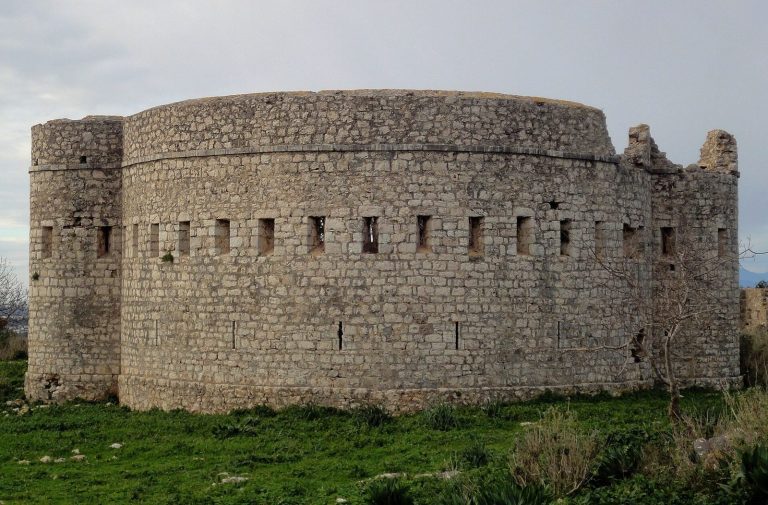
In 1670, Eugene of Kostakioi, a monk ordained as a priest, carried out a major renovation, built the monastery’s cells, and gathered the monks into a community. In 1860, the Ottoman government built a small fortress called the Koulia of Koronisia to protect the monastery’s fish farms.
In 1918, the monastery ceased operating independently and became a dependency of the Monastery of Prophet Elijah at Iliovounia. The church became a parish church and belongs to the Greek Orthodox Church under the Metropolis of Nikopolis and Preveza, an Orthodox diocese. A ministerial decision declared it a preserved monument and listed site in 1969.
Remains
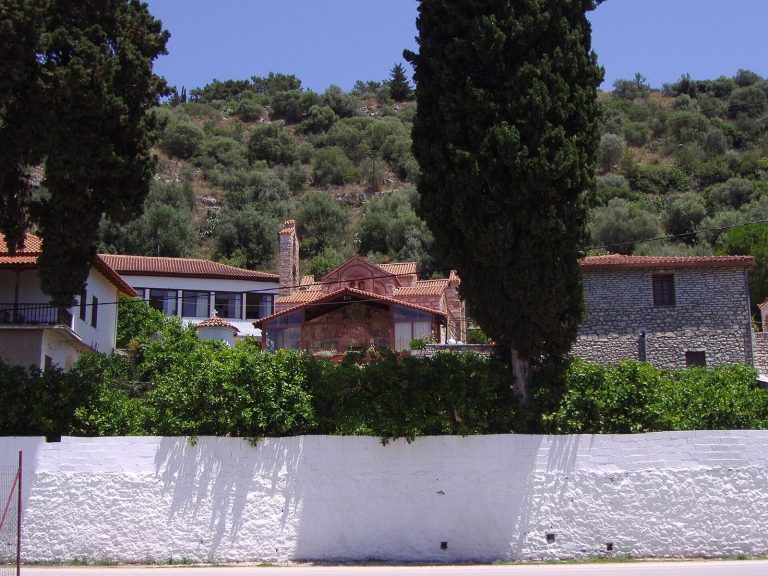
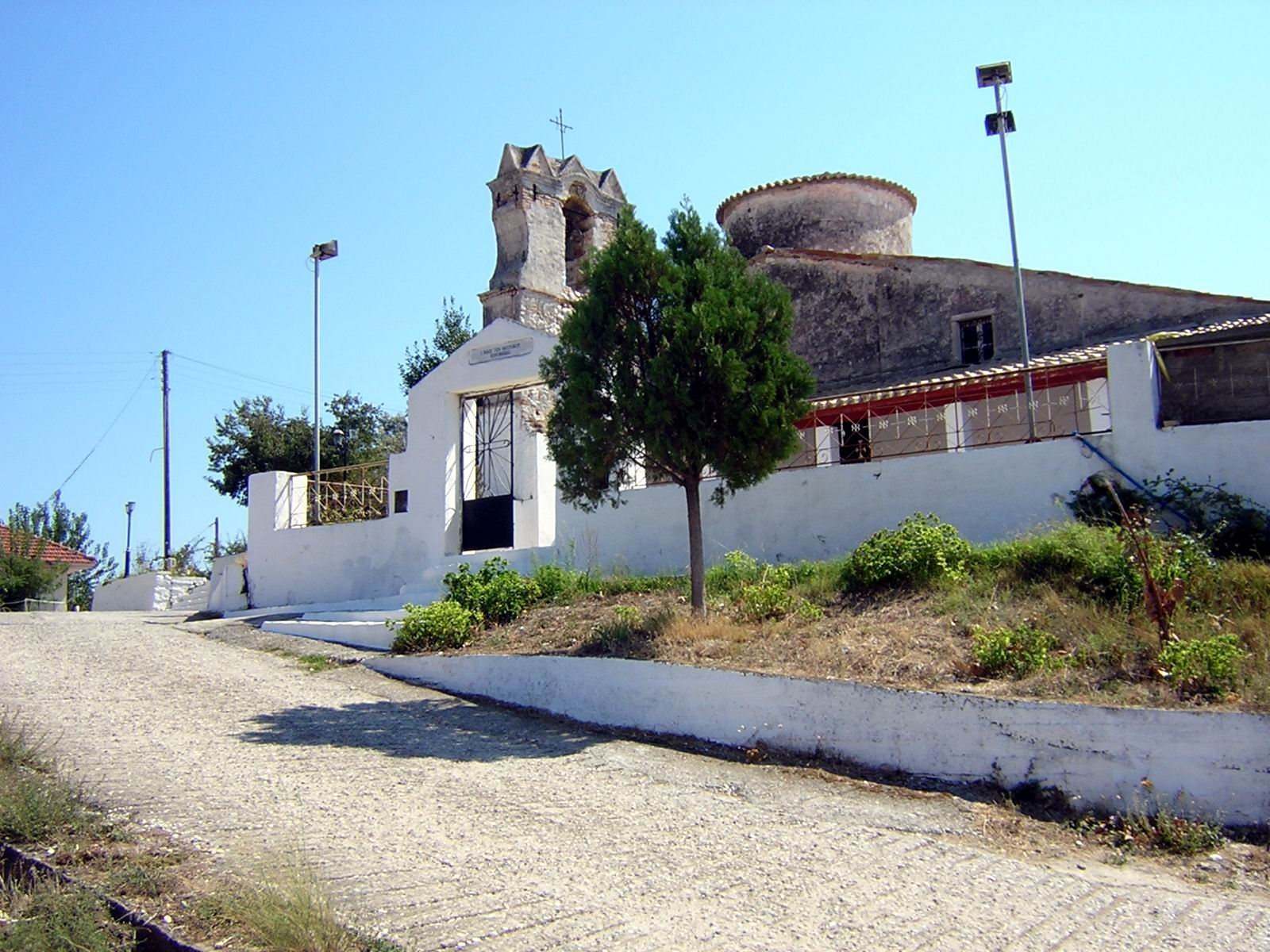
The stone church stands at the centre of the Koronisia settlement and measures 15 by 7.30 metres. Its interconnected spaces comprise the main church, a narthex (an entrance vestibule), and an outer narthex.
Church and associated buildings
Church plan and spaces
The main church has a domed, semi-inscribed cruciform plan, a cross-shaped layout partly enclosed within the building. On the west, the narthex has a continuous vault shaped like half a cylinder, while the outer narthex has a wooden roof. The church has two entrances and a floor of stone slabs.
Interior and furnishings
A marble relief slab at the centre of the floor carries the motif of the five loaves. The altar is built of masonry, and a small number of poorly preserved frescoes remain in the main church and narthex. The wooden iconostasis, a screen separating the sanctuary from the main worship area, dates to the 19th century and bears floral and animal designs carved in three dimensions. Its principal icon of Christ is dated 1854; the other principal icons date to 1884-1885.
North portico and bell tower
An elongated portico with a wooden roof runs along the church’s north side. The bell tower is formed as a pierced wall and measures 2.90 metres wide and 7.75 metres high. Its building inscription dates its construction to the end of the 19th century.
Olive press and monastic residence
An attached building, now in ruins, formerly housed the monastery’s olive press. The abbot Archimandrite Ambrosios Rafailidis, a senior monastic cleric, renovated it in 1870. A small fortified tower beside the building served as the monks’ residence.