Moni Kato Panagias: A Byzantine Monastery near Arta, Greece
Site at a Glance
- Rating
- 4.9
- Popularity
- Very Low
- Country
- Greece
- Primary era
- Medieval
- External website
- Open
- Eras represented
- Medieval
- Civilizations
- Byzantine
- Site type
- Religious
- Remains
- Monastery
On this page6 sections
History
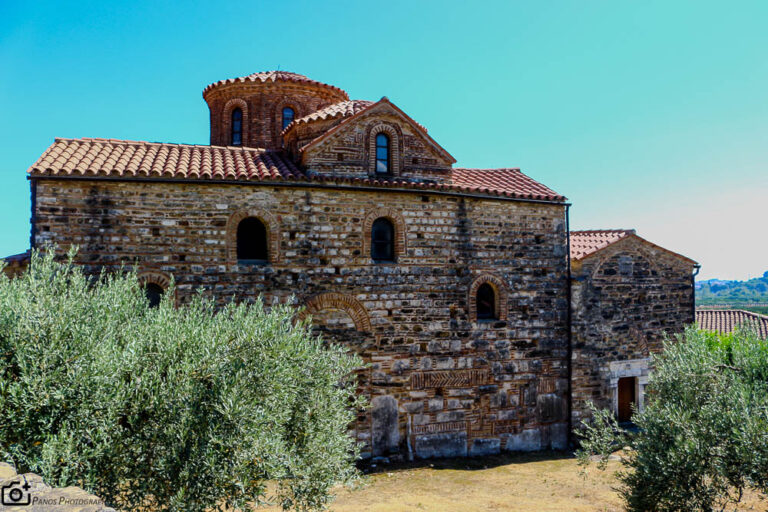
Moni Kato Panagias is a medieval Orthodox monastery in Greece, founded around 1250 west of Arta during the flourishing of the Despotate of Epirus, a medieval Greek state formed in Epirus and western Greece after the fragmentation of the Byzantine Empire. Its surviving principal church is a Byzantine cross-vaulted building. The monastery was established by Michael II Doukas, despot of Epirus, and his wife Theodora, who was later venerated as a saint. The church is dedicated to the Nativity of the Theotokos, the Orthodox celebration of the birth of Mary, who is honored by the title “Bearer of God.”
Foundation and medieval identity
The monastery was once known as the Monastery of the Road of the Fountain. The name Kato Panagias, meaning “Lower Panagia,” distinguished it from the Parigoritissa, which stands at a higher level. A tradition recorded by the seventeenth-century biographer Job the Monk explains Michael II’s foundations as acts of repentance for his adultery with Gangrini, a noblewoman of Arta with whom he had two illegitimate sons. The other monasteries associated with this tradition are Panagia of Vlacherna and Saint George in Arta.
Theodora is also associated with the monastery’s foundation. She spent the final ten years of her life as a nun at the Monastery of Saint George in Arta and died in 1280. That monastery was subsequently renamed for Saint Theodora.
Transformation after 1953
Kato Panagias remained a male monastery until 1953, when it was converted into a women’s monastery while Seraphim Tikas was Metropolitan of Arta. It has continued in that form. Agni Papadimitriou, a nun from Metsovo, became its first abbess after the conversion. Her leadership revived the monastery and shaped its present form, while weaving became the principal occupation of the nuns.
The monastery is affiliated with the Greek Orthodox Church and the Metropolis of Arta. It is recognized in Greece as an archaeological site and a protected historic building. Outside the enclosure, Gerontissa Agni Papadimitriou also founded the Church of Saint Zacharias the Neomartyr of Arta. In Orthodox usage, a neomartyr is a Christian martyr from the post-Byzantine or modern era. The church preserves Zacharias’s original icon, and the saint was martyred in Patras.
Remains
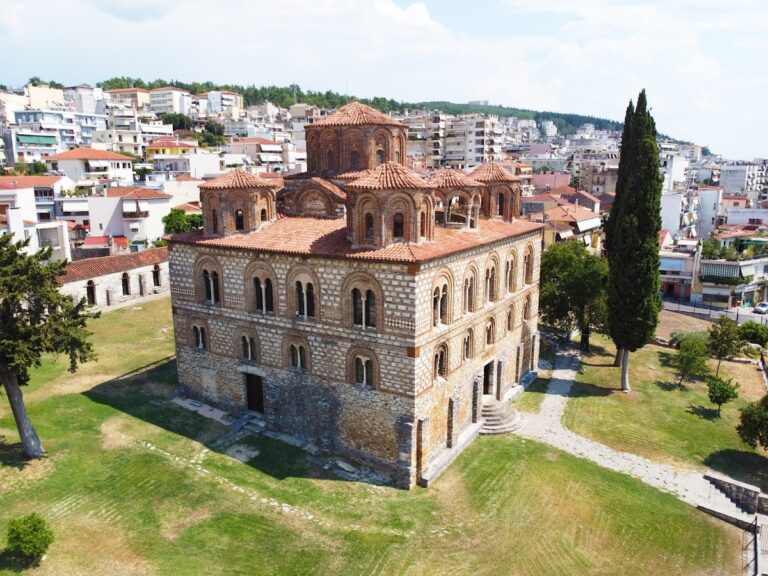
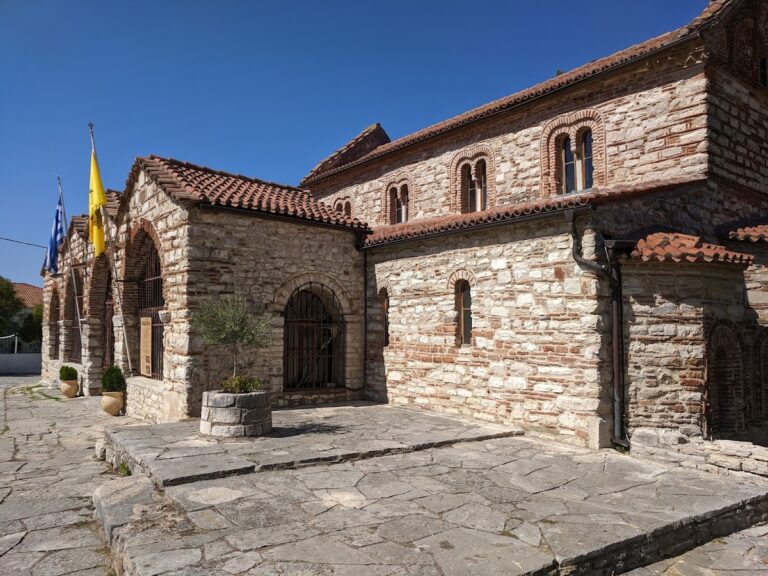
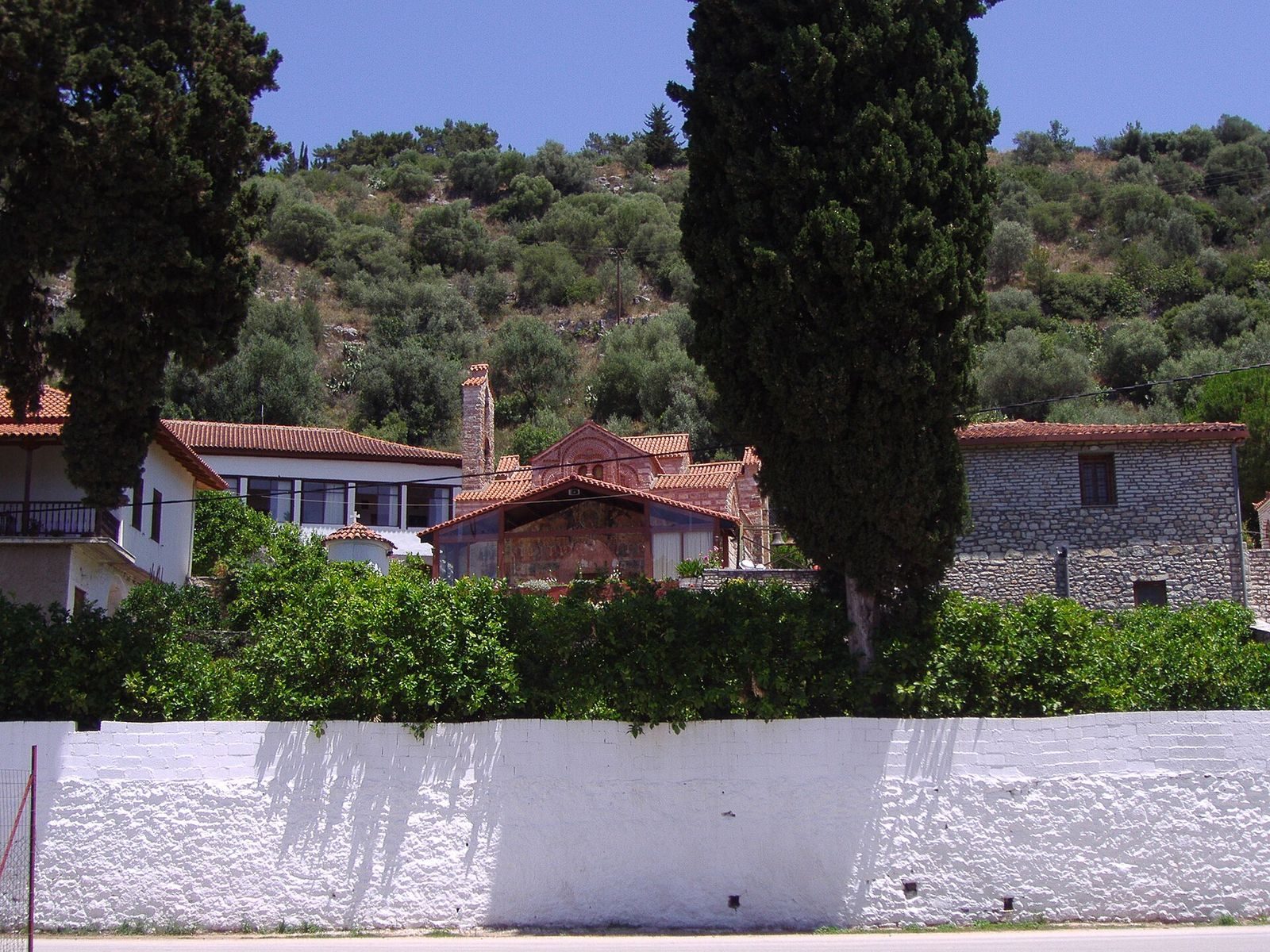
Moni Kato Panagias stands at the foot of Peranthi Hill, west of Arta, beside the Arachthos River near its mouth at the Gulf of Arta. The original monastic complex survives chiefly through its katholikon, the principal church of an Orthodox monastery. The church is a Byzantine cross-vaulted structure built of stone and brick, with elaborate ceramic decoration. The cells and other auxiliary buildings were added later than the katholikon.
The surviving katholikon
The church incorporates marble blocks taken from the ruins of nearby Ambrakia, combining reused ancient material with its medieval stone-and-brick construction. A clearly visible monogram of Michael II Doukas appears on the western exterior. Inside, frescoes belong to several historical periods. The oldest surviving paintings are in the diakonikon, a chamber associated with the deacon’s liturgical functions, and date from the middle of the thirteenth century, contemporary with the church’s construction.
Church of Saint Zacharias
The Church of Saint Zacharias the Neomartyr of Arta stands outside the monastery enclosure. It preserves the saint’s original icon, linking the later foundation by Agni Papadimitriou with the religious community surrounding Kato Panagias.