Church of the Immaculate Conception: A Late Gothic Monastery Church in Olomouc
Site at a Glance
- Rating
- 4.8
- Popularity
- Very Low
- Country
- Czechia
- Primary era
- Medieval
- External website
- Open
- Eras represented
- Medieval, Early Modern, Modern
- Civilizations
- Holy Roman Empire, Margraviate of Moravia
- Site type
- Religious
- Remains
- Church
On this page16 sections
History
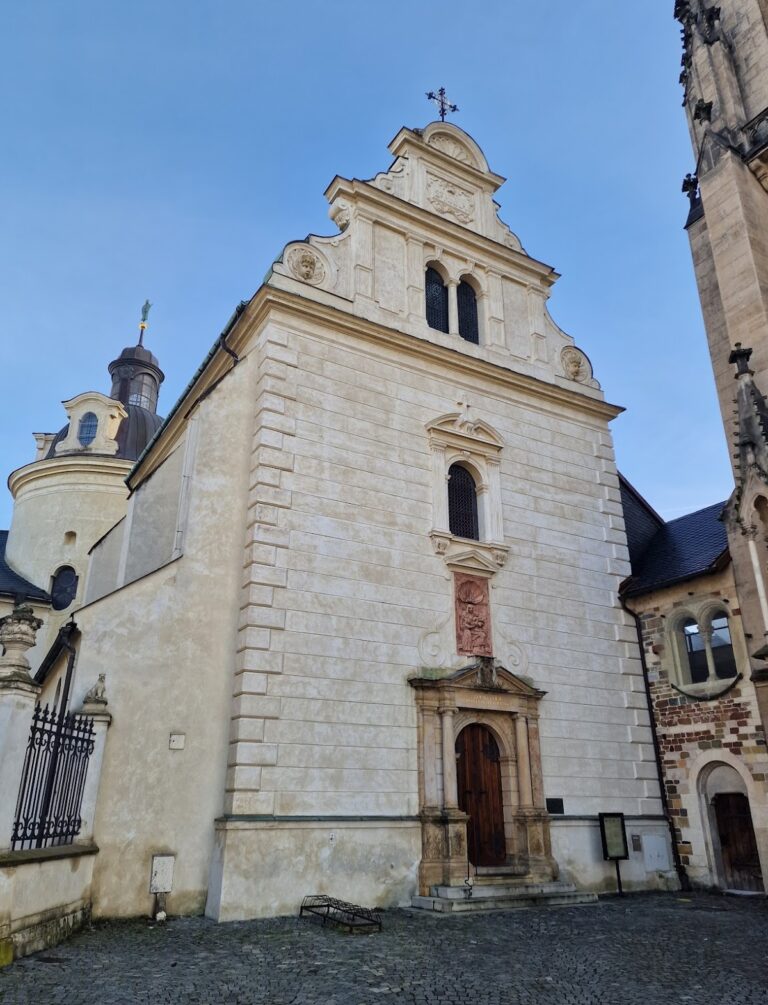
The Church of the Immaculate Conception is a Roman Catholic monastery church in Olomouc, Czechia, built for the Observant Franciscans in the mid-fifteenth century in the area known as Na Bělidlech, outside the city’s medieval fortifications. The late Gothic church later became part of Olomouc’s defenses when the fortifications were expanded in the second half of the eighteenth century.
Franciscan foundation
Construction began on the initiative of Jan Kapistrán, a Franciscan preacher and religious leader who served as vicar general of the Friars Minor. The church is traditionally connected with the place where he preached. It was consecrated on 28 August 1468 in the presence of Matthias Corvinus, King of Hungary, who also became King of Bohemia.
A major fire in 1492 severely damaged the church and contributed to the gradual decline of the Franciscan monastery. Wall paintings from the late fifteenth and early sixteenth centuries nevertheless belong to the surviving evidence of the church’s early history.
Seventeenth-century rebuilding
Alterations in the 1630s and 1640s included the construction of a new crypt. After the Thirty Years’ War, the complex was enlarged with two side chapels. The Chapel of the Holy Sepulchre was consecrated in 1653, while the Chapel of Saint Anthony of Padua was added later in the seventeenth century.
The roof also preserves a record of later events. During repairs in autumn 2012, workers found a container concealed in the finial cross. It contained documents dating from 1633 to 1872, grains of incense, and a needle with thread. The papers mention events of the Thirty Years’ War, prices for barley, wine, and beer, a prayer against storms and lightning, the election of Ferdinand IV as King of the Romans in 1653, a later note recording his death, and two lightning strikes that hit the roof in 1749.
In 1749, the monastery administration did not have the 5,000 gold pieces required to purchase timber for a new roof structure. The original framing was therefore retained and is described as one of the five oldest surviving roof structures in the Czech Republic.
Franciscan and Dominican communities
The Franciscans left the monastery during the Josephine reforms of the 1780s. These measures, introduced under the Habsburg ruler Joseph II, dissolved or restricted many religious institutions. Dominicans from a dissolved Olomouc convent then took over the complex with the support of Archbishop Coloredo-Waldsee. After the novitiate was restored at the end of the nineteenth century, the monastery and church became a center of Dominican activity in the Czech lands.
In the 1880s, Gustav Meretta directed a Gothic Revival remodeling of the interior. Baroque altars were removed and replaced with Neo-Gothic furnishings, including a main altar purchased in Germany, and a Neo-Gothic pulpit was installed. Most of these alterations were removed during extensive reconstruction in the 1980s.
Twentieth-century interruption and repair
Political changes in 1950 interrupted Dominican activity for several decades. The order returned in 1996. Flooding in 1997 disturbed the church’s subsoil, after which the building was repaired and reconsecrated in October 1998. The church is regarded as an important late Gothic monument and is protected as a heritage site.
Remains
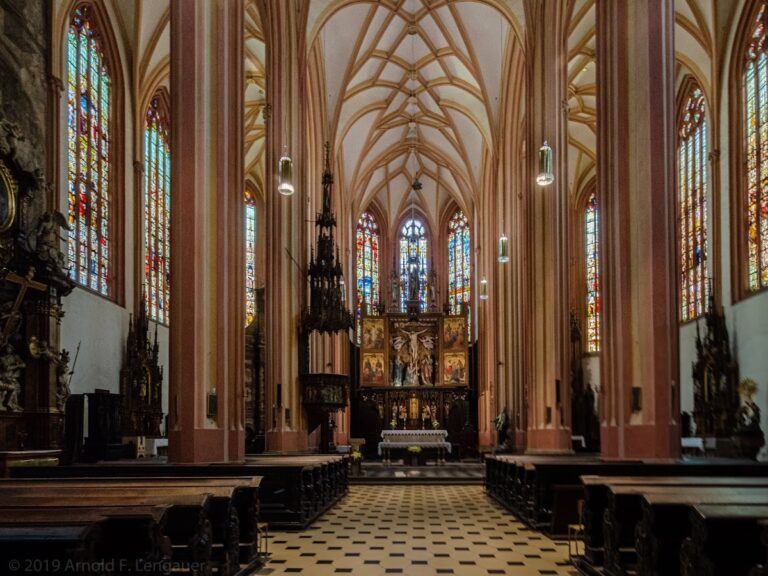
The church is a simple, oriented late Gothic masonry building with three aisles. Its principal roof rises as a tall octagonal pyramid. At the eastern end, the presbytery, the part of the church containing the sanctuary and monks’ choir, has two simple vaulted bays and a polygonal termination. It carries a gabled roof and a small turret on the ridge. The building stands at the corner of present-day Sokolská and Slovenská streets, with a monastery garden adjoining it.
Presbytery and early decoration
Wall paintings
Fragments of late Gothic wall paintings from the mid-fifteenth and early sixteenth centuries survive in the presbytery and on its eastern side. A large composition on the northern wall represents the Battle of Belgrade of 1456, with Jan Kapistrán at its center. Choir stalls line the side walls, while the presbytery windows contain modern stained glass by Karel Rechlík.
Interior features and northern side
Northern passage and altar
On the north side, a passage leads to the monastery cloister and the Way of the Cross. This side of the church also contains a Baroque altar dedicated to Saint Dominic, three stone reliefs, and a small original window used for confession.
Entrances and music gallery
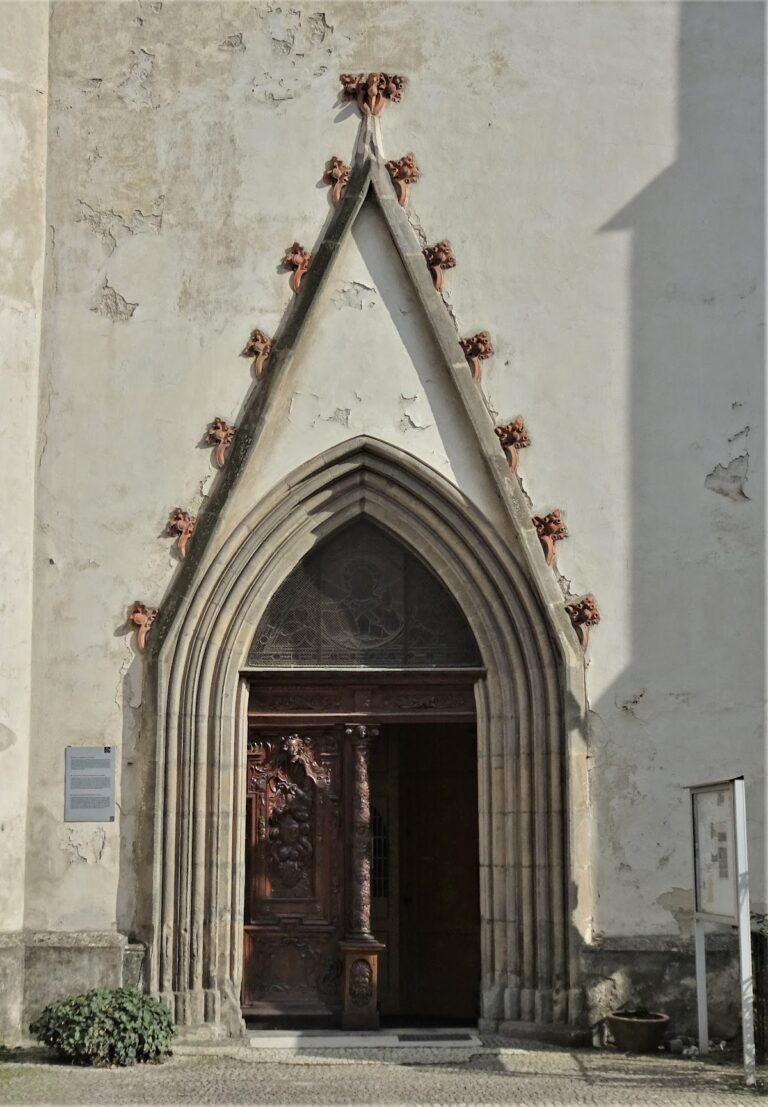
The present entrance is on the east side, where a music gallery with an organ is also located. The original entrance was on the south side. A large mural of the Madonna of the Rosary, dated 1500, occupies the lunette, a curved wall area, on the front wall of the southern aisle.
Relics of Saint Zdislava
A coffin containing the relics of Saint Zdislava of Bohemia is kept in a side altar in the left aisle. Zdislava was a thirteenth-century Czech Dominican saint associated with charitable and religious work.
South-side chapels
Chapel of Saint Anthony of Padua
The Chapel of Saint Anthony of Padua stands on the south side of the church. Baldassare Fontana decorated its interior with stucco in 1708. Its ceiling fresco, painted by Innocenzo Monti, depicts the glorification of Saint Anthony in heaven.
Chapel of the Holy Sepulchre
The Chapel of the Holy Sepulchre was built externally against the south side, in the corner between the church walls, and runs parallel to the presbytery. Its facade is concealed within the nave, from which the chapel is entered. Its plan and the stone elements of its exterior arcade identify it as a devotional structure modeled on the chapel associated with Jesus’s tomb in Jerusalem’s Church of the Holy Sepulchre. The chapel lacks the typical canopy-like structure on its roof and contains a copy of the thirteenth-century icon of the Virgin Mary, Mother of Perpetual Help.
Garden and adjoining setting
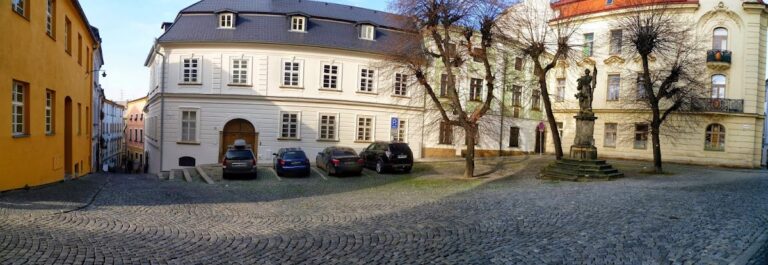
The monastery garden adjoins the church. It was formerly used for growing vegetables and is now ornamental. The Delfín Fountain has stood south of the church since 2005.
Nearby sites