St. Urban Tower: The Gothic Bell Tower of Košice Cathedral


Site at a Glance
- Rating
- 4.6
- Popularity
- Low
- Country
- Slovakia
- Primary era
- Early Modern
- Eras represented
- Early Modern, Modern
- Civilizations
- Hungarian
- Site type
- Religious
On this page10 sections
History
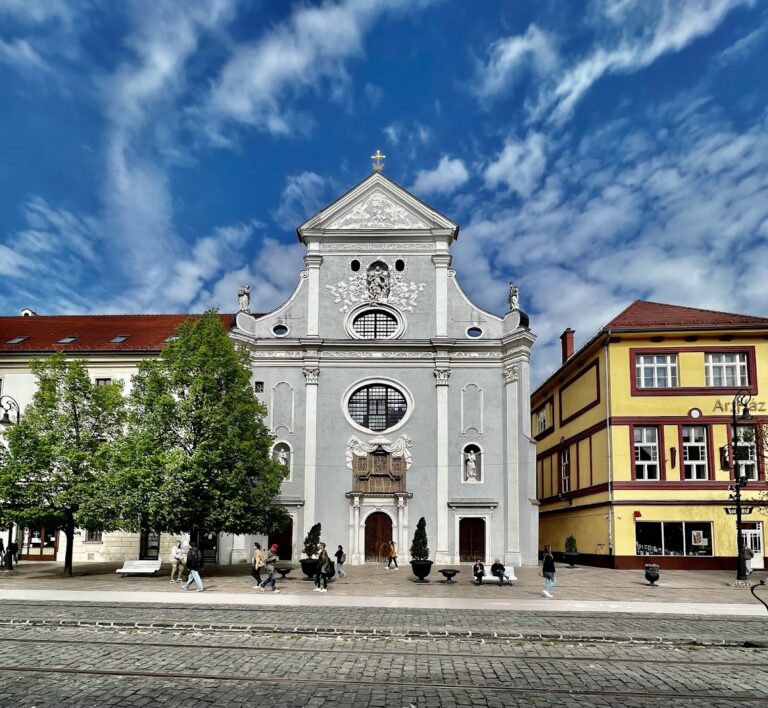
St. Urban Tower is the Gothic bell tower of the Cathedral of St. Elizabeth in Košice, Slovakia. Its construction is now dated to the second half of the sixteenth century, when it served the Gothic cathedral, although it was long thought to have originated in the late fourteenth or early fifteenth century. The tower is dedicated to St. Urban, traditionally identified here with Pope Urban I and associated in Central European religious culture with winegrowers and vineyards.
Sixteenth-century reconstruction
A major fire in Košice in 1556 destroyed or severely damaged both the cathedral and its tower. The flames melted their bells, whose metal was reused the following year. In 1557, the Olomouc bell founder František Illenfeld cast the five-ton Urban bell from this recovered material. The bell became closely connected with the tower’s subsequent history.
Mannerist and later alterations
In 1628, the Prešov builder Martin Lindtner remodeled the tower in Mannerist form, a more complex phase of Renaissance design. A three-part marble plaque above the entrance commemorates the work and names the mayor and councilors active at the time. The tower was altered again in 1775, when its roof received a Baroque onion dome and an associated metal cross. An Empire-style roof followed at the beginning of the nineteenth century, and small shops were installed at ground level.
The shops were removed in 1911–1912 and replaced with a representative arcade. Work on the arcade continued in 1943–1944. A fire in 1966 damaged the roof and badly damaged the Urban bell. The tower was reconstructed between 1967 and 1971 in the form generally seen today.
Modern ownership and use
In 1977, St. Urban Tower became an exhibition space for artistic metalwork belonging to the Museum of Eastern Slovakia. Restitution in 1994 returned it to its original ecclesiastical owner, the Roman Catholic Archdiocese of Košice. It was later leased first as a bar and, from 2004, as a wax museum focused mainly on the history of Košice. The tower is currently empty and requires further reconstruction.
A restoration project began in February 2020 and was scheduled for completion in February 2021. It was organized by Perly Gotickej cesty, a nonprofit founded in 2004 by the City of Košice and the Roman Catholic Parish of St. Elizabeth to support spiritual and cultural values. The work was financed through European funds and the budget of the Košice self-governing region. The tower, the Cathedral of St. Elizabeth, and the Chapel of St. Michael were recognized together as national cultural heritage in 1970. St. Urban Tower is also individually listed as a Slovak National Cultural Monument under registration number 1117, recorded in 1963.
Remains
Layout and exterior
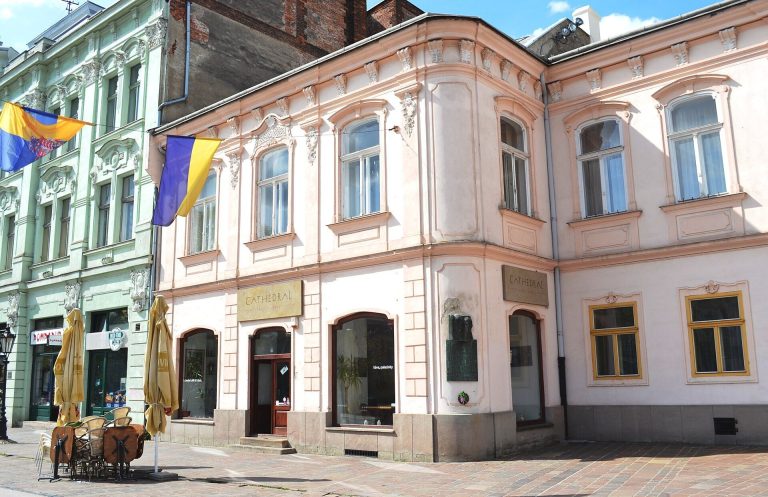
The tower stands on Hlavná Street, a few metres from the Cathedral of St. Elizabeth. It is a Gothic bell tower whose appearance incorporates later Renaissance, Mannerist, Baroque, and Empire alterations. Its roof history is visible in the changes from the original pyramidal form to the Baroque onion dome of 1775 and then to the Empire-style roof installed at the beginning of the nineteenth century. A new white facade was applied during the restoration that began in 2020.
Arcade and incorporated tomb slabs
The arcade running along the base of the tower replaced the former ground-floor shops in 1911–1912 and was completed in 1943–1944. It protects tomb slabs from the cathedral and from a nearby former medieval cemetery. Its masonry incorporates thirty-six old gravestones, mainly dating from the fourteenth and fifteenth centuries, together with one dated to the fourth century. These stones form part of the visible fabric of the lower structure.
Entrance plaque and memorial stones
Above the bell-tower entrance is a three-part marble plaque bearing the city coat of arms. Its inscriptions appear above and below the emblem. The lower text is partly damaged but remains partly legible, while the upper inscription gives the names of the mayor and councilors connected with the 1628 remodeling. The names of Ján Lang and Václav Schwertel also appear on the plaque; their tombstones are now set into the north wall of the Chapel of St. Michael.
Urban bell
The original five-ton Urban bell was cast in 1557 from metal recovered after the 1556 fire. Its inscriptions include a passage from Isaiah 40:6–8 about the transience of human life and the permanence of the word of God. They also identify František Illenfeld of Olomouc and give the year of casting. Some letters have been worn or erased.
The 1966 fire damaged the original bell, which was later reassembled from its fragments. In 1989 it was placed outside the tower. A functioning copy was cast by craftsmen of the Eastern Slovak ironworks and hung inside the tower in 1996.
Documented interior uses
The tower’s documented contents have included an exhibition of artistic metalwork, a wax museum, and a small cabinet devoted to Jozef Tomko, a Slovak Roman Catholic cardinal. The building is currently empty.