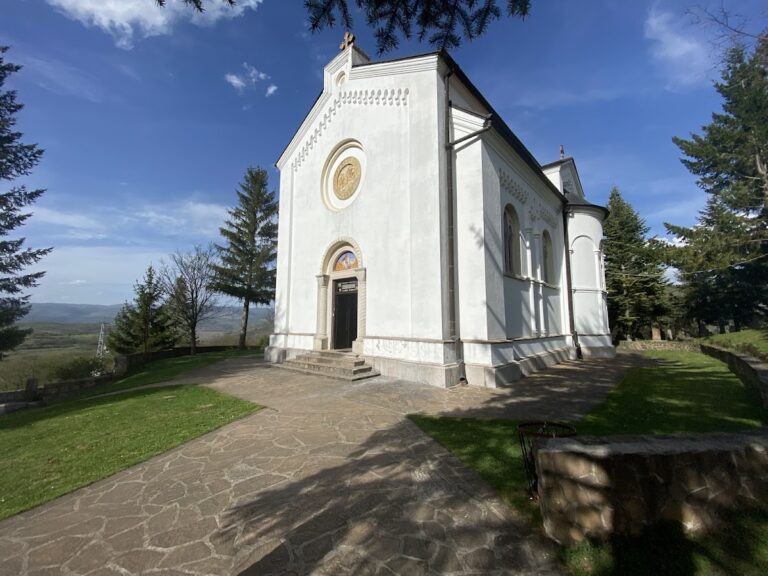
Church of the Holy Mother of God, Donja Kamenica: A Medieval Orthodox Church
Site at a Glance
- Popularity
- Medium
- Country
- Serbia
- Primary era
- Medieval
- Eras represented
- Medieval
- Civilizations
- Bulgarian
- Site type
- Religious
- Remains
- Church
On this page9 sections
History
The Church of the Holy Mother of God, Donja Kamenica, is a medieval Eastern Orthodox church in Serbia, generally dated to the early 14th century. Its name reflects the many images of Mary painted inside. The church is now Serbian Orthodox and was formerly Bulgarian Orthodox.
Bulgarian rule and dating
When the church was built, Donja Kamenica and much of the Timok Valley belonged to the Vidin appanage, a territorial domain centered on Vidin, within the Second Bulgarian Empire, the medieval Bulgarian state that lasted from the late 12th to the late 14th century. The prevailing view places the church’s construction and painting in the early 14th century, though other proposed dates for its construction range from the mid-14th century to the mid-15th century or even the 16th.
The identity of the painted couple
An inscription beside a painted man identifies him as Michael, a despot, a high-ranking title used in medieval Byzantine and Balkan courts. One reading describes him as faithful to God in Christ; another adds that he was the son of Tsar Michael. Petar Nikov proposed that the figure was Michael Shishman, tsar of Bulgaria from 1323 to 1330. That identification has lost favor: Michael’s father was named Shishman, and Michael was generally styled despot before becoming tsar.
The leading identification in Bulgarian historiography, proposed by Nikola Mavrodinov, is an otherwise undocumented son of Michael Shishman. On this reading, the son became despot of Vidin after his father took the throne in 1323 and was probably dead by 1331, when Belaur is named as Vidin’s ruler. Another proposal identifies the man as an undocumented son of Michael Asen IV, the eldest son of Ivan Alexander. Michael Asen was proclaimed co-tsar, a ruler formally sharing the tsar’s title and authority, after his father came to power in 1331. He died fighting the Ottomans before 1354–1355. The theory is difficult to reconcile with the Byzantine historian Nikephoros Gregoras’s statement that Michael Asen’s widow returned to Constantinople childless, or with the lack of other evidence that Michael Asen held the title of despot.
An earlier Serbian interpretation named the 15th-century nobleman Mihailo Anđelović, but it too has lost support. The frescoes’ style, clothing, and hairstyles are considered inconsistent with the 1450s, and the church bears little resemblance to churches of the Morava school, a medieval Serbian architectural style associated with the Morava region. In 1454–1455, Donja Kamenica was under Ottoman control and belonged to a man named Yusuf, rather than to the Serbian Despotate, a late medieval Serbian state ruled by despots. Anđelović himself was never titled despot.
The woman shown with the despot is also unidentified. Her inscription includes the feminine title despotissa and the word daughter. A possible reading of her name as Anna has prompted suggestions that she was Anna Neda, the Serbian wife of Michael Shishman, whether the man was her husband or her son. Bistra Nikolova proposed that Anna Neda may have settled in Vidin after Michael Shishman’s second marriage and held a personal domain that included Donja Kamenica. Another reading gives the woman’s name as Elena.
Restoration and protection
The church and its frescoes were restored in 1958. Since 1982, the Serbian state has protected it as a Monument of Culture of Great Importance. It remains an active church.
Remains
Setting and architecture
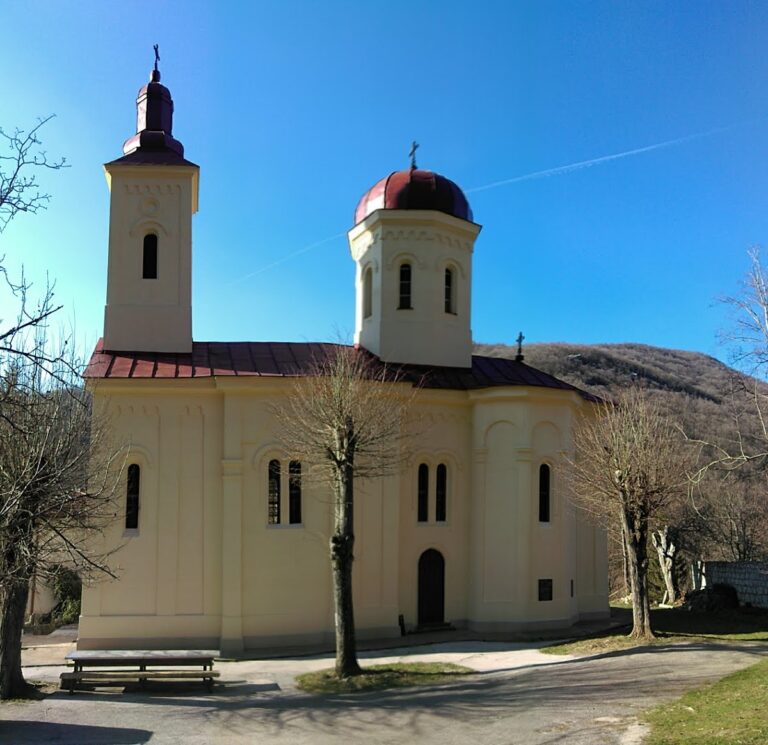
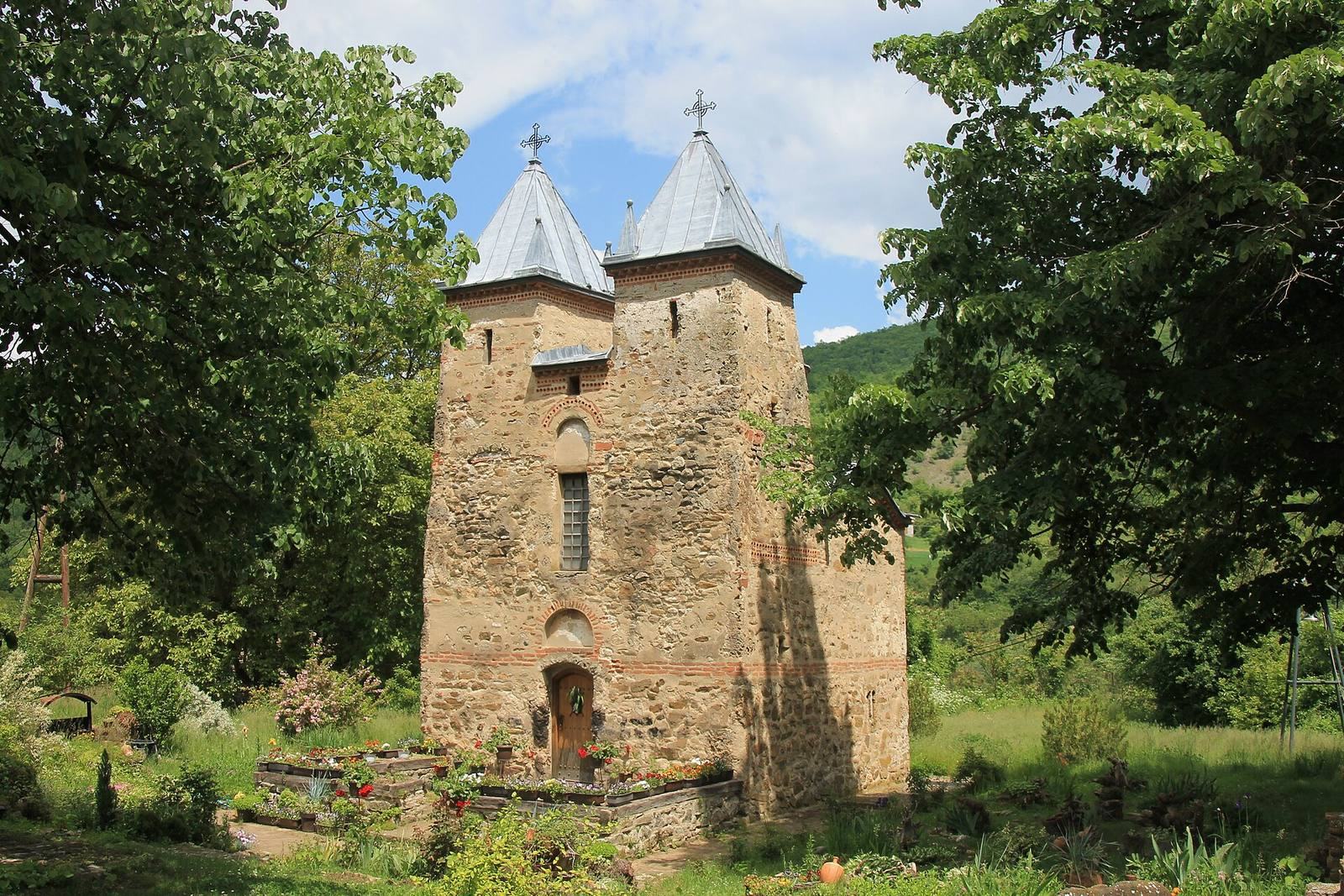
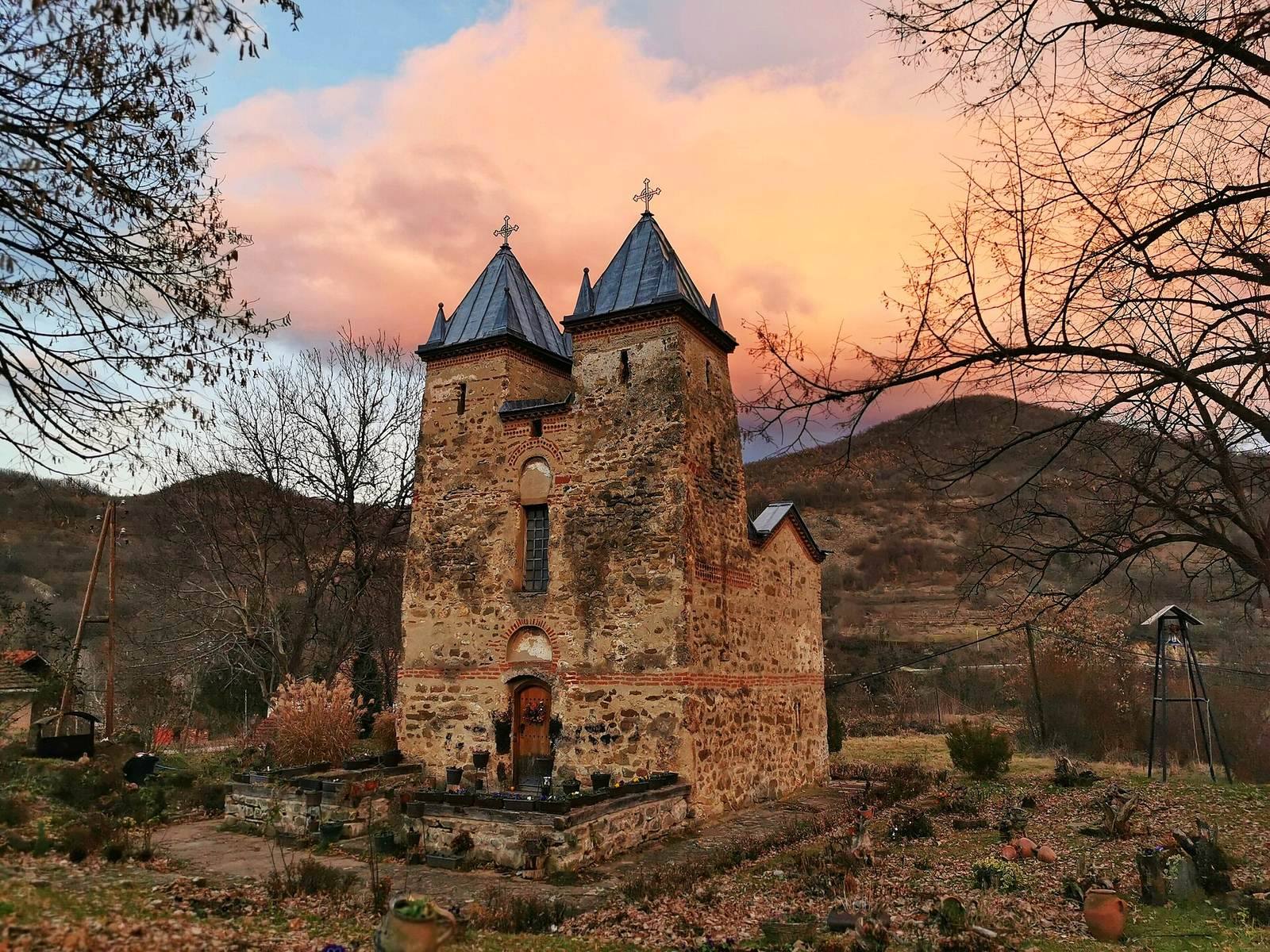
The church stands on Donja Kamenica’s central square, on the left bank of the Trgoviški Timok and beside an old military road linking Pirot and Vidin. Its small building has a round dome, a single apse, or rounded sanctuary projection, and a cross-in-square plan, in which a central worship space is arranged in a cross beneath a dome. Measurements give either 7.80 by 6.50 metres or 7.70 by 6.20 metres. Dressed stone set in mortar forms the main structure, while brick courses level parts of the building and add decoration, especially around the more elaborate dome.
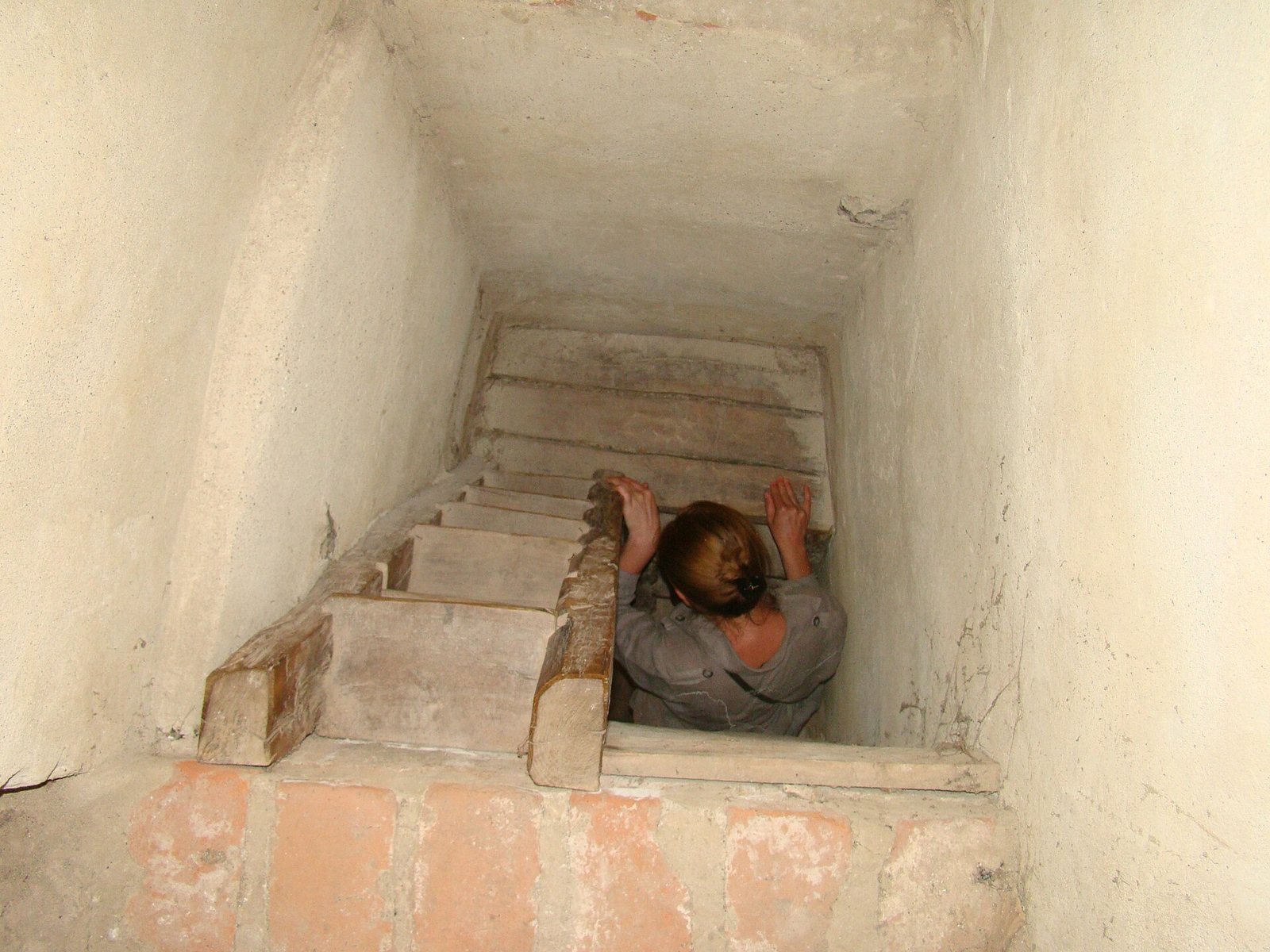
The tall entrance hall, or narthex, formerly had two storeys and is flanked by pointed towers. Models of the church in donor portraits indicate that the towers were once farther apart. The entrance hall and west façade also incorporated substantial timber elements. Each tower ends in a sharply pointed pyramid, with further pointed details at its four corners. These forms are unusual in medieval Bulgarian church architecture. Nikola Mavrodinov considered them Gothic in appearance, referring to a medieval European style known for pointed forms; Bistra Nikolova instead suggested Hungarian or Transylvanian influence.
Interior frescoes
Religious scenes and saints
The interior murals are generally dated to the 14th and 15th centuries. Their arrangement follows a model established in Bulgarian church decoration from the 13th century, and their style has affinities with churches in southwestern Bulgarian lands. Most inscriptions accompanying the paintings are in Byzantine Greek, the medieval form of Greek used in the Byzantine Empire, while some are in Old Church Slavonic, an early Slavic literary and liturgical language.
The scenes include an image of the Christ Child as the sacrificial offering of the Eucharist in the lower apse; the Raising of Lazarus; the Annunciation; Christ’s entry into Jerusalem; Judas Iscariot’s betrayal; scenes of the Passion in the upper main chamber; the Descent from the Cross; the mourning of Jesus; and Mary’s death and bodily assumption into heaven, known as the Dormition, on the west wall. Saints appear on the north and south walls of the main chamber and on its supporting wall projections. Among them are mounted military saints, an uncommon subject in the church. Saint Petka is painted high in the south tower, and Saint Nicholas high in the north tower.
Portraits of historical figures
Eleven historical figures appear in four portrait compositions. Three have no captions, making the people difficult to identify. One composition in the main chamber preserves two men from the waist up; one holds a model of the church, and only the head of a child remains visible. Another, on the upper west wall of the entrance hall, shows a man, a woman, a boy, and a girl. The man holds a church model, a customary sign of donation. Art historian Dragana Frfulanović proposed that the men holding church models in these two compositions represent the same principal donor. A third composition in the main chamber shows a monk and a priest.
The fourth composition, on the lowest west wall of the entrance hall, depicts a young man and woman facing forward. He wears red clothing adorned with pearls and double-headed eagles, a crown associated with a despot, and holds a cross-topped sceptre in his right hand while extending his other hand toward the woman. She wears the clothing and crown of a despotissa.