Saint Ulrich: The Catholic Parish Church of Kevenhüll
Site at a Glance
- Rating
- 4
- Popularity
- Very Low
- Country
- Germany
- Primary era
- Early Modern
- External website
- Open
- Eras represented
- Medieval, Early Modern, Modern
- Civilizations
- Duchy of Bavaria, German, Holy Roman Empire, Kingdom of Bavaria
- Site type
- Religious
- Remains
- Church
On this page11 sections
History
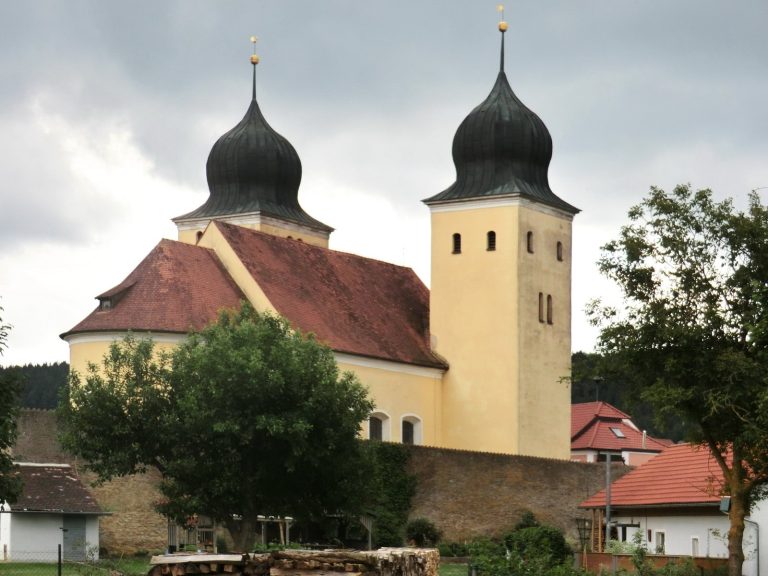
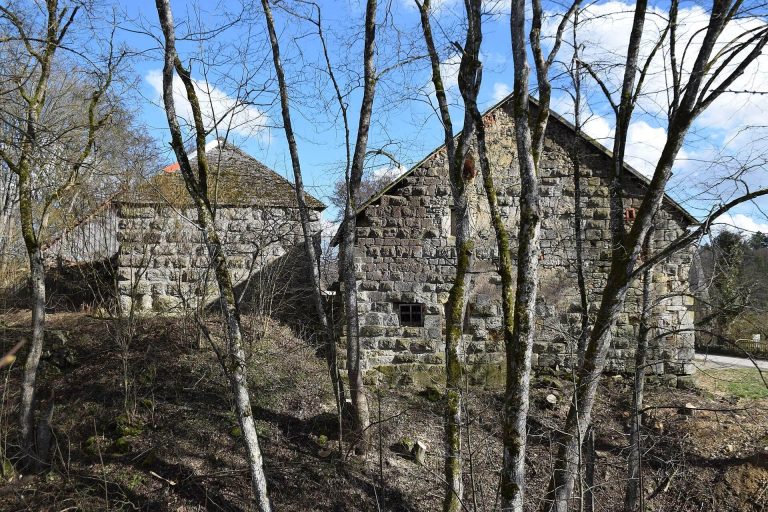
Saint Ulrich is the Catholic parish church of Kevenhüll, a district of Beilngries in Germany, and is associated with the Diocese of Eichstätt. A church was consecrated at Kevenhüll in 1072 during the Romanesque period, a medieval European artistic and architectural era; the present building is Baroque, an ornate style prominent in the seventeenth and eighteenth centuries, and was built in 1739–40. The church’s development is closely connected with Plankstetten Abbey and the changing organization of parish life in Kevenhüll.
Medieval church and parish rights
The first church probably belonged to the local nobility and may have occupied the lower floor of a residential and defensive tower that now serves as the church tower. Bishop Gundekar II of Eichstätt, an eleventh-century bishop, consecrated it. A further church consecration took place in 1406. Two years later, Kevenhüll and its Gothic church became dependent on St Walburga’s parish in Beilngries, which was incorporated into Plankstetten, a Benedictine monastery whose monks followed the Rule of Saint Benedict.
In 1411, Plankstetten established a foundation to provide for a priest to celebrate an early Mass, a service held earlier in the day. A priest who was not a monk served this foundation. An episcopal visitor confirmed its right of patronage in 1480. From 1496, Kevenhüll held rights similar to those of a parish but remained without full independent status. An endowment associated with Ottmaring parish is recorded there in 1518, and the priest serving the early Mass also cared for Kevenhüll.
Monastic service and rebuilding
A monk from Plankstetten served as Kevenhüll’s clergyman in 1636 and again around 1678, while the monastery provided pastoral care. The parish registers begin in 1642. From 1713, another Plankstetten monk cared for the community, and the monastery built a rectory for him. The new church was consecrated on 20 June 1752.
Parish independence and later changes
After Plankstetten’s dissolution in 1806, a former monk continued serving the parish until 1829. Secular clergy then took charge of the parish curacy, a pastoral unit that had not yet become an independent parish. Kevenhüll gained independent parish status in 1864. The parish founded a devotional association dedicated to the Heart of Mary in 1843, a church-vestment association in 1888, and a Sacred Heart confraternity in 1908.
The church’s defensive works were demolished between 1894 and 1899. Plankstetten again provided pastoral care from 1968, when a new rectory was also built. Exterior renovations followed in 1971–72 and 1991–92. An interior renovation in 1988–89 reversed later repairs that had distorted the ceiling paintings.
Remains
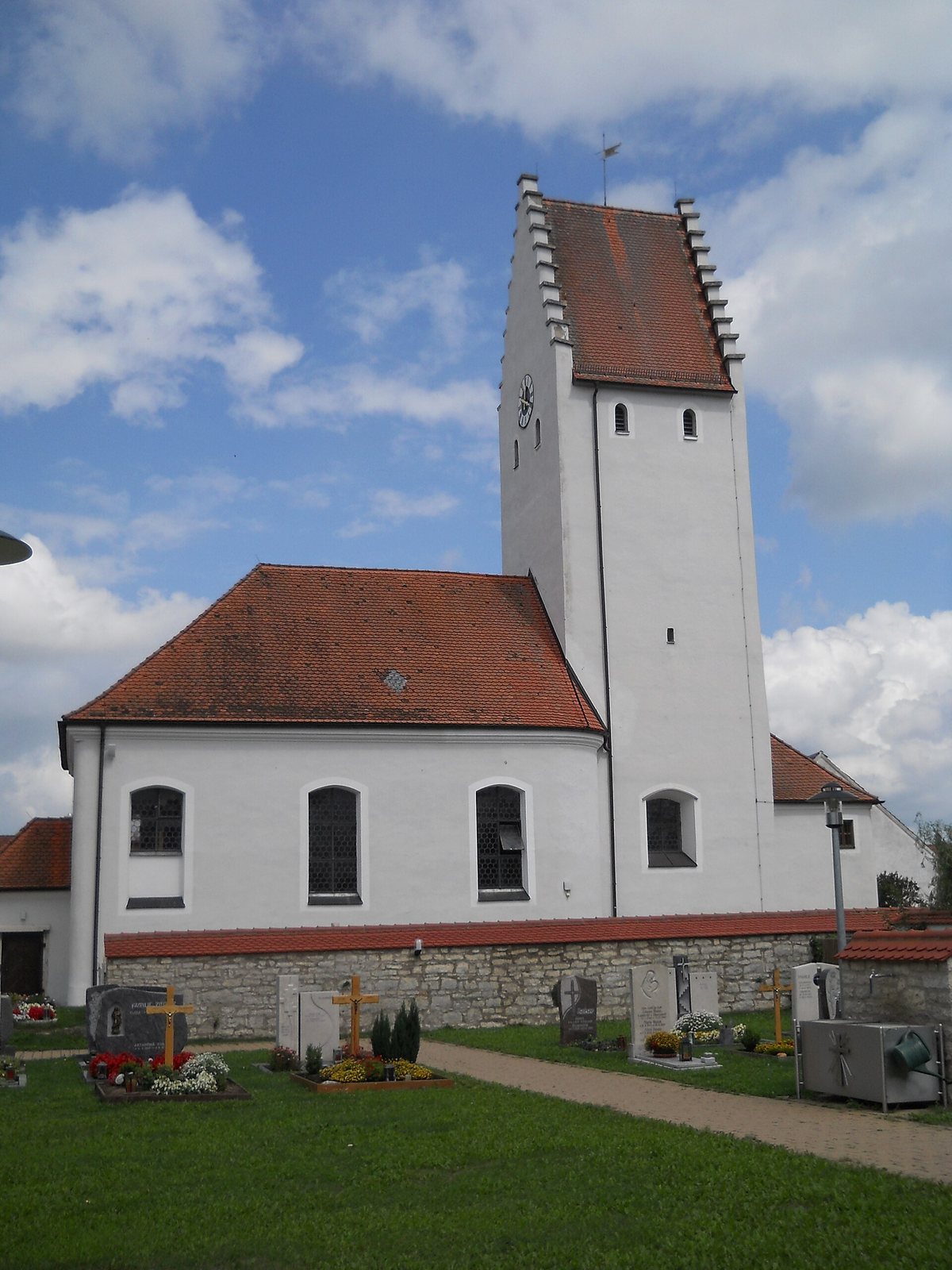
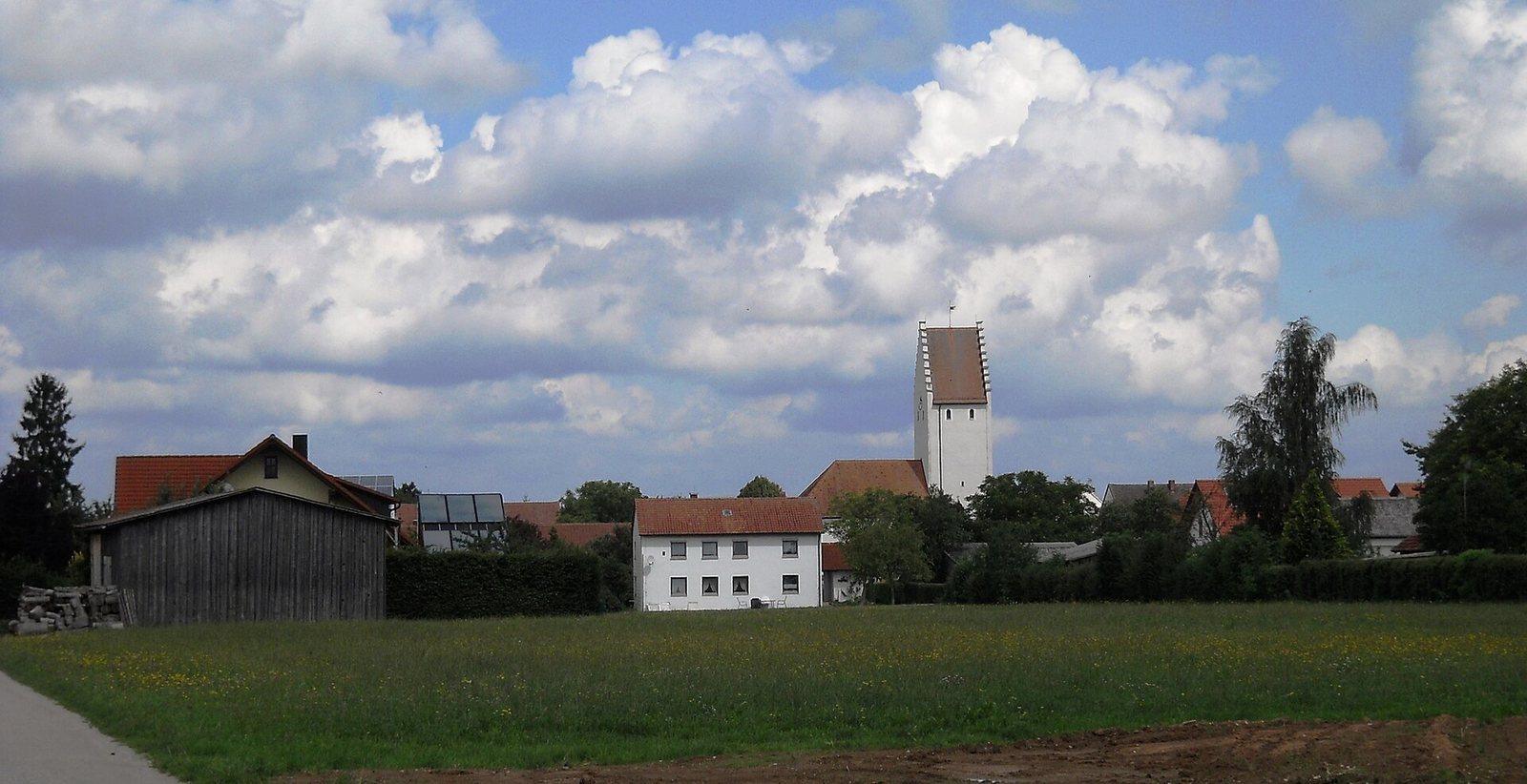
The church is a single-nave Baroque building aligned east–west and stands within the walled cemetery at the centre of Kevenhüll. Its layout runs from a porch at the western end to a square choir, the area around the altar, at the eastern end.
Plan and tower
The rectangular nave, the church’s main worship space, measures 9 by 15 metres and has three window bays, or sections of the wall. Its corners curve inward, and an organ gallery occupies the west end. At the east end, the plain tower has a stepped gable and a saddle roof. Its ground floor contains the choir, with a sacristy, a room where clergy prepare for services and store liturgical objects, extending east from it.
Interior decoration and furnishings
Plasterwork and ceiling paintings
Ornamental plasterwork in interlacing strap patterns and flower-basket designs decorates the choir and nave. Shallow, column-like pilasters divide the nave’s side walls, and plaster frames the windows. The ceiling paintings date to 1749 and include two large and sixteen smaller medallion-shaped frescoes, paintings made on plaster. Johann Dominikus Murmann painted them using engraved prints by Johann Georg Bergmüller as models. The large scenes show the Assumption, the belief that Mary was taken into heaven, and Saint Ulrich at the Battle of Lechfeld in 955, when the East Frankish king Otto I’s forces defeated a Magyar army. The smaller medallions depict the twelve principal disciples of Jesus and four Church Fathers, influential early Christian theologians: Gregory, Jerome, Ambrose, and Augustine.
Altars
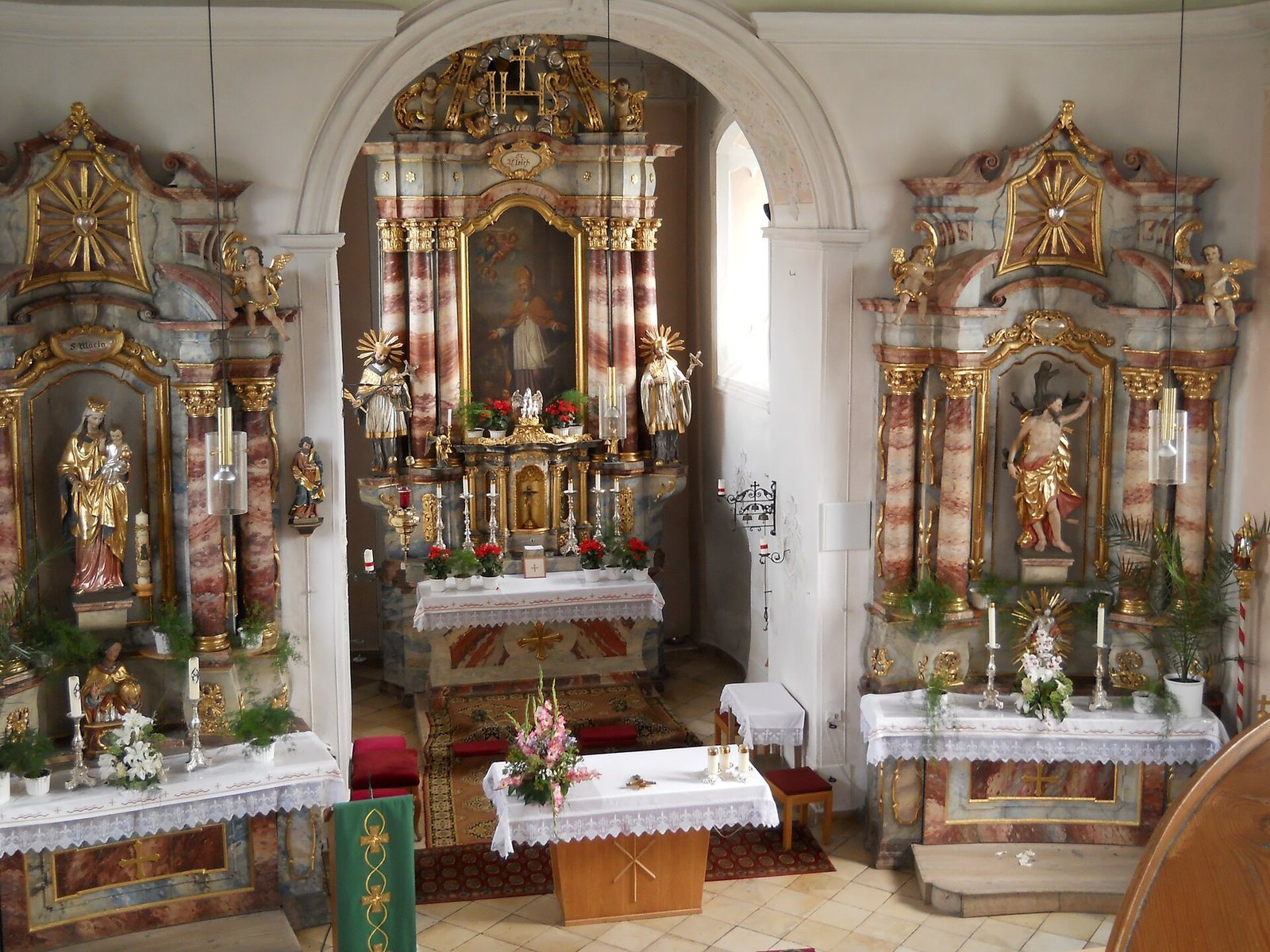
The six-column high altar has an altarpiece of Saint Ulrich holding an Ulrich cross, flanked by statues of Saint Francis Xavier on the right and Saint John of Nepomuk on the left. Above it, a Christogram, a monogram representing Jesus’ name, reads IHS; seven childlike figures called putti and two angels surround it. A stained-glass window behind the upper section provides backlighting. Above the tabernacle, the container for consecrated bread, a pelican feeding its young represents the Eucharist, the Christian rite centred on consecrated bread and wine. A candle-bearing angel kneels on either side of the tabernacle. Each side altar has four columns and is shaped to fit the nave’s curved corners. The right altar holds a statue of Saint Sebastian, while the left has a crowned Madonna with the infant Jesus.
Pulpit and devotional images
A relief dated 1520 and depicting the Visitation of Mary is attached to the back of the pulpit. On its canopy, an angel points toward two panels bearing ten Roman numerals that symbolize the Ten Commandments. At the rear right of the nave, figures of Saints Florian and Wendelin flank a painting of a soul being rescued from purgatory. Alfred Theiner of Unterhaching painted the Stations of the Cross in 1967.
Organ and bells
The organ was installed in 1908 and repaired in 1979. It has seven stops, controls that select sets of pipes to produce different sounds. Four bells hang in the tower: three Euphon bells dating to 1950 and a smaller bronze Ulrich bell cast in Nuremberg in 1689 by Wolfgang Hieronymus Heroldt.