Church of the Eremitani: An Augustinian Medieval Church in Padua


Site at a Glance
- Rating
- 4.6
- Popularity
- Medium
- Country
- Italy
- Primary era
- Medieval
- Eras represented
- Medieval, Early Modern
- Civilizations
- Holy Roman Empire, Venetian
- Site type
- Religious
- Remains
- Church
On this page19 sections
History
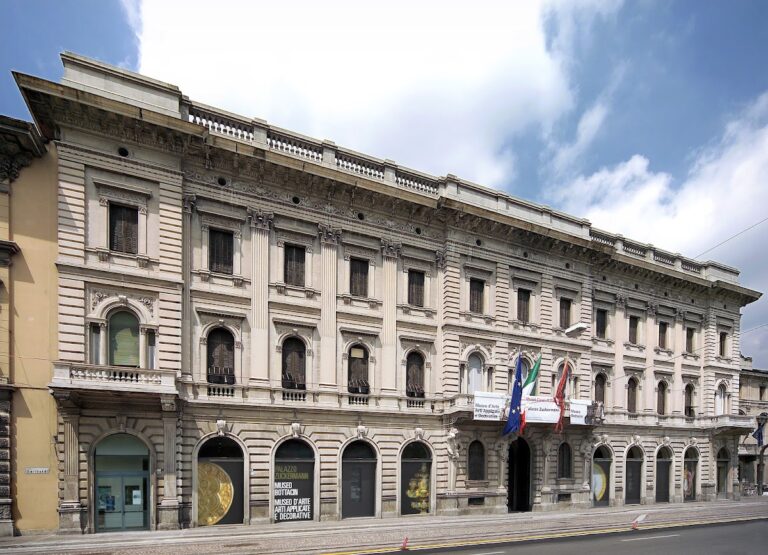
The Church of the Eremitani is a medieval Catholic church in Padua, Italy, built for the Augustinian Hermits in the late thirteenth century in the Romanesque and Gothic traditions of the city. Formally dedicated to Saints Philip the Apostle and James the Less, it belonged to a religious complex whose monastery stood to the north, on the site now occupied by the Musei Civici agli Eremitani.
The Augustinian foundation
The church grew from the union of two Augustinian congregations active in Padua. The Guglielmites had settled near Santa Croce, while the Giambonites were present in the city from at least 1242. Both joined the Augustinian Great Union in 1256, when several communities following the rule of Saint Augustine were brought together. The united order then settled in the Arena area and established Santa Maria della Carità, the original name of the Augustinian complex.
Little is known about the earliest church and monastery buildings. The present church was built with public funds, and its construction is recorded from 1276 in the communal statute of 7 June. Work continued into the early fourteenth century and was completed around 1306 under Fra Giovanni degli Eremitani, including the wooden ceiling and facade.
Religious and civic life
The Augustinian order administered the church and monastery for centuries. From 1509, Padua’s rectors and city deputies met in the church every year on 17 July, the feast of Saint Marina, to commemorate resistance to Imperial forces during the War of the League of Cambrai, a conflict involving the major European powers and Italian states. From 1571, the ceremony also recalled the Christian victory at the Battle of Lepanto.
The church received several notable visitors. Henry III of Valois, king of France, was welcomed there in 1574 while travelling to France for his coronation. Saint Francis de Sales, the Catholic bishop and writer associated with the Counter-Reformation, came to pray while he was a university student. Martin Luther, the German theologian and church reformer whose criticisms helped initiate the Protestant Reformation, stayed in the adjacent monastery while passing through Padua on his journey to Rome.
Suppression, war damage, and reconstruction
The Napoleonic suppression decree of 28 June 1806 expelled the friars and closed the monastery. The church reopened for worship in 1808, while the cloister complex was converted into the Gattamelata military barracks. In 1817, the church became a parish church, and it is now administered by the secular clergy of the Diocese of Padua.
The church and former monastery were severely damaged by an Allied air raid on 11 March 1944. The attack, associated with the military use of the former monastery and the site’s proximity to the railway station, partly destroyed the facade, roof, and apsidal area. The Dotto and Ovetari chapels were completely destroyed.
After the Second World War, Ferdinando Forlati directed the reconstruction of the upper facade, roof, and apsidal section. The work followed the original design, reused much of the material recovered from the ruins, and employed anastylosis, a method that reassembles a ruined building with its original architectural elements wherever possible. The Ovetari frescoes were reconstructed and returned to public display in 2006.
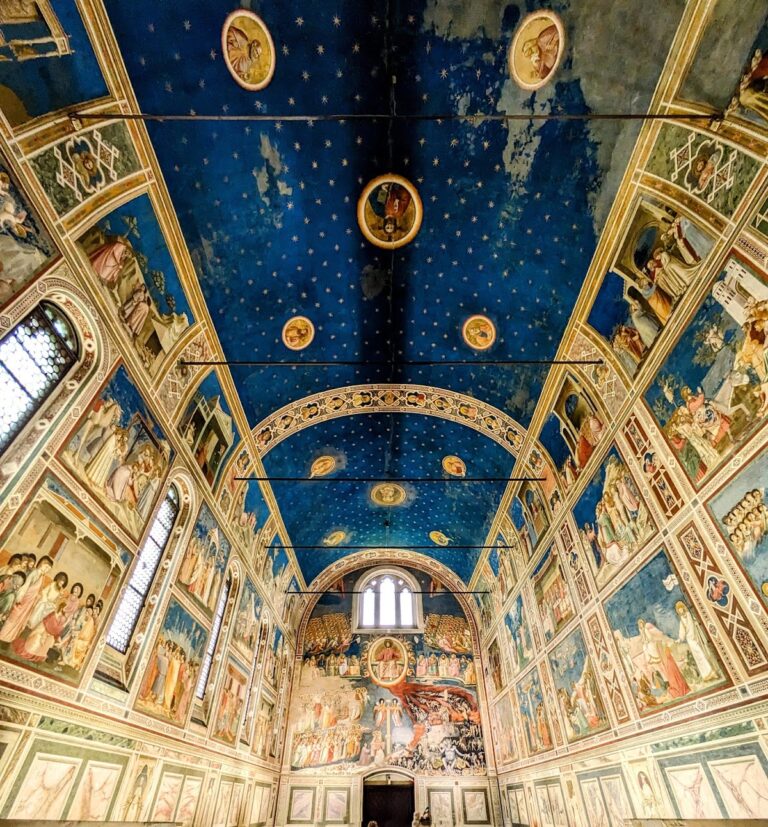
In 2021, the Church of the Eremitani became one of the four components of the UNESCO World Heritage property Padua’s fourteenth-century fresco cycles. Together with the Scrovegni Chapel, a nearby early fourteenth-century chapel celebrated for its frescoes by Giotto, it forms part of the inscribed cultural property. The property covers 71.8 dunams and has a buffer zone of 5,300 dunams.
Burials and memorials
The church contains burials or memorials associated with several figures from Padua’s political, military, intellectual, and artistic history. They include Feltrino Gonzaga, lord of Novellara and Bagnolo, who died in 1374; Ilario Sanguinacci, a military commander and podesta, the civic official who governed a medieval or Renaissance Italian city, in Bologna and Florence, who died in 1381; the humanist Marco Mantua Benavides; and the theologian Paolo Veneto. Other commemorated figures include Zanino da Peraga, Jacopo da Forli, Vittoria Accoramboni, Antonio Vallisneri, and Barbara Strozzi.
Remains
Church layout and exterior
The Church of the Eremitani is a relatively long, single-nave building of the barn type, a form associated with Padua’s Romanesque and Gothic traditions. The nave terminates in three apses. The two lateral apses have straight ends, while the central apse ends in five sides. Four side chapels of different sizes open along the south side of the nave, with the Ovetari Chapel beside the chapel on the right and the small Dotto Chapel between the presbytery and the Ovetari Chapel.
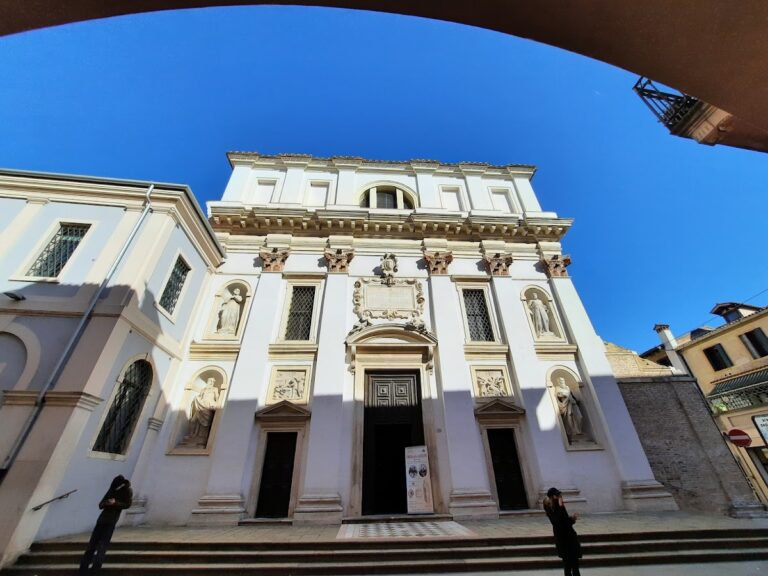
The tall gabled facade has a rose window in its upper section. Below it, a stone pseudo-loggia, or gallery-like facade, is formed by five arches. The central arch holds the entrance portal, while the two lateral arches contain tombs. Along the south side, the Renaissance portal is decorated with twelve high-reliefs representing the months. Niccolò Baroncelli of Florence made them in 1422, and the pseudo-loggia continues along part of this side of the church.
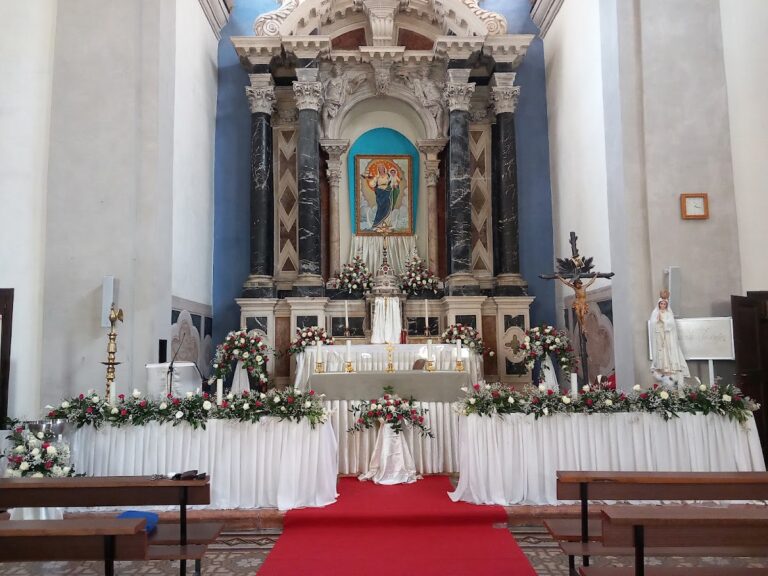
The broad nave has walls arranged in alternating horizontal courses of tuff and brick. Its reconstructed ship-keel wooden ceiling follows the original medieval model. In the former choir area, the ceiling arrangement consists of one complete barrel vault and six half-barrels, creating a distinct vaulted zone within the church.
Funerary monuments and interior features
Carraresi monuments
Near the entrance stand the funerary monuments of Jacopo II da Carrara and Ubertino da Carrara. They were originally made for the church of Sant’Agostino and were moved to the Eremitani after Sant’Agostino was demolished in 1819. Ubertino’s monument dates from about 1345 and Jacopo II’s from about 1351. Andriolo de Santi, other Venetian artists, and the Lombard sculptor Bonino da Campione contributed to the works. The two central sarcophagus niches contain Madonnas and Child attributed to Bonino da Campione, while Jacopo II’s monument also bears an epitaph by Francesco Petrarch.
Older furnishings and fresco fragment
An ancient clock remains on the left side of the nave, together with baptismal fonts. A fragment of a fourteenth-century Gothic fresco depicting the Crucifixion is also preserved within the church.
Altar of Saint Nicholas
Near the entrance is the Altar of Saint Nicholas, made by Giuliano d’Ognibene in 1495. Statues of Saints James and Philip flank its main composition, while a Pieta occupies the crowning section. The predella, the horizontal lower part of an altarpiece, contains scenes from the life of Saint Nicholas of Tolentino by Domenico di Giovanni. At the centre is a wooden statue of Saint Bernardino by Bartolomeo Bellano, made around 1450 to 1455 under the influence of Donatello.
Benavides mausoleum
Marco Mantua Benavides commissioned a monumental mausoleum in 1544 after moving from Mantua to Padua. Bartolomeo Ammannati of Florence designed the ensemble, which has a sarcophagus flanked by statues representing Labour and Patience. Benavides appears above them between the figures of Time and Fame, and the composition is crowned by Immortality. The monument is made of yellow Nanto stone, while its statues are carved from white marble.
Chapels and surviving wall paintings
Cortellieri Chapel
The Cortellieri Chapel on the right side of the nave preserves remains of a fresco cycle made by Giusto de’ Menabuoi around 1370. The paintings represent the Glory of Saint Augustine together with the Virtues and the Liberal Arts. These traditionally comprise grammar, rhetoric, logic, arithmetic, geometry, music, and astronomy, the disciplines associated with formal education.
Main chapel
The main chapel contains a fresco cycle by Guariento, stylistically dated to 1361 to 1365. Its surviving decoration is on the north wall. The upper three registers show Stories of Saints Philip and Augustine, while the monochrome dado, a lower decorative wall zone painted in a restricted range of tones, presents allegories of the planets and the Ages of Man. The cycle was influenced by Giotto’s nearby frescoes in the Scrovegni Chapel. Scenes that remain include Saint Philip being forced to sacrifice to Mars, Saint Philip’s meeting with bishops, his martyrdom on the cross, Saint Augustine’s vision, and the clothing of Saint Augustine and baptism of Adeodatus.
Behind the high altar is a painted crucifix made in 1367 by the Venetian artist Nicoletto Semitecolo.
Ovetari Chapel
The Ovetari Chapel is dedicated to Saints James and Christopher. Its fresco decoration was commissioned through the will of the notary Antonio Ovetari and begun by Giovanni d’Alemagna, Antonio Vivarini, Niccolò Pizzolo, and Andrea Mantegna. Giovanni d’Alemagna completed the floral garlands in the vault, while Vivarini painted four Evangelists. Bono da Ferrara and Ansuino da Forli continued the work.
Andrea Mantegna was seventeen when he began working in the chapel. He painted three saints in the apse vault among the Doctors of the Church created by Pizzolo. Mantegna later worked on the Calling of the Apostles James and John, the Sermon of the Apostle James, episodes from the life of Saint James the Greater, the Assumption of the Virgin, scenes from the life of Saint Christopher, and the Martyrdom of Saint Christopher.
Work in the chapel was interrupted from 1451 to 1453 because of insufficient funds. After Pizzolo’s death, it resumed under Mantegna alone from 1453 to 1457. The Assumption of the Virgin and the Martyrdom of Saint Christopher were removed in 1880 because of their poor condition, transferred to canvas, and evacuated during the war. The Martyrdom of Saint James was replaced on the left wall by a full-scale photograph, into which surviving fragments were inserted after the 1944 bombing. About 77 square metres of the original frescoes remain from an area of several hundred square metres, and approximately 88,000 small fragments were reassembled.
Sanguinacci Chapel
The Sanguinacci Chapel stands to the left of the high altar and is dedicated to Saints Cosmas and Damian. Its name derives from the family that held its patronage. The upper right wall contains a Madonna and Saints fresco by the Master of the Scrovegni Choir, dating approximately to the fourth decade of the fourteenth century.
On the lower right wall is an Enthroned Madonna with Saints and a Donor, made around 1373 and probably painted by Giusto de’ Menabuoi. The donor may be the German nobleman Enrico Spisser, who was then serving the Carraresi. The left wall preserves remains of a votive fresco with heraldic emblems. Much of this painting was lost when the funerary monument of Ilario Sanguinacci was installed.
Dotto Chapel
The small Dotto Chapel lies between the presbytery and the Ovetari Chapel. Its right wall contains the funerary monument of Francesco Dotto.
Sacristy and later artworks
The new sacristy, now used as a weekday chapel, contains several paintings and memorial works. Among them are Christ and the Samaritan Woman, Christ and the Adulteress, The Wedding at Cana, and David by Pietro Ricchi; Saint John the Baptist, recently reattributed to Guido Reni; Madonna with Saints by Ludovico Fiumicelli; and Madonna and Child by Altichiero da Zevio. The room also contains the tomb slab of the theologian Paolo Veneto.