Saint Andrew’s Lion: Padua’s Medieval Victory Monument
Site at a Glance
- Popularity
- Low
- Country
- Italy
- Primary era
- Classical
- Eras represented
- Classical, Medieval, Early Modern
- Civilizations
- Roman
- Site type
- Civic
- Remains
- Monument
On this page8 sections
History
Saint Andrew’s Lion is a medieval victory monument in Padua, Italy, erected in 1209 after Padua defeated the Este-ruled marquisate of Ferrara. The memorial marked the Paduan victory over the House of Este, the ruling dynasty associated with Ferrara.
The victory and the replacement
Residents of the Sant’Andrea district distinguished themselves in the fighting against Aldobrandino I d’Este. The Paduans seized a stone lion representing the Este as a trophy. Jacopo de Viallardi da Vercelli, Padua’s podestà, or chief civic magistrate, authorized the trophy’s installation as a memorial.
After Padua reconciled with Rinaldo d’Este in 1212, the original lion was returned. A similar but larger statue, sculpted by Daniele, took its place. The monument is popularly called the Cat of Saint Andrew. The nickname’s origin is uncertain, though it may have begun as a medieval insult directed at the Este; it was recorded by 1855.
Destruction and reconstruction
On 2 May 1797, French troops destroyed the statue, mistaking it for the Lion of Saint Mark, the emblem of the Venetian Republic. Girolamo de’ Dottori supervised the reconstruction, which was entrusted to sculptor Felice Chiereghin. Made in the late eighteenth century, the replacement was regarded as inferior to its predecessor.
Repairs and rebuilding
Sculptor Antonio Penello repaired the statue in 1914 after it was vandalized, and it underwent another restoration in 1989. Vehicles struck the monument repeatedly. A collision on 23 September 2013 toppled it and shattered the sculpture. Reconstruction began on 27 November 2014, and on 19 March 2015 the monument was reassembled with a newly made lion replica. The restored Chiereghin sculpture was given a place of honor at Padua’s town hall.
Remains
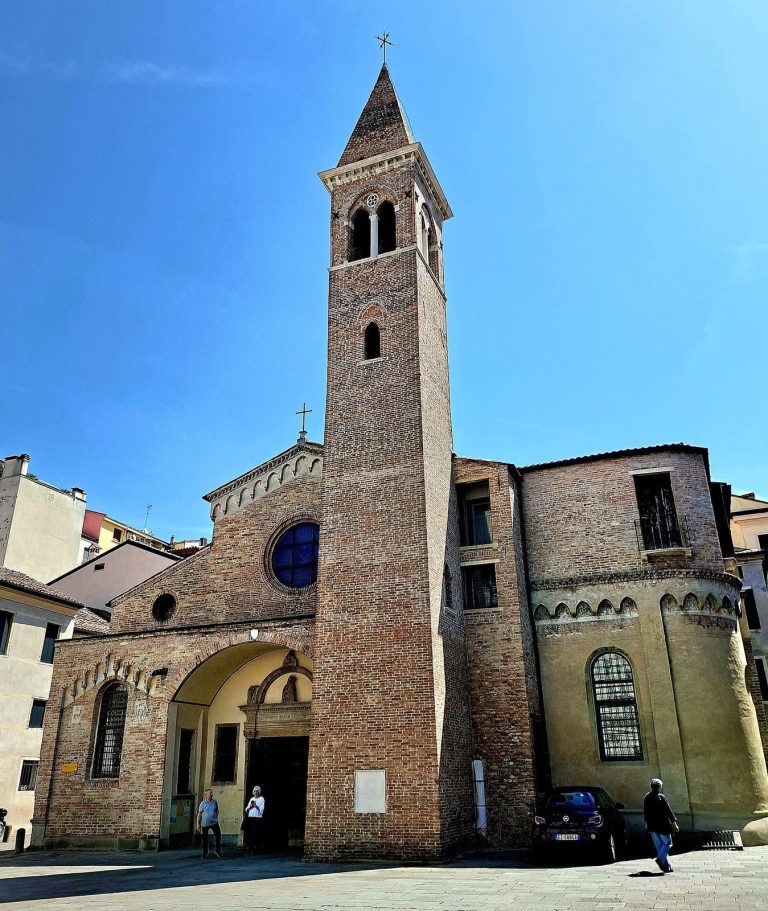
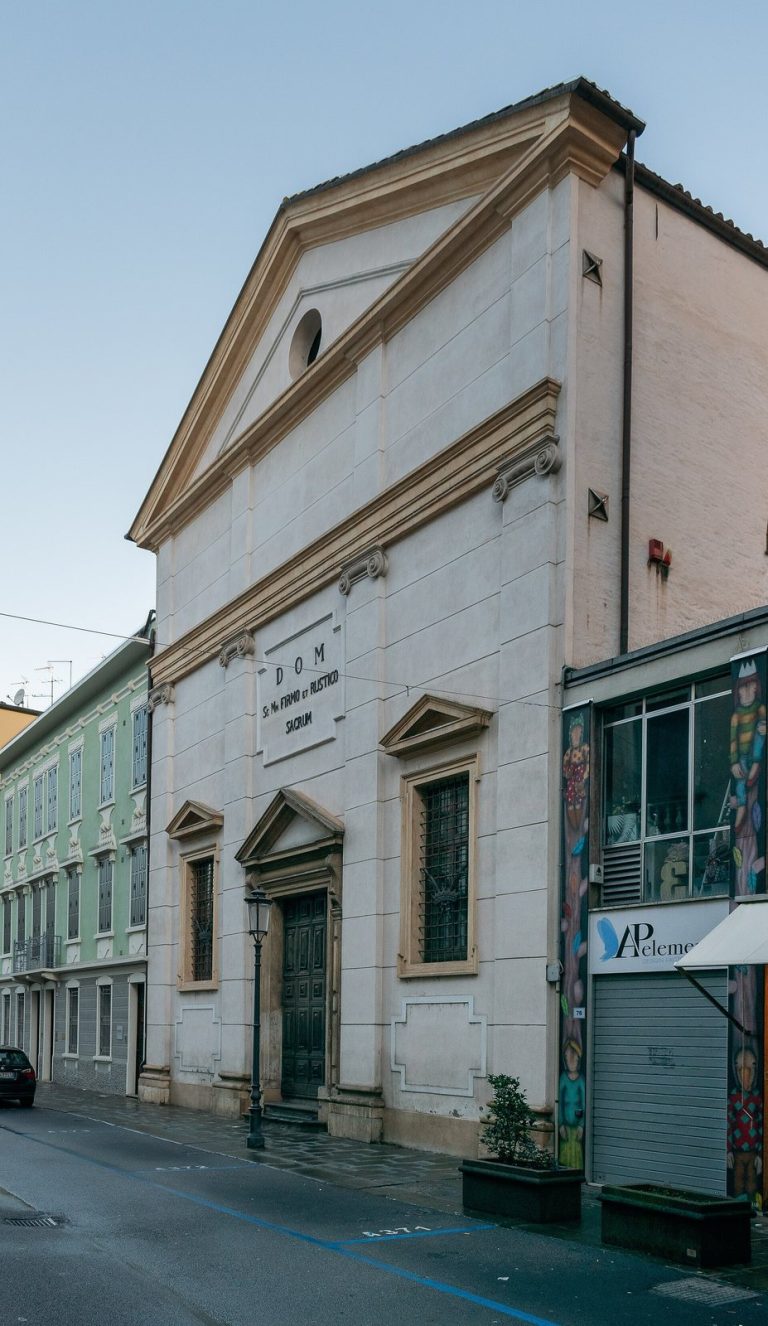
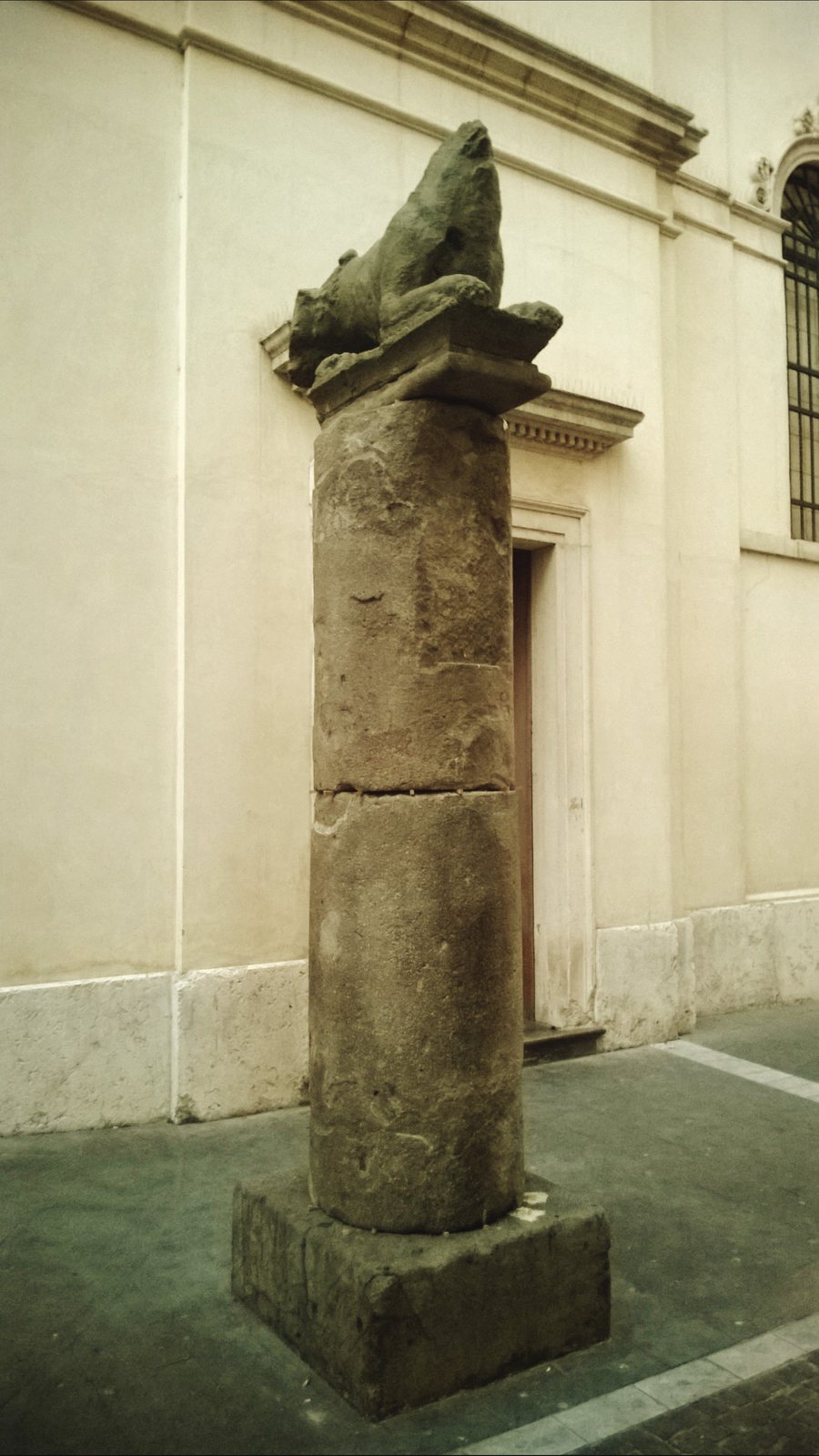
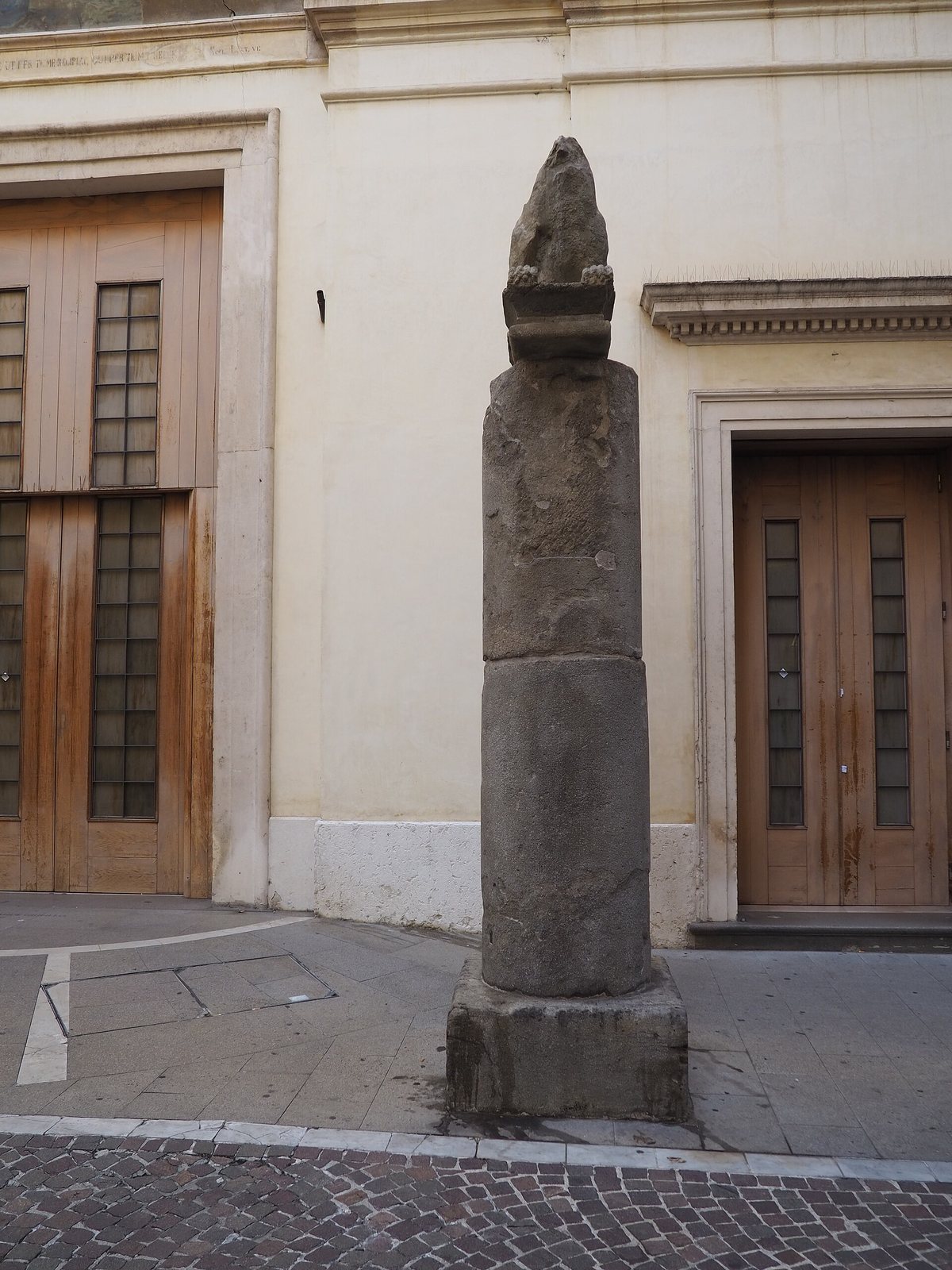
The monument stands in the small forecourt of Sant’Andrea church on Via Sant’Andrea, at a spot traditionally considered one of Padua’s highest points. Its vertical arrangement places a stone lion above a Roman-era column.
Stone monument
Column and base
The column is made of Euganean trachyte, a volcanic stone from the Euganean Hills, and is assembled from two sections. It rests on a quadrangular base of the same stone.
Lion sculpture
The worn lion has a posed form and a Romanesque appearance, recalling a medieval European artistic style. The sculpture now set above the column is a replica. An earlier lion sculpture is depicted in plates in the French art historian Jean-Baptiste-Louis-Georges Seroux d’Agincourt’s Histoire de l’art par les monuments.